By 2026, the divide between "customer support" and "growth marketing" has officially collapsed. We no longer live in an era where support tickets are a burden to be cleared as cheaply as possible; instead, every interaction is a high-intent opportunity for revenue. As of this year, 78% of organizations have fully integrated AI into their core business functions, and the results are staggering. Merchants are seeing a 7x surge in AI-driven traffic and an 11x increase in orders attributed to AI-powered search results. If your 2026 playbook doesn't prioritize Shopify marketing automation AI and agentic support, you aren't just falling behind—you're leaving millions in unrealized lifetime value on the table.
The New Standard: Why Automation is Non-Negotiable in 2026
The ecommerce landscape has shifted from "search-and-click" to "agent-driven." We are witnessing the rise of Agentic Commerce, where AI agents like Google Gemini and Microsoft Copilot autonomously research and purchase products for consumers via the Universal Commerce Protocol (UCP), a standard co-developed by Shopify and Google. For a brand to survive in this ecosystem, its internal operations must be just as sophisticated as the agents buying from them.
Brands like Brooklyn Tea are already proving that small, boutique teams can compete with global retail giants by using Shopify AI to automate ad campaigns and engagement. The "moat" for successful merchants is no longer just the product—it is data quality. As Stephanie Mace of Shopify notes, unified first-party data is the ultimate AI advantage.
"AI is not just a feature at Shopify. It is central to our engine... the biggest shift in technology since the internet." — Harley Finkelstein, President of Shopify
Implementing Gorgias Automation to Save 50% of Support Time
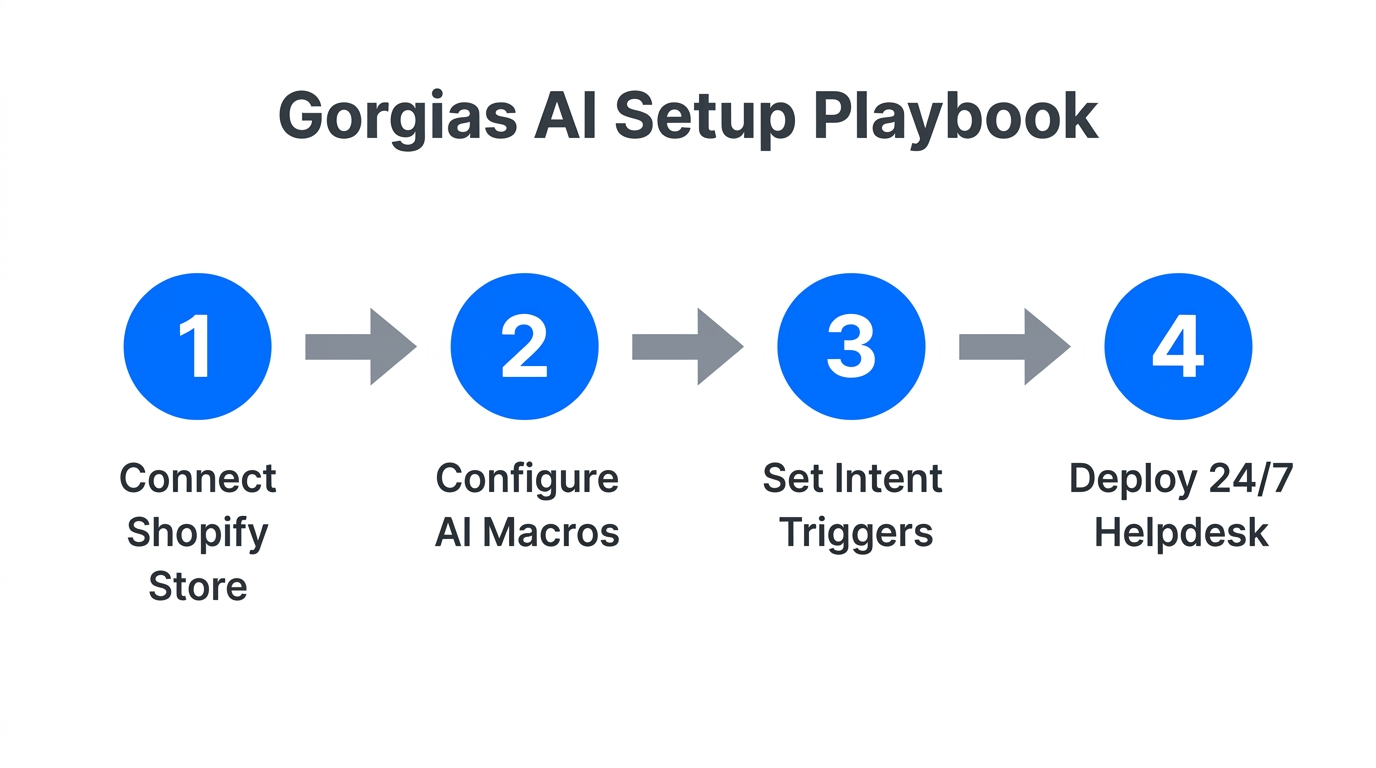
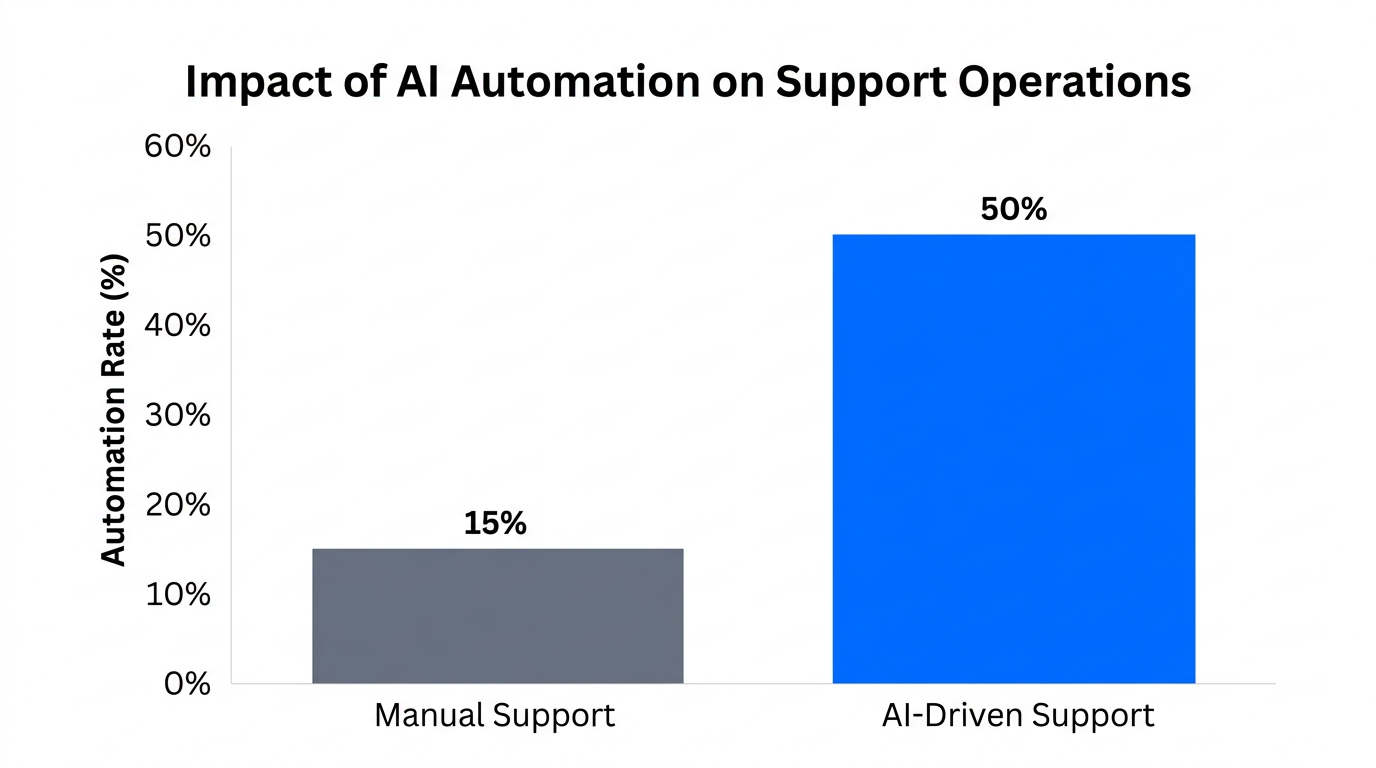
One of the most immediate wins for any Shopify merchant is the implementation of Gorgias automation. In 2026, the goal is no longer "zero inbox"—it is "zero human touch" for repetitive queries. Tools like Gorgias and Tidio’s Lyro are now capable of handling over 50% of all support emails autonomously.
Step 1: Automating WISMO (Where Is My Order)
WISMO queries typically make up 30-40% of support volume. By connecting your shipping carrier data directly to your AI agent, you can resolve these instantly. The AI doesn't just provide a tracking link; it provides context. "Your package is 2 miles away and will be delivered by 4 PM today." This level of detail has led to brands like Loftie seeing a 10-20% lift in customer satisfaction (CSAT) scores while automating half of their support volume.
| Metric | Traditional Support | AI-Agentic Support (2026) |
|---|---|---|
| Average Response Time | 2-4 Hours | < 10 Seconds |
| Automation Rate | 5-10% | 55-70% |
| CSAT Score | 4.2/5.0 | 4.8/5.0 |
| Cost Per Ticket | $5.00 - $12.00 | $0.40 - $1.10 |
The Support-to-Sales Workflow: Turning Frustration into Profit
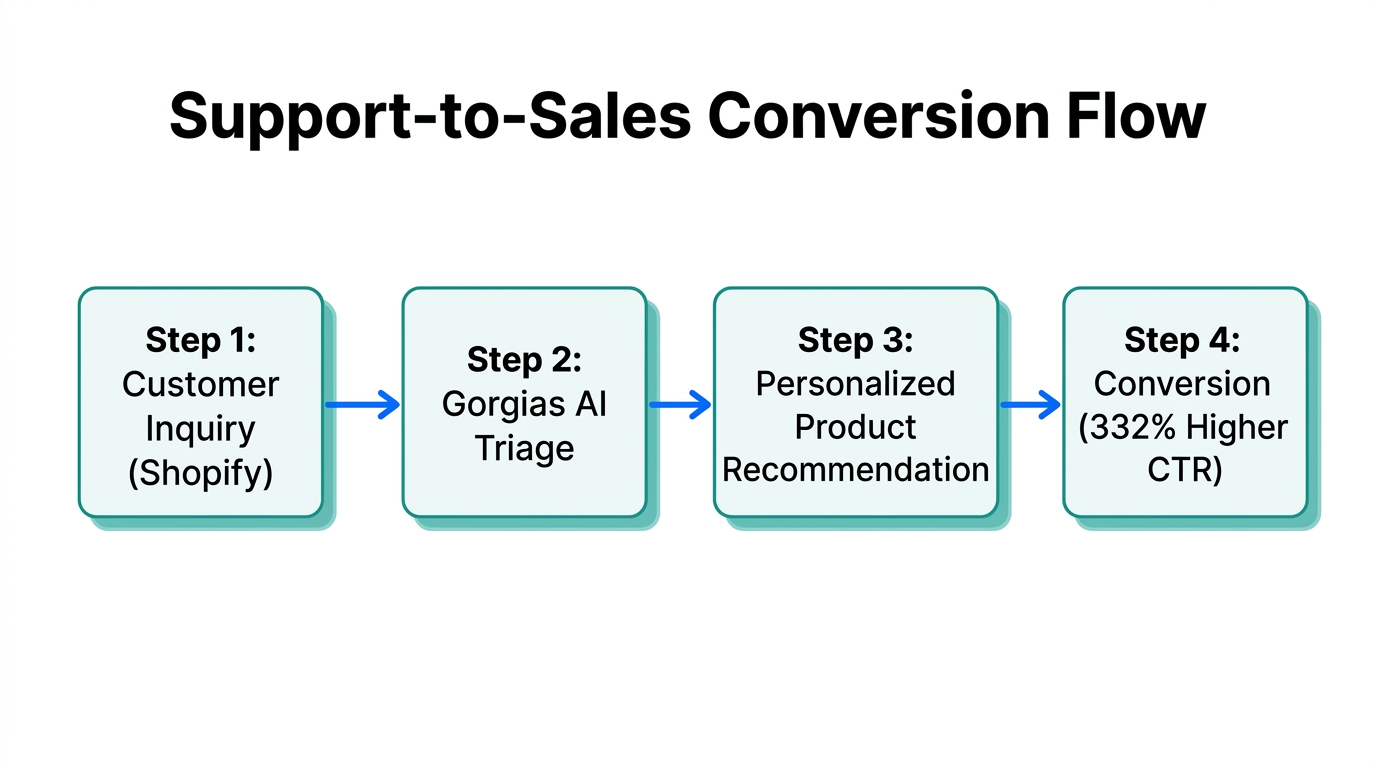
The real magic happens when you configure your AI to recognize customer sentiment. If a customer expresses frustration—perhaps due to a delayed shipping notice—the AI shouldn't just apologize. It should trigger a sales-focused workflow. In 2026, top-tier brands use Gorgias automation to automatically issue personalized discount codes during high-friction interactions.
For example, if the AI detects a "Negative Sentiment" score on a WISMO query, it can be programmed to say: "I see your order is delayed by 2 days. I'm so sorry for the wait! To make it up to you, here is a 15% discount code [SORRY15] for your next order." This turns a potential churn event into a retention win. This strategy contributes to the 14% increase in customer retention rates attributed to AI-powered personalization.
"The strongest brands are treating AI as operations, not experiments. They are moving from defensive support to offensive revenue generation."
Automating SEO and Content Pipelines with SEOAnt
Scaling operations isn't just about answering questions; it's about being discovered. Shopify marketing automation AI extends deeply into technical SEO. Using SEOAnt, merchants in 2026 are automating the detection of broken links, missing meta-tags, and alt-text generation.
However, the key is avoiding the "robotic" penalty. Google's algorithms are now hyper-tuned to detect low-effort AI spam. The 2026 playbook is to use Shopify Magic to generate base descriptions, which are then refined by a human editor or a high-end AI researcher. For instance, Jones Road Beauty uses OpenAI Deep Research to analyze thousands of Reddit threads to find real-world customer language, which then informs their automated SEO and email content.
Connecting the Stack: From Outreach to Automation
A truly automated e-commerce engine requires a steady stream of User-Generated Content (UGC) and influencer endorsements to feed the ad algorithms. While Shopify marketing automation AI handles the post-purchase experience, platforms like Stormy AI streamline the pre-purchase discovery. By using Stormy AI’s autonomous agents to find and outreach to creators, you ensure your automated TikTok Ads always have fresh, high-converting creative to work with. Integrating these two worlds—influencer discovery and automated operations—is how brands like Healf are targeting £100 million in sales.
Beyond Response Time: KPIs for the AI Era
In 2026, the metrics we used in 2024 are obsolete. "First Response Time" matters less when an AI agent responds in milliseconds. Instead, you must measure the Revenue Impact of your automation. Businesses using generative AI in marketing and sales report an average revenue growth of 5% to 10% (McKinsey).
Critical KPIs to Track:
- AI Resolution Rate: Percentage of tickets solved without human intervention (Target: >50%).
- Support-Driven Revenue: Sales generated from discount codes or upsells issued via Gorgias automation.
- Retention Lift: The change in LTV for customers who interacted with an AI agent vs. those who didn't.
- Automated Email CTR: Leveraging tools like Klaviyo to send flows at a "Predicted Optimal Time" to hit that 332% higher CTR benchmark.
"Data quality is the moat. If your AI isn't connected to your purchase history, your recommendations will always be irrelevant."
Conclusion: Building Your 2026 Automation Engine
Scaling in 2026 is a race to see who can provide the most personalized experience with the least manual effort. By implementing Gorgias automation for support, leveraging Shopify marketing automation AI for hyper-personalized email flows, and using SEOAnt to maintain technical integrity, you transform your store from a manual shop into an autonomous revenue machine.
Remember, the goal is Agentic Commerce. Whether it's an AI agent buying for a customer or an AI agent selling for you, the brands that master this unified data flow will be the ones standing at the end of the year. For advanced brands, combining these operational efficiencies with an AI-powered influencer strategy via Stormy AI allows you to scale creative content as fast as your support tickets. Start by automating your most frequent queries today, and turn your support team into your most effective sales force.