Scaling Digital Products: Marketing Lessons from the $250M Teachable Exit for 2026
Learn how Ankur Nagpal scaled Teachable to a $250M exit and explore the 2026 creator economy growth trends, digital product distribution, and founder exit strategies.
In the landscape of the creator economy growth 2026, few stories resonate as powerfully as the journey of Ankur Nagpal. From developing viral Facebook quizzes that asked users "how good of a kisser are you?" to architecting a $250 million exit with Teachable, Nagpal’s trajectory offers a masterclass in digital product distribution and value creation. For founders and marketers today, his story isn't just about a payday; it's a blueprint for transitioning from viral novelties to high-ticket digital education ecosystems.
The Shift: From Viral Personality Quizzes to High-Ticket Education
Ankur describes the early days of building viral personality quizzes before founding Teachable.
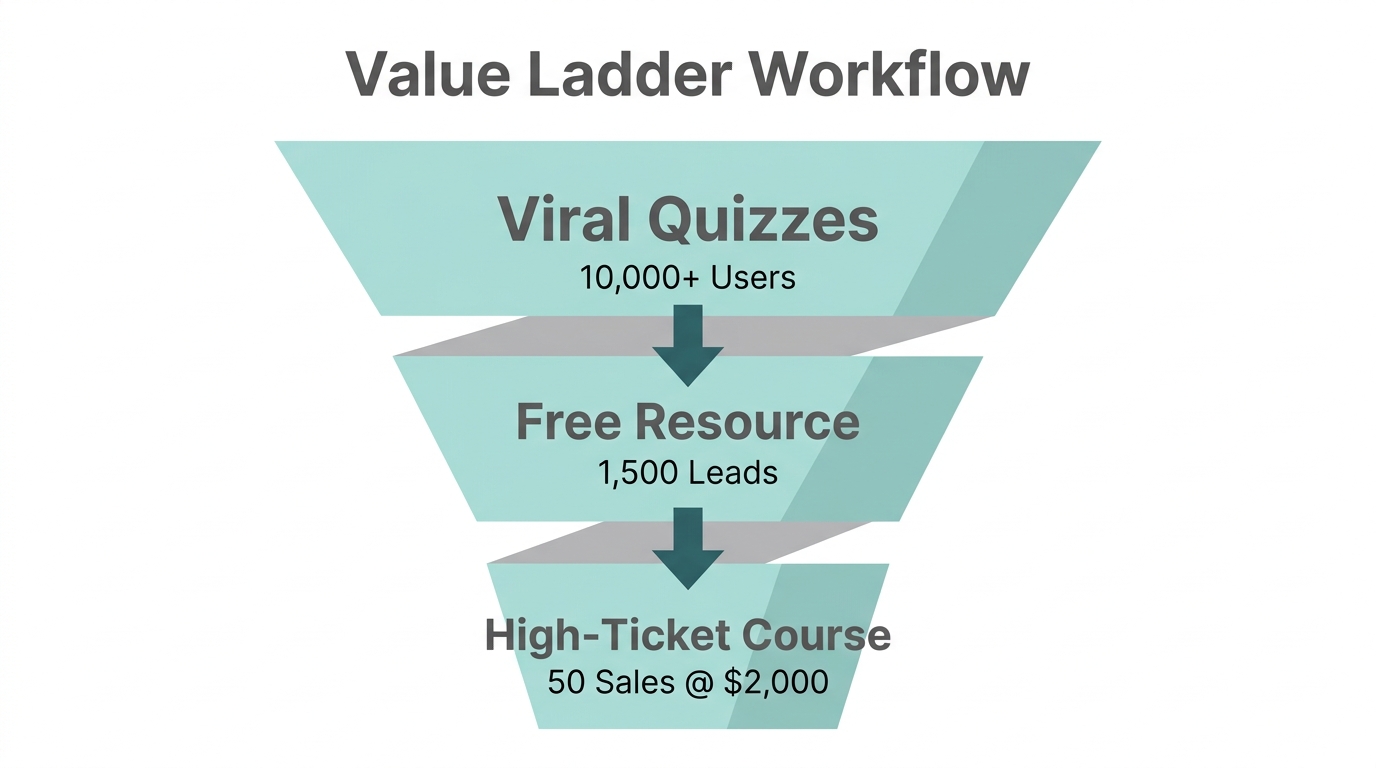
Before Teachable became the gold standard for online course platforms, Nagpal was a college student leveraging the early viral mechanics of social media. At just 20 years old, he generated his first millions by creating simple, engagement-heavy Facebook apps. These apps—personality quizzes and friend-based interactions—served as an early lesson in Teachable marketing strategy: distribution is everything. While these quizzes were low-value in terms of content, they were high-value in terms of attention.
"Zero to something is always more life-changing, undoubtedly. Making money in college allowed me to realize that if I can do things on the internet, why ever get a regular job?"
By 2026, the market has matured significantly. The "viral for viral's sake" era has been replaced by a demand for substantive outcomes. Nagpal’s shift from entertainment to education was a calculated move into a space where the customer lifetime value (LTV) was exponentially higher. Using platforms like Stormy AI for creator CRM and TikTok Ads Manager for modern distribution, founders can now bridge the gap between entertaining content and high-ticket educational products.
Why Distribution-First Founders Outperform Product-First Founders in 2026
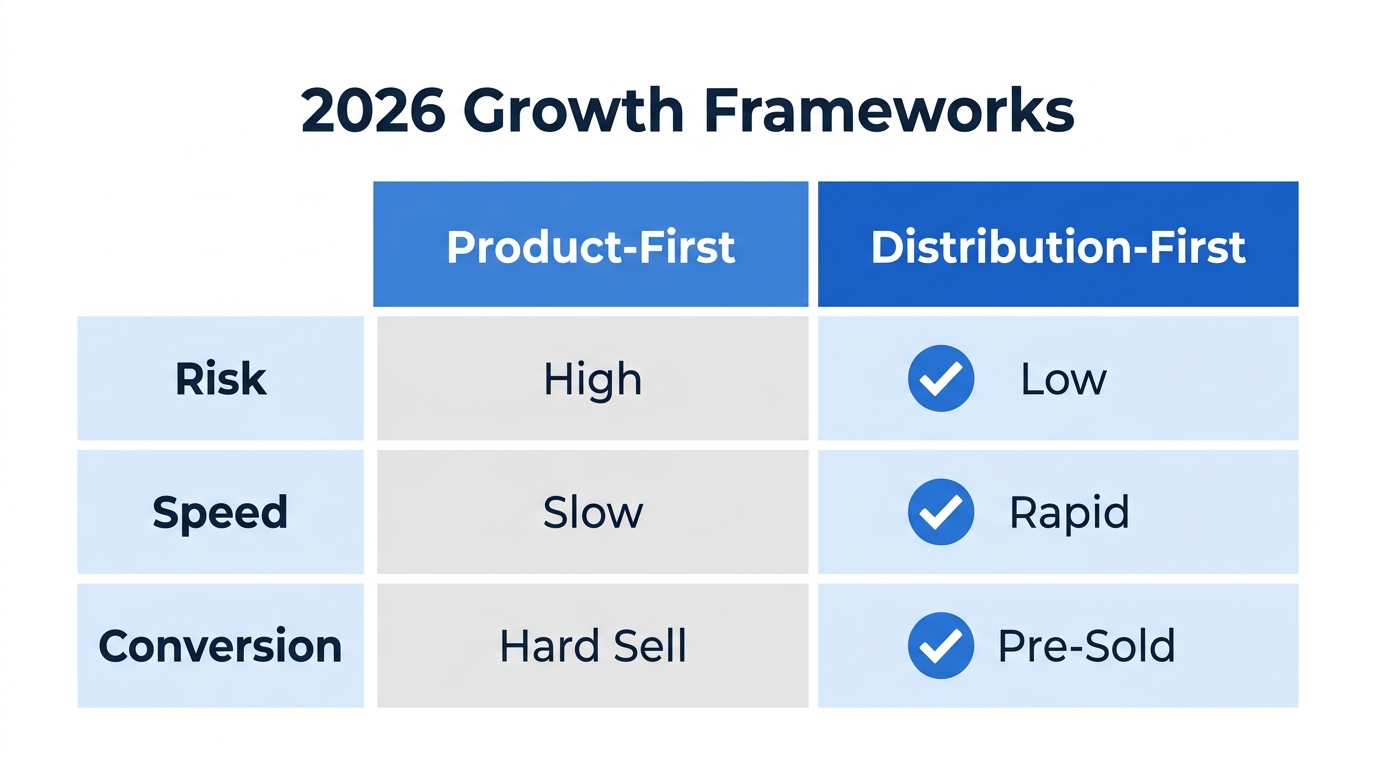
One of the most enduring debates in the startup world is whether to prioritize the product or the distribution. Nagpal’s success suggests that in 2026, the digital product distribution model wins every time. A product-first founder builds a beautiful tool and hopes people find it; a distribution-first founder builds an audience and creates a product they are already asking for. This is particularly true in scaling online courses, where the market is saturated with content but starved for trusted guides.
Modern distribution often involves leveraging creators who already own the attention of your target demographic. To stay competitive, many brands are now using Stormy AI to discover and vet influencers across TikTok and YouTube, ensuring their product reaches the right eyes without the manual friction of old-school outreach. By automating creator discovery, founders can focus on the product's value proposition while the distribution engine runs on autopilot.
| Strategy Component | Product-First Approach | Distribution-First Approach |
|---|---|---|
| Primary Focus | Features and UX | Audience and Reach |
| Market Validation | Post-launch feedback | Pre-launch community demand |
| Acquisition Cost | High (Paid ads required) | Low (Owned or earned media) |
| Exit Potential | High (Acquihire focus) | Massive (Market dominance focus) |
Nagpal’s background in Facebook apps gave him the data-driven mindset necessary to scale Teachable. He didn't just build a course platform; he built a distribution engine that enabled thousands of others to sell their knowledge. This meta-layer of distribution—providing the tools for other people's distribution—is a recurring theme in nine-figure exits.
Bootstrapping vs. Early-Stage Capital: The Nagpal Model
While Teachable wasn't purely bootstrapped, Nagpal retained the majority of the company until the exit. This is a critical lesson for 2026 founders: equity is your most valuable asset. In the transcript of his reflections, Nagpal notes that before the sale, he had roughly $1.5 million in the bank and was living "flat" in New York City. The founder exit strategies that yield nine-figure personal payouts often require extreme discipline during the growth phase.
By 2026, the cost of building has dropped significantly due to AI, but the cost of attention has risen. Using tools like Notion for internal management and Stripe for global payments, modern startups can remain lean much longer than they could a decade ago. Nagpal’s ability to maintain control allowed him to walk away with over $100 million personally, rather than being diluted by successive rounds of venture capital.
"I didn't really spend money or grow money during that entire time. I paid myself a salary of $150k, which in New York was my life break-even. Then, you just move the decimal point over two places."
Actionable Steps to Identify 'Knowledge Gaps' in the 2026 Market
To scale a digital product effectively, you must identify where the current market is underserved. Nagpal points toward several burgeoning categories in 2026, specifically proactive health and aesthetic wellness. As the U.S. medical system remains focused on reactive care, a massive knowledge gap has opened regarding longevity and bio-optimization.
- Analyze Cultural Shifts: Look at where status is shifting. In 2026, status is found in health, longevity, and "break-out" systems (like raw milk or direct-from-farm food sourcing).
- Audit Search Intent: Use tools like Google Ads Keyword Planner to find high-intent questions that don't have definitive, high-ticket answers.
- Bridge the Convenience Gap: Many digital products succeed not because they provide new info, but because they provide a concierge experience. People pay for the action plan, not just the data.
- Leverage Social Proof: Scale your findings by partnering with influencers who represent the "aesthetic ideal" of your niche. Use Stormy AI to find creators who actually live the lifestyle your product promises.
The 'Zero-to-One' Psychological Shift for $100M+ Exits
The technical mindset and psychological focus required to launch a software product's first version.Nagpal emphasizes that the jump from zero to one—from having nothing to having your first million—is more life-changing than the jump from one to one hundred. However, the latter requires a different psychological makeup. Scaling a company like Teachable involves transitioning from a "hacker" mindset to a "steward" mindset. You are no longer just building apps; you are managing a platform that supports the livelihoods of thousands of creators.
This shift also extends to personal finance post-exit. Nagpal’s experience with private banking vs. direct indexing is a cautionary tale for newly wealthy founders. After his exit, he A/B tested his wealth management by giving half to a major institution and managing the other half himself. The result? The institutional fees and "stupid shit" like fixed income for a young founder significantly underperformed simple indexing of the S&P 500.
"The S&P returned about 13% in that time. They did a lot of other stupid shit that averaged it down to 6%. You realize their product has such good margins that they can afford to do whatever."
For founders today, the lesson is clear: focus your energy on the business (the alpha) and keep your personal investments as simple as possible. Tools like Carry have emerged to help creators and founders optimize this "tax alpha" without the heavy fees of traditional private wealth management.
Tax Alpha: The Final Frontier of Scaling
A deep dive into advanced Roth IRA strategies used by founders for tax-free growth.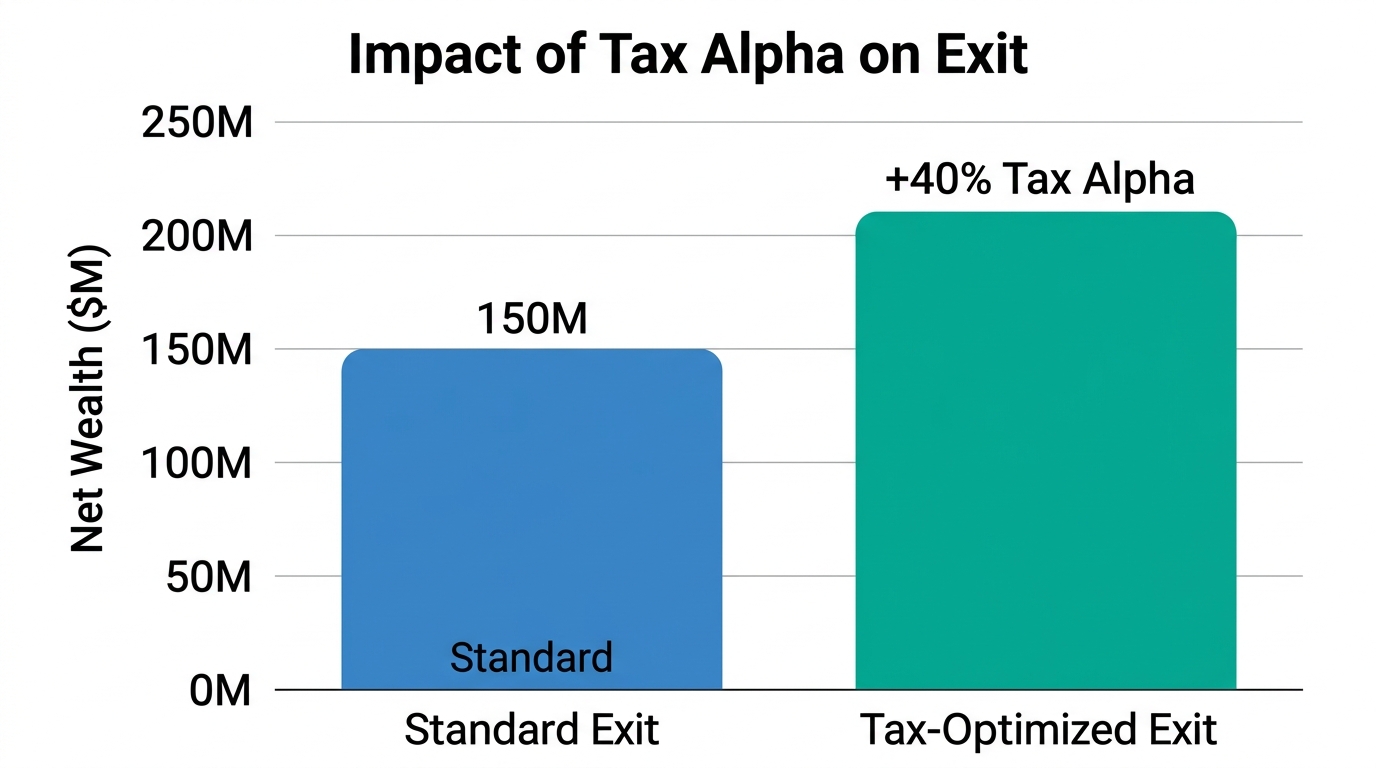
In 2026, founder exit strategies are incomplete without a plan for tax optimization. Nagpal’s deep dive into the Mega Backdoor Roth IRA and direct indexing via platforms like Frec highlights a shift in how the modern wealthy operate. Instead of looking for 20% returns in the market, they look for 40% tax savings, which acts as a guaranteed "alpha."
- Direct Indexing: Buying individual stocks to harvest losses while tracking an index. This can yield significant tax-loss harvesting benefits (e.g., $16k in losses on a $250k test).
- The Roth Strategy: Emulating the Peter Thiel model by putting low-value founder shares into a Roth IRA so that the eventual billions in growth are tax-free.
- Mega Backdoor Roth: Using a Mega Backdoor Roth IRA structure to get up to $77,000 per year into a tax-free growth environment.
By applying the same rigorous testing to his money that he did to his Teachable marketing strategy, Nagpal has secured his wealth for the long term. This level of financial literacy is now a requirement for any founder aiming for a nine-figure exit.
Conclusion: The Playbook for Future Founders
Scaling a digital product to a $250M exit in 2026 isn't about luck; it's about distribution-first thinking, relentless capital efficiency, and a deep understanding of the creator economy growth 2026 trends. Ankur Nagpal’s journey from viral quizzes to education and finally to fintech with Carry shows that the skills learned in the early "viral" days are the same skills needed to manage massive platforms and complex wealth.
If you are currently building, remember: your audience is your moat. Whether you're using Stormy AI to scale your influencer outreach or Shopify to handle your digital storefront, the goal is the same—own the distribution, solve a high-value problem, and optimize the exit before it even happens.