In 2026, the gap between the high-earning freelancer and the wealthy entrepreneur has never been wider. You might be a world-class designer or developer, command a high hourly rate, and still find yourself on a financial treadmill that stops the moment you stop clicking. The reality of the modern economy is simple: if you are renting out your time, you are capped. To build true wealth, you must pivot from selling services to owning equity. For creators, the most fertile ground for this transition is the Shopify ecosystem, where specialized skills can be productized into scalable digital assets.
The 'Maker' vs. 'Designer' Skill Trap: Why Freelancers Fail the Wealth Test
Understand the limitations of renting out your time for hourly design work.
Many talented professionals fall into the trap of mastering their craft but failing to master the rules of money. Building wealth requires more than just being good at your job; it requires one of the four essential money-making skills: selling, making, designing, or hunting. As Steve Jobs famously demonstrated, combining 'Designing' with 'Selling' creates a nearly invincible competitive advantage.
"The two most addictive things in the world are heroin and a monthly salary. You do not want to get hired to provide services where you're trading your time for dollars."
Even if you are a designer with impeccable taste or a maker who can build complex systems, you are likely failing the wealth test because you lack equity. In the 2026 market, high-demand Shopify business ideas are moving away from bespoke agency work and toward productized solutions. If you spend your days designing individual storefronts for clients, you are building someone else's equity. To win, you must take those same skills and bake them into a repeatable product like a Shopify theme or a SaaS app.
Identifying High-Demand Gaps in the 2026 Shopify Market
Success in productization starts with hunting—the skill of spotting mispriced opportunities or market gaps. In 2026, the Shopify market is no longer about generic templates. It is about hyper-specialization. Merchants are looking for tools that solve specific conversion problems or offer unique brand aesthetics that AI-generated themes can't yet replicate.
- Industry-Specific Themes: Instead of a 'General' theme, build a theme specifically optimized for high-ticket furniture or subscription-based supplements managed via Klaviyo.
- Micro-SaaS Apps: Small, single-purpose apps, often discussed on platforms like Indie Hackers, that fix a specific friction point in the checkout process using the latest Stripe integrations.
- Design-to-Code Frameworks: Tools that allow non-technical founders to maintain high design standards without hiring a designer for every tweak.
The 4-Step Framework: Turning Bespoke Work into a 'Code' Product
A look at the four crucial decisions that define your business transition.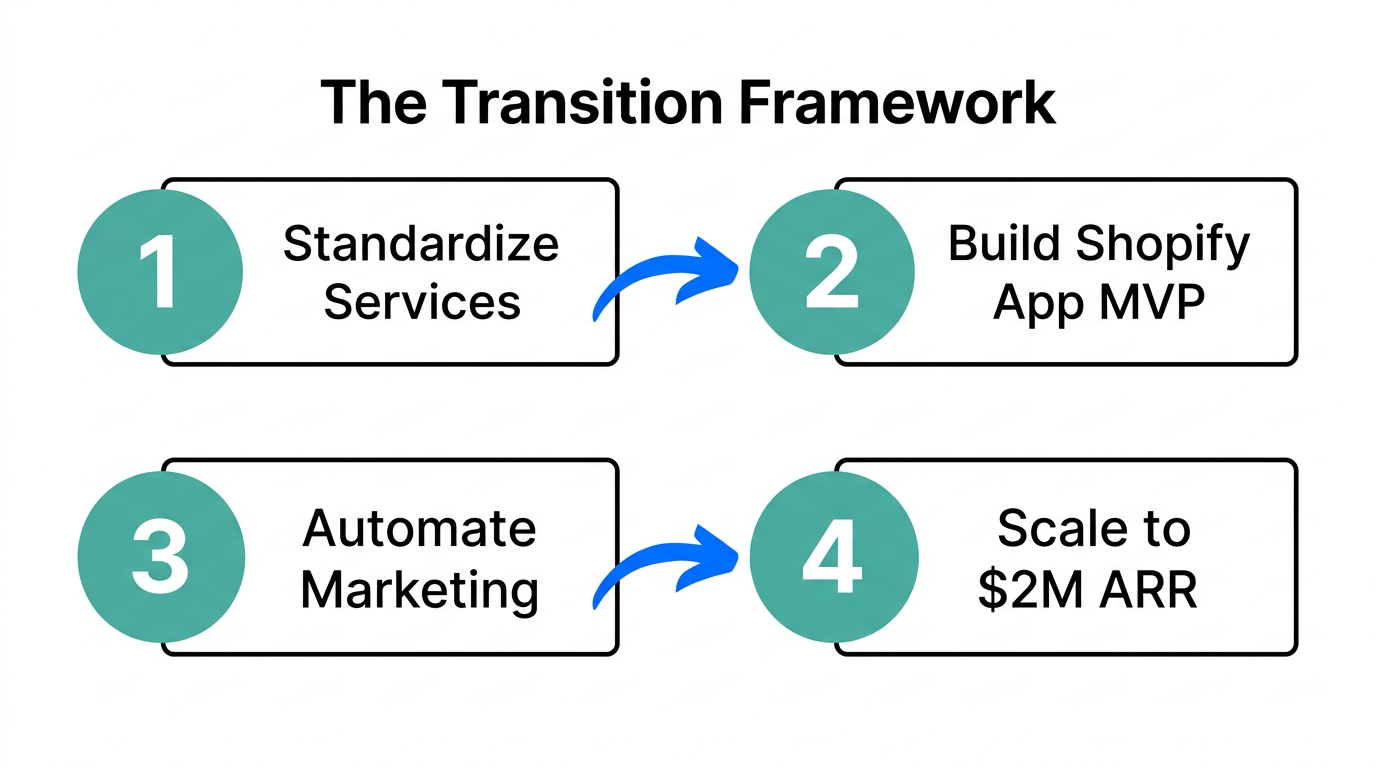
To stop renting your time, you must follow a deliberate path from service provider to product owner. This framework allows you to leverage your existing expertise into a scalable SaaS growth strategy.
Step 1: Master Your Money-Making Skill
You need at least two years of 'practice reps.' If you are a designer, don't just design; study the top producers. If you want to learn selling, go where sales are made and double the input of the top performer. As the research suggests, if the lead salesperson makes 100 calls, you make 200. This builds the fundamental muscle required to sustain a business.
Step 2: Identify Repeatable Client Requests
Look at your last 10 client projects. What did they all ask for? If every Shopify merchant you work with asks for a specific custom landing page layout, that is no longer a service—it is a product opportunity. This is how you transition from bespoke to 'Code.'
Step 3: Build the Asset (Code, Content, or Capital)
Instead of building a one-off site, build a Shopify theme that solves that repeatable problem. Now, you can sell that same theme to 2,000 customers instead of one. This is the difference between a $200k salary and a $2M annual recurring revenue (ARR) business. You are no longer trading hours; you are selling a digital asset.
Step 4: Be Patient with Results
You cannot plant a seed and dig it up the next day. As the comedian Steve Martin realized with the banjo, if you commit to a 40-year horizon, greatness is inevitable. However, in the SaaS world, you only need to get rich once. Be impatient with action (shipping updates, marketing, outreach) but patient with results.
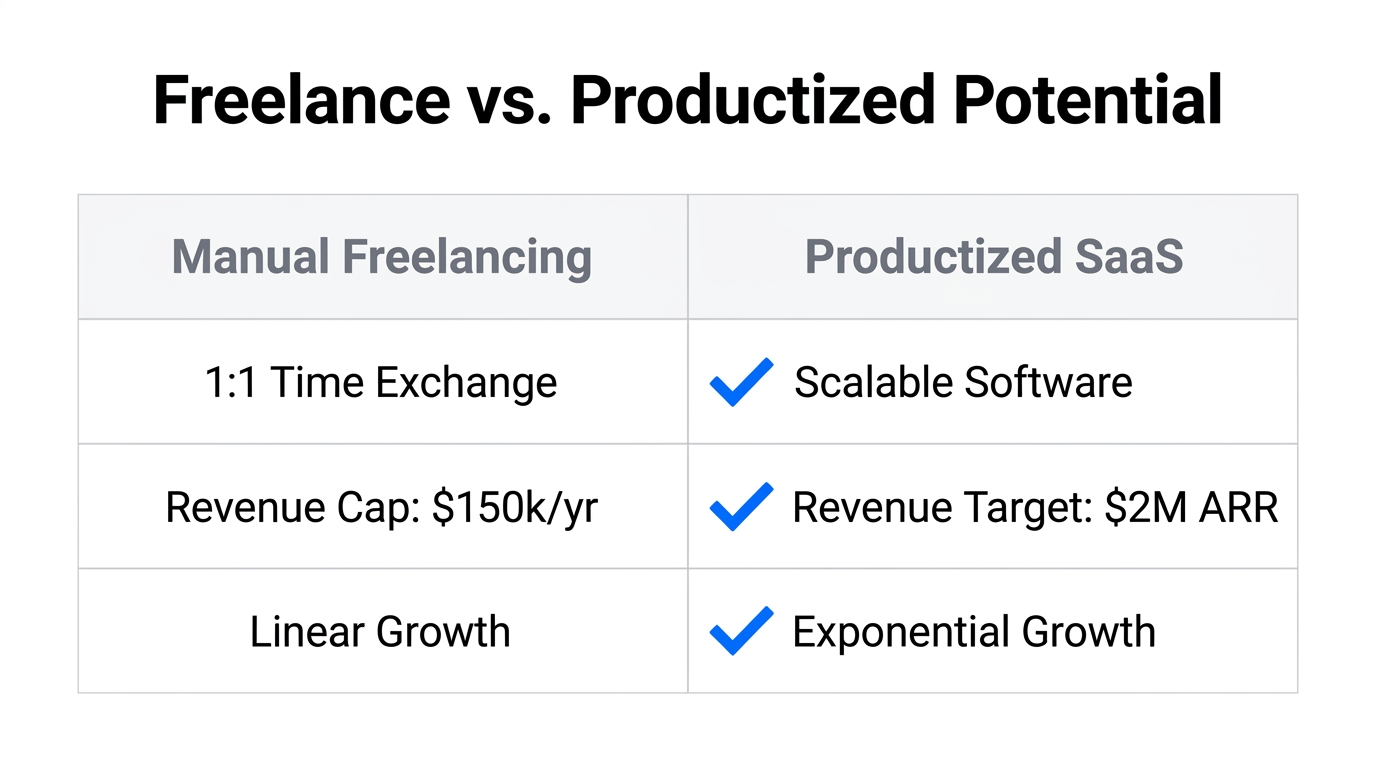
| Metric | Freelance Designer | Productized SaaS/Theme |
|---|---|---|
| Scalability | Linear (Hours = $) | Exponential |
| Asset Ownership | None (Client owns work) | 100% Equity |
| Marketing Effort | Continuous manual outreach | Automated distribution |
| Income Ceiling | Low (Capped by time) | Unlimited |
Marketing Your Product: Moving from Manual to Automated Distribution
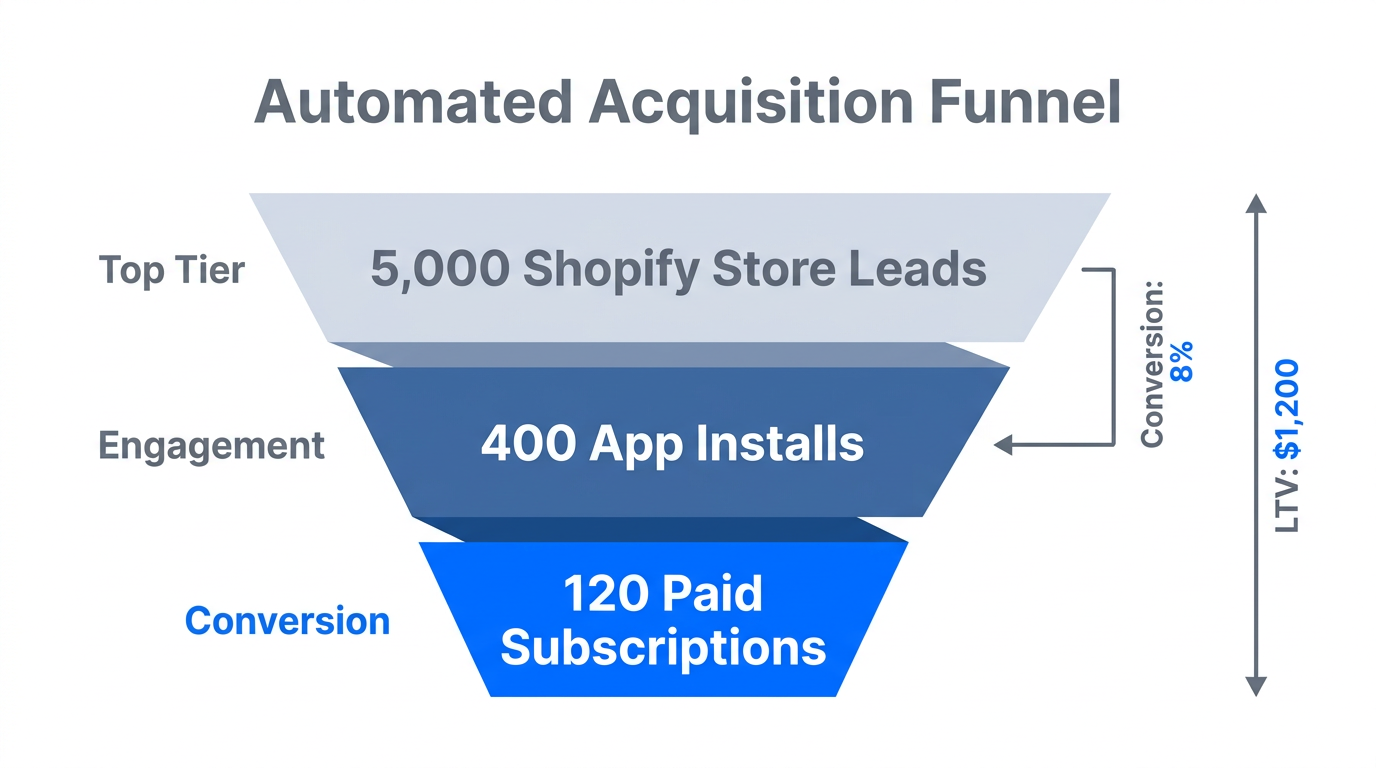
Once your product is live on the Shopify Theme Store or App Store, your job shifts from 'Making' to 'Selling.' In 2026, manual outreach is too slow. You need ecosystem distribution. Leverage content to build trust, much like MrBeast did with YouTube or how Naval Ravikant advocates for permissionless leverage.
To scale rapidly, you must reach the right influencers and partners who already have the attention of your target Shopify merchants. Platforms like Stormy AI allow you to automate this discovery and outreach. Instead of manually emailing potential partners, you can use an AI Agent to find creators in the e-commerce niche and manage your relationships at scale. This allows you to focus on product quality while the system handles the 'Selling' leg of your wealth-building journey.
"Be impatient with action and patient with results. That combination is an unbeatable killer."
Proximity is Power: Growing Your Network in 2026
Why your success is heavily influenced by the network of people around you.If you want to increase your odds of success, you must change your zip code—physically or digitally. Proximity is power. Being around other founders who are building on Shopify will help you avoid common mistakes through osmosis. In 2026, this means joining high-level mastermind groups or moving to tech hubs where the 'white-hot center' of action is happening.
When you surround yourself with 'killers' in the industry, your standards level up. If you stay in a room where you are the smartest person, you are in the wrong room. Move to where the most ambitious people are, and you will find that your $2M ARR goal is actually the baseline, not the ceiling.
Conclusion: From Hours to Equity
Scaling from a designer to a SaaS founder on Shopify is not a matter of luck; it is a matter of following the rules of money. By mastering a single money-making skill, refusing to rent out your time, and productizing your expertise into Code, you flip the odds from a 90% failure rate to 90% success. The 2026 e-commerce landscape is ready for designers who think like owners. Start building your equity today by identifying that one repeatable problem you can solve for thousands of merchants at once.