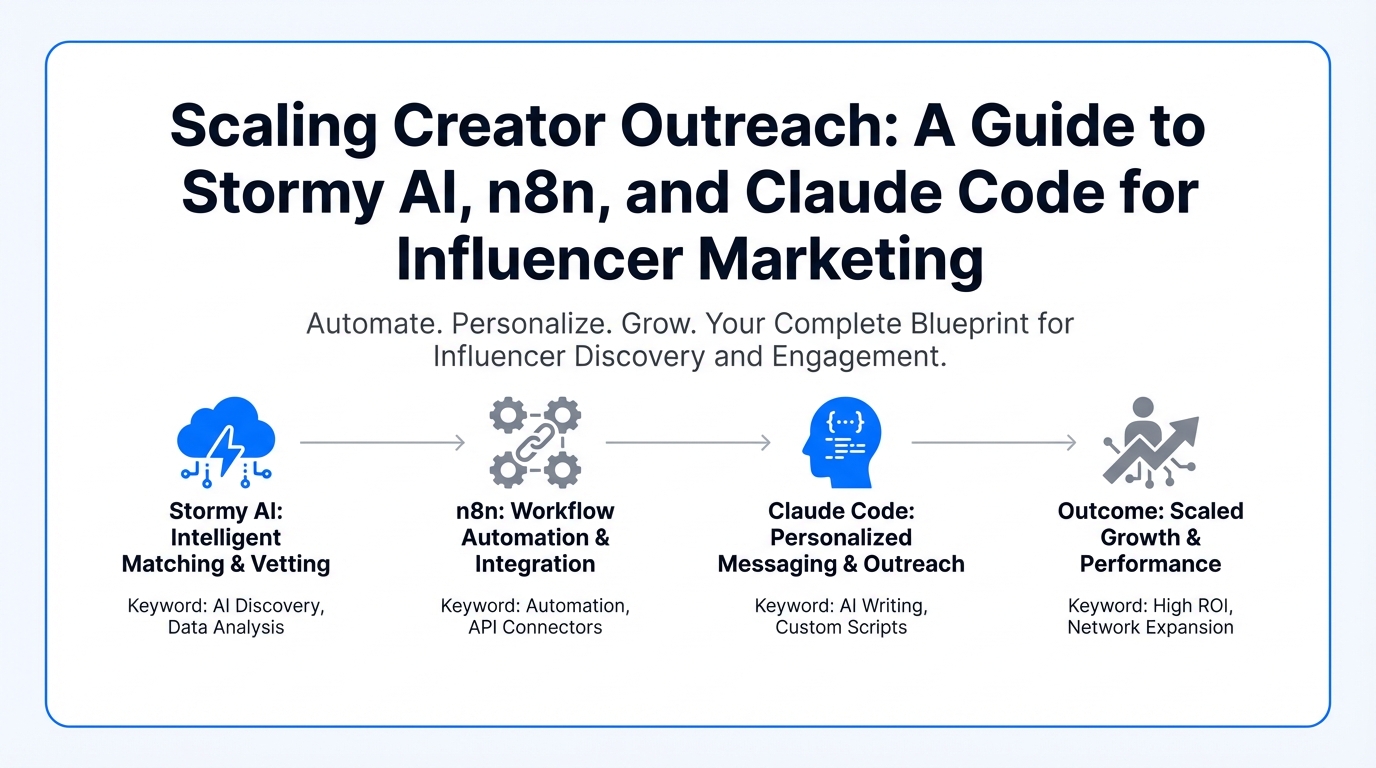
Imagine a scenario where a marketing team of three is replaced by a single, high-performing 58-minute workflow. In this new reality, niche research, landing page creation, and sourcing 50+ UGC (User Generated Content) creators happen simultaneously while you sip your morning coffee. This isn't a futuristic dream—it's the power of Agentic Marketing. By combining strategic reasoning, workflow orchestration, and specialized execution, brands are moving away from the manual grind and toward a scalable influencer marketing automation engine. The old ways of manual spreadsheets and one-off emails are being replaced by a cohesive stack: Stormy AI, n8n, and Claude Code.
The Shift to Agentic Marketing: Why 2025 is Different
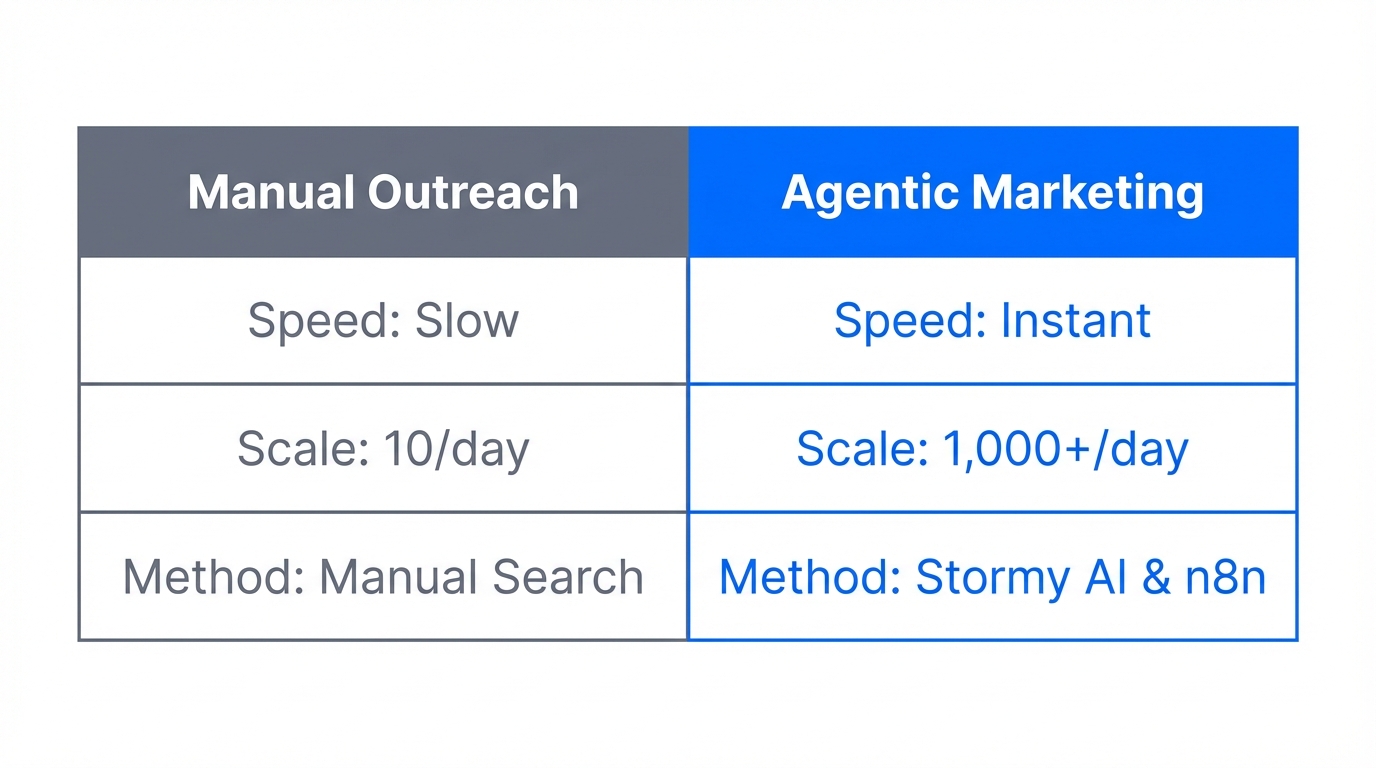
The marketing landscape has moved from simple efficiency to true autonomy. We are no longer just looking for tools that make us faster; we are looking for agents that can think, decide, and act. According to research from Flowlyn, 19.7% of marketers explicitly planned to deploy AI agents by 2025 to handle complex decision-making. This shift is driven by a massive ROI: businesses report an average return of $5.44 for every $1 spent on marketing automation, as noted by emailvendorselection.com.
However, simply buying tools isn't enough. Between 42% and 54% of AI initiatives failed in recent years due to integration issues and data silos. To avoid this "failure gap," you need a cohesive stack rather than isolated tools. Companies that successfully implement AI-powered automation see a 10%+ revenue boost within just 6–9 months, according to reports by McKinsey. The goal is clear: use creator outreach automation to bypass the manual labor and focus on the high-level strategy that moves the needle.
"The move from static automation to Agentic Marketing is the difference between follow-the-leader and building a self-correcting growth machine."
The Three Pillars of an Automated Influencer Stack
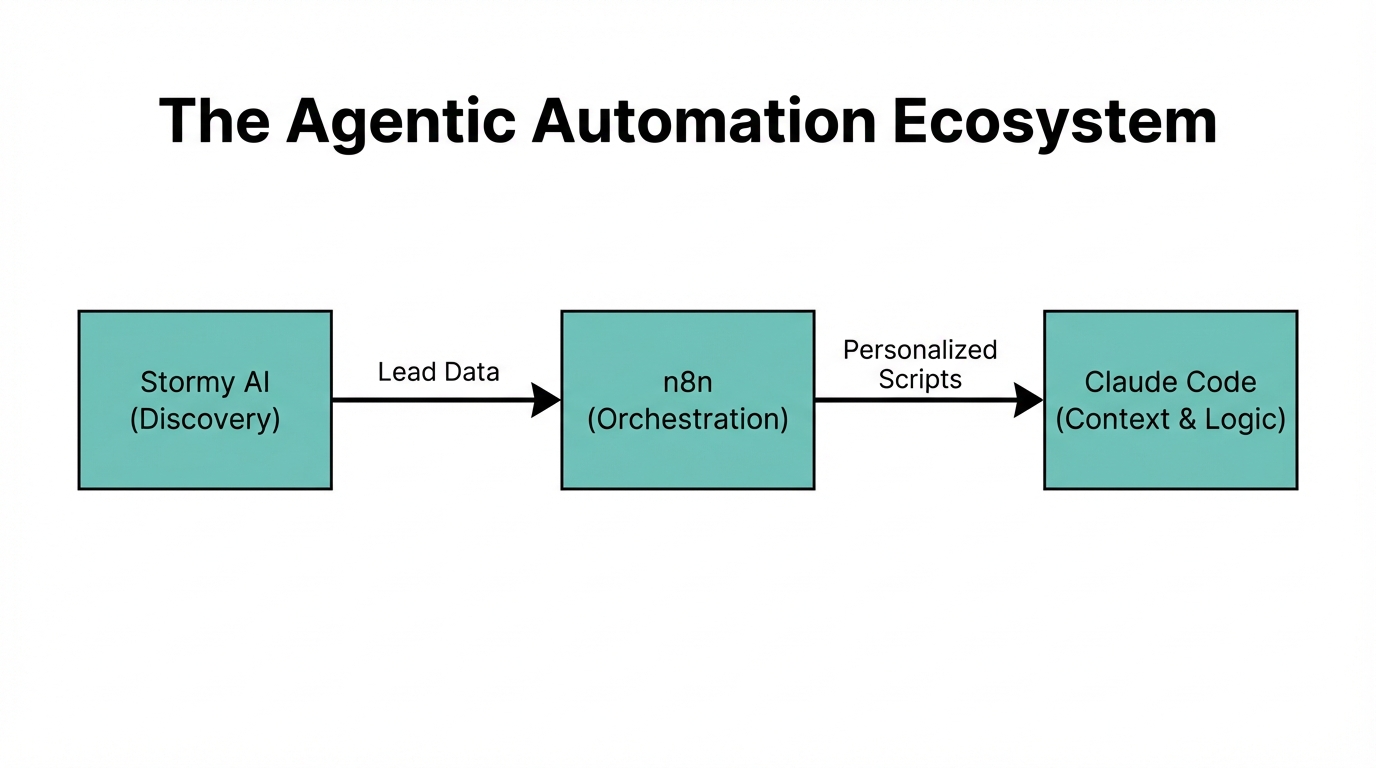
To build a world-class UGC marketing strategy, you need three distinct roles filled by your AI stack: the Strategist, the Nervous System, and the Executioner.
1. Claude Code: The Strategic Orchestrator
Claude Code is Anthropic’s command-line tool that allows Claude to interact directly with your local files and execute code. Unlike a standard chatbot, Claude Code can perform technical audits, build assets, and validate strategies in its "Plan Mode." This reduces hallucinations and ensures your strategy is grounded in reality before a single dollar is spent. By using the Model Context Protocol (MCP), Claude can connect to your CRM or Google Analytics to make data-driven decisions.
2. n8n: The Central Nervous System
n8n is an open-source workflow automation tool that serves as the glue for your entire stack. It doesn't just pass data; it uses AI Agent Nodes to "reason" through tasks. For example, it can analyze a creator's bio and decide if they are a high-value lead before passing them to the next stage. Companies like Delivery Hero have used n8n to save over 200 hours monthly per workflow.
3. Stormy AI: The Specialized Executioner
While Claude plans and n8n routes, Stormy AI executes. It is an end-to-end AI agent specifically built for influencer and creator marketing. It handles automated influencer discovery by scanning 10,000+ profiles daily across TikTok, YouTube, and Instagram. Most importantly, it performs autonomous negotiation, chatting with creators about rates and deliverables within your set budget, which replaces weeks of human back-and-forth.
| Feature | Manual Workflow | AI-Powered Stack |
|---|---|---|
| Discovery Time | 15-30 mins per creator | < 1 minute (Bulk) |
| Outreach Personalization | Templates / Generic | Hyper-personalized AI |
| Negotiation | 3-7 days of emails | Real-time Autonomous |
| Data Accuracy | Prone to human error | Direct API syncing |
The 4-Step Playbook for Automated Outreach
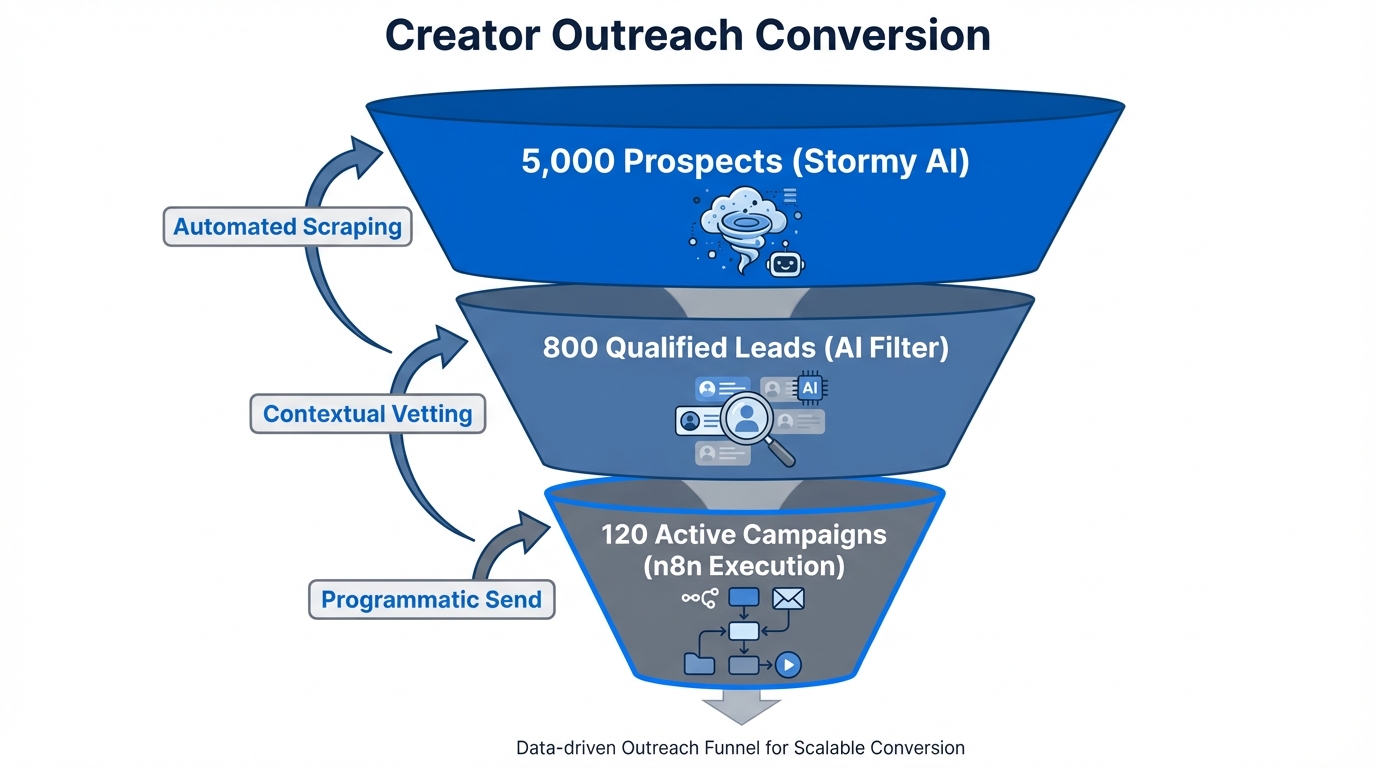
Ready to build? Follow this architectural pattern to replace a 3-person team with a single automated engine.
Step 1: Strategic Setup (Claude Code)
Start by initializing a project folder. Use Claude Code to generate a MARKETING.md strategy file and detailed brand guidelines. This ensures that every subsequent step—from the emails sent to the creators found—is aligned with your brand voice. You can also have Claude write custom Python scripts for niche scraping that generic tools might miss.
Step 2: Workflow Orchestration (n8n)
Build a trigger in n8n. This could be a new entry in Google Sheets or a lead from a landing page built in Framer. Route this data to an AI Agent node using Claude 3.5 Sonnet to score the lead. If the lead is an influencer, n8n triggers a webhook to your execution layer.
Step 3: High-Touch Execution (Stormy AI)
This is where the magic happens. Platforms like Stormy AI pick up the influencer lead, analyze their engagement metrics to ensure they aren't fraudulent, and begin a hyper-personalized outreach sequence. Because Stormy handles the initial negotiation, your team only gets involved when a deal is "warm" and ready for a final signature. This allows you to scale creator outreach automation without losing the human touch where it matters most.
Step 4: The Feedback Loop
Don't let your data die in a silo. Use n8n to pull performance data from your campaigns back into a central database like Airtable or Notion. Have Claude Code analyze this data at the end of the month to optimize your next batch of outreach. Context engineering is the secret to long-term success.
"The goal isn't to send 10,000 emails; it's to build 10,000 relationships. Automation is the only way to do that at scale."
How to Avoid the 'Context Death Spiral'
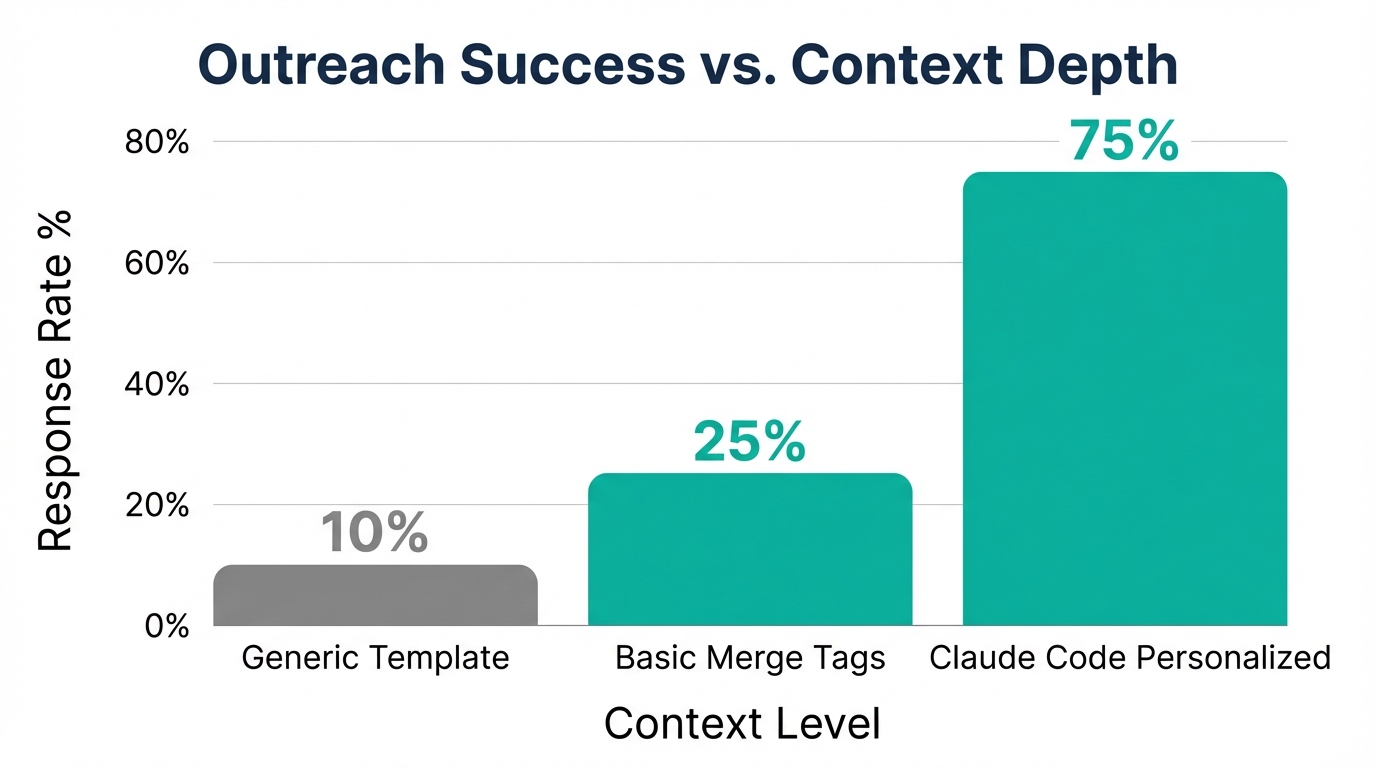
Many marketers fail because they fall into the "Context Death Spiral"—the act of manually copy-pasting data between ChatGPT, their CRM, and their email tool. This leads to fragmented information and generic outreach that creators ignore. To solve this, you must maintain persistent data across your stack.
Use Claude Code’s persistent file access and n8n's database nodes to ensure that if a creator mentioned they love hiking in 2024, your AI agent knows that during the outreach in 2025. Additionally, always implement Human-in-the-Loop (HITL) checks. Set your n8n workflows to "Wait for Approval" before high-risk actions like sending a contract or a high-value payment via Stripe.
As David Visser, CEO of Zyber, points out: "2026 is the year AI will finally handle the heavy lifting so marketers can focus on creativity and strategy." By building this stack today, you aren't just saving time—you are building a competitive advantage that manual teams simply cannot match.
The Future of Creator Management
The transition to influencer marketing automation is no longer optional for brands looking to scale. By leveraging Claude Code for strategy, n8n for orchestration, and Stormy AI for execution, you can transform your creator operations into a high-output machine. The focus must shift from prompt engineering to context engineering—ensuring your AI agents have the right data at the right time to make the right decisions.
Start small: automate your discovery process first, then move to outreach, and finally, autonomous negotiation. In the world of modern growth, the fastest to automate is the one who wins the market. Ready to find your first 100 creators? It's time to let the agents take the wheel.