The creator economy is undergoing a fundamental shift. We are moving away from a world where creators simply 'spray and pray' content across platforms, hoping for a viral hit. Today, the winners are those who build a robust content distribution strategy fueled by their own unique insights and personal research. However, the bottleneck has always been the transition from raw thought to polished output. Entering the mix is a high-performance duo: Obsidian and Claude Code. By pairing a bionically-linked 'second brain' with a command-line AI agent, creators can now automate the distillation of their best ideas into a high-output engine without losing their authentic voice.
The Foundation: Why Obsidian and Claude Code are Gamechangers
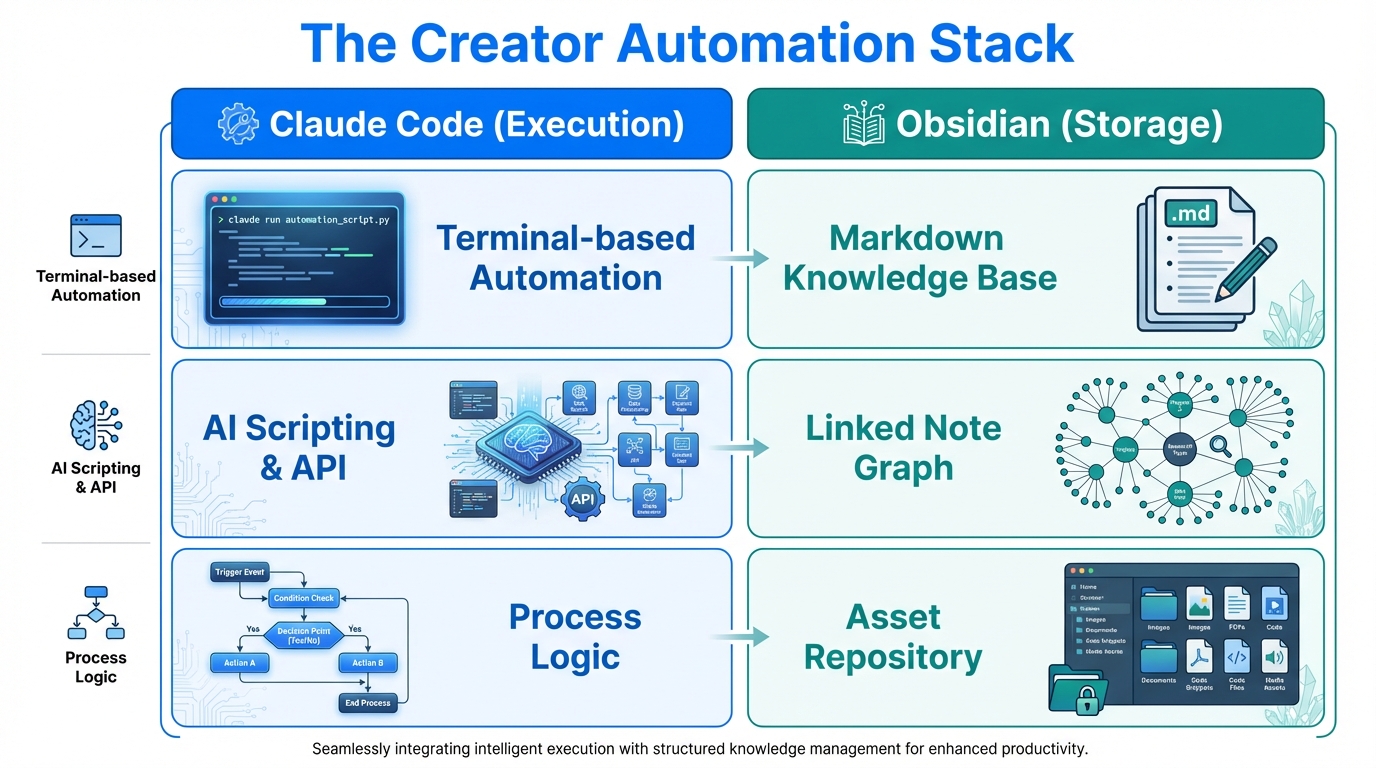
To understand how to scale, we must first look at the tools. Obsidian is more than a note-taking app; it is a collection of markdown files that sit locally on your computer. Unlike traditional cloud-based tools, it allows for 'bidirectional linking,' creating a web of inter-relationships between your thoughts. When you pair this with Claude Code—an AI agent that operates through a command-line interface (CLI)—you gain the ability to control your entire computer and local files through natural language. Using Claude Code, you can tell your AI to 'read all my notes on filmmaking and find a connection to my recent thoughts on SaaS growth,' and it will execute that search across thousands of files in seconds.
This combination is the 'alpha' in content marketing automation. While most creators are struggling with generic AI prompts in a web browser, those using a local vault are feeding the AI 'the oxygen' of their specific memories and preferences. As noted by industry experts, markdown files are the memories that allow an LLM to function not just as a generic assistant, but as a digital extension of your own mind. This is the secret to moving from basic reflection to actionable AI for creators workflows.
| Feature | Standard AI Web UI | Obsidian + Claude Code Vault |
|---|---|---|
| Context Depth | Limited to current chat history | Accesses years of personal notes and files |
| Voice Alignment | Requires repetitive prompting | Builds profiles from your historical writing |
| Pattern Matching | Generic across public data | Finds unique links between your specific niches |
| Execution | Copy/Paste required | Direct file manipulation and automation |
The 'Ghost' Command: Delegating Without Losing Your Voice
One of the biggest fears in the creator economy is that AI for creators will make content sound robotic or 'sanitized.' To solve this, creators are implementing the 'Ghost' command. This is a custom instruction set within Claude Code that builds a voice profile by scanning your entire vault. It analyzes your syntax, your unique vocabulary, and your common philosophical stances to ensure that any delegated content—whether it is a TikTok script or a LinkedIn thread—remains perfectly brand-aligned.
By using the Ghost command, you aren't just asking an AI to 'write a post.' You are asking it to 'answer this question the way I would, based on my past 500 daily notes.' This level of content marketing automation allows a creator to scale their output 10x while maintaining 100% fidelity to their personal brand. It effectively turns your Obsidian vault into a 'Style Guide' that evolves as you do.
"The quality of information that the agent has entirely determines what it can do for you. If it knows your memories, it becomes your most powerful delegate."The 'Trace' Method: Identifying Your Evergreen Pillars
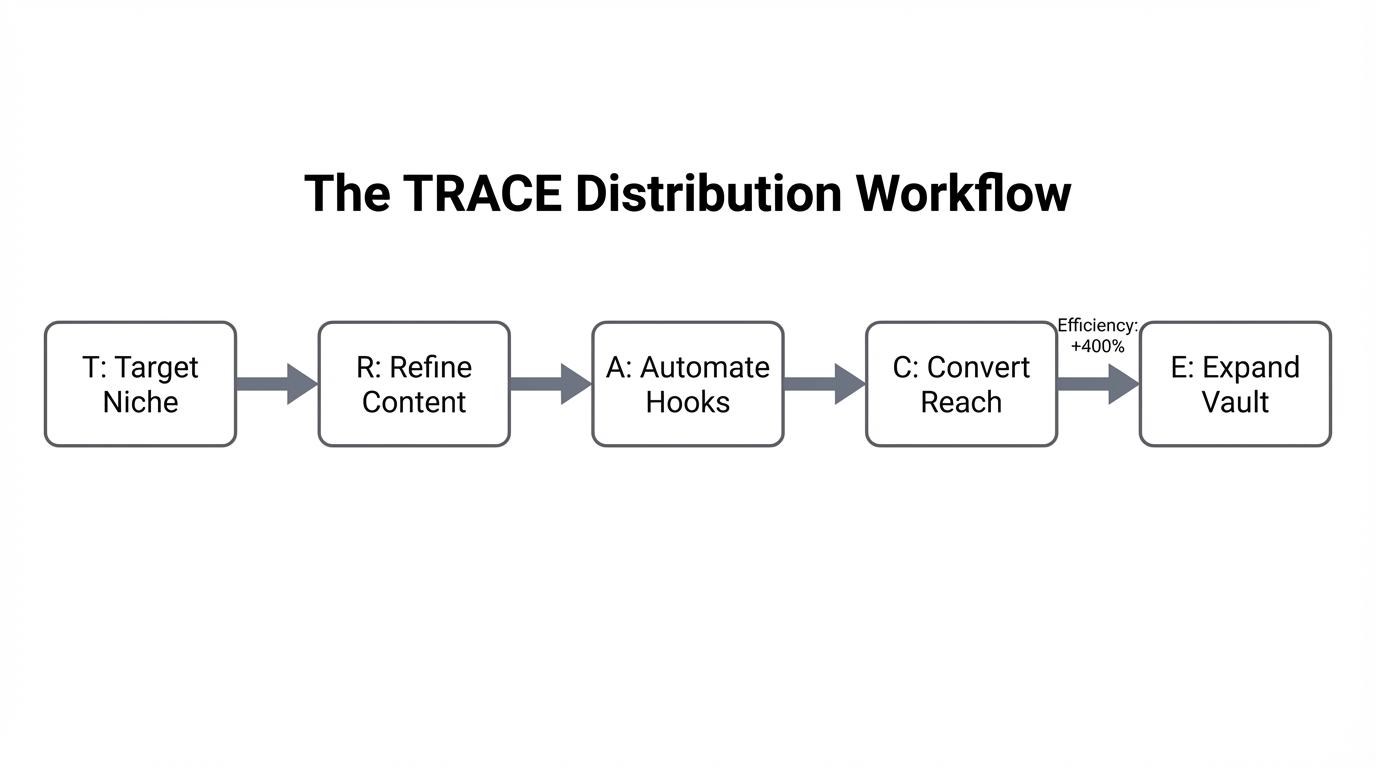
Great content distribution strategy is built on 'evergreen' topics—ideas that remain relevant and compound over time. The 'Trace' method uses Claude Code to track how a specific concept has evolved within your vault over months or even years. For example, you might trace your relationship with 'remote work.' Claude can scan your notes from 2022 to 2025, surfacing how your skepticism turned into adoption and eventually into a unique framework for productivity.
This allows creators to see their own intellectual history. Instead of guessing what to write about, you can use the Trace command to identify the content pillars that have the most 'gravitational pull' in your thinking. When you find an idea you have been unconsciously refining for three years, that is your high-signal content. You can then use tools like Canva to visualize these frameworks or CapCut to turn these refined insights into high-engagement video content, often organized using the Second Brain methodology.
Connecting Disparate Niches for Unique Hooks
The most viral content often comes from the intersection of two unrelated fields—think 'What Shawarma Shops Can Teach You About SaaS Retention.' In a standard folder system, these ideas live in isolation. In Obsidian, everything is connected. By using the 'Connect' command in Claude Code, you can force the AI to find the 'bridge' between two disparate folders in your vault.
For instance, you might ask Claude to find the link between your notes on 'Ancient Stoicism' and 'Modern User Experience Design.' The resulting 'bridge' becomes the unique hook for your next piece of content. This pattern matching is something humans find difficult to do at scale, but for an AI with access to your entire second brain, it is a trivial task. This is how you generate 'novel' ideas on tap, ensuring your content marketing automation never feels stale or repetitive. Platforms like Stormy AI can then help you find the right UGC creators or influencers who resonate with these specific, niche-crossing hooks to amplify your message.
From Daily Note to Content Pipeline: The Playbook
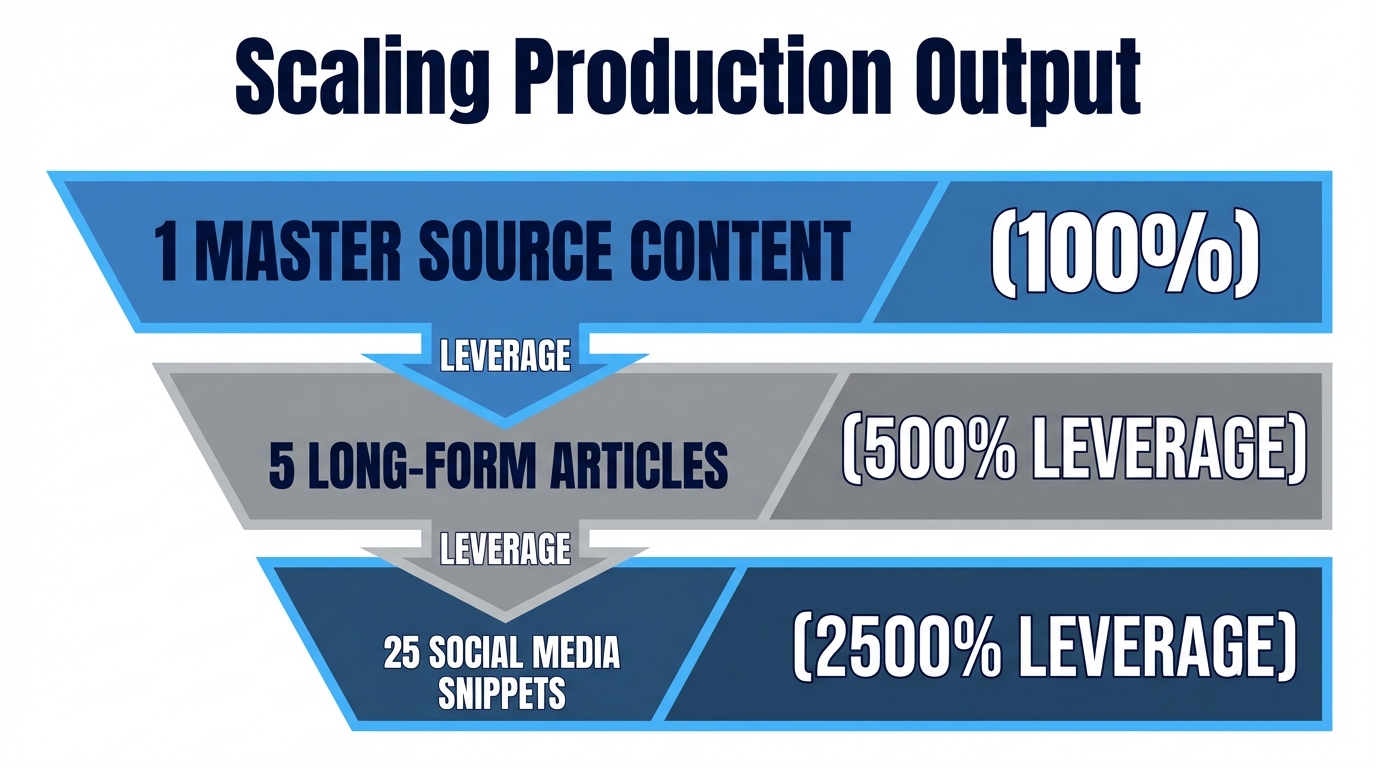
The 'Daily Note' is the heartbeat of many creators using Obsidian. It is a catch-all for reflections, meeting notes, and fleeting thoughts. However, these insights often die in the note. A strategic content distribution strategy requires a 'graduation' process. Here is how to automate that transition using Claude Code:
Step 1: The Daily Note Capture
Throughout the day, write raw reflections in your Obsidian Daily Note. Don't worry about formatting. Use it as a digital dump for everything from Meta Ads insights to personal philosophy.
Step 2: The 'Graduate' Command
Run a custom Claude Code command called '/graduate'. This script scans your recent daily notes for tags like #idea or #insight. It identifies concepts that have enough 'meat' to become standalone pieces and prompts you to promote them.
Step 3: AI-Powered Drafting
Once an idea is 'graduated,' Claude uses your vault context to write a 'Mini-Essay' version of the thought. This draft is stored in a 'Content Pipeline' folder, ready for distribution to TikTok, YouTube, or Beehiiv newsletters.
Step 4: Strategic Outreach
With your core insights refined, you can use modern tools to scale. For example, Stormy AI can help source and manage UGC creators who can take your refined 'Obsidian-born' scripts and turn them into high-performing ad creatives or organic posts at scale.
"The 'graduate' command turns a daily note stream into a structured idea pipeline, ensuring no high-signal thought is ever lost to the archives."Managing a Media Company Vault with AI
For those building larger brands, the vault shouldn't just be personal—it should be a collective intelligence for the team. Managing a 'Media Company Vault' involves creating context files for every project, guest, and campaign. When you have a dedicated file for a partner, like a structured CRM entry for creative context, the AI can help you prep for podcasts or sessions in seconds.
In this environment, the AI acts as a research assistant. It doesn't just pull data from the web; it pulls from your team's internal hypotheses and past successes. If you are planning a campaign for a new app, your vault can tell you which 'hooks' worked best in your 2024 Google Ads campaigns based on your internal performance notes. This AI for creators approach ensures that your media company isn't just reacting to trends, but is operating from a proprietary 'Knowledge Base' that competitors cannot replicate.
The Future of the Creator OS
The combination of Obsidian and Claude Code represents the early stages of a 'Personal OS.' By treating your reflections as data and your AI as a bionic delegate, you can scale your content distribution strategy to heights previously reserved for large media conglomerates. The 'alpha' is no longer in working harder; it is in building a better context for your AI to work with.
As you build out your vault and refine your commands, remember that the most important part of the process is the consistency of reflection. The markdown files you write today are the 'oxygen' for the AI-powered campaigns of tomorrow. Start small, build your 'Ghost' profile, and watch as your personal insights become a high-velocity engine for growth in the modern creator economy. For those ready to take their creator management to the next level, integrating these insights with modern influencer discovery and outreach platforms is the final step in a truly automated content empire.