In the high-stakes world of performance marketing, the biggest bottleneck isn't the budget—it’s the creative. For years, media buyers have been held back by the slow, manual process of designing, testing, and iterating on visual assets. However, the emergence of multimodal models like OpenAI's GPT-4o has fundamentally shifted the landscape. With over 800 million weekly active users reporting into SaaStr by early 2025, the platform has evolved from a simple chatbot into a powerful "Logical Architect" capable of driving high-volume ad prototyping at a fraction of the traditional cost.
The New Standard of Creative Efficiency
As we move through 2025, the competition in the LLM space has shifted from general capability to technical specialization. While SQ Magazine reports that OpenAI’s market share among enterprise businesses has stabilized around 25% due to the rise of niche competitors, GPT-4o remains the undisputed leader for multimodal creative automation. Its ability to natively generate images, analyze visual trends, and integrate with data APIs makes it the go-to tool for automated ad design.
Agencies like Monks have already proven the viability of these workflows, demonstrating that AI-led pipelines can slash production hours by 50% and reduce overall costs by up to 97%. By leveraging GPT-4o for digital marketing, brands are no longer limited by the capacity of their design teams; they are limited only by the quality of their prompts and the depth of their performance data.
Dynamic Creative Prototyping: The "Vibe-Based" Approach
Traditional creative production starts with a rigid brief. Dynamic Creative Prototyping, however, starts with a "vibe." By using GPT-4o’s native DALL-E 3 integration, marketers can generate dozens of distinct visual directions in seconds. This allows teams to explore conceptual "gaps" in the market that were previously too expensive to test.
According to The Vibe Marketer, GPT-4o acts as the "Logical Architect" of the creative process. While other models might excel at the emotional nuance of copy, GPT-4o is superior at understanding the structural requirements of a high-converting ad. You can feed it a product description and ask for 10 distinct visual styles—ranging from "minimalist tech" to "vibrant lifestyle"—to see which aesthetic resonates most with your target audience before ever opening Photoshop.
"ChatGPT thinks sharper; Claude sounds smoother. Use OpenAI for the internal logic like media plans and visual prototyping, then refine the emotional resonance elsewhere."
| Feature | OpenAI (GPT-4o) | Anthropic (Claude 3.5) |
|---|---|---|
| Primary Strength | Multimodality & Logic | Brand Voice & Empathy |
| Creative Role | The Architect (Structure/Design) | The Writer (Copy/Nuance) |
| Market Use Case | High-Volume Prototyping | Long-form Research |
| Best For | Data-Heavy Ad Ops | Landing Page Scripts |
Playbook: Generating 10+ Ad Variants in 10 Minutes
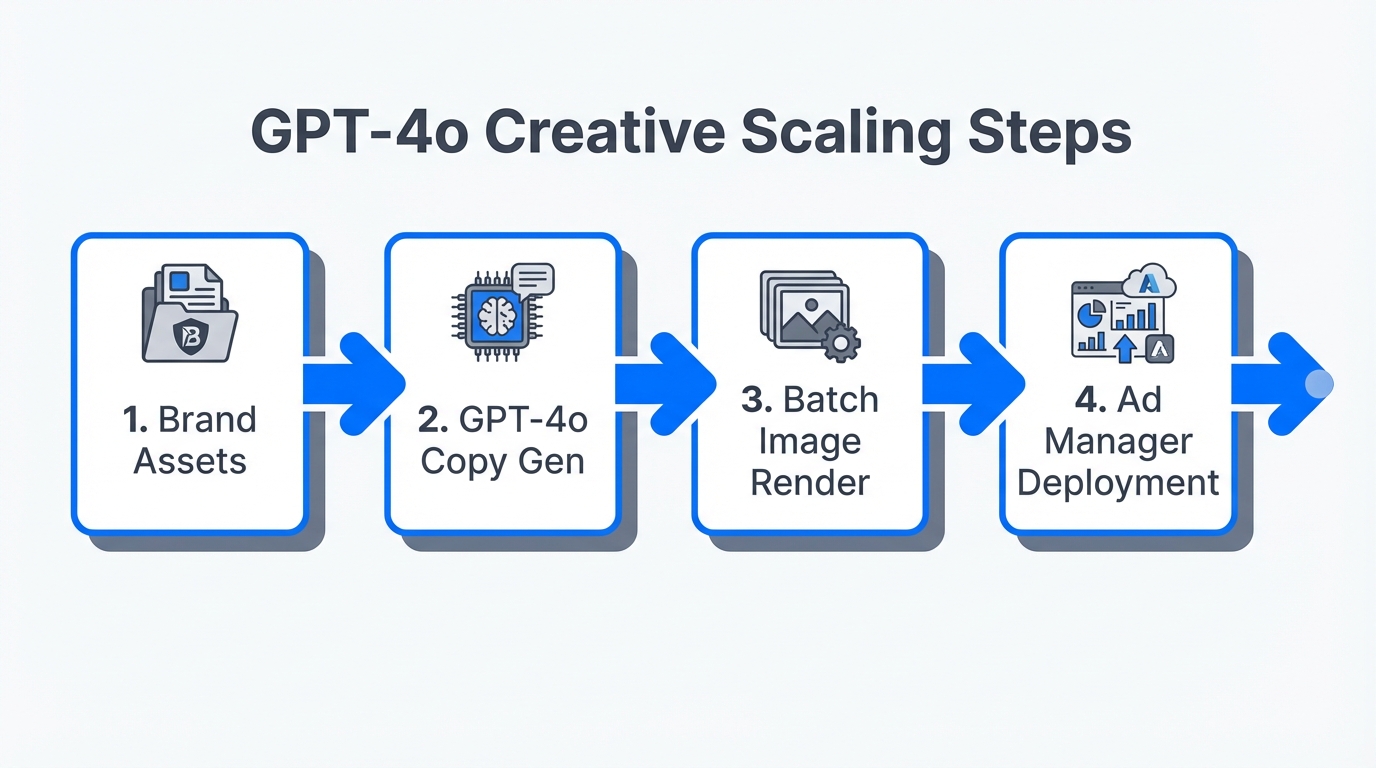
To truly achieve AI creative automation, you need a repeatable process. Follow this playbook to scale your creative output without increasing your overhead.
Step 1: Define the Creative Logic
Instead of asking for one ad, provide the model with your brand guidelines and target personas. Use a Custom GPT to ensure the model remembers your specific brand colors, font styles, and "anti-goals" (what your brand should never look like). This avoids the "Context Death Spiral" often found in one-off chat windows, as noted by Medium contributors.
Step 2: Generate Vibe-Based Mockups
Ask GPT-4o to create five distinct visual concepts for a single product. For example: "Generate a photo-realistic ad mockup for a wellness app, focusing on a 'serene morning' aesthetic with soft lighting and natural textures." Use Direct Agents' methodology of rapid prototyping to explore diverse visual hooks simultaneously.
Step 3: Integrate UGC Elements
While AI can generate the logic and static frames, the highest-performing ads often utilize authentic User-Generated Content (UGC). To source the human elements that ground these AI designs, platforms like Stormy AI can help you discover and manage creators who provide the raw footage that fuels your automation pipeline. Combining AI-generated backgrounds or overlays with real human faces is a proven strategy to maintain trust while scaling.
Data-Driven Iteration: Closing the Loop
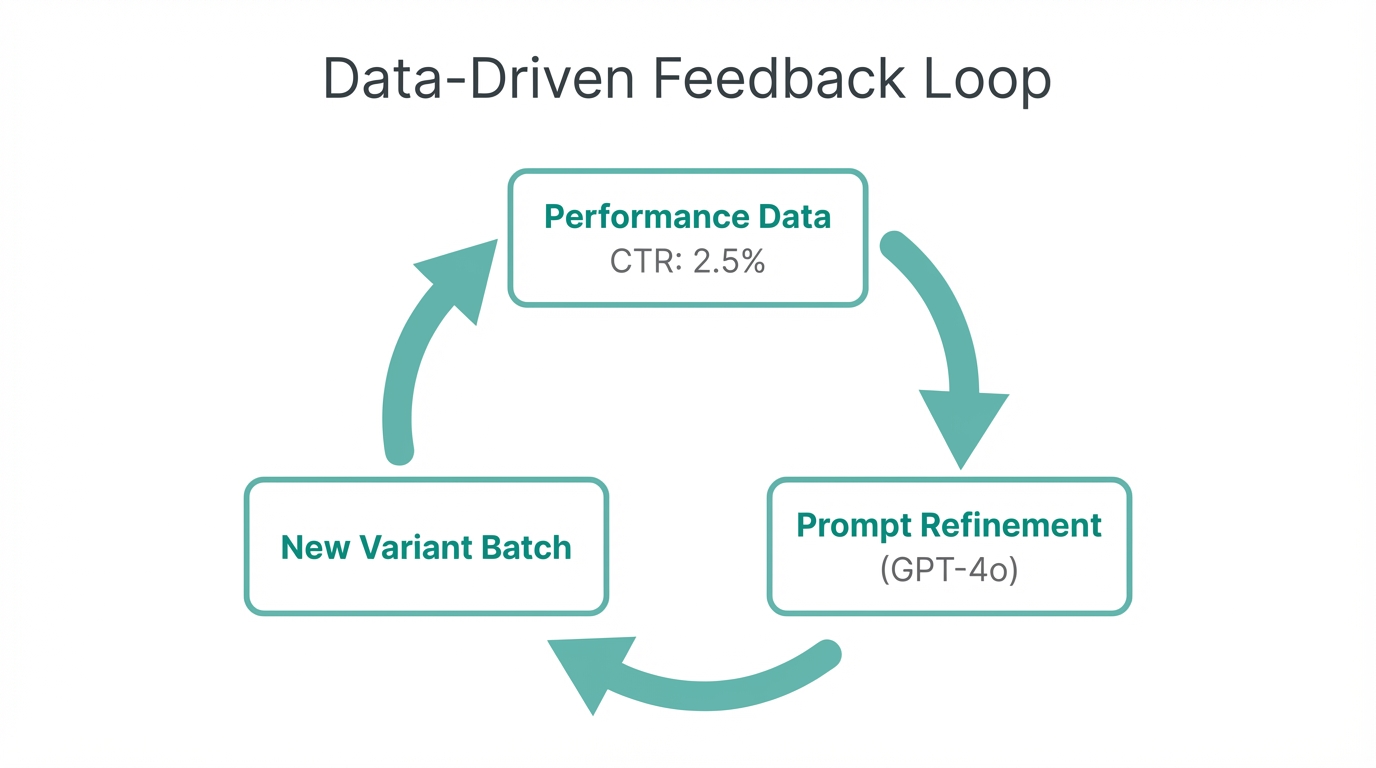
The real power of GPT-4o lies in its ability to learn from performance. Once your initial prototypes are live, the iteration process begins. Instead of guessing why an ad failed, you can feed performance metrics (CTR, CVR, CPC) back into GPT-4o to reduce cost per purchase with AI.
By treating the AI as a data scientist, you move away from subjective creative opinions and toward a mathematical certainty of performance. Platforms like AirOps allow teams to scale these workflows, turning a single successful insight into hundreds of automated variants.
Case Study: How Hatch Optimized Cost Per Purchase
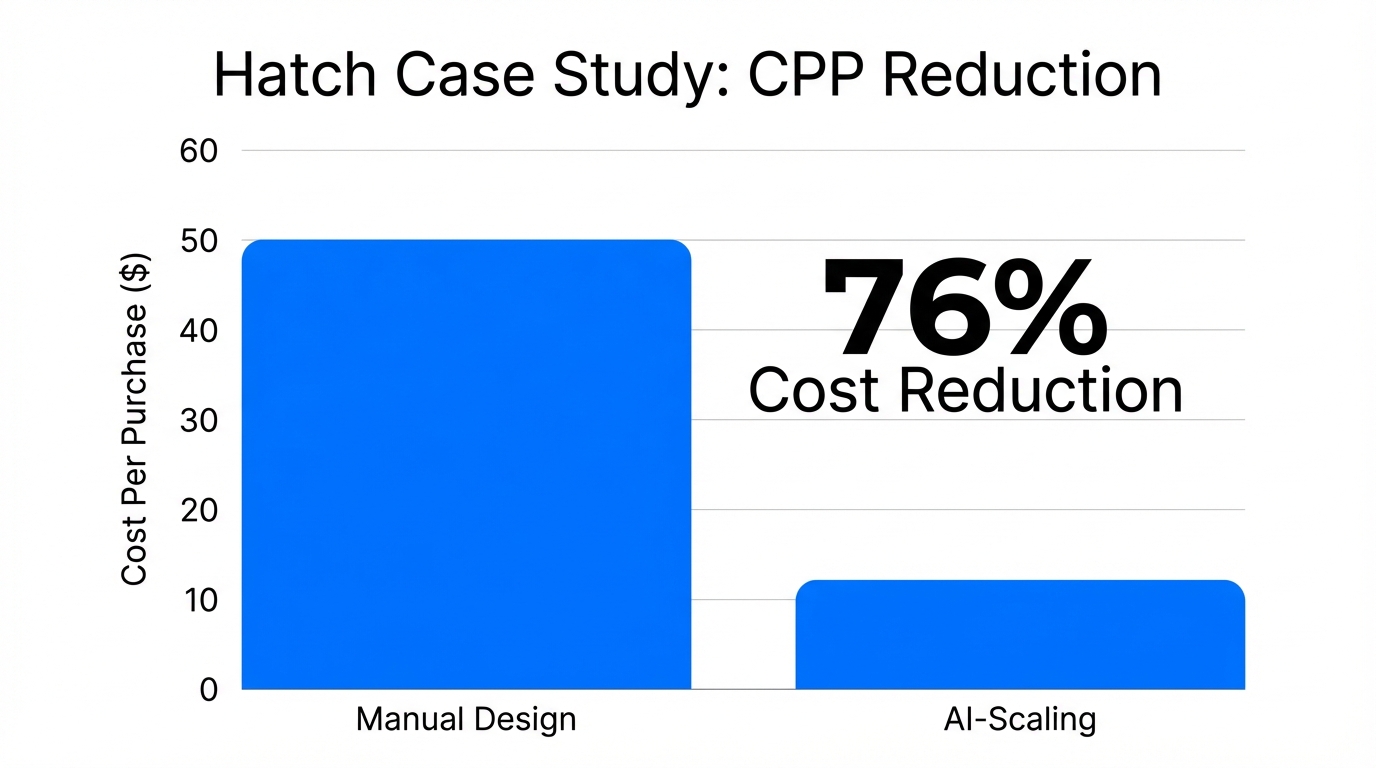
Hatch, a brand focused on sleep health, provides a perfect example of scaling ad creative with AI. By implementing an AI-driven creative pipeline, they managed to produce 60 distinct ad variants in a timeframe that would have previously allowed for only five.
According to research from Influencer Marketing Hub, this high-volume approach led to a 31% improvement in cost per purchase (CPP). The sheer volume allowed the algorithm to find winning combinations that a human team might never have tested. Furthermore, they cut production hours by 50%, allowing their internal creative team to focus on high-level strategy rather than resizing assets for different platforms.
"The future of media buying is not just about who has the better bid, but who can produce the most relevant creative at the lowest cost."
Pitfalls to Avoid in AI Creative Automation
While the potential for automated ad design is immense, it is not without risks. To maintain brand integrity, marketers must avoid the common trap of over-automation. As noted by CX Quest, AI should ideally get you to 80% completion; the final 20%—which includes empathy, nuance, and final compliance checks—must be handled by a human.
- Creative Hallucinations: Models can sometimes make "risky claims" about product benefits. Always fact-check AI-generated ad claims against your internal data as recommended by Optmyzr.
- Data Privacy: Never use free, personal AI accounts for sensitive enterprise data. Ensure you are using Team or Enterprise tiers to protect your intellectual property, a point emphasized by Landrum Talent Solutions.
- Brand Drift: Without a Custom GPT or "Project" context, the AI will eventually drift away from your brand voice. Use tools like Hunch Ads or dedicated brand assets to keep the outputs consistent.
The Future of the AI Creative Workflow
As we look toward the rest of 2025, the integration of AI-powered creator discovery and automated prototyping will become the industry standard. By using GPT-4o to handle the logic and visual structure, and platforms like Stormy AI to manage the human-centric UGC and influencer outreach, brands can build a "full-stack" creative engine that operates 24/7.
The goal is no longer just to make ads faster; it’s to make them smarter. By leveraging the 380% ROAS lift seen in similar AI-driven campaigns documented by AI Marketing News, it’s clear that those who embrace these high-volume prototyping workflows will dominate the auction landscape in the years to come.