Scaling a service-based agency from zero to monthly recurring revenue (MRR) within a single year isn't the result of a lucky viral moment; it is the byproduct of rigorous content operations and a refusal to succumb to shiny object syndrome. For introverted founders who prefer the keyboard to the stage, ghostwriting has emerged as a premier business model, allowing for high-margin scale without the need for a massive public persona. However, the transition from a solo freelancer to a legitimate agency owner requires a fundamental shift in how you manage your tech stack, your team, and your time.
By leveraging tools like Notion for centralizing data and Hypefury for automated scheduling, agencies can move beyond "tactic hunting" and into true implementation. This guide provides an operational deep-dive into the frameworks necessary to build a million-dollar ghostwriting business, focusing on the infrastructure that supports high-volume, high-quality output.
The Mindset Shift: From Solo-Writer to Chief Editor
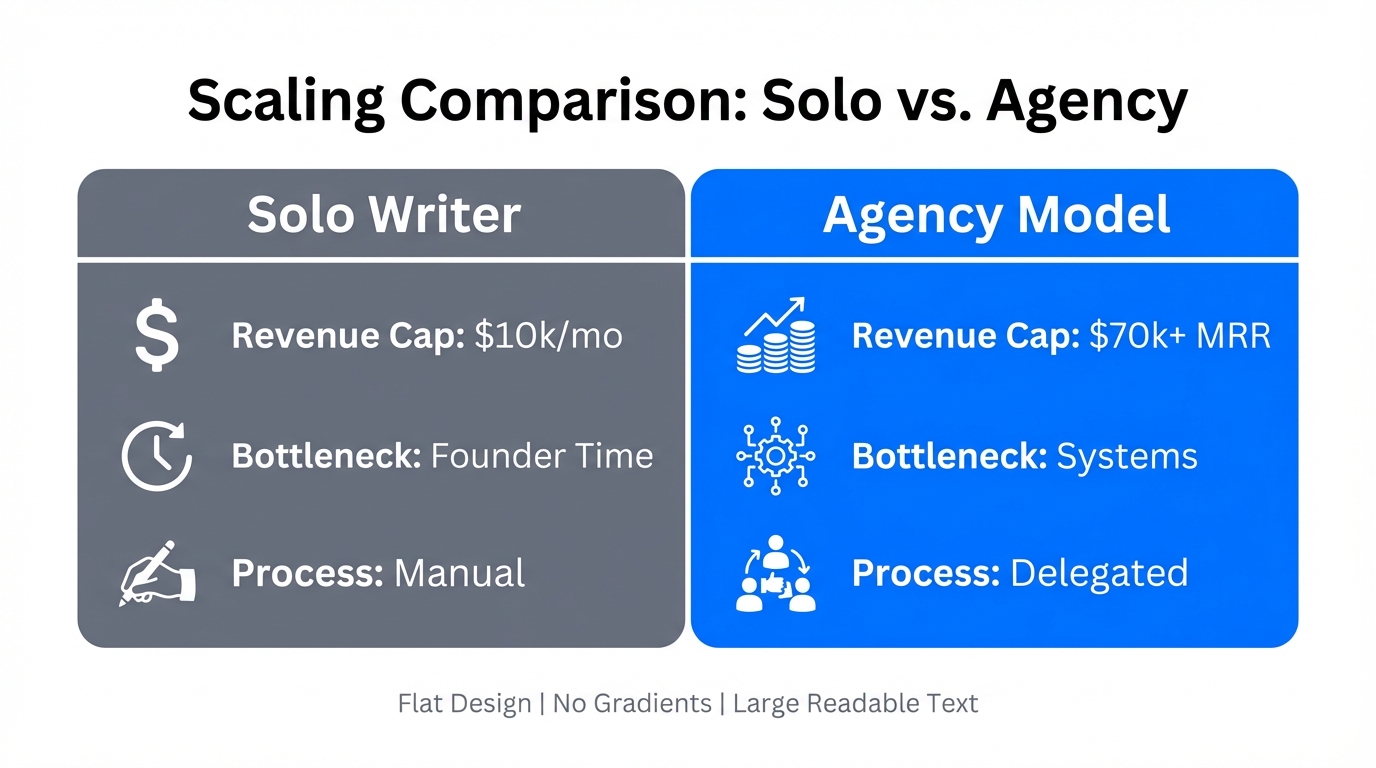
Most ghostwriters get stuck at the $10k/month ceiling because they remain the primary bottleneck in their own business. To scale beyond this, you must stop being the one who writes every tweet and start being the one who architects the system. As Marcos, the founder of the ghostwriting agency The Birdhouse, explains, the breakthrough happens when you decide whether you want to be a solopreneur or an entrepreneur. The latter requires building a real business under a real business name, which involves hiring a team to handle the heavy lifting while you transition into the role of Chief Editor.
In this model, your primary responsibility becomes maintaining quality control. Instead of staring at a blank page, you spend your time reviewing drafts from your writing team, refining the hooks, and ensuring the "monetization-first" strategy remains intact. This shift allows the agency to take on 15-20 clients simultaneously without the founder burning out, provided the backend is built on a solid foundation of Notion for business.
Hiring for Talent: The Vetting Framework
Finding high-quality writers is the most significant hurdle in scaling content operations. You cannot scale on your own pen, so you must find partners who can mimic various brand voices. The most effective way to source these writers isn't through traditional job boards, but through the platforms where they already hang out—namely, X (formerly Twitter) and LinkedIn.
"Think of your first hires as partners, not just employees. You are looking for people who vibe with your culture and have the raw talent to adapt to any niche."
The Writing Prompt Test
To vet talent effectively, skip the lengthy resumes and move straight to a practical test. The goal is to see how they handle a specific constraint. Follow this playbook for hiring:
- The Call-out: Post a public "we're hiring" notice on your primary social channel.
- The Filter: Ask candidates to submit their previous work or portfolio.
- The Prompt: Select the top 5 candidates and give them a specific assignment: "Write a 10-part Twitter thread based on this 20-minute podcast episode."
- The Selection: Evaluate based on hook strength, pacing, and the ability to simplify complex ideas.
By using a tool like Hemingway App, you can objectively measure the readability of their submissions. Aim for writers who can keep content at a 4th to 6th-grade reading level, as simplicity is the key to virality in the ghostwriting space.
Workflow Automation: Mastering the Hypefury Tutorial
Once you have a team, the challenge becomes delivery. Managing 10+ social accounts manually is a security nightmare and an operational drain. This is where a Hypefury tutorial becomes essential for every new hire. Hypefury allows agencies to manage client account access without ever seeing the client's password, which is a massive selling point for high-ticket CEOs and founders.
| Feature | Benefit for Agencies | Impact on Scale |
|---|---|---|
| Ghostwriter Access | Secure login without password sharing. | High Security |
| Auto-Retweet | Increases reach of winning posts automatically. | Higher ROI |
| Recurrent Slots | Automates the scheduling of evergreen content. | Time Savings |
| Thread Finisher | Auto-plugs a newsletter or product at the end of a thread. | Monetization |
A scaled agency uses Hypefury not just for scheduling, but for content repurposing. Senior writers can take a client's long-form YouTube video, break it down into five separate threads, and schedule them out over three weeks in less than an hour. This efficiency is what allows for 60% profit margins on a $70k/month revenue base.
Centralizing Operations: The Notion Business Brain
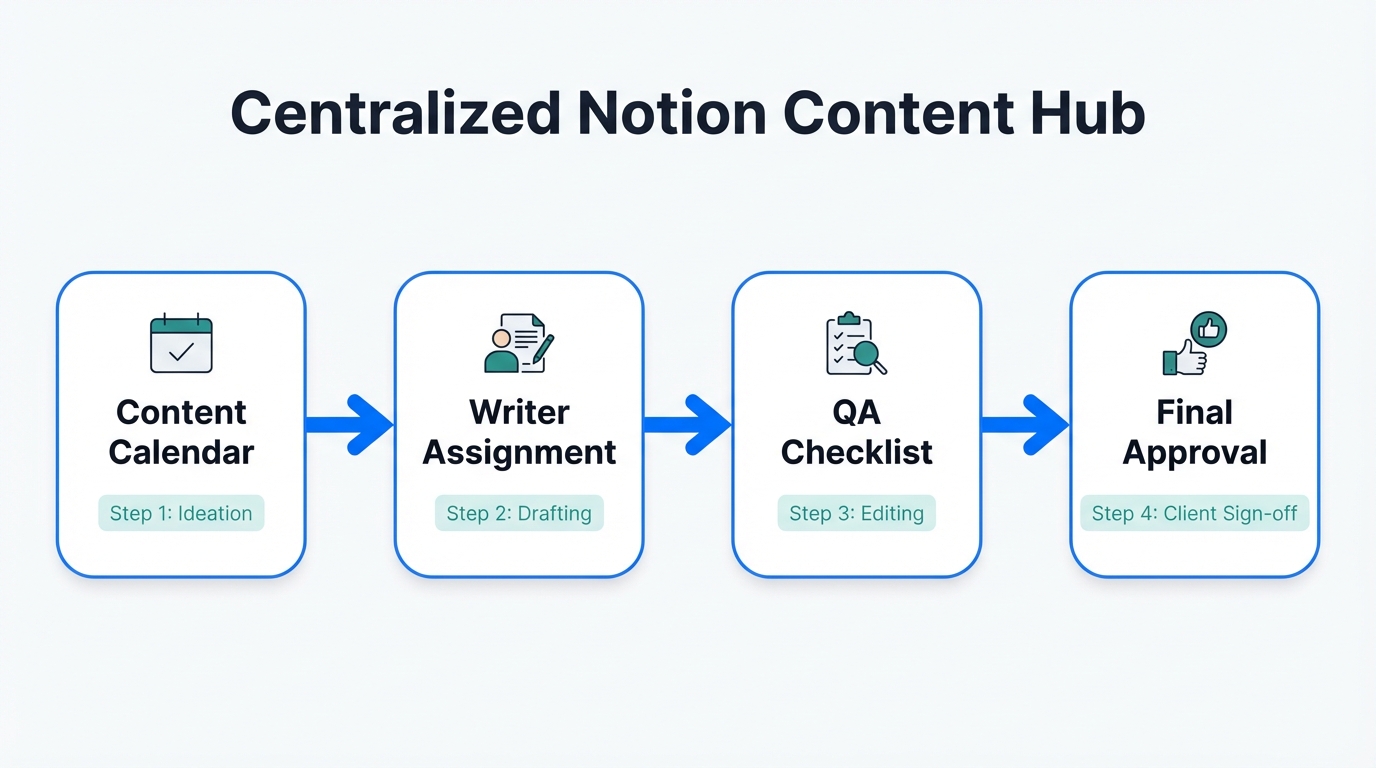
Without a central source of truth, a content agency will inevitably collapse under the weight of its own communication. Notion for business serves as the CRM, the content library, and the client-facing dashboard. A well-oiled Notion workspace should include three primary components:
1. The Client Hub
Each client should have a dedicated portal where they can view their upcoming content calendar, approve drafts, and track performance metrics. This reduces the need for constant Slack updates and keeps the relationship professional. Many agencies integrate their Notion hubs with tools like Zapier to automate notifications when a new draft is ready for review.
2. The Company Dashboard
This is for internal eyes only. It tracks the status of every piece of content in production—from "Idea" to "Writing" to "Chief Editor Review" to "Scheduled." Managing these content operations through a Kanban board view ensures that no client is ever neglected.
3. The CRM & Lead Tracker
Even at $70k MRR, the engine of the business is still lead generation. Tracking cold, warm, and hot DMs within Notion allows your sales representative to follow up consistently. As the agency grows, platforms like Stormy AI can be integrated into the workflow to help discover and vet potential brand partners or creators that might complement the ghostwriting service.
"If you don't track your outreach in a CRM, you are leaving thousands of dollars on the table every month. Consistency in the follow-up is where the 3k/month clients are closed."
Team Structure: The Roles Needed to Scale
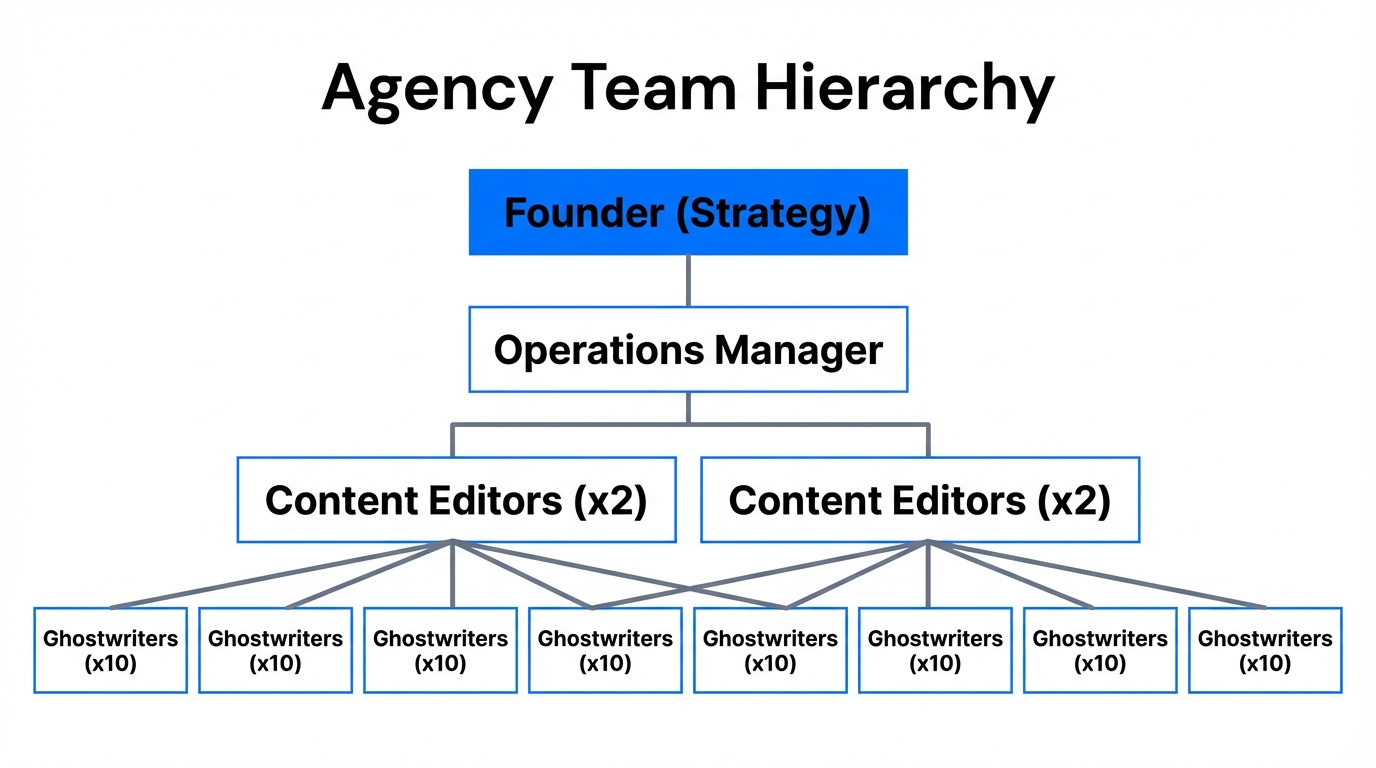
To reach a million-dollar run rate, you need a team that covers the entire customer journey—from acquisition to fulfillment. While a solo ghostwriter does everything, a scaled service agency typically follows this structure:
- Operations Manager: This is often the first and most important hire. They manage the internal systems, handle billing via Stripe, and ensure the writers are meeting deadlines.
- Senior Writers: Responsible for the high-level strategy and voice-matching for top-tier clients. They are the ones actually using the Hypefury tutorial frameworks to schedule content.
- Junior Writers: Handle the repurposing work—turning threads into LinkedIn posts or scripts for CapCut edited short-form videos.
- Sales Representative: Focuses entirely on the "Closer" framework—getting on calls and converting leads into paying clients.
If your agency also manages influencer partnerships or campaigns for clients, using an AI-powered discovery tool like Stormy AI can drastically reduce the time your Ops Manager spends on sourcing. By automating the search for creators that fit a specific niche, the team can focus on the creative strategy rather than manual vetting.
Maintaining Quality: The Chief Editor Protocol
The biggest fear of any agency owner is that a writer will post something off-brand that damages a client's reputation. To mitigate this, implement a Chief Editor Protocol. This means no content goes live without being moved to the "Approved" column in Notion by either the founder or a trusted Senior Editor.
On specific days—for example, Tuesdays—the CEO should have a blank calendar dedicated entirely to deep-work editing. They review the week's worth of content for every client, checking for rhythm, punchiness, and monetization alignment. This ensures that while the production is outsourced, the soul of the content remains at a world-class level.
Conclusion: Building the Implementation Flywheel
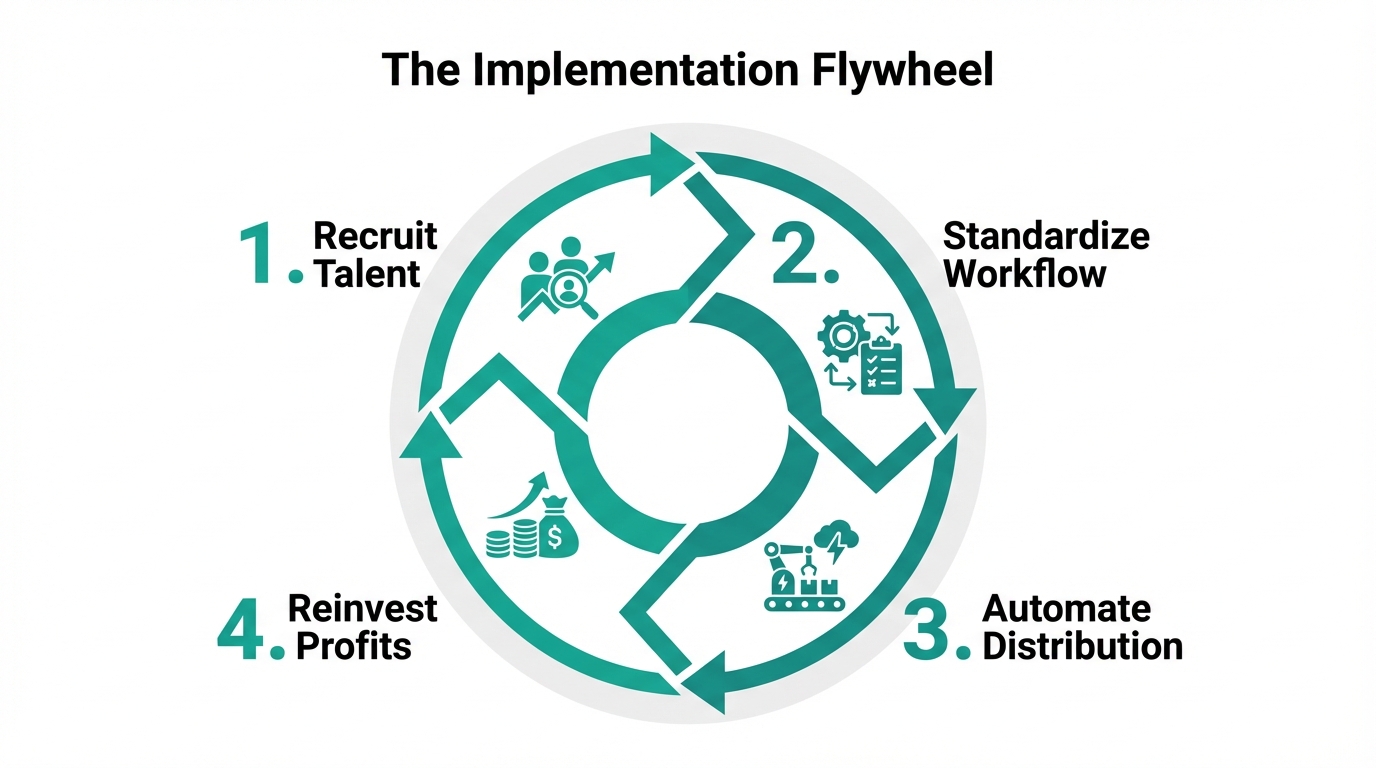
Scaling a ghostwriting agency is a game of discipline. It requires moving from the erratic energy of a "tactic hunter" to the steady execution of an implementer. By centralizing your content operations in Notion, automating your delivery with Hypefury, and building a specialized team, you create a flywheel that compounds over time.
Remember, the goal isn't just to get followers; it's to provide a done-for-you monetization service. If you can make a client more money than they pay you, you will have a client for life. Start by perfecting your own personal brand, then use that as the case study to land your first $3k/month client. From there, it's just a matter of following the framework and refusing to quit when the shiny object of a new business model inevitably appears.