In 2026, the barrier to creation has effectively vanished. With 200,000 new vibe coding projects being launched every single day on platforms like Lovable, the digital landscape is flooded with high-quality products. But as supply explodes, the premium on attention has reached an all-time high. If you build it, they will no longer come. In this era, the most successful founders aren't the ones who can write the best code—it's the ones who can build the most robust social media distribution engine.
The traditional hierarchy of Silicon Valley has been flipped on its head. In 2014, engineers were the untouchable elite; by 2026, distribution people sit at the very top of the startup food chain. Today, we are exploring a technical marketing playbook to turn a single 30-minute voice memo into a 50-channel distribution machine using AI content repurposing 2026 techniques and tools like Claude Code.
The 2026 Hierarchy: Why Distribution is the Only Remaining Moat
In the past, proprietary code was the moat. Today, code is a commodity. When anyone can describe a product to an LLM and have it functional by lunch, the value shifts to who has the audience to actually see it. Consider Peter Levels, who generates over $3 million in annual revenue with zero employees. His success isn't just because he builds useful directories like Nomad List; it's because he has spent years building a distribution moat with over 750,000 followers and elite SEO.
| Era | #1 Priority | #2 Priority | #3 Priority |
|---|---|---|---|
| 2014 | Engineering | Product | Marketing |
| 2026 | Distribution | Product | Engineering |
Smart builders now start with distribution first. They grow a niche audience to 1,000 true fans, ask them what they need, and then vibe code the solution in 72 hours. This ensures a warm launch and immediate feedback loops. Without a social media distribution engine, your product is just a drop in an infinite ocean of noise.
"Distribution is the new code. While AI can build your product, it cannot build the trust, brand, and attention required to sell it. Those who own the channels own the market."
Creating 'Pillar Content': The Raw Ore of Your Distribution Factory
The biggest mistake in automated content marketing is trying to generate everything from scratch using AI. This leads to "slop"—content that feels hollow and robotic. To build a high-performance engine, you need high-quality raw material. This is what we call "Pillar Content."
Pillar content is a high-density, original piece of media that contains your unique insights, data, or personality. In 2026, the most efficient way to create this is through a 30-minute voice memo or podcast. It is significantly easier to speak your expertise for half an hour than it is to write a 3,000-word technical essay. This audio file becomes the "gold ore" that your AI engine will refine into dozens of different assets.
The 'One Pillar, Seven Channel' Framework
 25:51
25:51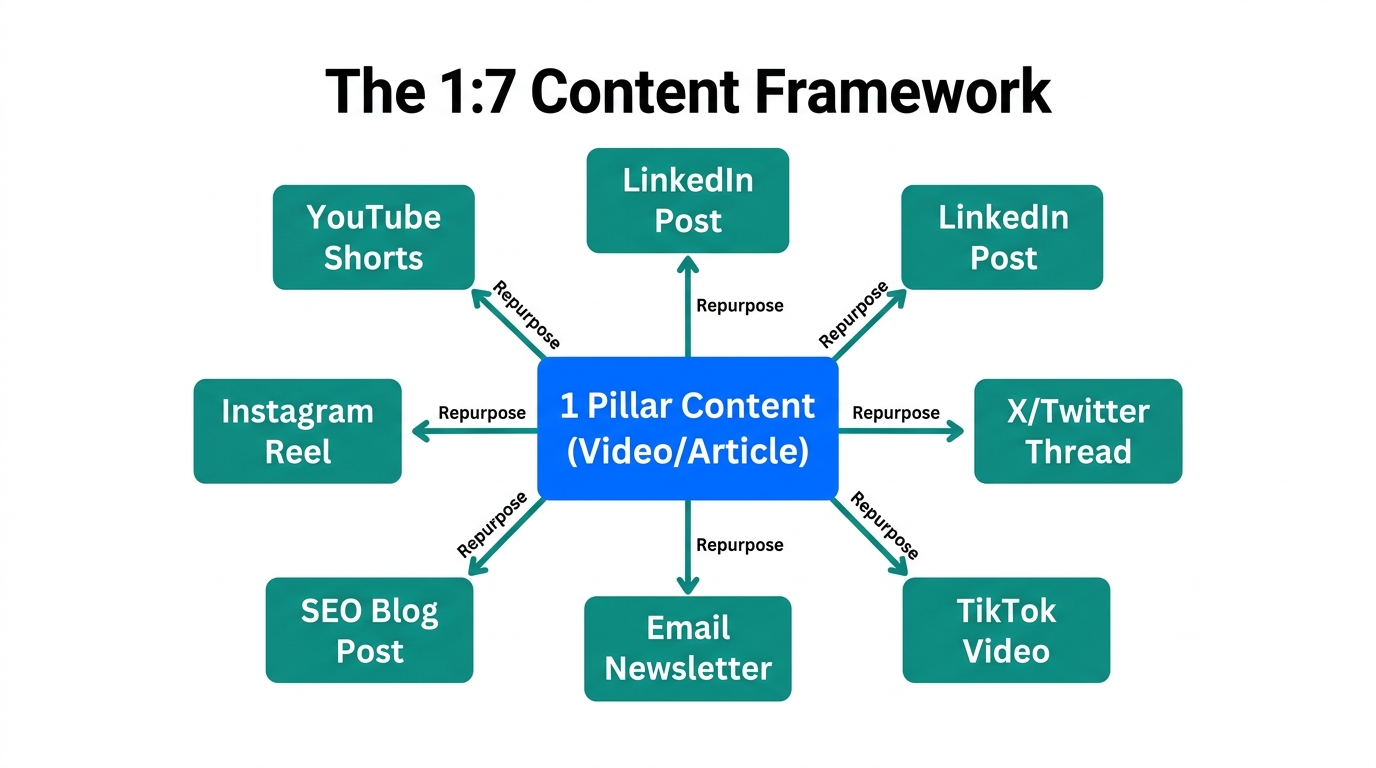
Once you have your 30-minute pillar piece, you need a system to deconstruct it. We use the One Pillar, Seven Channel framework to ensure maximum coverage with minimum manual effort. By feeding your transcript into a custom-tuned LLM, you can generate a week's worth of content in minutes.
The Distribution Matrix
- LinkedIn: 3-5 high-signal posts focusing on professional insights and frameworks.
- X (Twitter): 5-10 punchy threads and one-liners designed for virality.
- Newsletter: One comprehensive long-form edition summarizing the pillar content.
- YouTube Shorts/TikTok: 2-3 AI-edited vertical videos using key soundbites.
- Quote Graphics: 5-10 visual assets generated using creative LLMs like Midjourney or Canva.
- Email Sequences: Automated follow-ups for your CRM using Klaviyo or Instantly.
- Blog Post: A structured, SEO-optimized version of the transcript for your website.
By using this framework, you aren't just posting; you are building a multi-touchpoint ecosystem where your target customer sees your message across every platform they inhabit.
Building the Pipeline: Automating Video and Threads with Claude Code
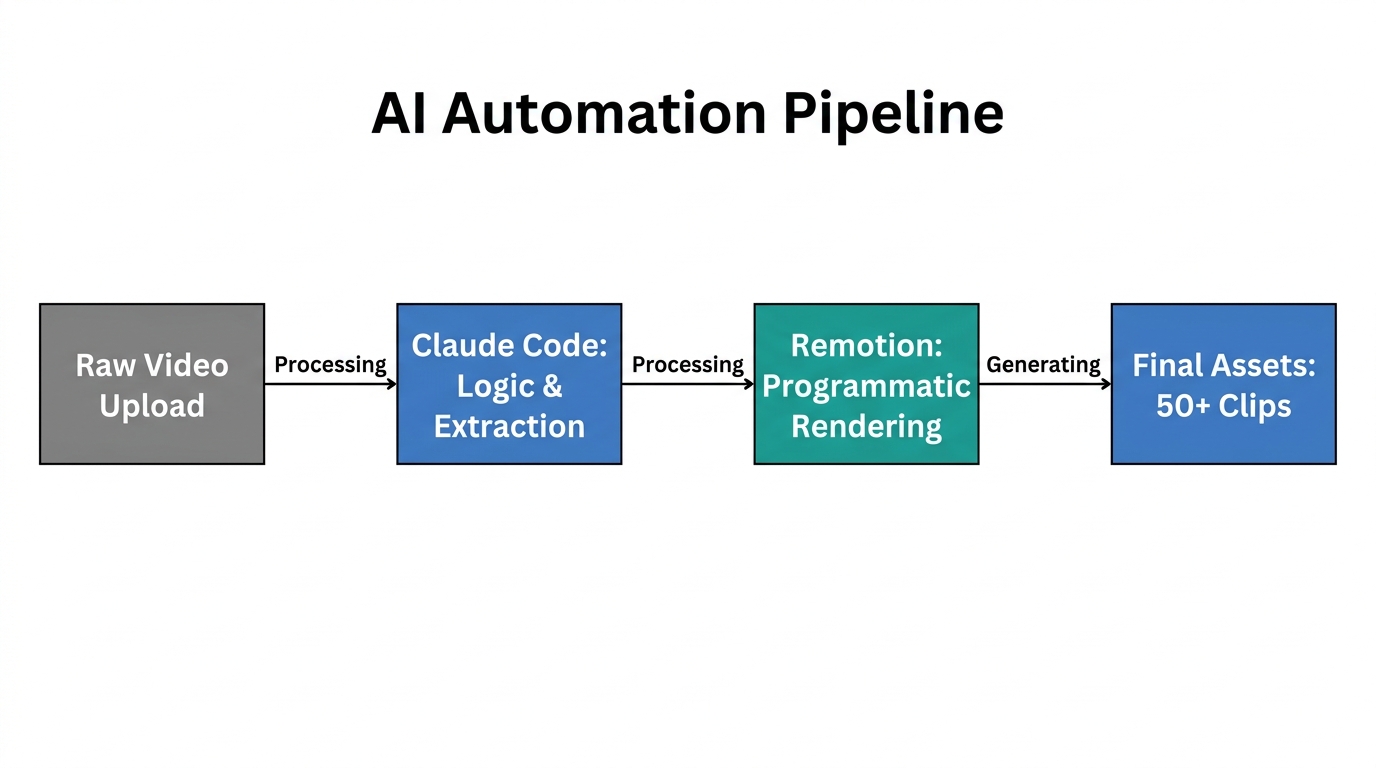
The technical breakthrough of 2026 is the ability to use Claude Code for creators. Unlike standard chat interfaces, Claude Code can interact directly with your file system and execute scripts. This allows us to automate the most time-consuming part of distribution: video editing.
By pairing Claude Code with Remotion—a framework for creating videos with React—you can programmatically generate short-form video content. You provide the transcript and the audio, and your AI engine identifies the most engaging hooks, adds captions, overlays relevant b-roll, and exports the final MP4 files.
Step-by-Step Automation Playbook:
- Transcription: Use Whisper or a similar tool to get a high-fidelity transcript of your pillar audio.
- Cloning: Pass the transcript to Claude Code with a specific prompt: "Identify the 3 most viral-worthy segments from this transcript and format them for Remotion."
- Generation: Run your Remotion script to render the video clips automatically.
- Copywriting: Have the AI generate the platform-specific captions, ensuring they don't feel like "AI slop" by providing brand voice reference documents.
For those looking to scale even further, incorporating influencer marketing automation via platforms like Stormy AI can help you find creator partners who can take these automated assets and distribute them to their own established audiences, multiplying your reach instantly.
"The 'Shots on Net' strategy isn't about being perfect; it's about being present. In the age of 'For You' pages, volume is the only variable you can fully control."
AEO: Optimizing for the 'Answer Engine' Era
6:33Traditional SEO is declining as zero-click searches grow. In 2026, you must prioritize Answer Engine Optimization (AEO). This means being the source that Perplexity and ChatGPT cite when a user asks a question.
To do this, your repurposed content must be citation-worthy. This involves using structured FAQ blocks, schema markup, and comparison tables that AI agents can easily parse. According to recent reports, AI-driven referrals have jumped for many founders from 4% to over 20% in a single month by simply restructuring their content for AEO. Tools like Otterly or Profound can help you monitor these citations in real-time.
Workflow Automation: Scheduling Cross-Platform Growth
The final step in your distribution engine is execution. You can now use tools like Claude Dispatch and Perplexity Computer to automate the actual posting and scheduling across platforms. By setting up an autonomous AI agent, you can ensure that while you sleep, your engine is discovering new niches, outreaching to potential collaborators, and following up on engagement.
This is where influencer marketing automation becomes a competitive advantage. While your engine handles the content, you can use Stormy AI to set up an AI agent that discovers and outreaches to creators daily on a schedule. This combines your high-volume content strategy with high-leverage human partnerships.
Conclusion: The Volume Advantage
28:52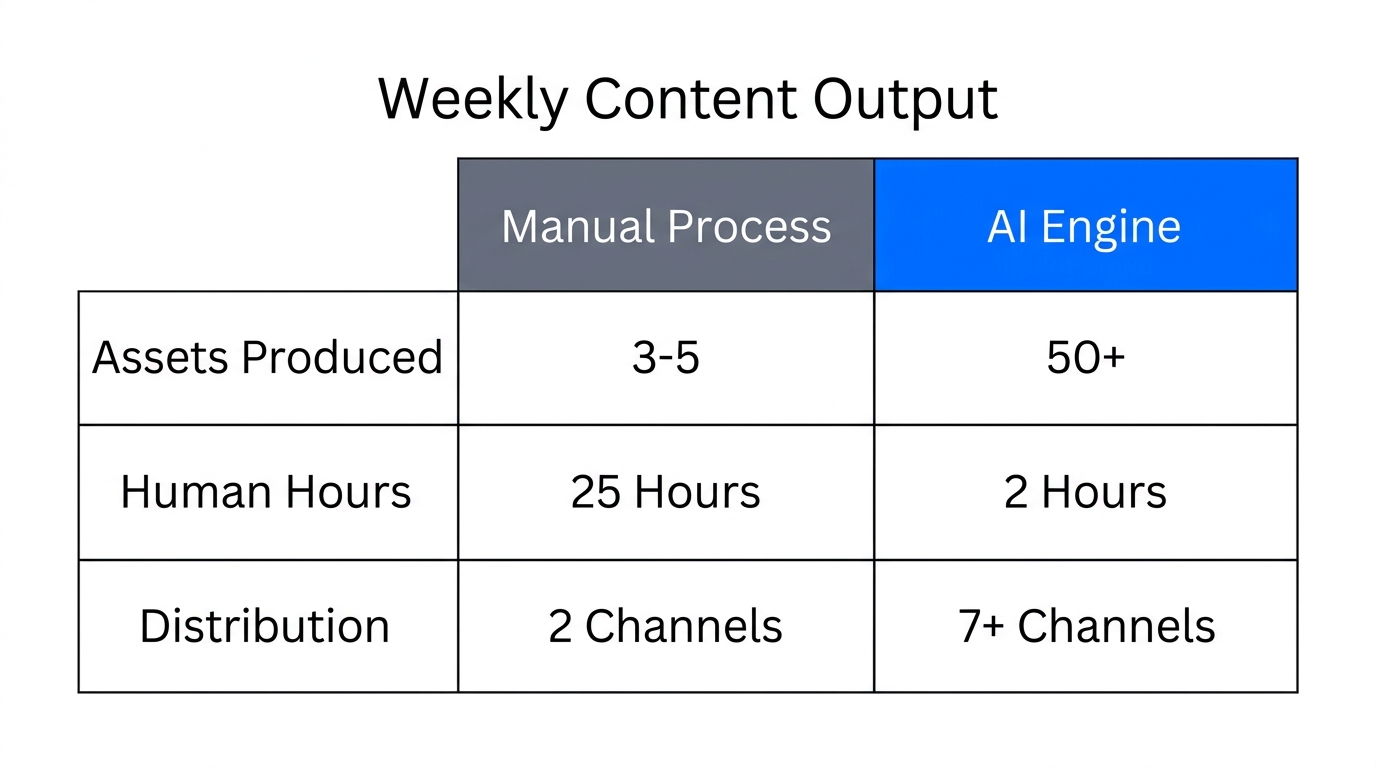
In 2026, the winner is not the person with the best code, but the person who takes the most shots on net. By building an AI content repurposing engine, you turn one hour of effort into 50+ touchpoints, ensuring that your product is seen, cited, and shared across the entire digital ecosystem.
The blueprint is clear: start with pillar content, automate the deconstruction with Claude Code, optimize for answer engines, and scale through autonomous distribution. Don't just vibe code a product that no one sees—build the engine that makes your success inevitable. Start by recording your first 30-minute pillar piece this week.