In the early days of the creator economy, the ultimate goal was simple: build an audience and sell them a t-shirt or a branded hoodie. By 2020, that evolved into the era of "goo in a bottle"—influencers launching white-labeled skincare, vitamins, or energy drinks. But as we move through 2026, the landscape has shifted fundamentally. The most sophisticated creators are no longer content with being mere storefronts; they are becoming infrastructure providers. They are moving away from transactional e-commerce and toward building venture-scale technology platforms and two-sided marketplaces that solve real utility problems for niche communities.
The $450 Million Case Study: Doug DeMuro and Cars and Bids
 3:07
3:07Perhaps the most striking example of creator-led marketplace growth is Doug DeMuro. Starting as a car reviewer with a simple camcorder and a relatable, self-described "car nerd" persona, DeMuro didn't just capitalize on his YouTube views. He identified a massive gap in the automotive market: the lack of a modern, user-friendly auction site for "enthusiast" cars. The result was Cars and Bids, a platform that has facilitated over $450 million in vehicle sales since its inception.
What makes DeMuro’s success so significant isn't just the revenue; it’s the nature of the business. Unlike a clothing line that requires constant new designs and seasonal marketing, a marketplace is a flywheel of liquidity. Buyers go where the sellers are, and sellers go where the buyers are. By using his YouTube channel as a free top-of-funnel customer acquisition machine, DeMuro solved the "cold start" problem that kills most tech startups. He didn't need to spend millions on Google Ads; he simply told his audience where the best cars were being sold.
"Doug is driving a two-sided marketplace that has real scale and can scale without having to put goo in a bottle or get distribution from stores. He is building a venture-scale business."
The Death of "Goo in a Bottle": Why Utility Wins in 2026
For years, the standard influencer platform business model was built on shaky ground. If a creator stopped posting, the sales stopped. This is the "freelancer trap." In 2026, creators are realizing that durable wealth comes from building assets that have utility independent of their face. While a fan might buy a perfume because they like a creator, a car enthusiast uses Cars and Bids because it is the best place to transact, regardless of whether they watched Doug’s latest video.
This shift toward utility is happening across every niche. From woodworking to education, creators are launching tools and platforms that provide high-value solutions. For instance, Jonathan Katz-Moses, a prominent woodworker, has scaled his business to $6 million in revenue by developing proprietary woodworking tools. His company, KM Tools, isn't just a merch shop; it’s a brand built on expertise and authority. When Katz-Moses raised $2 million from Slow Ventures, it signaled a new era where venture capitalists are betting on creators as tech founders, not just media personalities.
Leveraging Trust to Solve the Liquidity Problem
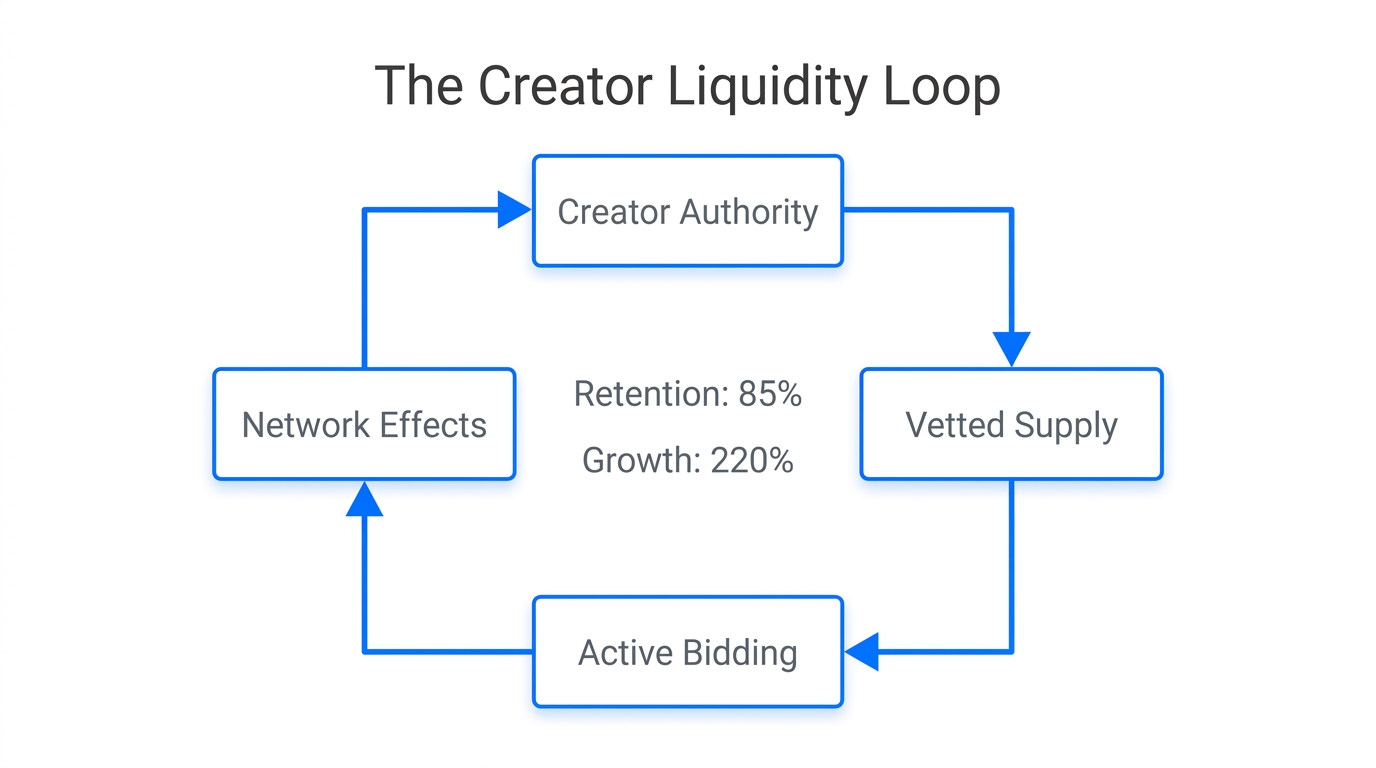
The hardest part of building a marketplace like Shopify or Stripe is gaining enough trust to handle people's money and data. In a two-sided marketplace, the "liquidity" (the number of transactions happening) is the only thing that matters. Trust is the lubricant for liquidity. Because creators like Doug DeMuro or Mary Heffernan of Five Marys Ranch have spent years building a "cadence of trust" with their audience, they can bypass the skepticism that new platforms usually face.
Take Mary Heffernan as an example. She moved from the restaurant world in San Francisco to a ranch in Oregon, documenting the raw, unpolished reality of ranch life on Instagram. By the time she launched her direct-to-consumer meat business, her audience didn't just want beef; they wanted ethically sourced meat from Mary. Today, her business is a massive operation with its own USDA-approved slaughterhouse and butchery, proving that even "physical" businesses can reach venture scale when backed by digital platform distribution in 2026.
"Finding creators that have real love from their communities is the whole thing. Those are the most durable audiences that make the business un-cancelable."
Marketplace vs. Traditional Merch: The 2026 Breakdown
42:58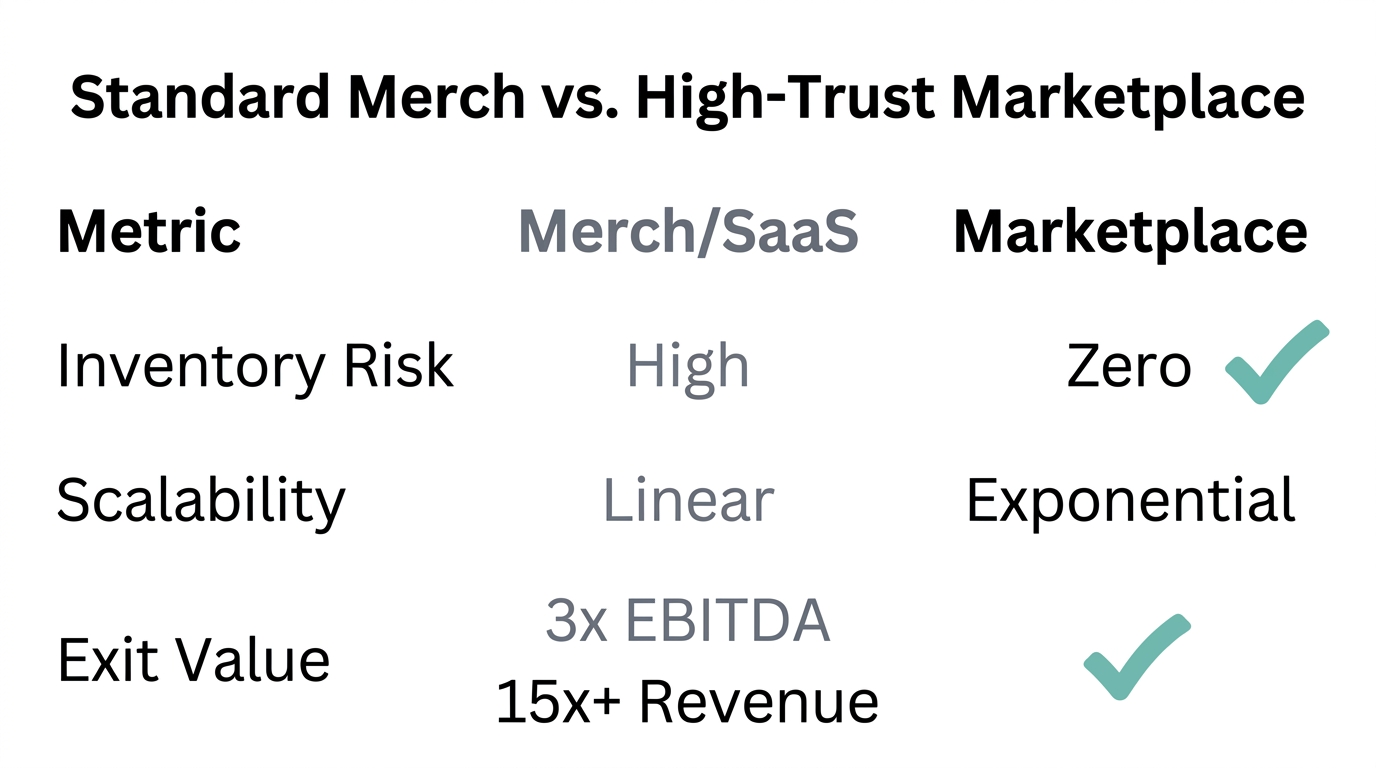
When evaluating the scaling cars and bids case study, it’s helpful to compare the marketplace model against the traditional creator revenue streams. The differences in scalability, valuation, and exit potential are night and day.
| Feature | Traditional Merch / "Goo" | Two-Sided Marketplace / Utility |
|---|---|---|
| CAC (Customer Acquisition Cost) | High (Paid Social dependent) | Near Zero (Organic Content) |
| Retention | Low (One-off purchases) | High (Platform dependency) |
| Scalability | Linear (Sell more units) | Exponential (Network effects) |
| Valuation Multiple | 1x - 3x Revenue | 5x - 15x Revenue (Tech multiples) |
| Exit Strategy | Hard (Creator is the brand) | M&A / IPO (Platform is the brand) |
Operational Excellence: The Creator’s Biggest Hurdle
The transition from a content creator to a platform founder is fraught with danger. Most creators are "visionaries" and "artists," but running a $100M marketplace requires operational excellence. This is where most creator-led businesses fail. They try to do everything themselves—editing, filming, supply chain, and customer service. In 2026, the winners are those who hire professional operators early.
Look at Jocko Willink. While he is the face of Jocko Fuel and the Echelon Front leadership program, he has built a network of partners and operators to handle the complexities of manufacturing, logistics, and retail distribution in Walmart and GNC. Success in this new era requires identifying your "special sauce" (content and community) and hiring for your 180-degree opposites (logistics and finance). To find the right creators to partner with, platforms like Stormy AI are becoming essential for brands and investors to vet creator quality and audience demographics before committing capital.
The 2026 Creator Playbook: From Content to Platform
7:45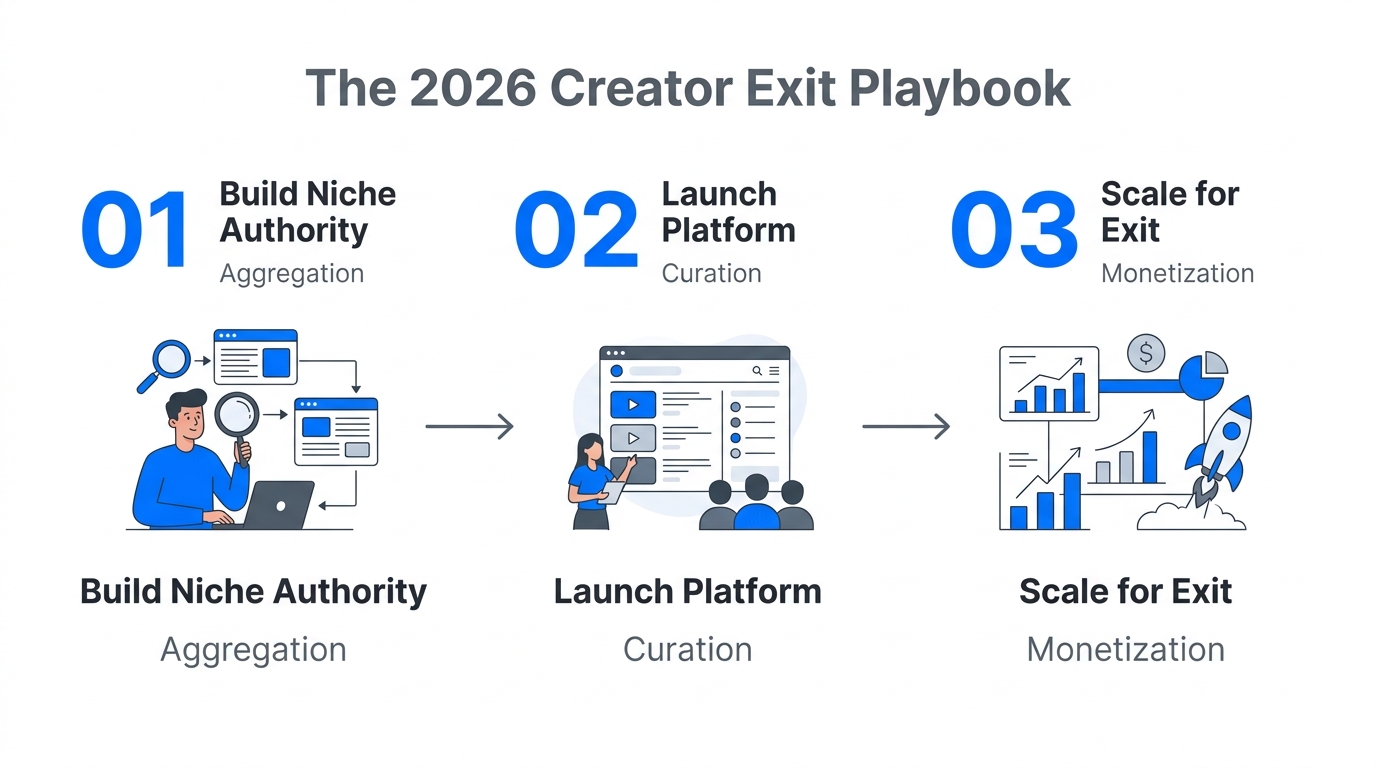
If you are looking to build a sustainable, venture-scale business in the current market, follow this three-step playbook:
- Step 1: Identify a Passion Category with a High Bottom-of-Funnel. Don't just be "funny." Be the authority in a niche where people spend money. Whether it's Chess, woodworking, or tactical gear, the niche must have a transactional endgame.
- Step 2: Build a Voice of Authority. Spend years (yes, years) building trust. Use Notion or Asana to manage your content calendar and ensure consistency. Your goal is to be the person your audience calls when they need to know what to buy or where to go.
- Step 3: Solve a Friction Point with Infrastructure. Once you have the audience, don't just sell them a product. Build the place where they buy all products. If you're a car guy, build the auction site. If you're a jiu-jitsu expert, build the marketplace for instructional videos like BJJ Fanatics.
"You can build a big audience that doesn’t transact. You should be careful about that. In a niche passion category, you will eventually figure out where the white space is."
The Future of Niche Dominance
As we look toward the end of 2026, the "middle-class creator" is disappearing. You are either a lifestyle freelancer or you are a platform founder. The middle ground—living off brand deals and AdSense—is becoming too volatile. By leveraging tools like Stormy AI to discover and manage these high-potential creator founders, the smart money is moving away from generic celebrities and toward hyper-niche authorities who own their infrastructure.
Whether it's Tonster Paints disrupting the paint industry or Gohar Khan building an SAT prep empire with Next Admit, the blueprint is clear: Content is the lead magnet; the marketplace is the exit.
Conclusion: Your Exit Starts with Authority
Scaling a business like Cars and Bids isn't about having the best camera or the most followers; it's about identifying white space within a community that already trusts you. In 2026, the ultimate creator exit is a two-sided marketplace that runs itself long after you've stopped clicking 'upload.' The transition from creator to founder is difficult, but for those who master creator-led marketplace growth, the rewards are venture-scale. Stop selling merch, and start building the infrastructure your community can't live without.