In the fast-moving landscape of 2026, the story of Cal AI has become the ultimate blueprint for mobile app founders. Zach, the 19-year-old founder who recently sold his company to My Fitness Pal, moved from recording podcasts during his high school lunch break to managing a $50 million annual revenue run rate. While the app's origin story is rooted in organic TikTok virality, the real lesson for marketers this year isn't about getting lucky with the algorithm—it's about the cold, hard science of scaling paid performance marketing and high-budget influencer sponsorships.
By January 2026, Cal AI was generating $5.7 million in monthly revenue. To sustain that level of growth, the team had to move beyond the "post and pray" method of organic content and master a sophisticated engine of Meta Ads, TikTok Spark Ads, and massive celebrity integrations. This article breaks down the exact playbook Cal AI used to manage a $1 million monthly ad spend and why a $500,000 check to MrBeast was one of their most strategic moves yet.
The Plateau of Organic Growth: Why $2M/Month Was the Ceiling
Transitioning from early-stage viral awareness to a sustainable long-term business model.
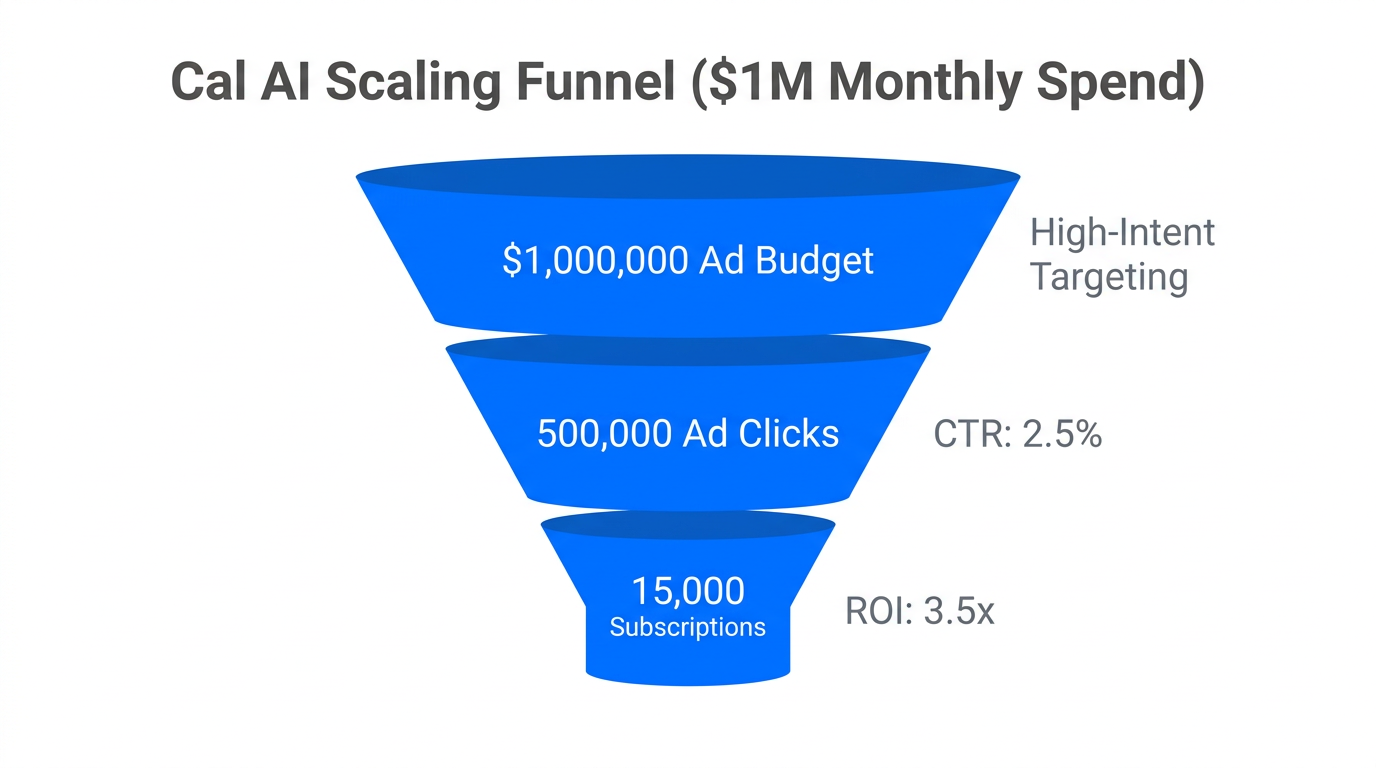
For most startups, hitting $2 million in monthly recurring revenue (MRR) purely through organic influencer outreach would be a dream. For Cal AI, it was a plateau. Zach realized early on that while organic TikToks could drive massive spikes, they lacked the predictability required to build a venture-scale business. Organic content is subject to the whims of platform algorithms; paid media is a faucet you can turn at will.
To break past the $2 million mark, Cal AI shifted its focus to TikTok Ads Manager and Facebook’s Advantage+ campaigns. By putting $1 million per month into paid spend, they were able to guarantee impressions and retarget users who had seen their viral organic clips but hadn't yet converted. In 2026, the most successful apps use Stormy AI to identify which organic creators are already driving high-quality engagement before putting paid spend behind their content.
The $500,000 MrBeast Sponsorship: Analyzing the ROI
A deep dive into the impact of appearing in viral high-stakes videos.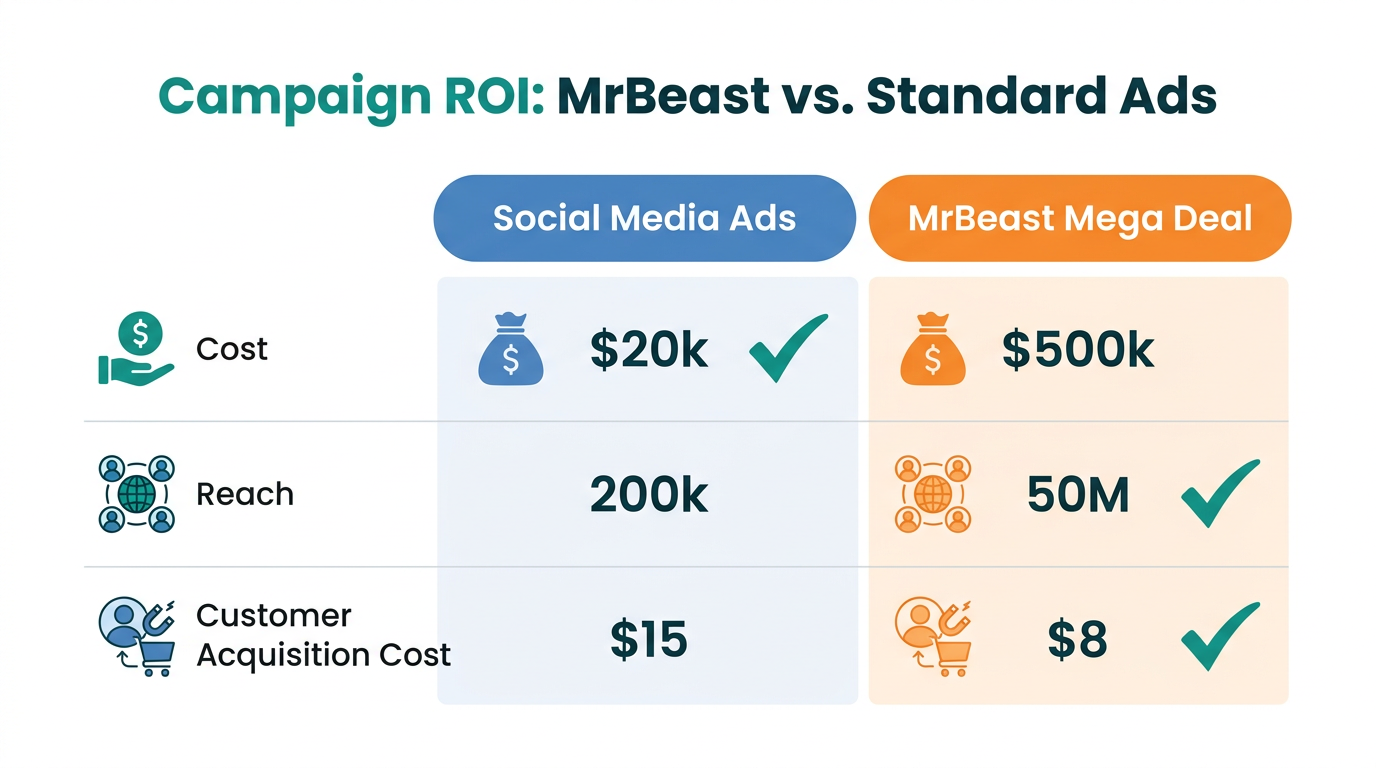
One of the most discussed moves in Cal AI performance marketing was their $500,000 sponsorship of a MrBeast video. In the video, a contestant was locked in a gym for hundreds of days, and Cal AI was integrated as the tool used to track his progress. While a half-million-dollar price tag sounds steep, the data suggests it was a calculated risk that paid off in both direct revenue and long-term brand equity.
According to Zach, the immediate return from the MrBeast deal was approximately $350,000 to $400,000. On paper, that looks like a $100,000 loss. However, in the world of high-budget influencer sponsorships, the "halo effect" is where the real profit lies. Having the world’s biggest creator endorse the app provided Cal AI with instant credibility, allowing them to close subsequent deals with hundreds of smaller creators at better rates.
"We probably made $400k back immediately, but the brand name of MrBeast saying we were in a video enabled us to do way more deals afterwards. The credibility exceeded the cost."Using Stormy AI, brands can now track these long-term gains by monitoring brand sentiment and download spikes across multiple months following a major campaign. Unlike legacy platforms like Captiv8 or Tagger, Stormy AI uses real-time AI agents to track how one major deal influences the conversion rates of your smaller, "always-on" influencer campaigns.

Attribution Challenges in 2026: Measuring What Matters
In 2026, privacy regulations and the death of traditional cookies have made attribution a nightmare for mobile app marketers. When Cal AI runs a massive influencer campaign, they don't just rely on tracking links—because, as Zach notes, most users go directly to the App Store rather than clicking a bio link.
To solve this, Cal AI utilizes a three-pronged attribution strategy:
- Promo Code Usage: Offering a unique discount (e.g., "BEAST") to track direct conversions.
- Time-Overlap Analysis: Correlating influencer post times with 1-hour and 24-hour download spikes in App Store Connect.
- Post-Purchase Surveys: Simply asking users, "How did you hear about us?" via tools like Typeform or internal polls.
| Metric | Cal AI Strategy | Stormy AI Advantage |
|---|---|---|
| Discovery | Manual outreach to hundreds | AI Natural Language Search |
| Vetting | Gut feeling & social proof | AI Fraud & Quality Scoring |
| Outreach | Manual DMs and Emails | Autonomous AI Outreach Agents |
| Tracking | Time-overlap analysis | Real-time Post Tracking & Analytics |
Performance Ad Creative: Rage-Bait over Product Features
The shift from organic content to scaling through structured performance ad creatives.One of the biggest shifts in scaling TikTok ads in 2026 is the move away from high-production, feature-focused commercials. Zach and the Cal AI team realized that traditional ads felt too much like... well, ads. To lower their Customer Acquisition Cost (CAC), they leaned into "rage-bait" and lifestyle-led content.
Instead of showing how the AI technology works, they might show a creator eating a massive, unhealthy meal and the app giving a shocking calorie count. This sparks debate in the comments, pushes the video to more people, and lowers the CPM (cost per thousand impressions). In 2026, controversy is a currency. By building what Zach calls an "Aura" strategy on X and TikTok, Cal AI created a brand presence that felt larger than life, making their paid ads feel like a continuation of a viral conversation rather than an interruption.

The 'Aura' Strategy: Lowering CAC Through Controversy
Zach explains the concept of aura and lifestyle branding for product growth.The concept of "Aura" in 2026 marketing refers to the perceived coolness and untouchable status of a brand. Cal AI achieved this by leaning into the "douchebag arc"—showing off Lamborghinis, throwing parties in Miami, and being unapologetically ambitious. While this alienated some critics on X, it solidified their target demographic: young, motivated individuals who wanted the lifestyle that Cal AI represented.
This controversial positioning acted as a top-of-funnel filter. By the time someone saw a paid ad on Google Ads or Instagram, they already had a strong opinion of the brand. This familiarity led to significantly higher click-through rates (CTR) compared to generic health apps. When you use Stormy AI to manage your creator relationships, you can specifically filter for influencers who have the "aura" or niche personality that fits your brand’s controversial or high-energy angle.
"We intentionally wanted to rage-bait people. It worked. It took over the timeline and lowered our acquisition costs because everyone was talking about us."Systematizing Influencer Outreach: How to Find the Next Big Deal
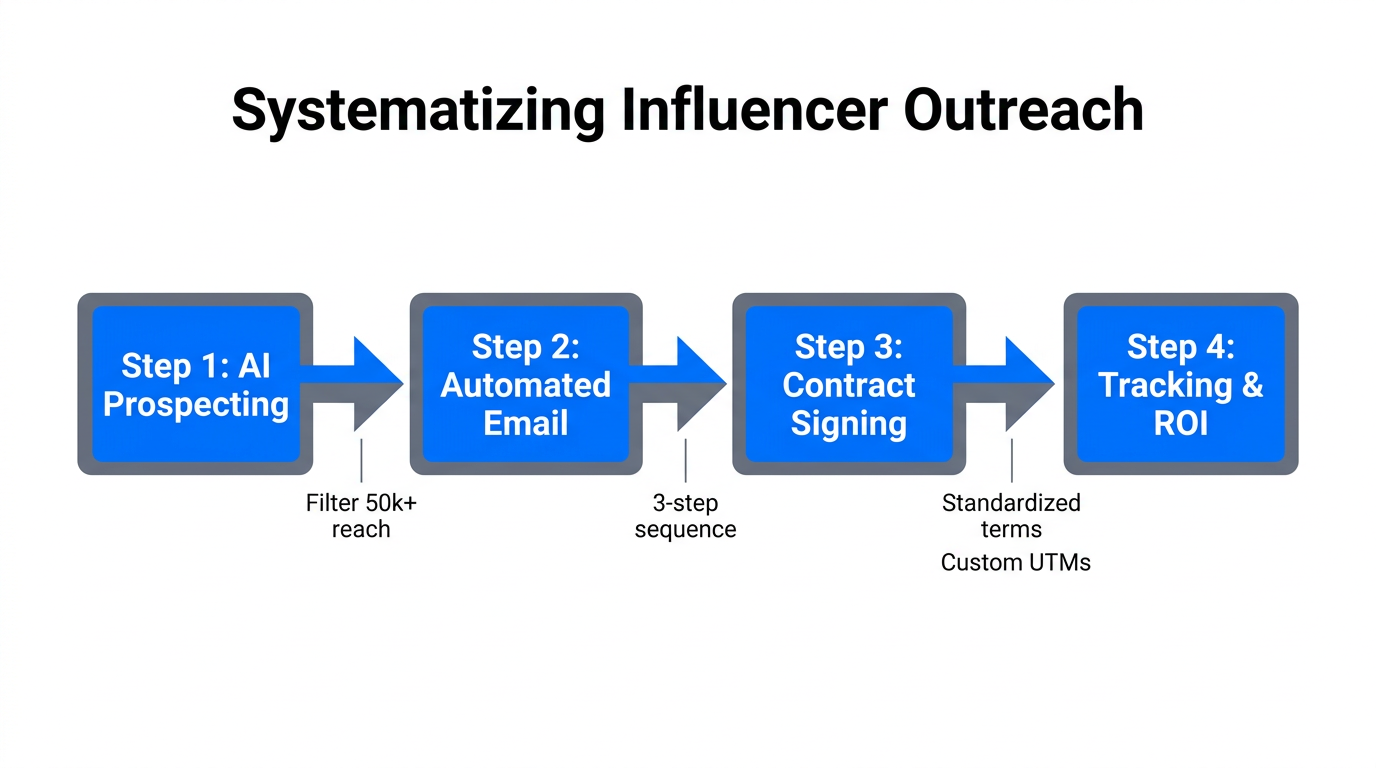
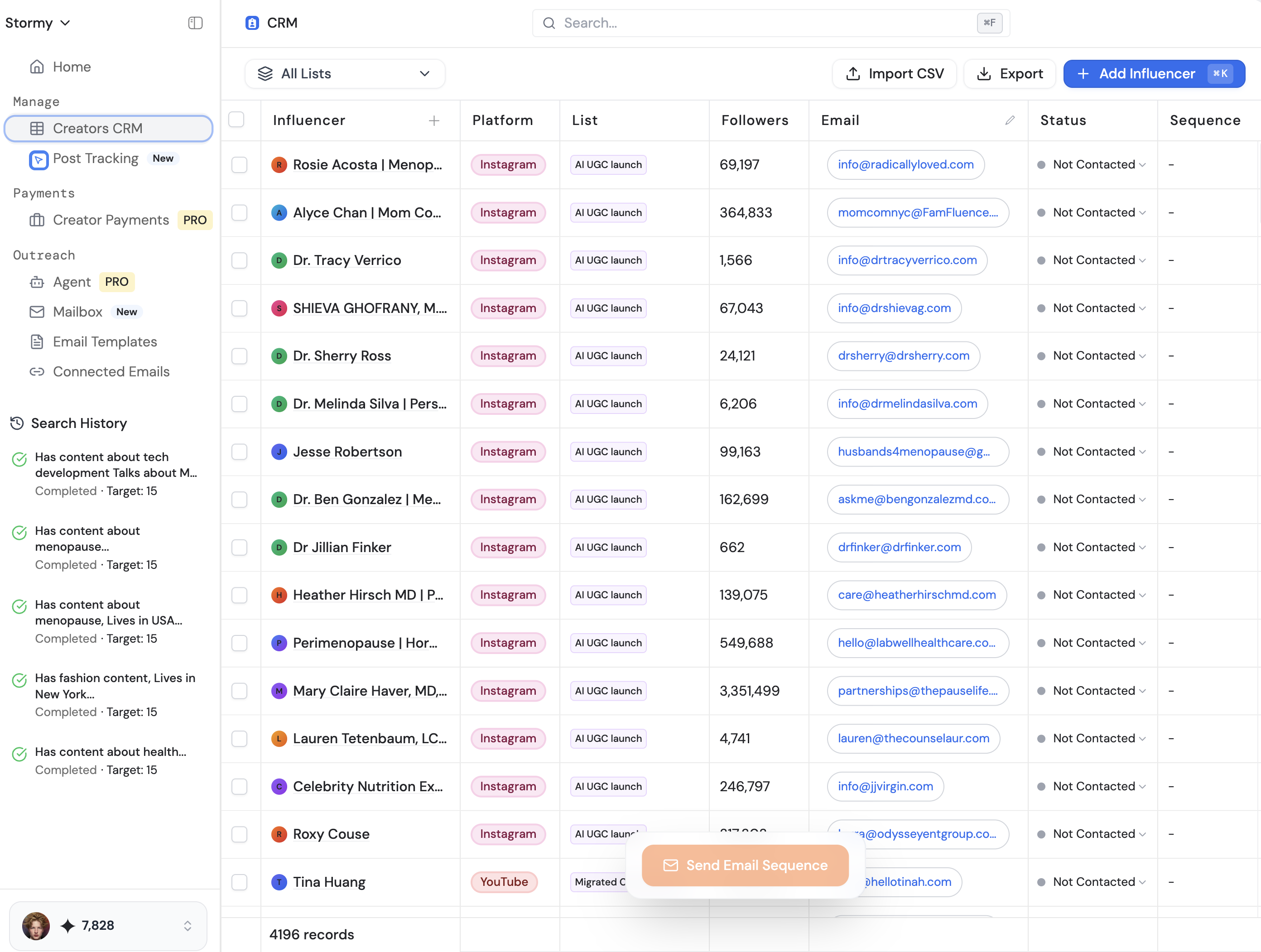
Zach’s initial success came from messaging hundreds of people manually. But to scale to $1M/month in spend, you cannot rely on manual DMs. You need a Creator CRM. In 2026, the competitive advantage belongs to those who use AI to automate the boring parts of influencer marketing—discovery, vetting, and initial outreach.
Platforms like Stormy AI allow you to set up autonomous agents that discover creators, check for fake followers, and send hyper-personalized emails while you sleep. While legacy tools like Julius or NeoReach require massive teams to manage, Stormy AI allows a single founder or a small marketing team to manage hundreds of relationships simultaneously.
Conclusion: The Path to a $100M Exit in 2026
Scaling a mobile app like Cal AI requires more than just a good product; it requires the audacity to spend big and the systems to track it accurately. Zach’s journey from a high school student to selling to My Fitness Pal proves that the combination of skills—coding, marketing, and decision-making—is the true multiplier of wealth.
If you are looking to scale your own app in 2026, remember the Cal AI playbook: build an organic foundation, lean into controversial creative, and then pour gasoline on the fire with performance ads. To handle the scale of discovery and outreach without a 30-person marketing team, leverage the power of Stormy AI to find, vet, and contact the creators who will drive your next $1M in revenue.