In 2026, the benchmark for entrepreneurial success has shifted. It is no longer just about who can raise the most venture capital or who can burn through the largest headcount; it’s about operational efficiency and personal freedom. As we navigate this year, the most successful founders are those building "lifestyle-first" businesses that generate millions in profit while running on lean, AI-augmented systems. But there is a massive hurdle every founder faces when they try to move from a five-person 'scrappy' team to a 50+ person organization: the knowledge gap.
When you are small, the founder is the system. Your intuition, your speed, and your memory drive every decision. However, as Ian Meers, founder of Oceans, recently shared, everything breaks when you try to scale that intuition. To reach the $15 million revenue mark with a global team, you must migrate the logic from your head into a source of truth that exists independently of you. This guide explores how to use accessible tools like Notion and Google Sheets to achieve operational excellence in 2026.
The 'Head-to-Process' Migration: Documenting Founder Intuition
Learn the exact strategy for transforming founder knowledge into repeatable business processes.
The most dangerous point in a company's lifecycle is when the person who created the process is the only one doing the process. In a remote environment, this creates a bottleneck that prevents scaling a remote team effectively. If you are the only one who knows how to handle a difficult client or how to vet a new hire, you don't own a business—you own a very high-paying job.
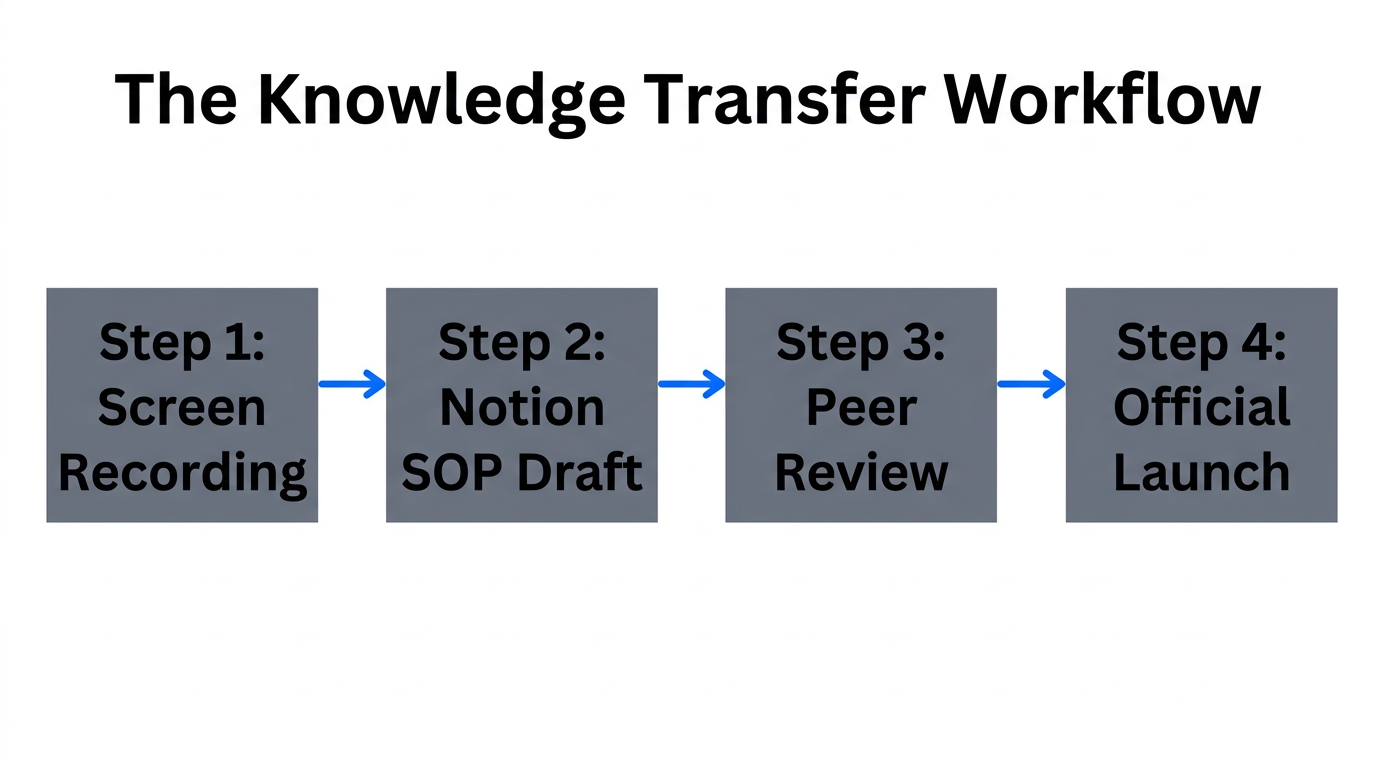
The goal in 2026 is to turn your "gut feeling" into Standard Operating Procedures (SOPs). This doesn't mean writing a 50-page manual that no one reads. Instead, it involves capturing real-time workflows. When you perform a task, record it using tools like TLDV or Descript, and then use AI to transcribe that video into a step-by-step checklist. This turns a one-time action into a repeatable asset.
"Getting the knowledge out of people's heads and into processes was one of the biggest challenges for us as we grew—and it was painful."To bridge this gap, you must treat business process documentation as a core product of your company. Whether you are managing an influencer marketing campaign on Stormy AI or handling financial reconciliations, every repeatable action needs a home. By documenting early, you ensure that when you hire employee number 50, they aren't waiting for a Slack message from you to start their day.
Building a Real-Time Business Dashboard in Google Sheets
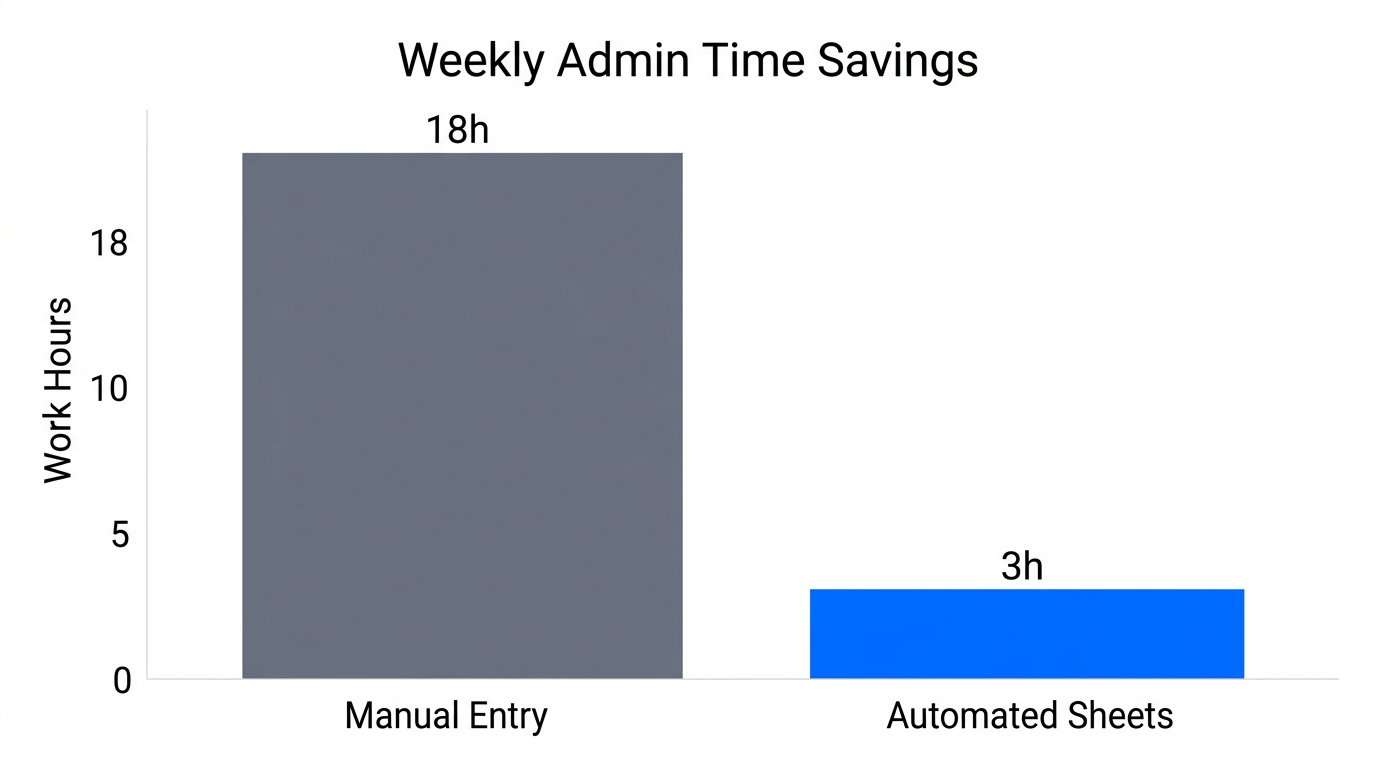
Many founders believe they need expensive, enterprise-grade ERP software once they cross the $1M revenue mark. In reality, some of the most profitable $10M+ businesses in 2026 are run almost entirely on the Google Workspace ecosystem. A Google Sheets business dashboard is often superior to rigid SaaS tools because it is infinitely customizable.
A high-level dashboard should provide maximum transparency to your leadership team. It should track three core areas: Growth (Sales/Marketing), Operations (Fulfilment/Churn), and Finance (Profit/Cash Flow). By connecting your HubSpot CRM or Stripe data directly to a sheet, you can see the health of your business in one glance without logging into ten different platforms.
| Metric Category | Primary KPI | Reporting Tool |
|---|---|---|
| Sales | New Contracts Signed | HubSpot / Google Sheets |
| Operations | Client Retention Rate | Google Sheets / Airtable |
| Marketing | CAC (Customer Acquisition Cost) | Google Ads / Sheets |
| Finance | Net Profit Margin | Stripe / Quickbooks |
Using Google Sheets allows you to build a "Single Source of Truth" for your metrics. For instance, if you are scaling a service business, you can track headcount utilization in real-time. This level of transparency ensures that every team member knows exactly what the "score" is, reducing the need for status meetings and improving overall team alignment.
Using Notion as a Centralized 'Source of Truth'
Find out how to leverage Notion to streamline your entire company's operational excellence.If Google Sheets is the calculator for your business, Notion for business operations is the brain. In 2026, the challenge for remote teams is not a lack of information, but an overload of fragmented information. Important links get lost in Slack, and documents disappear in deep Google Drive folders.
A centralized Notion workspace should serve as your company's "Internal Wiki." This includes:
- The Culture Manual: Mission, values, and the "how we work" guide.
- Departmental Hubs: Specific zones for Sales, Marketing, and Ops.
- Project Trackers: A high-level view of every active initiative using Linear or Notion's native databases.
- Reference Guides: Training material, brand assets, and technical documentation.
"You would be surprised how much you can get done in Google Sheets and Notion. We try to keep our tools pretty slim."When you have a global team spread across Sri Lanka, South Africa, and the US, having a centralized source of truth is non-negotiable. It allows for asynchronous work—following the async-first communication models popularized by companies like GitLab—meaning a founder in New Hampshire can assign a task at 5 PM, and a project manager in Colombo can execute it perfectly without a 3 AM phone call. Platforms like Stormy AI integrate into this workflow by allowing you to export creator lists and campaign data directly into your Notion project boards, keeping all your influencer marketing efforts organized alongside your core business processes.
Hiring Non-Traditional Talent for High-Level Ops
Explore why tapping into global talent pools is the key to scaling your business.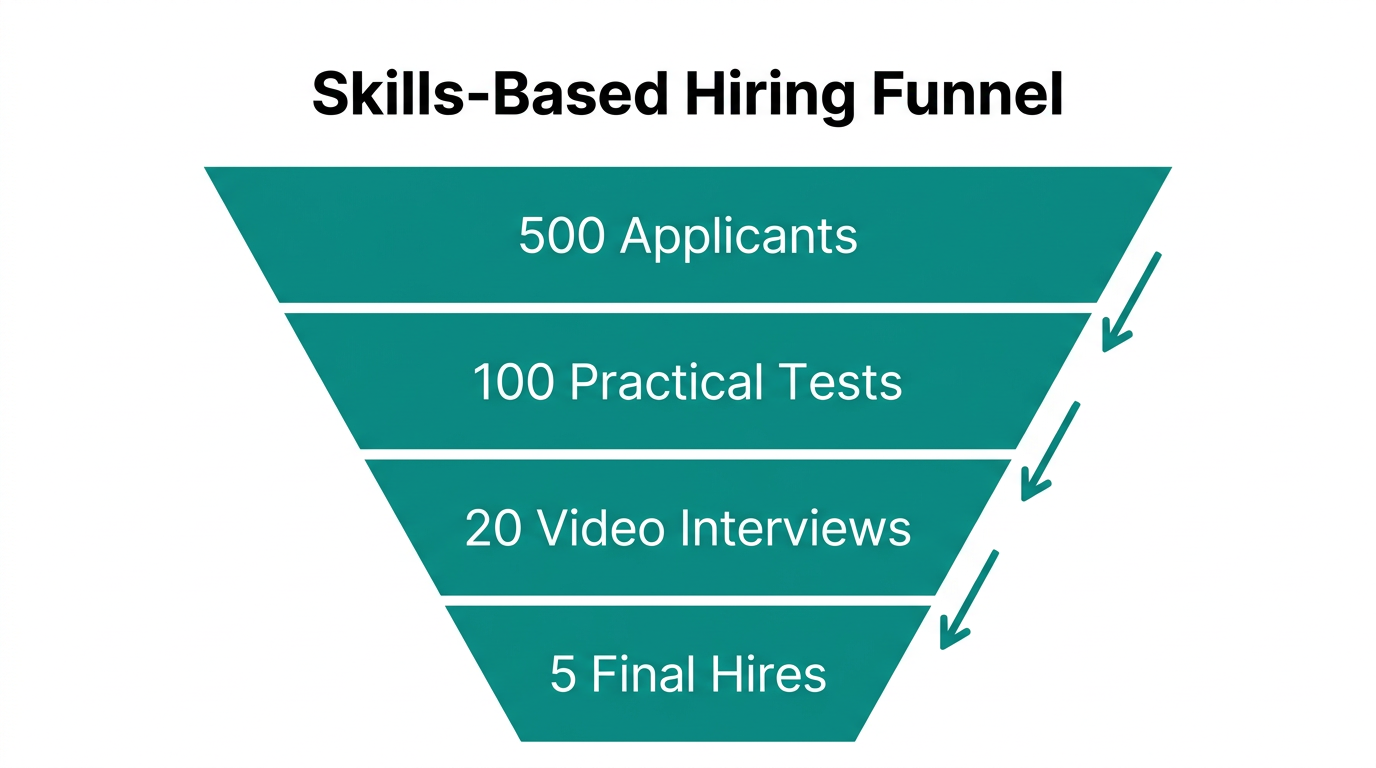
One of the most tactical advantages a scaling business has in 2026 is its hiring philosophy. Traditional resumes are increasingly irrelevant. Instead, look for operational backgrounds that demonstrate high pressure and high organization. As Ian Meers noted, a head of a children's summer camp might make a better Chief of Staff than a corporate MBA.
Why? Because a camp director manages chaotic logistics, angry parents, and hundreds of moving parts simultaneously. If they can do that, managing a sales team or a remote operations department is a "vacation." When scaling a remote team, prioritize high intelligence and curiosity over specific software experience. You can train a smart person to use Notion in a week; you cannot train someone to have an "owner mindset."
Overcoming the Scaling Pain: Quality Control at Scale
As you move toward 50+ employees, quality often dips. To prevent this, you must build automated feedback loops. This includes using AI-driven recording tools to audit sales calls and project management check-ins, or using Zapier to trigger automated notifications when a project hits a specific milestone. It also means setting up "Cohorts" for training. Rather than training one person at a time, hire in small groups and put them through a structured training course built in Notion.
This "Cohort" model ensures that every new hire receives the same high standard of onboarding. It also creates a sense of community among remote employees who are starting their journey together. In 2026, maintaining a high-quality service requires a relentless focus on the customer experience—answering emails in five minutes and over-delivering on expectations even when the founder isn't the one clicking 'send.'
"The first 50 hires, you've got to really lean in. You've got to go beyond the bounds of what you might do when the company is large."Conclusion: Building for Freedom
Scaling a business in 2026 is about more than just hitting revenue targets; it’s about designing a life of freedom. By migrating your intuition into scalable SOPs, using Google Sheets business dashboards for transparency, and leveraging Notion for business operations, you can build an organization that thrives without your constant intervention. Whether you are managing global logistics or using Stormy AI to automate your influencer outreach, the goal is the same: build systems, not just a job.
Remember that every mistake and "scaling pain" is simply a signal that a new process is needed. Don't fear the transition from founder to CEO—embrace the systems that will eventually set you free.