In 2026, the gap between growth hackers and traditional marketers has widened into a canyon. The era of manual pixel-pushing in tools like Framer or Webflow is giving way to the Agent-as-CMS movement. Growth marketing in 2026 isn't just about having a great idea; it's about orchestrating autonomous marketing agents that can design, deploy, and optimize experiments while you sleep. By leveraging Claude Code and real-time analytics from Humbolytics, brands are now running thousands of micro-experiments that achieve conversion rates once thought impossible [source: Unbounce AI Report].
The Agent-as-CMS Movement: Why Custom Code Wins
 30:59
30:59For years, low-code platforms were the gold standard for marketing teams. But as we move further into 2026, the limitations of these closed ecosystems have become clear. Agents need direct access to the codebase to perform high-level tasks. This is why many leading growth teams are migrating back to custom code stacks where the agent is the CMS.
When your site is built in React or Next.js and hosted with open access, tools like Claude Code can directly update your landing pages through terminal-based commands. This allows for a level of speed that platforms like Framer simply can't match. Instead of a designer manually dragging components, an agent pulls data from a Humbolytics property, identifies a high bounce rate, and rewrites the hero section in seconds.
"We migrated from Framer to custom code because we wanted the agent to be our CMS. In 2026, if your agent can't touch the code, you're moving too slow."
Setting Up Your 'Marketing Command Center' in the Terminal
45:59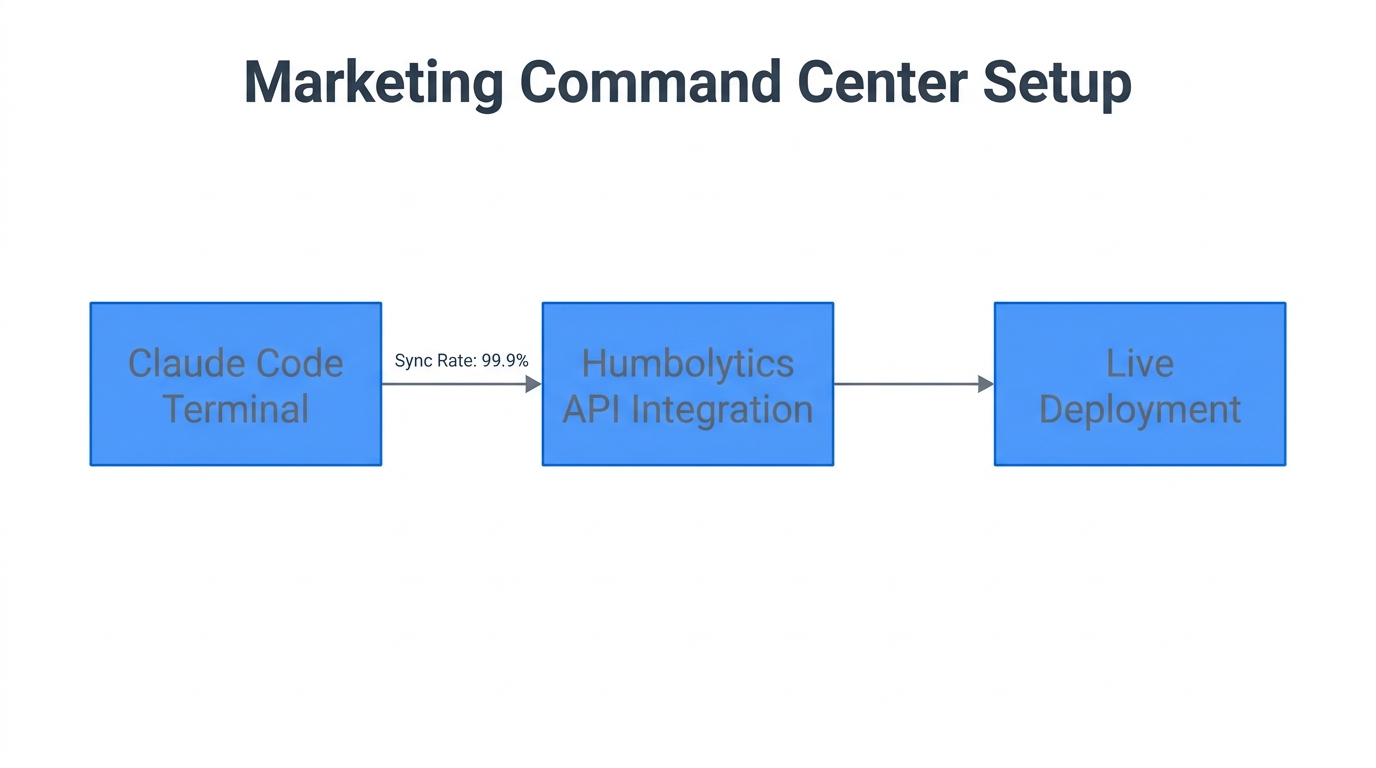
The modern growth stack has moved into the terminal. Using Claude Code as a centralized hub, you can connect various MCPs (Model Context Protocols) to build a unified marketing command center. This includes Idea Browser for strategic planning and Paper Design for visual refinement.
By connecting Idea Browser to Claude Code, you can maintain a rolling context of your ICP (Ideal Customer Profile), pain points, and offer definitions. This ensures that every piece of content the agent generates is grounded in real business strategy rather than just "vibe-coding." When you're ready to build, you can use skills like the Landing Page Architect to scaffold entire sites based on these deep insights using automation tools like Zapier or Make to trigger builds.
Building Autonomous CRO Agents with Humbolytics
43:16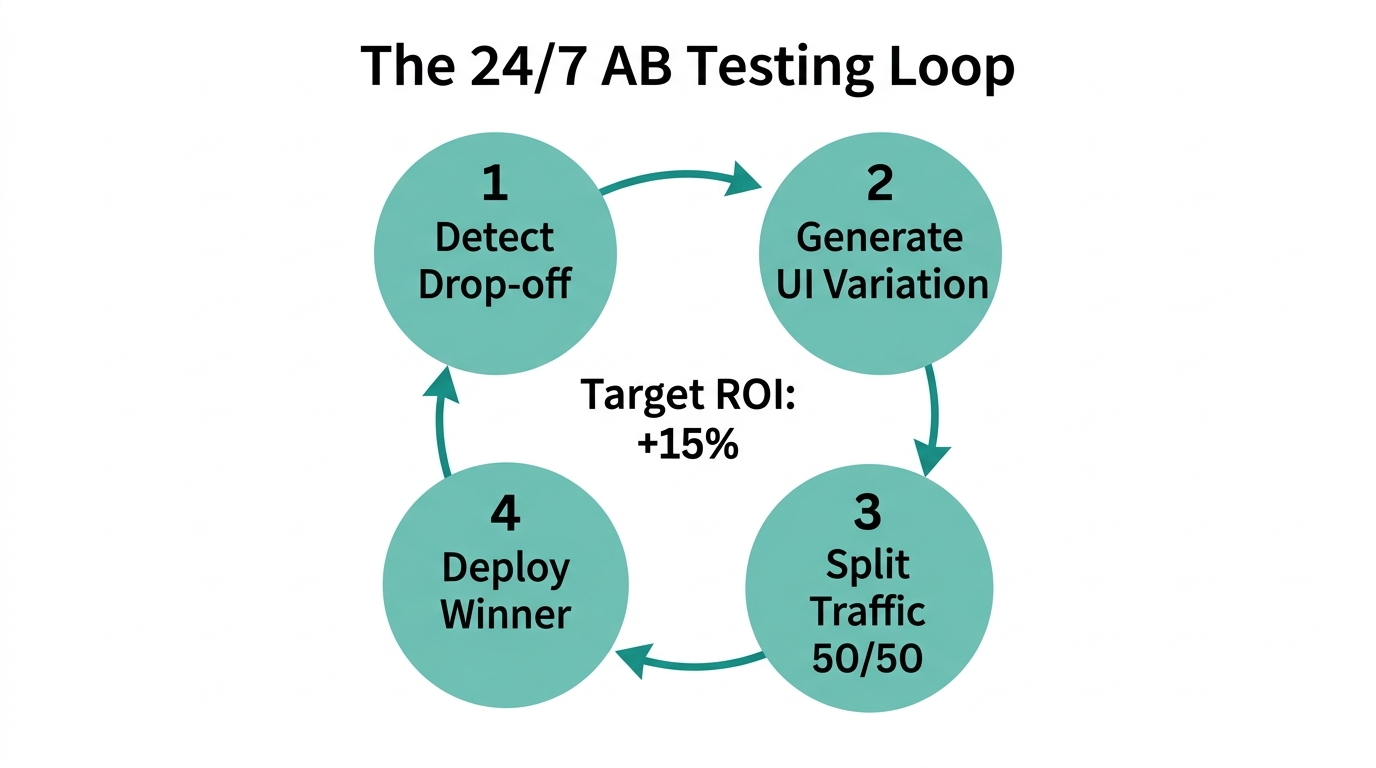
Conversion Rate Optimization (CRO) used to be a monthly reporting cycle. Now, it's a real-time feedback loop. By using the Humbolytics API, you can set up agents that pull scroll depth, heatmap data, and revenue attribution directly into your coding environment.
Step 1: Connect the Data Stream
First, generate an API key from your Humbolytics property. Using a dedicated Claude skill, you can prompt: "Analyze the last 7 days of traffic on the 'Guide' page and identify why the sign-up conversion is dropping."
Step 2: Trigger the Experiment
Instead of just giving you a report, the AI AB testing agent can suggest and deploy a variant immediately. Using dynamic script injection, the agent can test new headlines or layouts without a full production redeploy. This allows you to run personalized landing pages at scale for different segments of traffic, often integrating with your Shopify store via headless APIs.
| Feature | Traditional AB Testing | Autonomous AI Testing (2026) |
|---|---|---|
| Setup Time | Hours to Days | Seconds |
| Iteration Speed | Bi-weekly | Real-time / Hourly |
| Personalization | Manual segments | Individual-level (AI-generated) |
| Data Integration | Fragmented | Full Stack (Ads + Site + Revenue) |
Personalized Landing Pages at Scale for Google & Meta Ads
44:06In 2026, running a single landing page for an entire ad campaign is a recipe for high CAC (Customer Acquisition Cost). High-performing growth teams use Claude Code to create hyper-personalized subpages for every ad set. If you are running a pain point campaign on Google Ads targeting "B2B sales objections," your agent can spin up a specific page with a design that mirrors that specific intent.
By using Tailor-arc components and Paper, you can refine the design system so it feels polished and brand-consistent. Never settle for generic designs—use Claude to extrapolate design elements from reference images and apply them to your custom code site. This creates a seamless transition from a Meta Ad to a landing page, significantly boosting trust and conversion.
"The arbitrage opportunity right now is in the fact that 99% of people don't know this autonomous stack exists. You can outperform competitors by testing 10x faster."
The Weekly Growth Audit: Cron Jobs in Claude Code
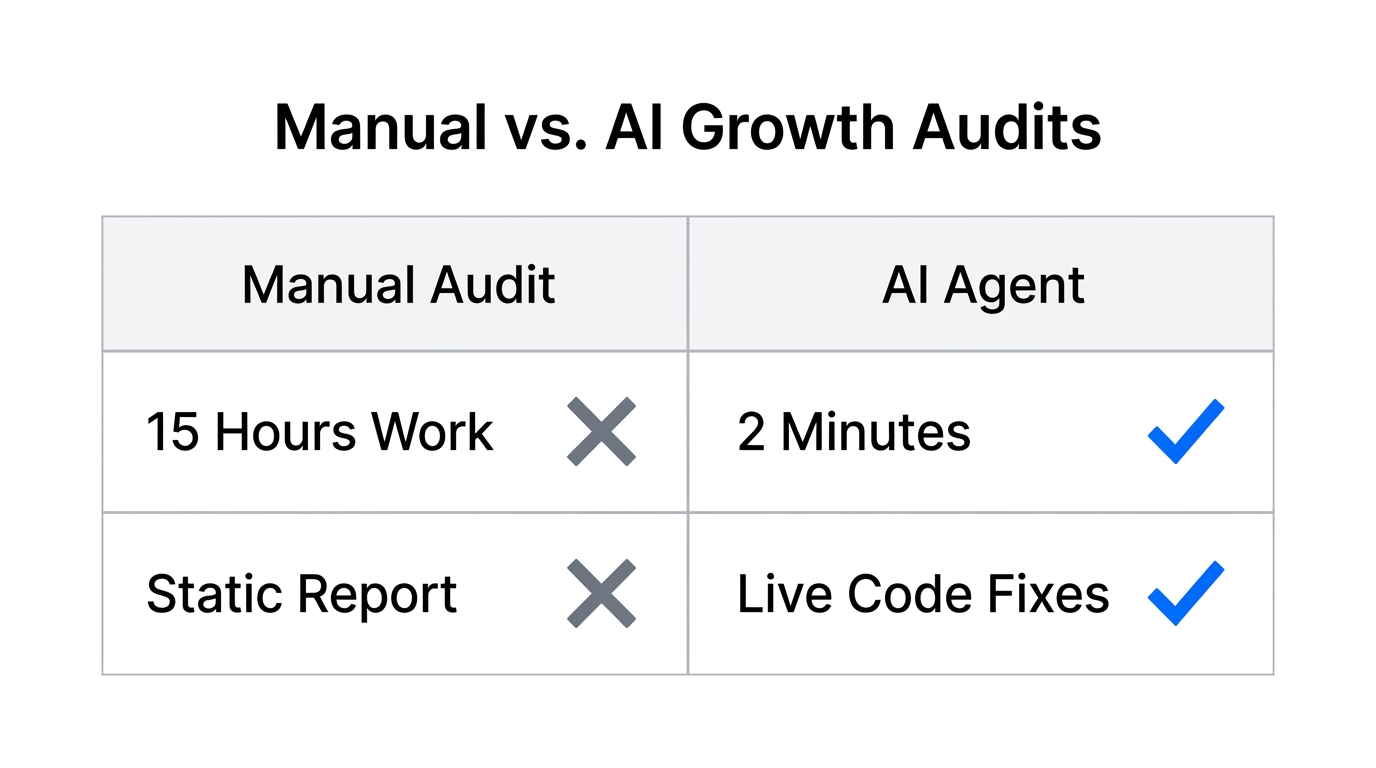
One of the most powerful features of Claude Code in 2026 is its support for automated tasks and cron jobs. You can schedule a weekly growth audit that performs the following steps autonomously:
- Data Pull: Scrapes current performance from Humbolytics and Google Ads.
- Comparison: Checks the week-over-week growth against the goals set in your Idea Browser context.
- Execution: Automatically tweaks underperforming headlines or adjusts the visibility of CTA buttons.
- Reporting: Saves a detailed Markdown log of every change and its subsequent impact on revenue.
While your site handles technical optimizations, you can focus on broader strategy or content acquisition. For example, brands running aggressive app install campaigns often pair this stack with creator-led content. Platforms like Stormy AI can help you source the raw UGC (User-Generated Content) that your autonomous agents then place and test across your various landing page iterations.
The Future of Growth Hacking
The growth marketing 2026 landscape is defined by speed and autonomy. By moving away from rigid low-code builders and embracing a custom code stack powered by Claude Code growth hacking, you unlock a level of experimentation that was previously reserved for enterprise engineering teams. Tools like Humbolytics provide the sensory input, and Claude provides the intelligence to act on it.
The arbitrage opportunity is here. While your competitors are manually reviewing last month's reports, your autonomous marketing agents are already three versions ahead, testing, learning, and driving revenue 24/7. Start by building a single lead magnet page today, connect it to your analytics via Google Analytics 4, and let the agent take the wheel.