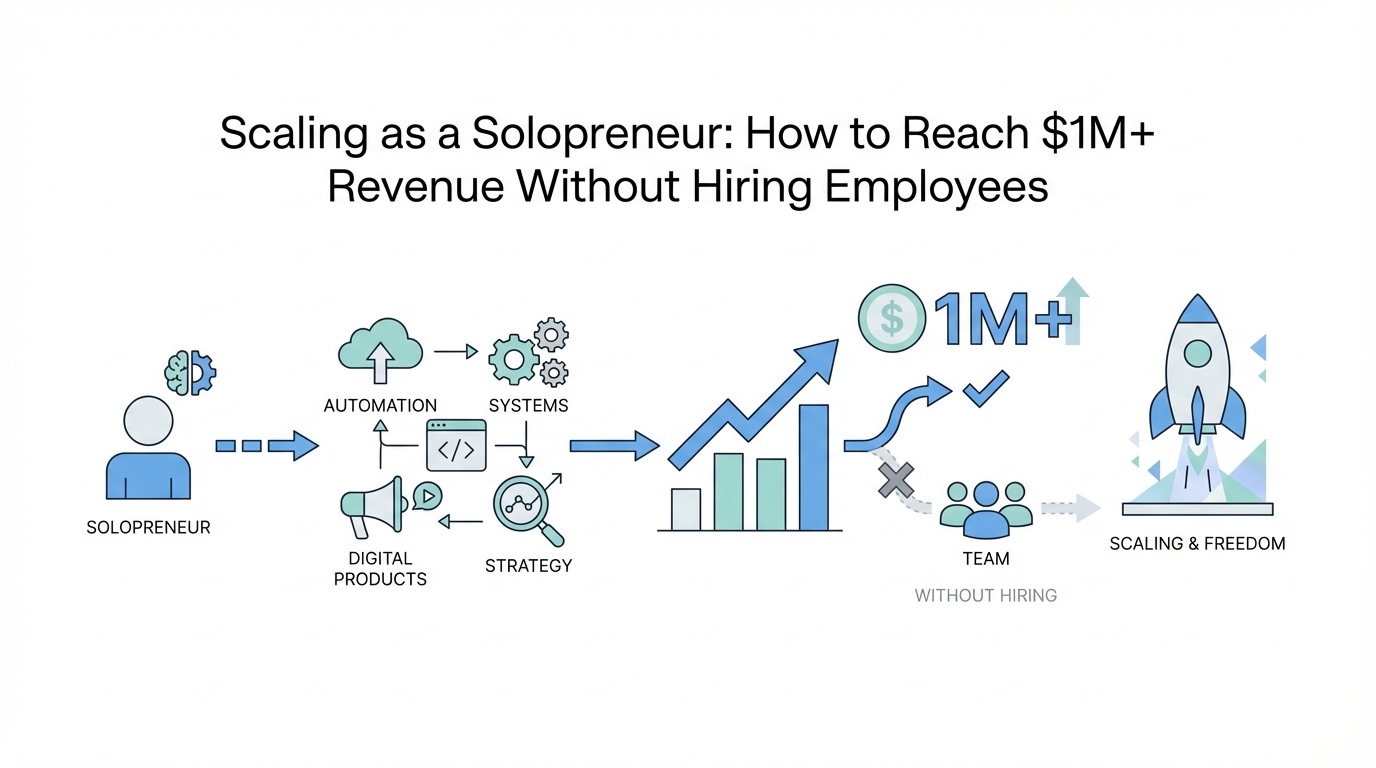
In the traditional startup narrative, growth is almost always synonymous with hiring. We are told that to reach seven or eight figures, you need a sprawling team, a middle-management layer, and a dedicated human resources department. But a new breed of entrepreneur is shattering this myth. Known as the high-revenue solopreneur, these founders are building lean, hyper-efficient machines that generate millions in revenue with a headcount of exactly one, a trend highlighted in the MBO Partners State of Independence Report. By focusing on solo founder productivity and rigid operational systems, they are proving that staying small isn't a limitation—it’s a competitive advantage that leads to higher profit margins, lower stress, and total creative freedom.
The Myth of the 'Necessary Hire': Why Staying Solo Wins
Most entrepreneurs view hiring as a badge of honor. However, every employee added to a payroll introduces complexity, communication overhead, and a higher financial break-even point. For a one-person business, the goal isn't to manage people; it’s to manage systems. When you operate as a solopreneur, your profit margins can hover between 80% and 95% because you don't have the massive overhead of salaries, benefits, and office space. This lean structure allows you to be more selective with your clients and more aggressive with your experimentation.
Take the example of Brett Williams, the founder of DesignJoy, who scaled his design agency to over $1.8 million in annual recurring revenue without a single employee or contractor. Instead of building a team to handle more work, he optimized his own output to handle higher-value work. To scale as a solopreneur, you must shift your mindset from "Who can I hire to do this?" to "How can I build a system that makes this effortless?" This often involves using tools like Trello to automate project management or Stripe to handle global payments without manual invoicing.
Step 1: Demand-Based Pricing and Speed to Market

The hardest hurdle for any new business is securing the first paying customer. Many founders spend months perfecting their brand or pricing model before ever launching. High-earning solopreneurs take a different approach: they use demand-based pricing to generate immediate momentum. By intentionally undercharging in the early stages, you can attract customers in record time, allowing you to put in the "reps" required to become world-class at your craft.
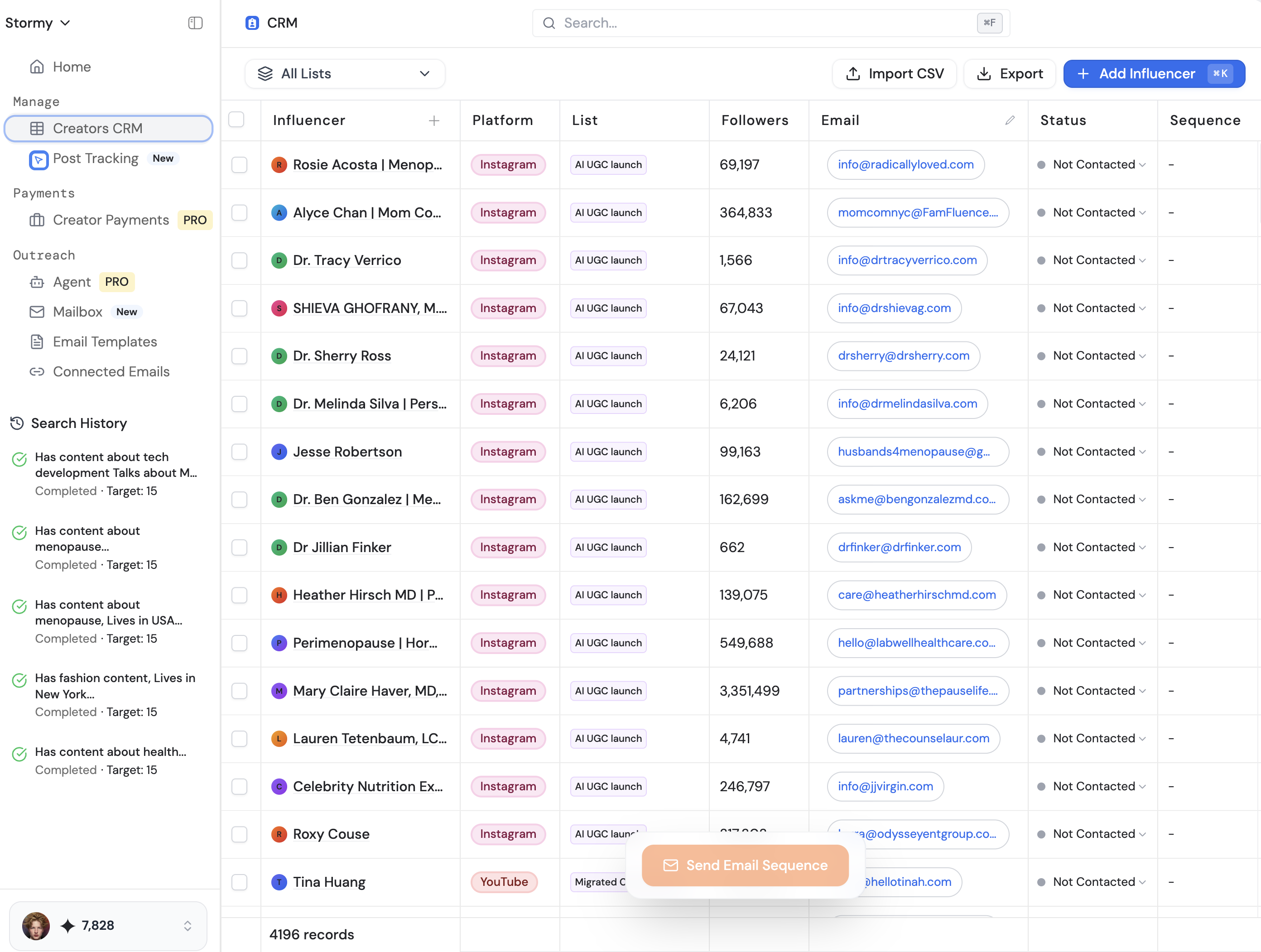
When you are looking to how to run a one-person business successfully, you need to prove the concept fast. Brett Williams initially offered "unlimited design" for just $449 a month. This price point was a "no-brainer" for early adopters, allowing him to gain a foothold in the market within 24 hours. As demand for your service grows, you incrementally raise your prices. This transition from $449 to $5,000 or $8,000 per month is only possible once you have the social proof and refined workflow that comes from high-volume experience. To identify the right niche and creators to partner with during this growth phase, many founders use Stormy's AI search for discovery across TikTok, YouTube, Instagram, LinkedIn, and TikTok Shop, ensuring every outreach effort is backed by data.
Step 2: Mastering Asynchronous Client Management
The biggest threat to a solopreneur’s productivity is the "quick sync" or the "15-minute introductory call." Meetings are the enemy of solopreneur business systems because they fragment deep work blocks and require synchronous availability. To reach the $1M revenue mark solo, you must eliminate phone calls and traditional meetings entirely. This is achieved through asynchronous client management, where all communication happens in writing or via recorded video.
By forcing all client interactions into a structured format—such as a dedicated project board—you ensure that every request is clearly defined before you ever see it. This removes the "back-and-forth" that typically eats up 40% of a service provider's day. If you are working with influencers or UGC creators for your own brand's growth, managing these relationships can become a full-time job without the right tools. Using Stormy AI for influencer vetting, you can vet potential partners and check for fake followers or engagement fraud in seconds, ensuring your asynchronous workflow isn't bogged down by low-quality leads.
Step 3: The 'One Request Rule' and Boundary Setting
Burnout is the primary reason solo founders fail to scale. To prevent this, you must set radical boundaries. One of the most effective strategies is the "One Request Rule." Under this system, a client can only have one active task in your queue at any given time. They can submit 50 requests, but you only work on the top one. Only once that task is completed and approved can they move the next one into the "active" column.
This rule does three critical things for your business:
- Reduces Cognitive Load: You are never overwhelmed by a massive to-do list; you are only ever focused on one thing.
- Forces Client Prioritization: Clients become more thoughtful about what they ask for, ensuring they only send their most important work.
- Predictable Delivery: Because you are only doing one thing at a time, your turnaround speed increases, leading to higher client satisfaction.
Step 4: Moving from $500 to $5,000 Clients
Not all revenue is created equal. In the solopreneur world, there is a massive difference between the "cheap" client and the "rich" client. The $500-a-month client often demands the most attention, asks for the most revisions, and is the most likely to churn. Conversely, the $5,000-a-month client—typically a well-funded startup or an established enterprise—values their own time as much as yours. They want the problem solved quickly and professionally, and they are happy to pay a premium for a low-touch, high-impact solution.
To attract these high-value clients, you must position your service as a cost-saving alternative to a full-time hire. A $5,000 monthly fee for world-class design or marketing is a steal compared to the high employer costs for employee compensation, which include salaries plus benefits and taxes. Large companies often use platforms like Upwork or Fiverr to find talent, but the friction of vetting and managing those freelancers is high. By offering a productized, "click-to-buy" service, you remove that friction. To scale this acquisition process, you can deploy Stormy AI's email outreach agent to automatically discover and contact high-value leads with hyper-personalized emails, allowing you to grow your client base while you sleep.
Step 5: Focusing on Output over Administrative Overhead
The 8-hour workday is a relic of the industrial age. For a knowledge worker or creative solopreneur, 6 hours of deep work is often the upper limit of peak performance. To reach $1M+ revenue, you must aggressively automate or eliminate administrative overhead. This means no manual billing, no manual onboarding, and no manual follow-ups.
By using a tech stack that includes Notion for documentation and Google Ads for automated lead gen, you can keep your focus entirely on the "output." In the world of influencer marketing and UGC, this means focusing on the strategy rather than the tracking. Tools like Stormy's post tracking allow you to monitor campaign performance, views, and engagement across TikTok, YouTube, and Instagram automatically, so you don't have to manually refresh spreadsheets to see if your marketing is working.
Scaling Beyond Services: Build Once, Sell Forever
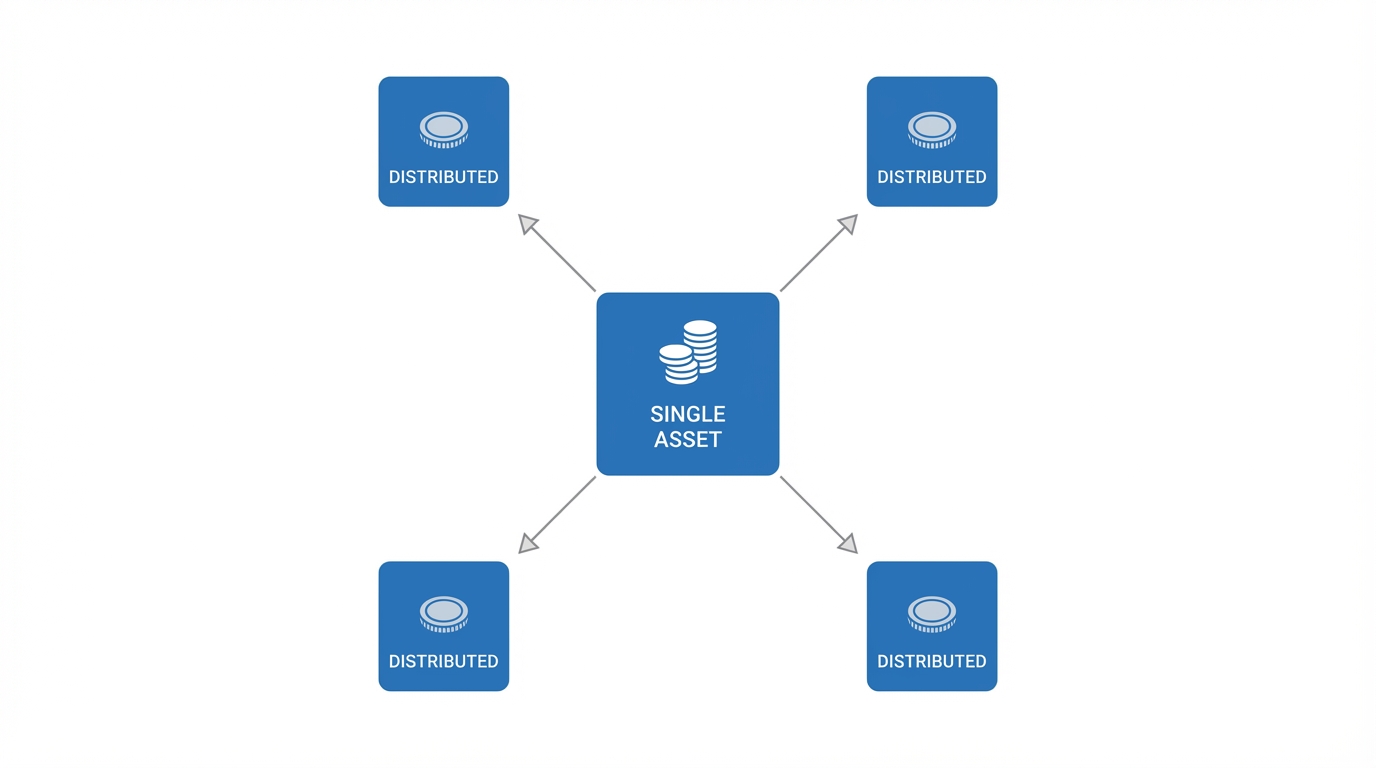
While productized services are highly profitable, they still involve trading time for money. The ultimate level of solo founder productivity is diversifying into digital products. By taking the knowledge gained from thousands of client "reps" and turning it into a downloadable product or a course, you create a secondary revenue stream that requires zero additional labor. Brett Williams did this with his "Scribbles" product and "Productize Yourself" course, which eventually accounted for nearly 30% of his total income.
This "build once, sell forever" model is the secret to moving from a high-paid freelancer to a multi-million dollar solopreneur, tapping into the rapidly growing creator economy. It allows you to maintain your lifestyle and 6-hour workday even as your income continues to climb. Whether you are selling a collection of design assets or a playbook on how to scale a mobile app via Apple Search Ads, the principle remains the same: leverage your expertise into assets that scale infinitely.
Conclusion: The Solopreneur Playbook for 2024
Scaling to $1M+ as a solo founder is not about working harder; it’s about working differently. It requires a radical commitment to boundaries, a rejection of traditional hiring, and the courage to charge based on the value you create rather than the hours you sit at a desk. By implementing asynchronous workflows, focusing on high-value clients, and leveraging AI-powered tools to handle discovery and outreach, you can build a business that serves your life, rather than a life that serves your business. The future of entrepreneurship isn't big—it’s lean, automated, and incredibly profitable.