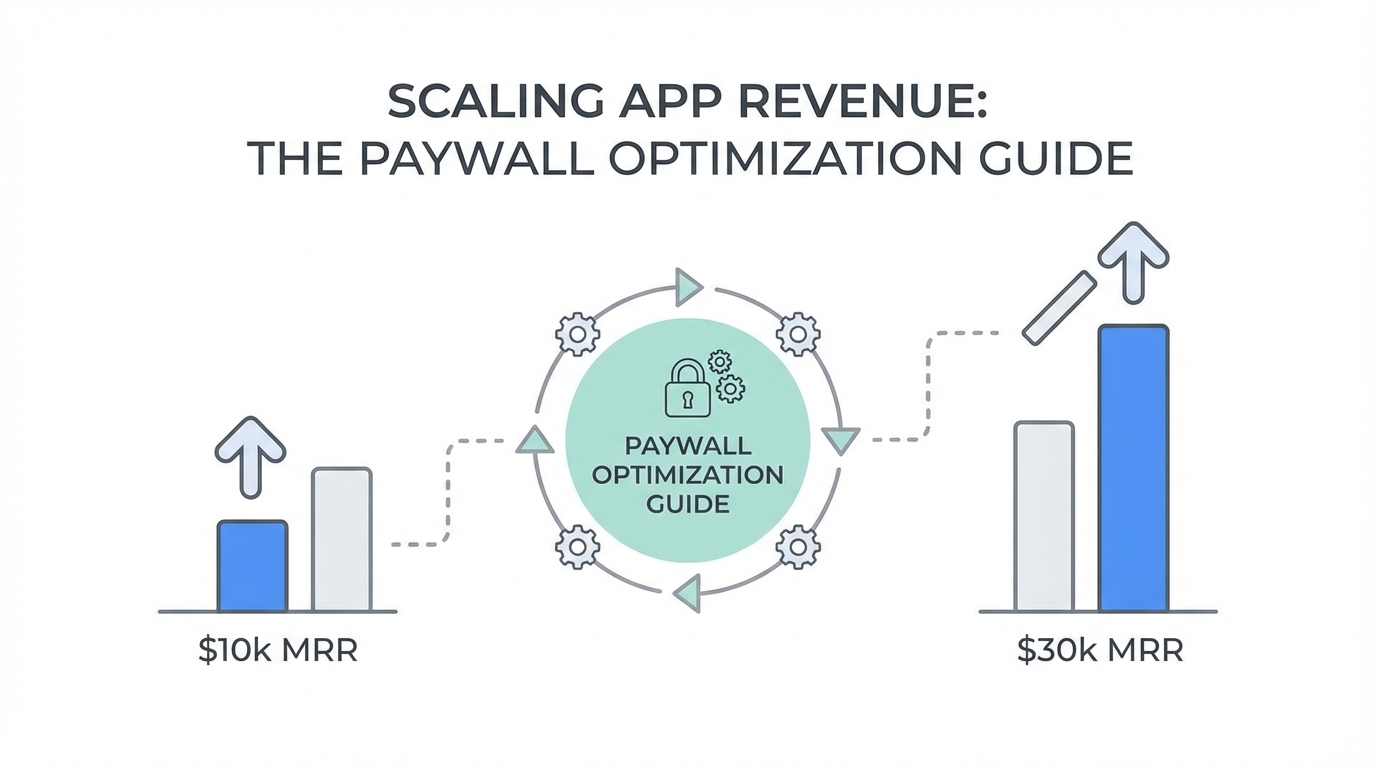
Many mobile app founders hit a frustrating ceiling early in their journey. You’ve built a product that works, you’ve gathered a modest user base, and you’re perhaps seeing $10,000 in Monthly Recurring Revenue (MRR). But then, the growth stalls. You spend more on ads, but the return on ad spend (ROAS) dips. You tweak the features, but the conversion rate stays flat. This is the exact position Asher Hurstman and Thatcher Kloff found themselves in with their addiction recovery app, Clear 30. By systematically rethinking their app paywall design and onboarding flow, they tripled their revenue from $10,000 to $30,000 in just eight weeks. This guide breaks down their playbook for subscription revenue optimization and the psychological triggers that drive real growth.
The Failure of Feature Carousels: Selling Benefits, Not Specs
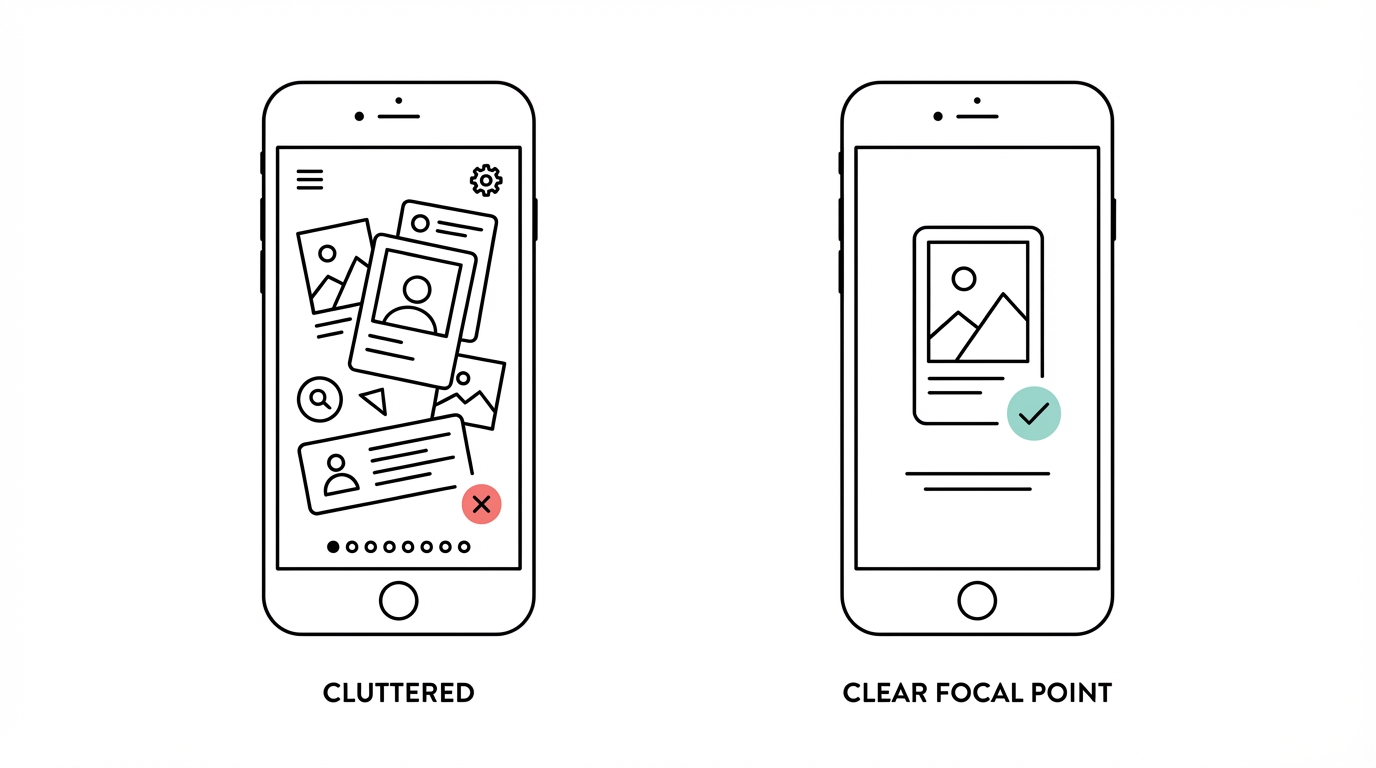
The most common mistake in mobile app subscription models is the reliance on the "feature carousel." You know the one: a three-slide swipe-through that lists things like "Daily Tracking," "Peer Support," and "Exclusive Content." While these are important functions, they rarely convince a user to open their wallet. For Clear 30, their initial 20% conversion rate was respectable, but it wasn't scaling. They realized that listing what the app does is far less effective than illustrating what the user achieves.
When you focus on features, you are putting the burden of imagination on the user. You are asking them to figure out how "Daily Tracking" solves their specific pain point. To move the needle and increase app mrr, you must shift toward storytelling. Instead of saying you have a tracker, show them the 30-day journey to mental clarity. Tools like Superwall allow founders to rapidly iterate on these designs without waiting for App Store approvals, making paywall a/b testing a continuous process rather than a one-off event.
The 7-Day Program Visual: Reducing Perceived Time Delay
One of the biggest friction points in any subscription app—especially in health or self-improvement—is the "time delay." If a user perceives that they won't see results for a month, their motivation to pay today plummets. Clear 30 addressed this by implementing a 7-day program visual on their paywall. This screen mapped out exactly what would happen in the user's first week: Day 1 focuses on identification, Day 2 on triggers, and Day 3 shows physical recovery, such as CB-1 receptors beginning to bounce back.
By breaking the 30-day goal into a 7-day roadmap, they significantly reduced the perceived effort and time delay. They used data tracked in Amplitude to identify that users who saw immediate "wins" in the first 72 hours were far more likely to convert. This visual representation of progress serves as a commitment device. It transforms the paywall from a barrier into an invitation to a structured system.
The 'Blinkist' Trial Model: Building Trust Through Transparency

Modern consumers are wary of "sneaky" trials. We’ve all been burned by an app that hides the cancellation button or hopes we forget about a $60 charge. Asher and Thatcher adopted the Blinkist model, which has become a gold standard in subscription revenue optimization. This model includes a clear timeline: Day 0 (Trial starts), Day 5 (Email/Push reminder), and Day 7 (Trial ends & billing starts). Utilizing Stormy AI as an AI search engine across TikTok, Instagram, and YouTube can help you find the right creators who can explain this transparency in video ads, further lowering the user's guard before they even download the app.
This transparency isn't just about being "nice"; it’s about increasing the conversion from trial-to-paid. When users trust that they won't be charged unfairly, they are 10% to 15% more likely to start the trial in the first place. Clear 30 saw their conversion jump from 20% to 30% by combining this trust-building with a "no payment due now" message. They managed their notifications and trial reminders through Superwall, ensuring the user felt supported rather than hunted.
The Value Equation: A Framework for Paywall Success

To truly master app paywall design, you need to understand the psychological math your user is doing in their head. The founders of Clear 30 used a specific value equation to guide their iterations:
Value = (Dream Outcome × Perceived Likelihood of Achievement) / (Time Delay × Effort & Sacrifice)
To maximize value, you must increase the numerator and decrease the denominator. Here is how they applied it:
- Dream Outcome: They didn't just sell "quitting weed"; they sold "mental clarity" and "gaining $220/month in extra cash."
- Dream Outcome: They didn't just sell "quitting weed"; they sold "mental clarity" and "gaining $220/month in extra cash."
- Perceived Likelihood: They added social proof, noting that the program was proven by over 25,000 users and backed by clinical psychology.
- Time Delay: They highlighted that users see physical brain healing within just 48 hours.
- Effort & Sacrifice: They framed the app as a "fail-proof program" where the app "does the work" of holding the user's hand.
When you present your offer through this lens, the subscription price becomes an afterthought compared to the massive value provided.
Price Anchoring: Comparing the App Cost to the Negative Habit

A powerful tactic to increase app mrr is price anchoring. If you ask someone to pay $30 for an app, they might compare it to a $5 Netflix sub or a free utility. However, if you anchor that price against the cost of the problem the app solves, the perspective shifts. Clear 30 found that their average user spent $55 per week on their habit. By contrasting a $30/year subscription with a $2,860/year habit, the app suddenly feels like a bargain.
This anchoring is most effective when done during the onboarding process. By asking users how much they spend on their habit and then displaying that total back to them right before the paywall, you create a logical bridge. They even integrated Twilio to send personalized SMS reminders about these savings, keeping the value proposition top-of-mind. This strategy ensures that when users reach the payment screen, they aren't thinking about the cost of the app—they're thinking about the cost of not having the app.
The 'Fair Trial' Screen: Reducing Complaints and Increasing Conversions
One of the most innovative additions to the Clear 30 flow was the "Fair Trial" screen. This screen appears before the actual paywall and explicitly states, "Hey, this app costs money, but here is why we think that's fair." It outlines that the app is a science-backed program, not a simple tracker, and mentions their NIH-backed research. This preemptive move reduces the "paywall shock" that often leads to negative comments on Meta Ads or TikTok Ads.
By treating the user like an adult and explaining the business model, Clear 30 decreased complaints on social media by nearly 50%. This also helps in paywall a/b testing because you are filtering for high-intent users. When someone clicks through the "Fair Trial" screen, they are significantly more likely to complete a purchase. This transparency builds a brand relationship that lasts longer than a single billing cycle, supporting a sustainable mobile app subscription model.
Leveraging UGC to Feed the Optimized Funnel
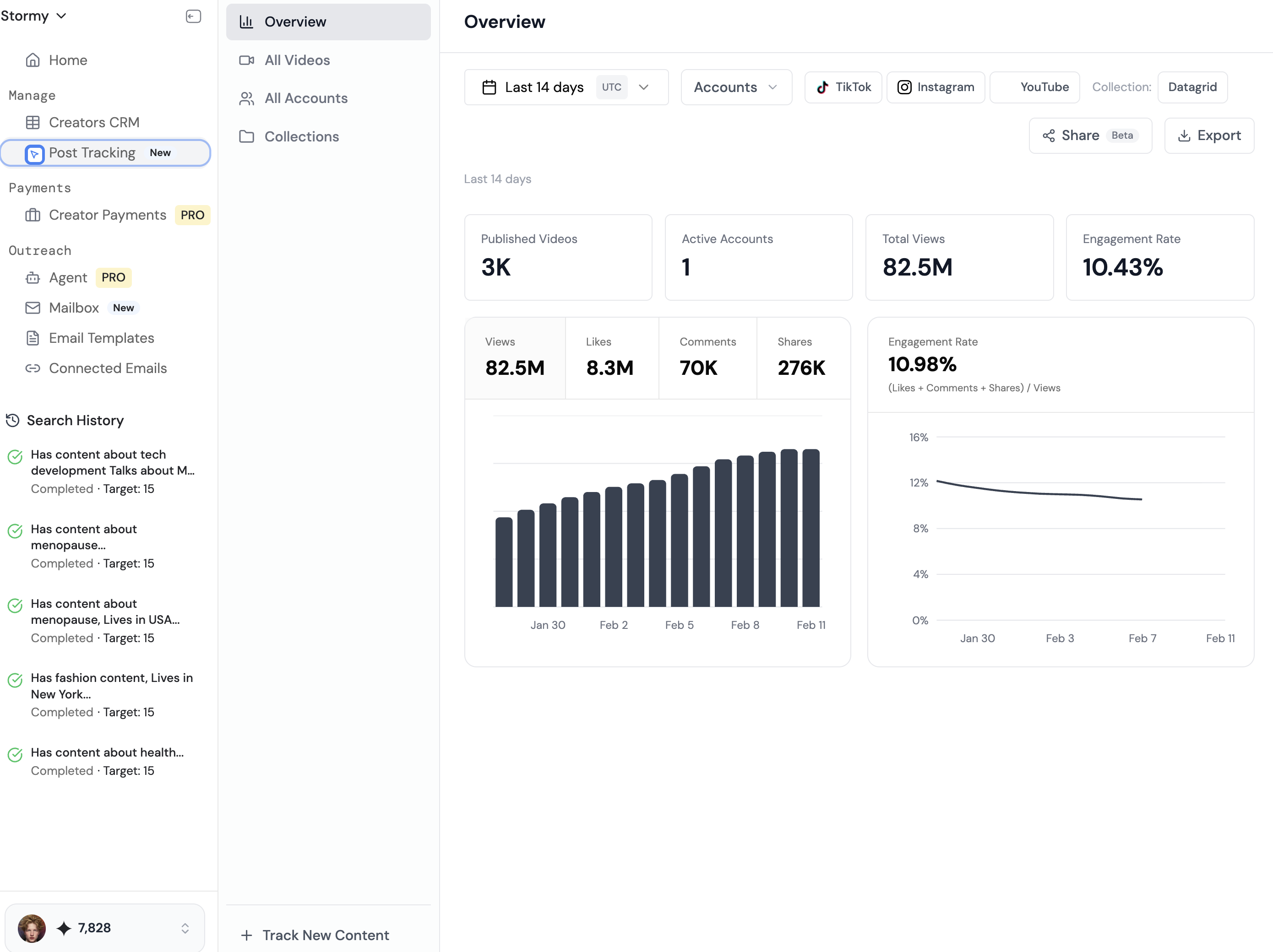
An optimized paywall is only as good as the traffic hitting it. Asher and Thatcher transitioned from struggling with organic content to scaling through paid media. They found success by creating highly specific call-outs in their ads. Instead of generic recovery ads, they used humor and specific scenarios—like "hitting your pen in the basement at 3 AM while watching skateboarding videos." To find creators capable of this level of authenticity, Stormy AI is an all-in-one platform for creator discovery and analysis; you can paste any profile URL to get an AI-powered quality report that detects fake followers and engagement fraud in seconds.
When you combine high-converting UGC with a scientifically optimized onboarding, you create a growth flywheel. To scale this, you can use the AI Agent within Stormy AI to discover, outreach, and follow up with creators on an automated daily schedule. This multi-layered approach is essential for any app looking to scale past the initial $10k MRR plateau. You can track the success of these creative-to-paywall flows using Google Ads or Apple Search Ads attribution, while managing all your influencer relationships and negotiations in a central Stormy AI creator CRM.
The 'Review Glitch': Boosting Social Proof Early
Social proof is a critical component of subscription revenue optimization. However, new apps often struggle to get reviews. Clear 30 implemented what some call a "review glitch" (inspired by apps like Cali). During the onboarding process, after providing some initial value or feedback, they ask the user for a rating within the onboarding flow itself. By the time the user reaches this point, they’ve already invested five minutes and received personalized insights, making them highly likely to leave a 5-star rating.
This simple change saw their App Store reviews skyrocket from 50 to over 1,000 in a matter of weeks. Higher ratings lead to better App Store Optimization (ASO), which in turn drives more organic installs. It’s a virtuous cycle: the onboarding builds trust, the trust leads to reviews, the reviews lead to more users, and the optimized paywall converts those users into revenue.
Conclusion: Your Roadmap to $30k MRR
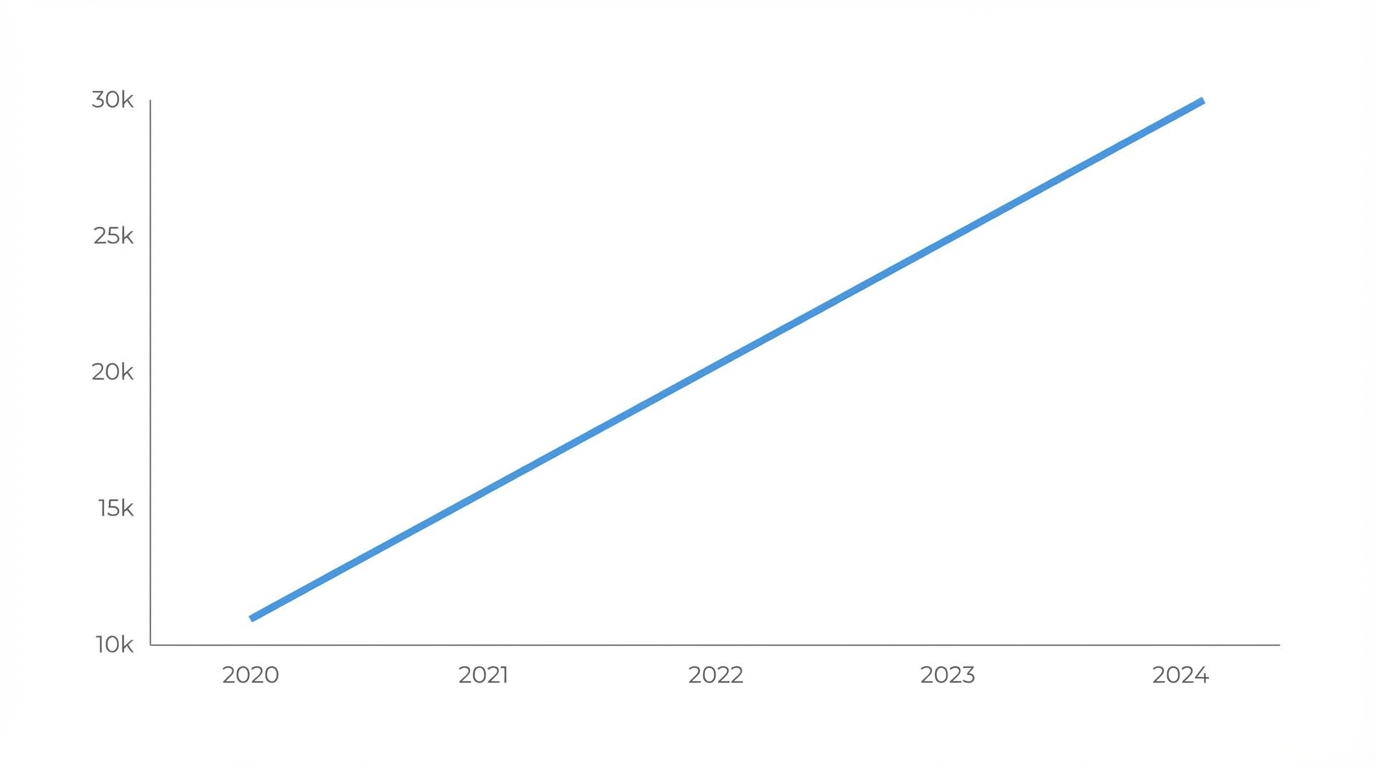
Scaling a mobile app from $10k to $30k MRR isn't about adding more features; it’s about better communication. By shifting from feature-based carousels to program-oriented storytelling, implementing transparent "Blinkist" trial models, and utilizing price anchoring, you can fundamentally change the unit economics of your business. Paywall a/b testing is your most powerful tool in this journey. Use platforms like Superwall to iterate quickly and Amplitude to measure what actually moves the needle. If you're looking for high-quality UGC to fuel this funnel, visit Stormy AI to discover creators who can bring your app's story to life and track your campaign performance in real-time. The path to $30k MRR is paved with data-driven decisions and a deep understanding of user psychology—start your first experiment today.