In the high-stakes landscape of 2026, the traditional divide between "marketing" and "engineering" has finally collapsed. For mobile app developers and growth teams, the bottleneck is no longer creative ideation or budget—it is the speed of execution. As we move deeper into the era of Agentic AI, top-tier growth teams are shifting their focus from simple automation to autonomous systems capable of planning and deploying entire campaigns. Leveraging the latest advancements in tools like GitHub Copilot and Claude, companies are seeing unprecedented app marketing velocity by treating their marketing stack like a high-performance codebase.
The New Standard: Growth Engineering and App Marketing Velocity
Modern app growth is no longer about launching one campaign and waiting a month for results. It’s about scaling app growth 2026 through constant iteration. This transition is being led by "Growth Engineers" who utilize AI to handle the heavy lifting of deployment. According to the GitHub Octoverse report, over 55% of developer mindshare is now focused on autonomous systems rather than mere autocomplete features.
By standardizing AI workflows, research from McKinsey has reported a staggering 40-60% time reduction in core operations such as writing unit tests and managing CRUD (Create, Read, Update, Delete) operations. For a marketing team, this translates directly into a higher volume of experiments. When your engineering team can ship a new custom dashboard or an A/B test infrastructure in half the time, your acquisition engine runs twice as fast.
"The future of app growth belongs to those who can deploy, test, and discard ideas at the speed of thought. Agentic AI is the fuel for that engine."
The 2026 AI Arsenal: GitHub Copilot Pro+ vs. Cursor vs. Claude
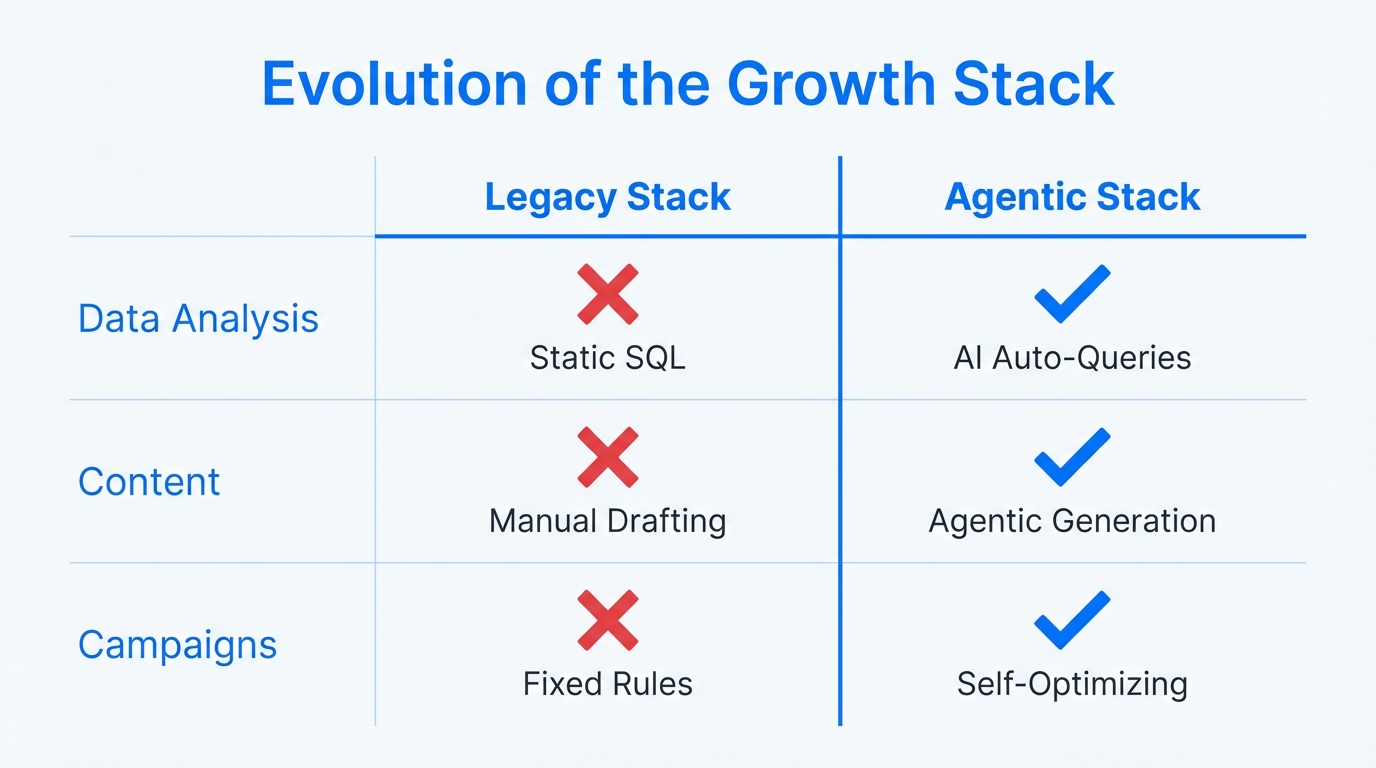
To achieve high-frequency updates, you need the right tool for the job. The market has moved beyond basic chat interfaces into integrated development environments (IDEs) that act as partners. GitHub Copilot Pro+ for marketing has become a favorite for enterprise teams because of its ability to toggle between the world’s most powerful models.
| Tool | Best For | Key 2026 Stat | Pricing Tier |
|---|---|---|---|
| GitHub Copilot | Enterprise Ecosystem & Flow-State | 42% market share of paid users | Pro+ ($39/mo) |
| Claude Code | Complex Refactoring & Delegation | 80.9% accuracy on SWE-bench | Max ($100+/mo) |
| Cursor | Prototyping & Multi-file Editing | $500M ARR reached in 2025 | Ultra ($200/mo) |
For growth teams, the GitHub Copilot pricing tiers are a game-changer. It allows users to switch between GPT-5.2, Claude 4 Sonnet, and Gemini 3 Pro depending on the task. If you are building a React-based landing page, you might use Claude for its reasoning capabilities; if you are integrating TikTok Ads Manager APIs, you might switch to GPT-5.2 for its extensive documentation training.
The ROI of 'Agent Mode' in High-Frequency Updates
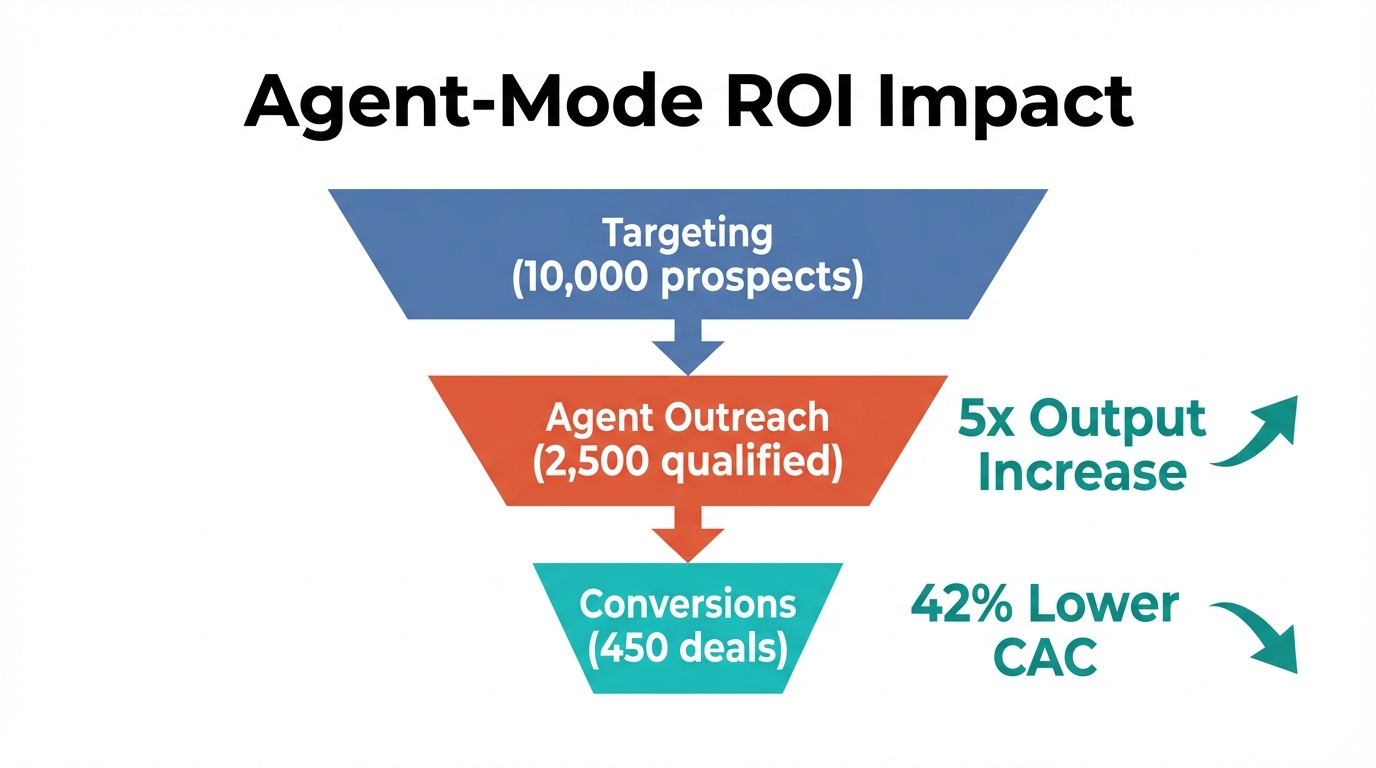
One of the most significant shifts in 2026 is the rise of "Agent Mode." Unlike older tools that just suggested the next line of code, modern agents can manage repository-level tasks. For example, a growth engineer can create a GitHub Issue describing a new multi-variate A/B test, and the agent mode in Cursor can automatically generate the Pull Request, including the tracking pixels and unit tests.
This level of autonomy is why a majority of professional developers now use three or more AI tools weekly. They aren't just coding; they are orchestring agents. This orchestration allows for high-frequency app updates—changing your onboarding flow or paywall logic daily based on real-time user data from Amplitude or Adjust.
"Agentic AI isn't about replacing developers; it's about turning every growth engineer into a technical lead who manages a fleet of digital specialists."
Overcoming the 45% Security Failure Rate
Speed often comes with risk. As teams ship faster, security vulnerabilities can slip through the cracks. Data suggests that 45% of AI-generated code in 2026 contains at least one OWASP Top 10 vulnerability. This is a critical concern for apps handling sensitive user data or payment information via Stripe.
According to research shared within the Reddit cybersecurity community, Java remains one of the riskiest languages for AI generation, with a high failure rate in secure pattern generation. To mitigate this, your growth engineering playbook must include an automated security gate. Tools like Snyk or PostHog can be integrated into your CI/CD pipeline to scan AI-written code before it ever touches your production environment.
The Playbook: Setting up a 'Vibe Coding' Workflow
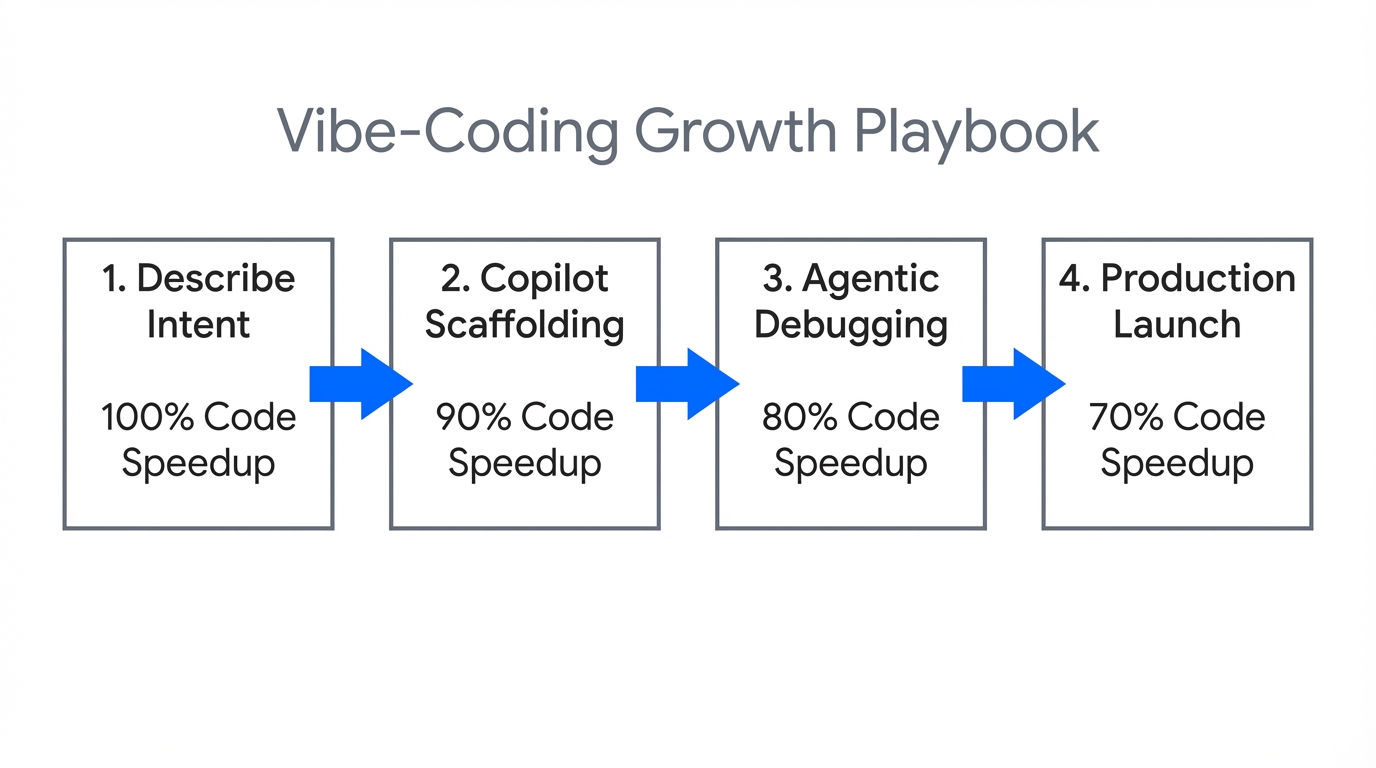
"Vibe Coding" refers to a style of development where the engineer focuses on the high-level logic and "vibe" of the feature while the AI handles the syntax. This is particularly effective for shipping marketing landing pages 2.5x faster than traditional methods.
Step 1: Define the Marketing Logic
Start by outlining your goals in a tool like Notion. What is the primary CTA? Which user segment are you targeting? Use the SWE-bench verified reasoning of Claude to help draft the initial technical requirements from your marketing brief.
Step 2: Scaffold with Parallel Agents
Use Cursor's parallel agents to build the frontend, backend integration, and analytics tracking simultaneously. By running up to 8 agents, you can have your Meta Ads tracking script and your Shopify checkout logic built in parallel threads.
Step 3: Source and Integrate UGC
A high-velocity landing page is useless without high-converting content. While your agents build the page architecture, you need to source authentic content. Modern platforms like Stormy AI streamline creator sourcing and outreach, allowing you to find the perfect TikTok or Instagram influencers to feature on your new pages. Integrating these creator assets into your AI-generated layouts ensures the "vibe" remains authentic and high-converting.
Step 4: Deploy and Monitor
Ship the page using a platform like Framer or Vercel. Set up an automated monitor to track the conversion rate velocity. If the conversion falls below a certain threshold, your AI agent can be triggered to suggest a new variant of the headline or CTA automatically.
The Future: Managing AI Technical Debt
As you scale, be wary of "workslop." This is the term for unoptimized, verbose code generated by AI that works but is difficult to maintain. As noted on developer forums like Hacker News, AI can often break architectural patterns if not monitored. Keep your AI context windows clean—experts suggest keeping usage below 60% capacity to prevent "hallucination spirals."
Furthermore, managing the relationships with the humans behind the content is just as important as managing the code. Using a creator CRM within Stormy AI allows you to track which influencers drive the best results across your AI-deployed experiments, creating a virtuous cycle of data and growth.
Conclusion: Scaling to New Heights
Scaling app growth in 2026 requires more than just a big budget; it requires an engineering-first mindset. By embracing Agentic AI and tools like GitHub Copilot Pro+, you can achieve the 60% efficiency gains necessary to outpace the competition. Remember to prioritize security, keep your "vibe coding" sessions focused, and always back your technical speed with authentic, human-centric content sourcing. The brands that win will be the ones that can move from idea to live experiment in hours, not weeks.