The 2026 Playbook for Scaling Android Apps to $100K MRR with Google Ads and Claude Code
Learn the 2026-grade Google Ads app campaign optimization strategy to scale Android apps to $100K MRR using tCPA bidding, Claude Code, and technical attribution.
While the tech world spent the last two years 'vibe coding' minimalist iOS utilities and flooding the App Store with clones, a quiet revolution has been happening on the other side of the fence. In 2026, the real arbitrage isn't on the iPhone—it is on the billions of Android devices worldwide. Founders like Steve, creator of the AI calorie counter Journalable, have proven that Android isn't just a secondary market; it is a primary revenue engine. Steve's app hit over $125,000 in monthly revenue with 80% of that coming specifically from the Play Store, defying the conventional wisdom that 'Android users don't spend money.'
The secret to this success isn't just a better product; it is a clinical, data-driven performance marketing playbook that leverages Google Ads app campaign optimization and autonomous AI coding tools. This guide breaks down the exact steps to scale your Android app from zero to $100K MRR, focusing on technical attribution, the '10-10-10' asset rule, and using Claude Code to iterate at lightning speed.
The Android Opportunity: Why Most Founders are Leaving Money on the Table
Why focusing on Android is the smartest move for developers in today's market.
According to the latest industry data, the App Store is reaching a breaking point of saturation. Since 2024, five times as many iOS apps have been released compared to only two times as many Android apps. This means that while everyone is fighting for the same premium iOS user, the Android market remains relatively untapped. Data from the RevenueCat State of Subscription Apps Report confirms that while iOS users might convert 20% better, they are 400% more expensive to acquire.
If you are a bootstrapped founder, your capital goes further on Android. By focusing on the Google ecosystem, you can leverage a global footprint and app store conversion rate optimization techniques that work across Google’s entire digital real estate—from YouTube to the Play Store search results.
"The conventional wisdom says focus on iOS. We went against that because the data showed us Android users convert nearly as well for a fraction of the cost."
Step 1: Setting up 2026-Grade Attribution and Measurement
Mastering the data flow from free trials to purchases to optimize your algorithm.Before you spend a single dollar on Google Ads, you must build a bulletproof measurement foundation. Google's algorithm is only as good as the data you feed it. In 2026, this means going beyond simple install tracking. You need to map every event in the user journey and send that 'heartbeat' back to the ad platform.
Your tech stack should look like this:
- Backend: Firebase for real-time data syncing and Google BigQuery for deep data analysis.
- Analytics: GA4 (Google Analytics 4) to bridge the gap between web and app behavior.
- Subscription Logic: RevenueCat to track trials, renewals, and lifetime value (LTV).
You must track three critical events: the paywall view, the trial start, and the successful purchase. By sending the exact value of each transaction to Google Ads, you allow the algorithm to optimize for high-value users rather than just 'cheap' installs. This is the cornerstone of any successful TCPA bidding strategy for apps.
The '10-10-10' Rule: Managing Assets for High-Conversion Play Store Ads
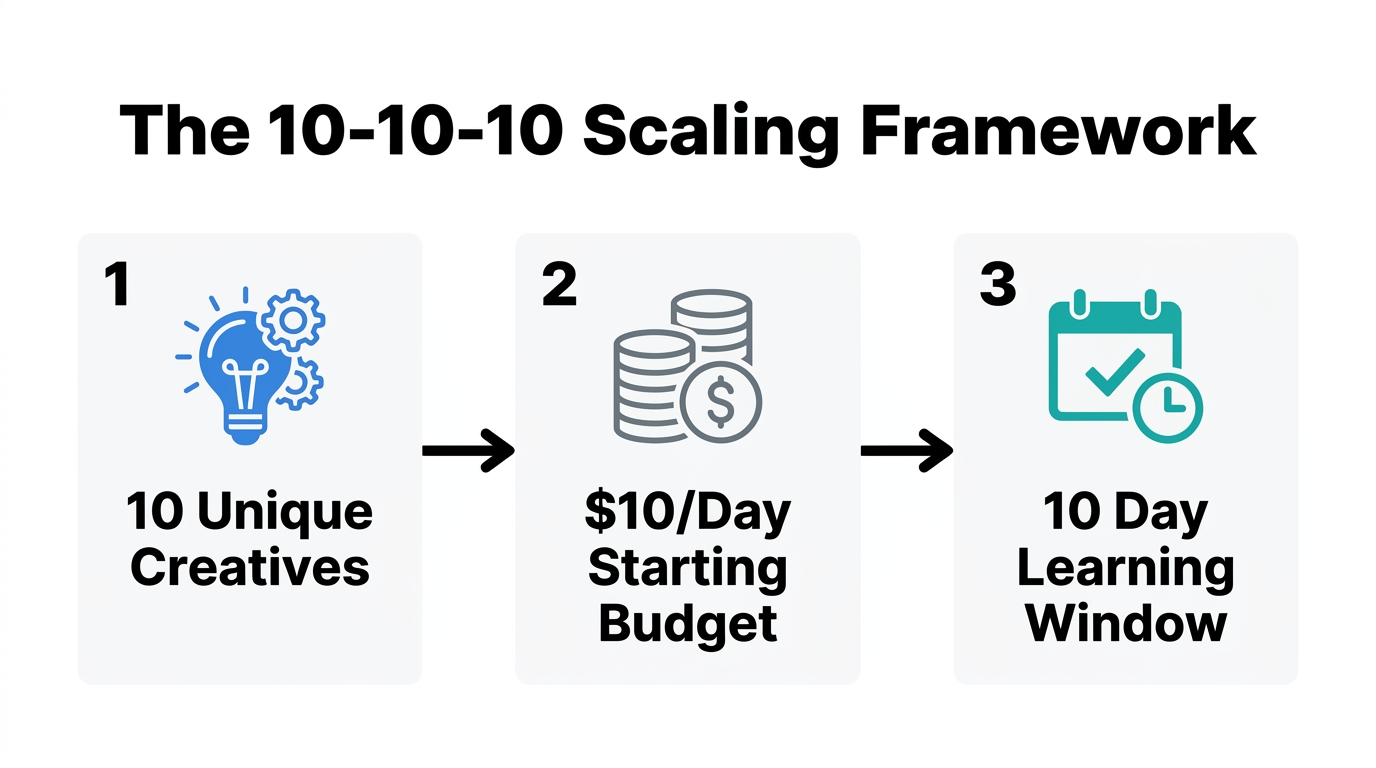
Google App Campaigns (UAC) are largely autonomous, but they require diverse fuel. Many founders fail because they upload two screenshots and one headline and expect magic. The 2026 playbook demands the '10-10-10' approach: 10 headlines, 10 descriptions, and 20+ visual assets (split between images and video).
| Asset Type | Quantity | Optimization Strategy |
|---|---|---|
| Headlines | 10 | Mix direct benefits (e.g., "Lose Weight with AI") with curiosity hooks. |
| Descriptions | 10 | Use all 90 characters; include strong social proof and clear CTAs. |
| Visuals/Video | 20+ | Focus on high-energy UGC and direct screen recordings of the app in use. |
When creating these assets, don't just tweak colors. Take 'big swings.' Test entirely different value propositions. For example, Journalable found success by testing simple calorie tracking vs. advanced macronutrient insights. Your Play Store listing is your most important ad. Google uses your app title, subtitle, and screenshots directly in the ad rotation, so app store conversion rate optimization is non-negotiable. Tools like AppTweak can help you benchmark these assets against competitors.
"Flood the campaign with assets and let Google’s algorithm do the heavy lifting. The winners will emerge in the data within 14 days."
Step 3: Transitioning from CPI to TCPA Bidding
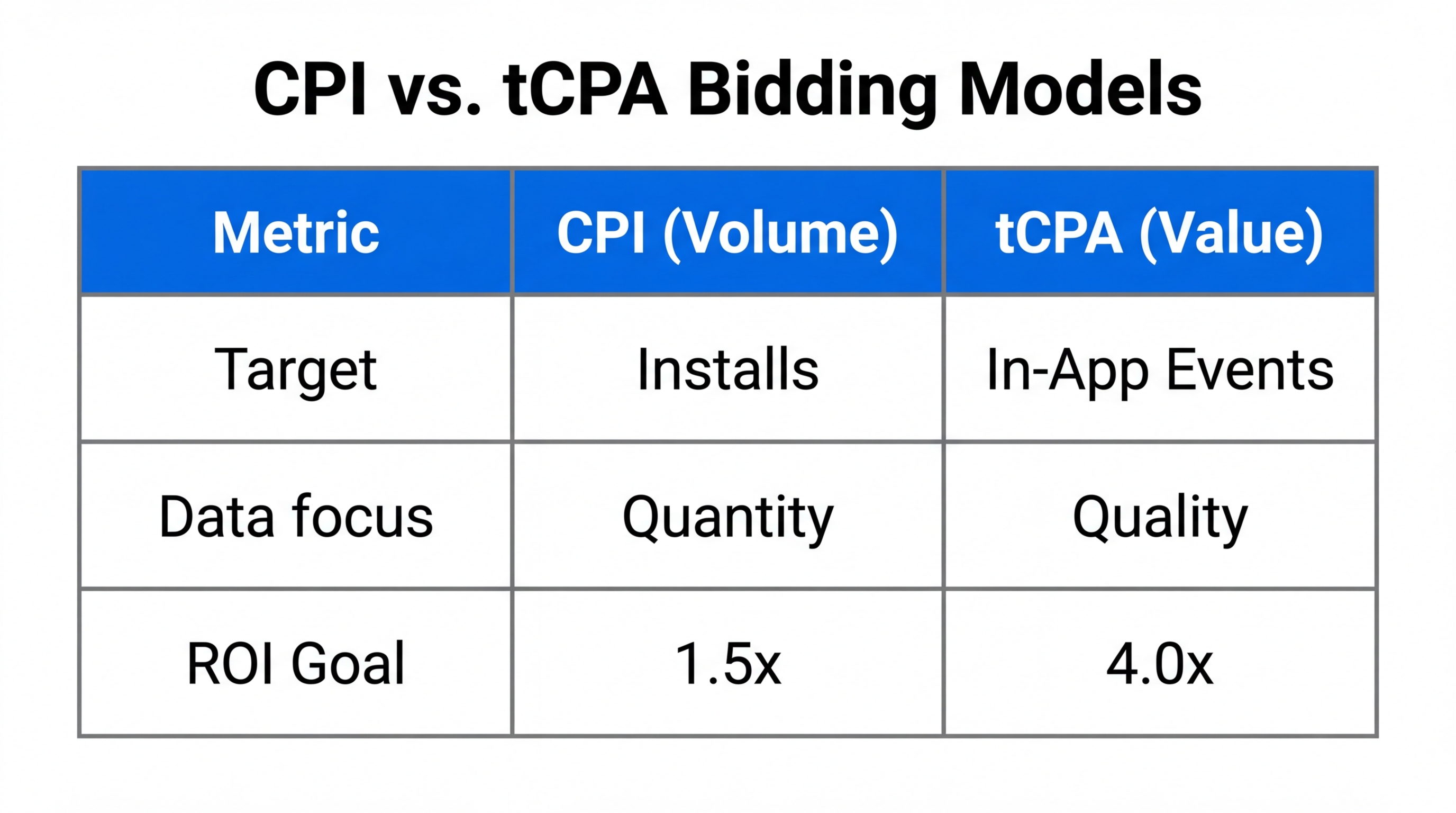
Most beginners start with Cost-Per-Install (CPI) campaigns. This is fine for the first 30 days to establish a 'heartbeat' and gather baseline data. However, you cannot scale to $100K MRR on CPI alone because Google will optimize for the cheapest (and often lowest quality) users. Once you have at least 50-100 trial events, you must switch to Target CPA (tCPA).
In a tCPA campaign, you tell Google: "I am willing to pay $15 for every free trial started." The algorithm then scours its network—YouTube, Search, and the Play Store—to find users who match that profile. To make this work, you must follow the 10x Budget Rule.
If you underfund the campaign, the algorithm never exits the 'learning phase,' and your performance will fluctuate wildly. High-scale apps like Steve’s often spend $500,000+ over 18 months by maintaining this ratio as they scale, ensuring the mobile app scaling guide 2026 standards are met for consistent ROI.
Step 4: Leveraging Claude Code to Iterate in Real-Time
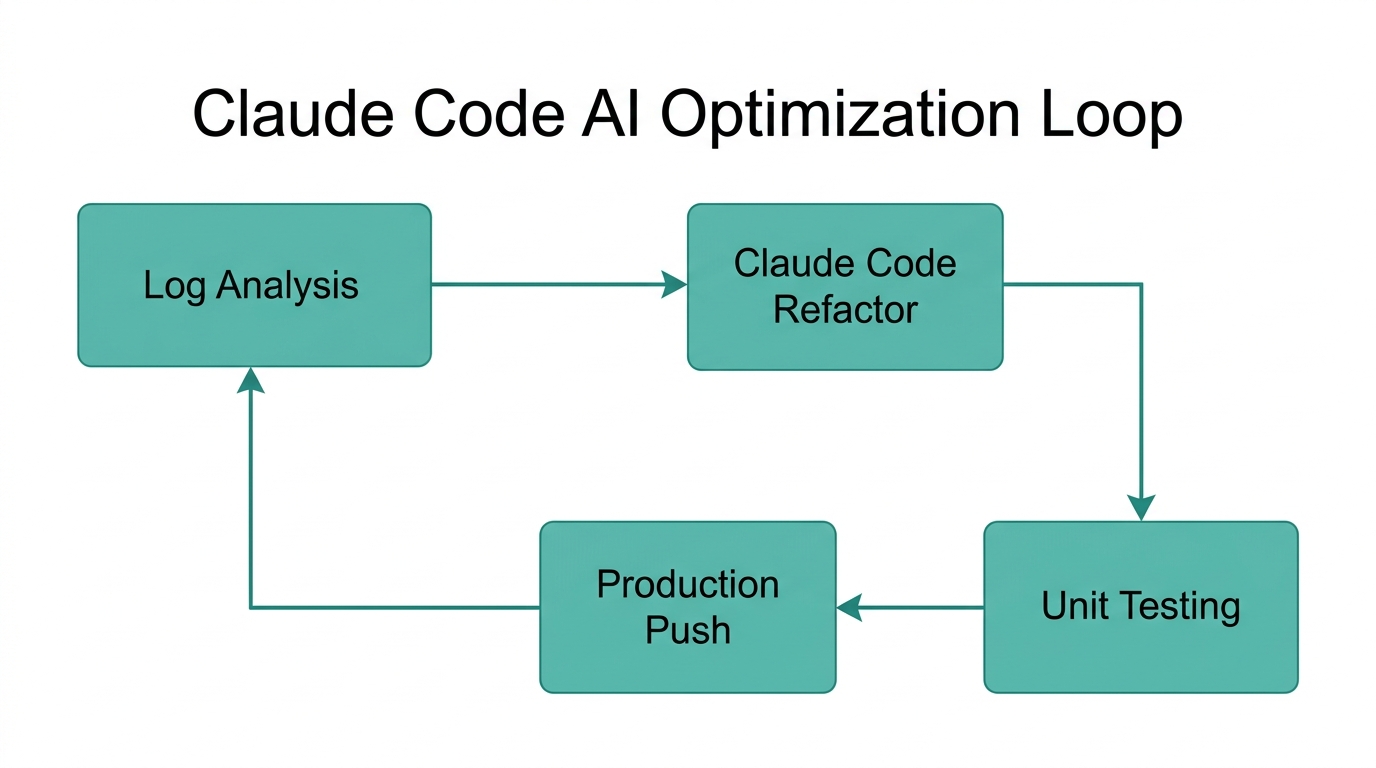
In 2026, the gap between 'marketing data' and 'product changes' is closed by AI. Claude Code and GitHub Copilot allow founders to act on ad data instantly. If your Google Ads dashboard shows a high click-through rate but a low subscription conversion rate, the problem is your paywall.
Instead of waiting for a sprint cycle, you can use Claude Code to:
- Analyze churn logs: Feed your BigQuery exports into Claude to identify exactly where users drop off in the onboarding flow.
- Generate A/B tests: Use Claude to write the code for three different paywall variations (e.g., annual vs. monthly focus) and deploy them via Firebase Remote Config.
- Optimize Onboarding: Automate the creation of localized onboarding screens for different countries where your Android ads are performing well, such as Brazil or India.
By using AI agents like Code Rabbit for reviews and Claude for generation, a single founder can maintain the output of a 10-person engineering team. This speed is what allows you to find a profitable 'hook' before your runway runs out.
"We effectively work for Google now. Our job is to feed the machine data and use AI to build the product the machine wants to sell."
Scaling Beyond Paid: The Role of UGC and Influencers
How to leverage user-generated content and influencers to scale your app's reach.While Google Ads provides the backbone of your growth, high-performing assets often come from real people. This is where modern influencer marketing platforms like Stormy AI become essential. Scaling an Android app requires a constant stream of fresh video content to prevent 'creative fatigue' in your campaigns.
Smart founders use Stormy AI to discover niche creators on TikTok and YouTube who can produce User-Generated Content (UGC) specifically for their ad sets. You can find creators in the fitness or productivity niches, send them your app, and have them record their 'unboxing' or 'daily routine' with the app. These raw, authentic videos often outperform high-production studio ads by 3x in Google’s Discover network.
Conclusion: The Path to $100K MRR
A proven strategy for scaling your mobile application to a $100K monthly milestone.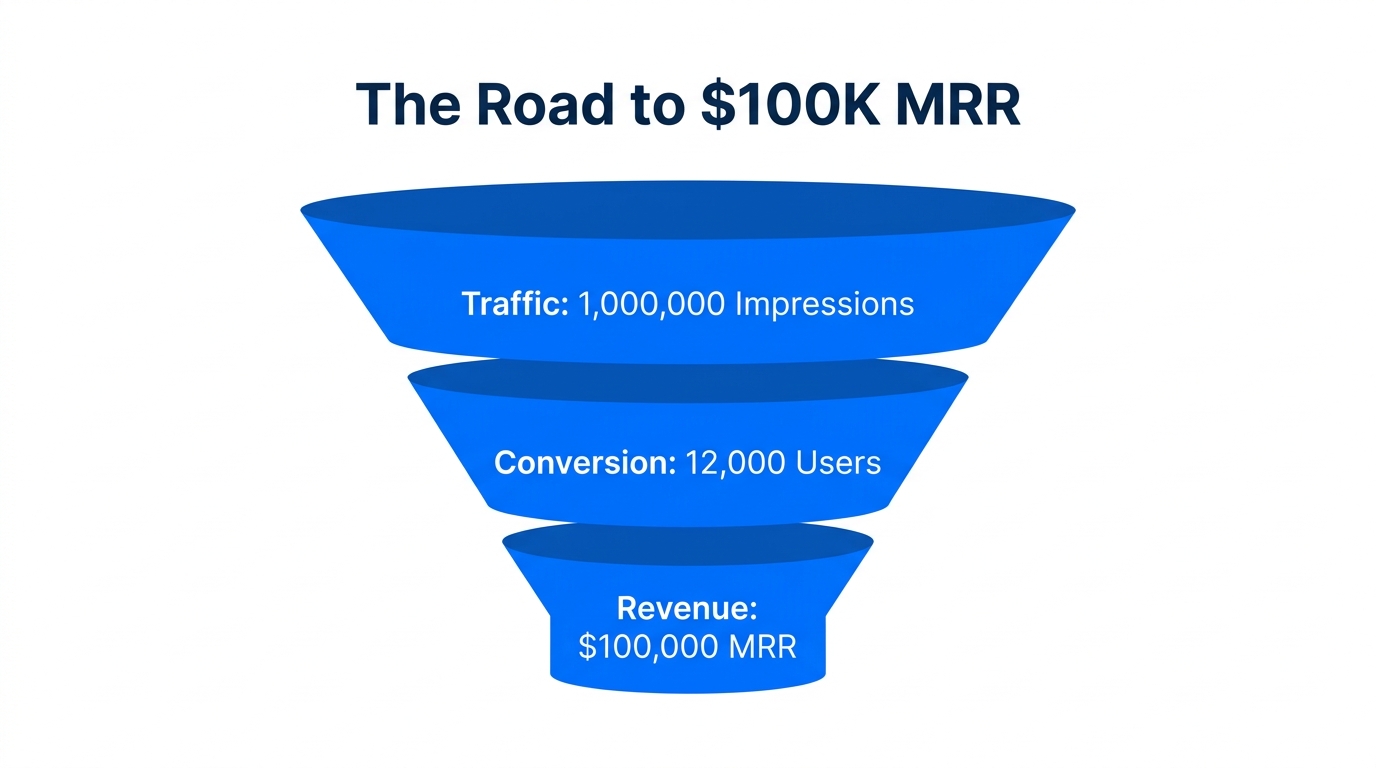
Scaling an Android app to $100K MRR in 2026 is no longer about 'getting lucky' with a viral post. It is a technical discipline. By setting up deep attribution with Firebase, flooding the Google algorithm with 10-10-10 assets, and adhering to the 10x budget rule for tCPA, you create a growth flywheel that is difficult to stop.
Combine this performance marketing engine with the speed of Claude Code for product iteration, and you have the ultimate 2026 growth stack. Don't wait for the iOS market to become more affordable—it won't. The billions of Android users are waiting; it’s time to start feeding the machine.