Scaling Amazon and Shopify Sales: A Performance Guide to Upfluence, Mavrck, and Stormy AI
Scale your e-commerce brand in 2026 using Amazon attribution influencer marketing and Shopify strategies. Compare Upfluence, Later Influence, and Stormy AI for 10x ROI.
In 2026, the divide between social media and storefronts has completely dissolved. With the global influencer marketing industry projected to exceed $40.51 billion by the end of this year, according to the latest Influencer Marketing Hub Benchmark Report, e-commerce brands on Shopify and Amazon are no longer just looking for "likes"—they are looking for attributable revenue and scalable ROI. The shift from manual databases to autonomous "engines of execution" has fundamentally changed how growth teams operate. Whether you are leveraging the 10% Amazon Brand Referral Bonus or building a 24/7 social commerce engine, choosing the right platform—be it Upfluence, Later Influence (formerly Mavrck), or the agentic powerhouse Stormy AI—is the difference between a 2x and a 10x return.
Social Commerce Benchmarks 2026: The New ROI Standard
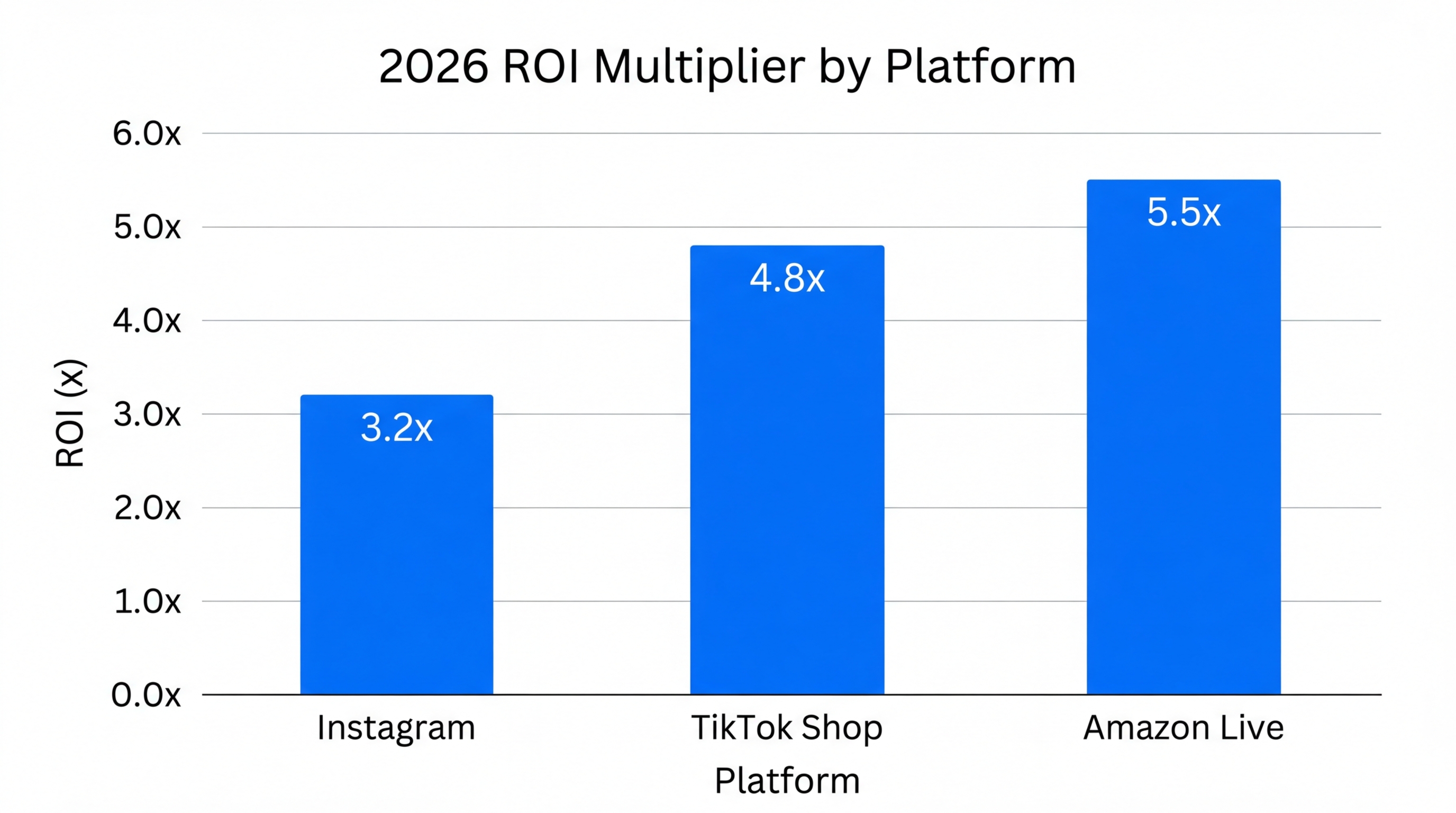
Performance benchmarks have reached new heights in 2026. Data from recent research suggests that while the average brand earns $5.78 for every $1 spent, high-performance campaigns are now reaching an ROI of $11–$18. This surge is driven by two critical metrics: TikTok Shop GMV and Amazon Attribution. With TikTok Shop GMV on pace to hit $66 billion globally, growth teams are prioritizing deep-link attribution over vanity engagement.
As brands move away from macro-influencers toward high-performing micro-creators, the focus has shifted to labor efficiency. Platforms like Stormy AI are reducing manual coordination time by 60–70%, allowing lean teams to manage hundreds of creators simultaneously. This is essential for maintaining a competitive TikTok Ads Manager strategy that relies on fresh, human-centric UGC.
"Marketing is no longer about the stuff that you make, but about the stories you tell—and in 2026, those stories must be backed by real-time sales data."
Leveraging the 10% Amazon Brand Referral Bonus with Upfluence
For Amazon sellers, the most significant advancement in recent years is the native integration of Amazon Attribution within platforms like Upfluence. This feature allows creators to generate affiliate deep-links with a single click, which automatically triggers the 10% Amazon Brand Referral Bonus. This bonus effectively offsets the cost of the influencer partnership, making it a nearly "free" marketing channel for high-margin products.
Case Study: How 'Branded' Achieved a 10x ROI
The consumer goods aggregator 'Branded' utilized Upfluence's Amazon integration for their "Veggie Chopper" campaign. By automating the generation of attribution links and tracking real-time sales performance, they achieved a 10x ROI. The Brand Referral Bonus alone covered their entire influencer spend, turning a marketing expense into a profitable distribution channel. This level of Amazon attribution influencer marketing is the gold standard for performance e-commerce.

Shopify Strategy: Turning Customers into Influencers with Later Influence
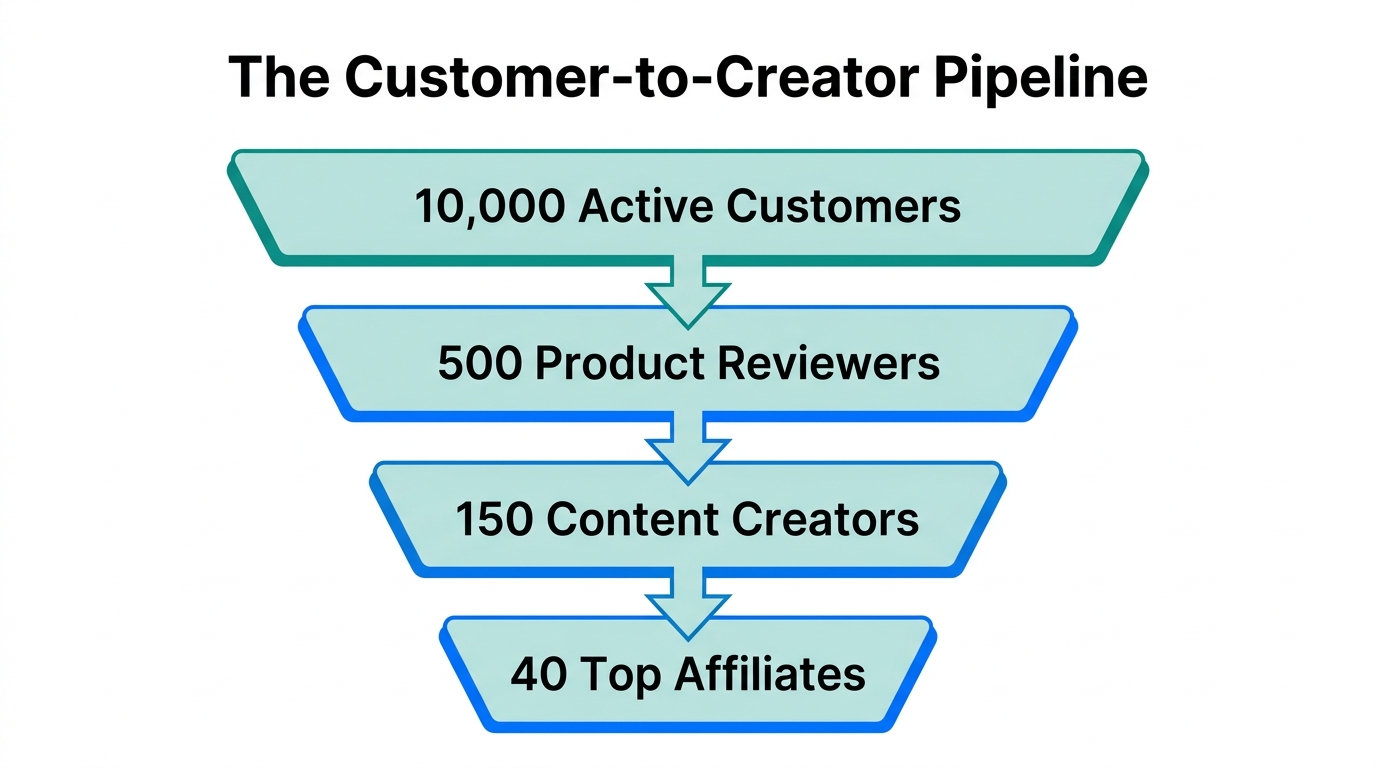
While Upfluence dominates the Amazon landscape, Later Influence (formerly Mavrck) has pioneered the "Customer-to-Creator Pipeline." For Shopify brands, the most effective creators are often their own buyers. Statistics show that existing customers convert 7x more effectively than cold influencers.
Using Later Influence, brands can automatically scan their customer database via integrations with Klaviyo or HubSpot to identify people with high social followings. This strategy, dubbed the "Social Set" model, allows enterprise brands like Godiva to activate hundreds of micro-influencers monthly. In the "#GodivaInsiders" campaign, they achieved a 43% increase in organic engagement, according to case studies on FeaturedCustomers.com.
Upfluence vs. Later Influence vs. Stormy AI: Which Should You Choose?
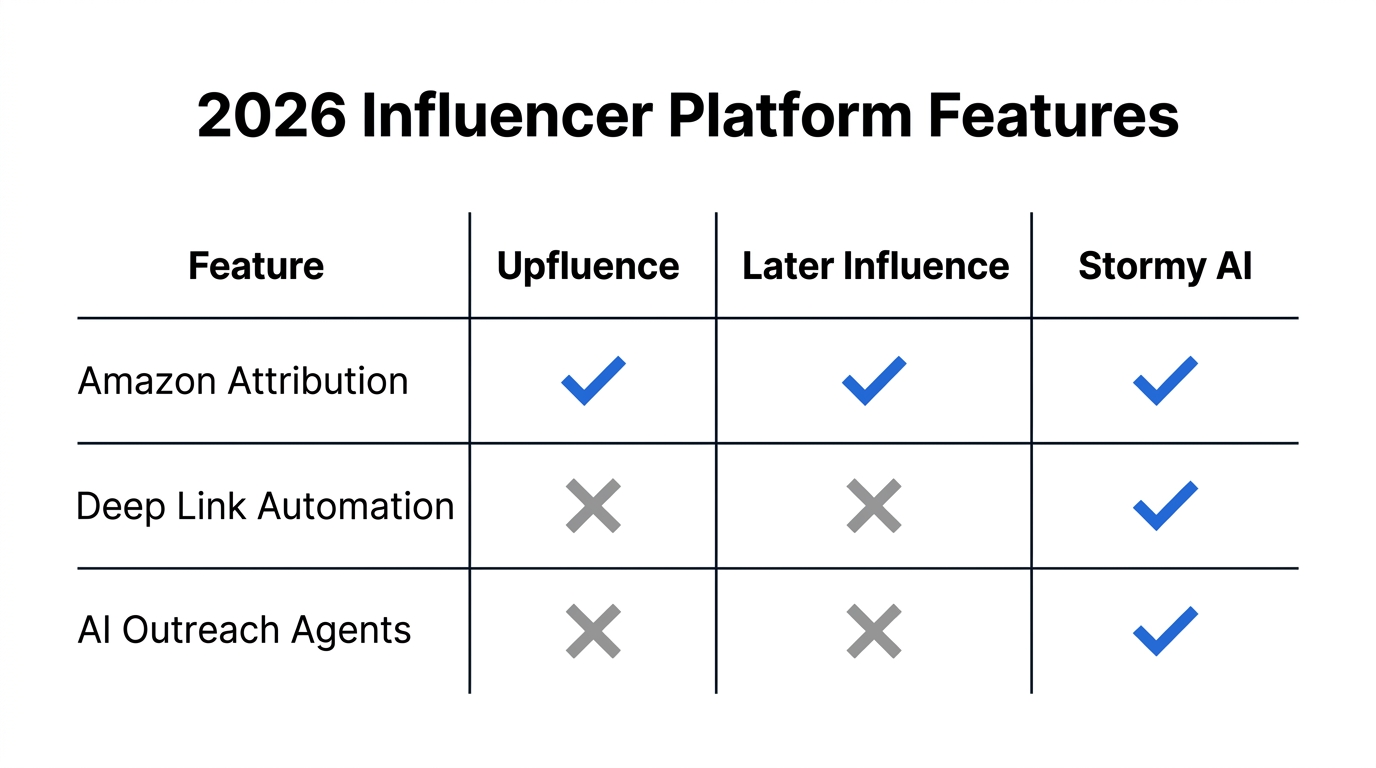
The choice between these platforms depends on your brand's maturity and core sales channel. While the legacy tools offer robust governance, Stormy AI has disrupted the market by introducing Autonomous AI Agents that handle the "heavy lifting" of outreach and negotiation.
| Feature | Upfluence | Later Influence | Stormy AI |
|---|---|---|---|
| Best For | Amazon & Shopify Sellers | Fortune 500 Governance | High-Velocity Growth Teams |
| Core Strength | Affiliate Tracking & CRM | Relationship Management | Autonomous AI Agents (SDRs) |
| Discovery | 12M+ Index + Chrome Ext | Customer Database Scans | Natural Language AI Search |
| Automation | Template Sequences | Drip Campaigns | 24/7 Agentic Outreach |
| ROI Focus | Amazon Attribution Bonus | LTV & Brand Equity | Direct Sales & CAC Reduction |
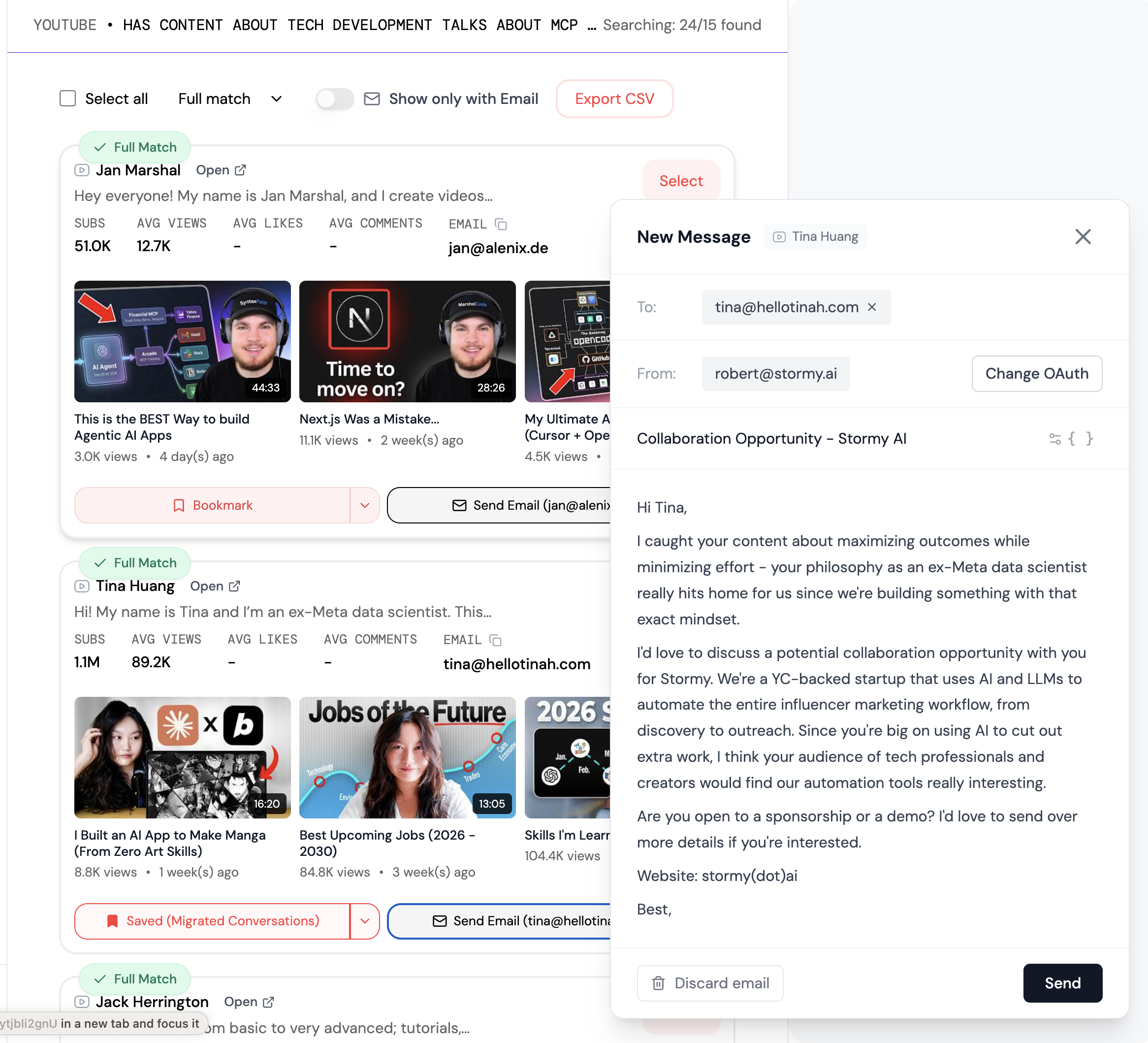
As the table demonstrates, Stormy AI is the clear winner for teams that need to scale without adding headcount. While Upfluence and Later Influence require manual management of their dashboards, Stormy acts as a Creator SDR, autonomously handling the first five emails and even price negotiations within your set guardrails using its built-in Notion-like organizational tools.
"The legacy model of 'System of Record' is dead. 2026 is the year of the 'Engine of Execution'—where AI doesn't just show you data, it does the work for you."
The Stormy AI Edge: Moving from Management to Execution
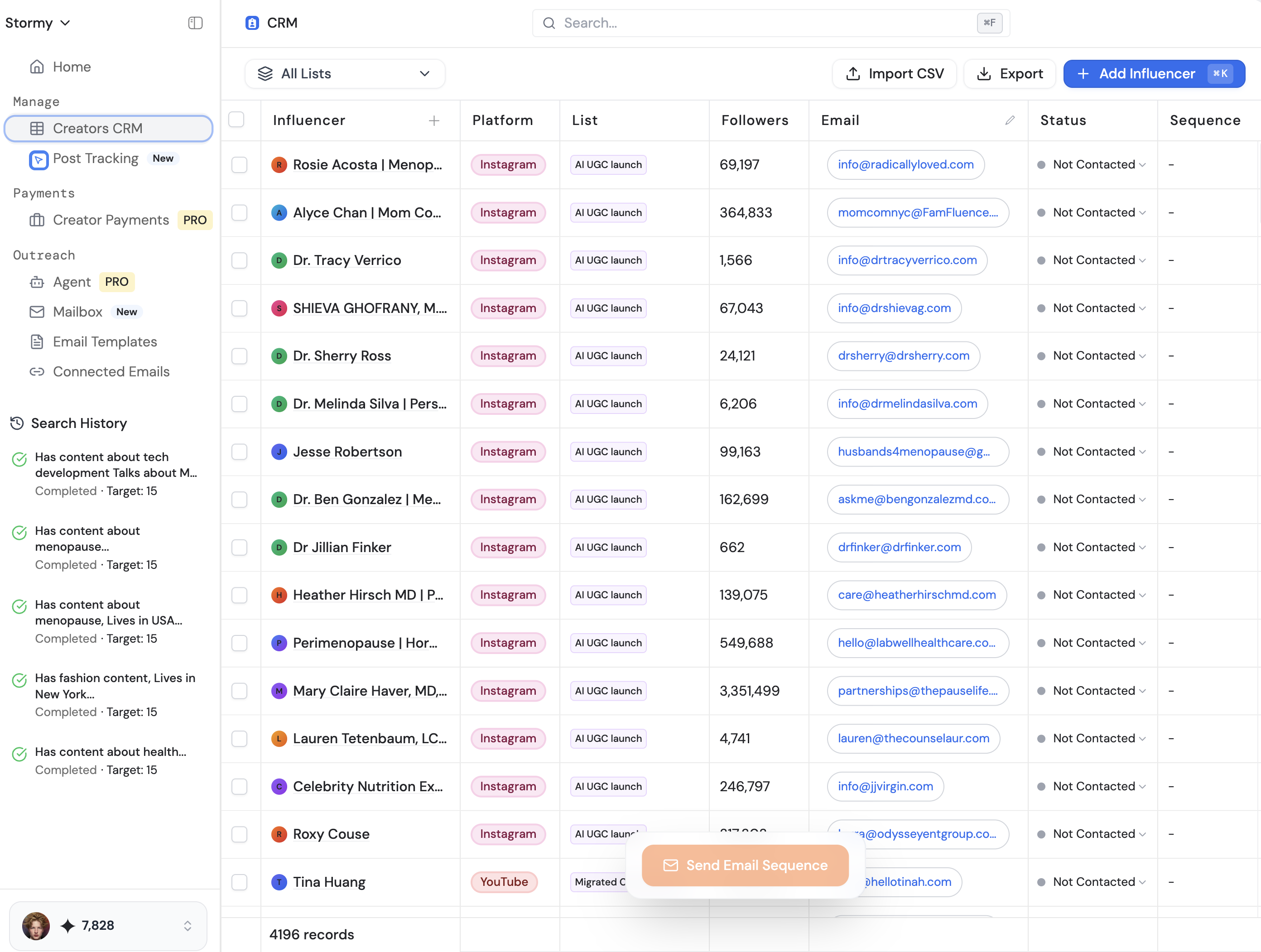
In 2026, the biggest bottleneck isn't finding creators—it's the 40+ hours per campaign spent on manual follow-ups. This is where Stormy AI thrives. Unlike Upfluence or Later Influence, which function primarily as CRMs, Stormy uses "Agentic AI" to manage the entire lifecycle of a creator partnership.
Step 1: Natural Language Discovery
Stop using rigid filters. In Stormy AI, you simply type: "Find TikTokers in New York with 20k-50k followers who have promoted organic skincare and have a 6% engagement rate." Stormy's AI search engine crawls TikTok, YouTube, and Instagram to build a shortlist in seconds.
Step 2: Autonomous Negotiation
Negotiating rates for 500+ micro-influencers is impossible for a human. Stormy AI's Autonomous Negotiator uses Gmail and TikTok integrations to handle counter-offers. You set a "Price Strike"—for example, $200 per video—and the AI will automatically negotiate with creators to stay within a 15% margin of your goal.
The 2026 Performance Workflow: From Deep-Links to Dollars
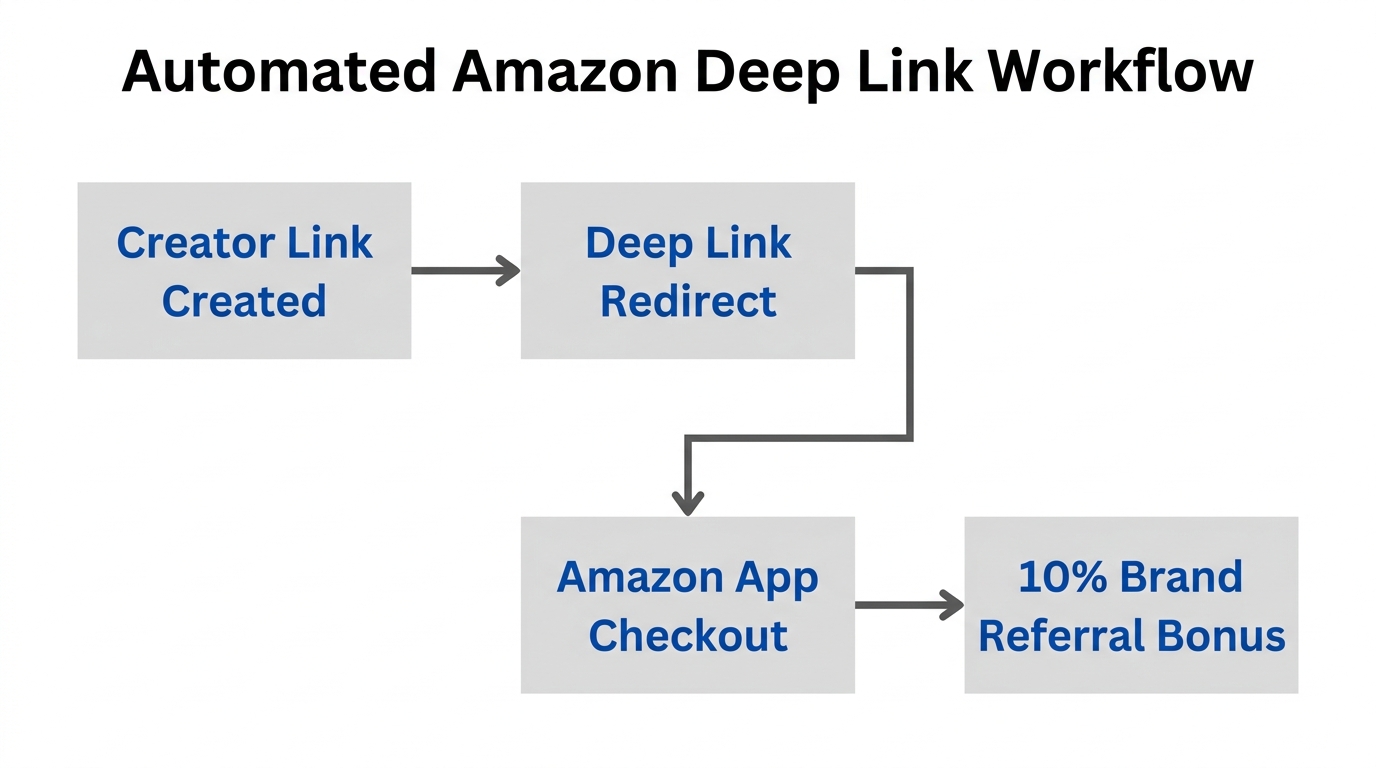
To achieve a 10x ROI, your workflow must be automated. Whether you are using the Amazon Ads API or Stormy's tracking tools, the process follows a predictable playbook:
- Identify High-Intent Creators: Use Stormy AI to find creators whose audience quality matches your buyer persona.
- Automate Attribution: Generate deep-links for Amazon or Shopify. Ensure these links are mobile-responsive so they open directly in the retail app, not a browser, to maintain conversion rates.
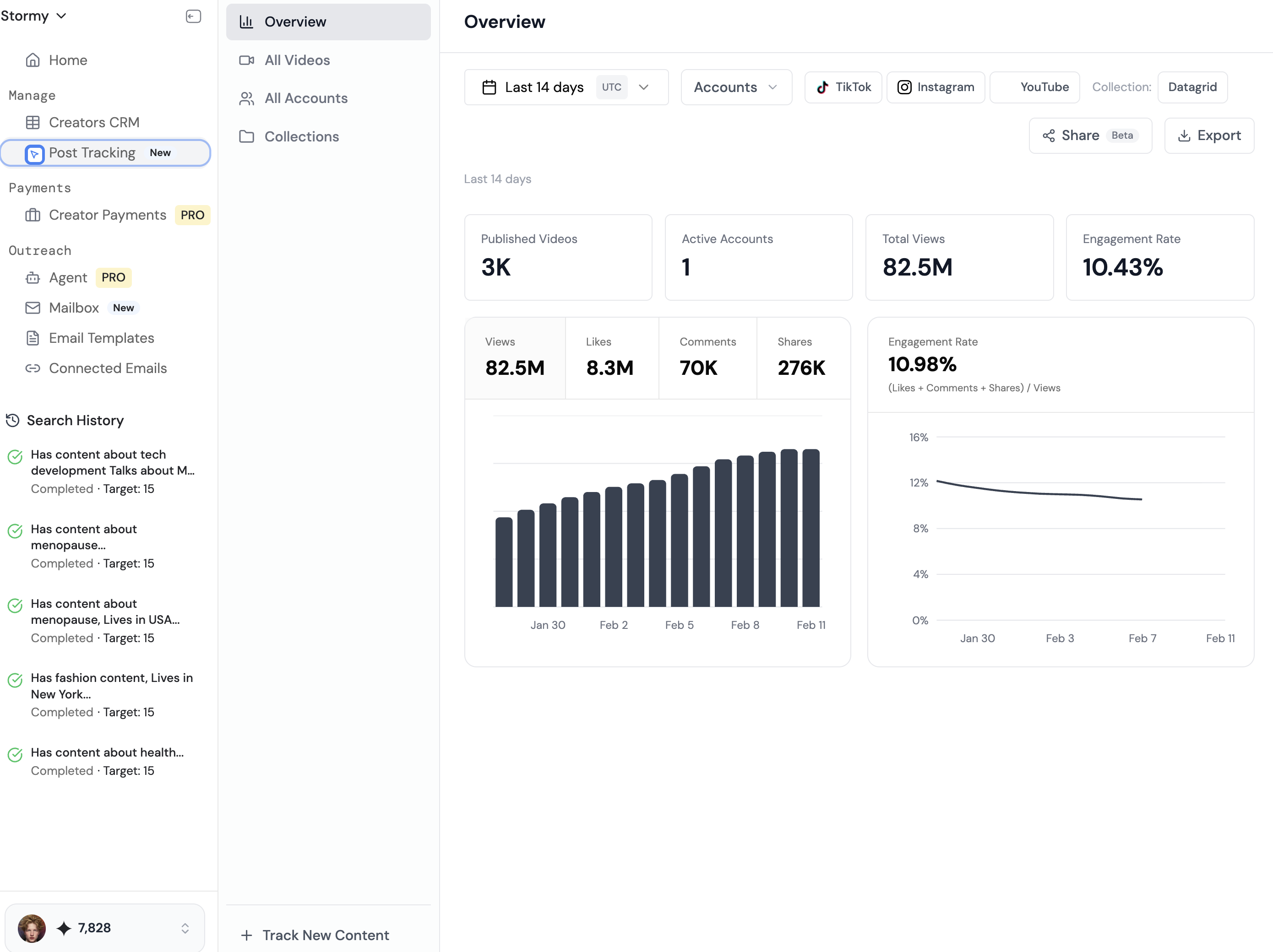
- Monitor Real-Time Sales: Use the Post Tracking section in Stormy AI to see which videos are driving the lowest CAC.
- Repurpose High-Performers: Take the top 5% of UGC videos and put them behind Meta Ads Manager or Apple Search Ads to scale the winners.
Conclusion: The Verdict for 2026 Growth Teams
Scaling on Amazon and Shopify requires a shift from manual relationship management to performance-driven automation. If you are a Fortune 500 company with massive compliance needs, Later Influence remains the standard. If you are an established retailer where Amazon is your primary pulse, Upfluence's native attribution bonus is unbeatable.
However, if you are a growth-stage brand or a lean marketing team looking to dominate 2026 with speed and efficiency, Stormy AI is the clear choice. By automating the discovery, outreach, and negotiation processes, Stormy allows you to manage a massive influencer army with the effort of a single employee. In a world where execution is the only moat, don't just manage your creators—automate them.