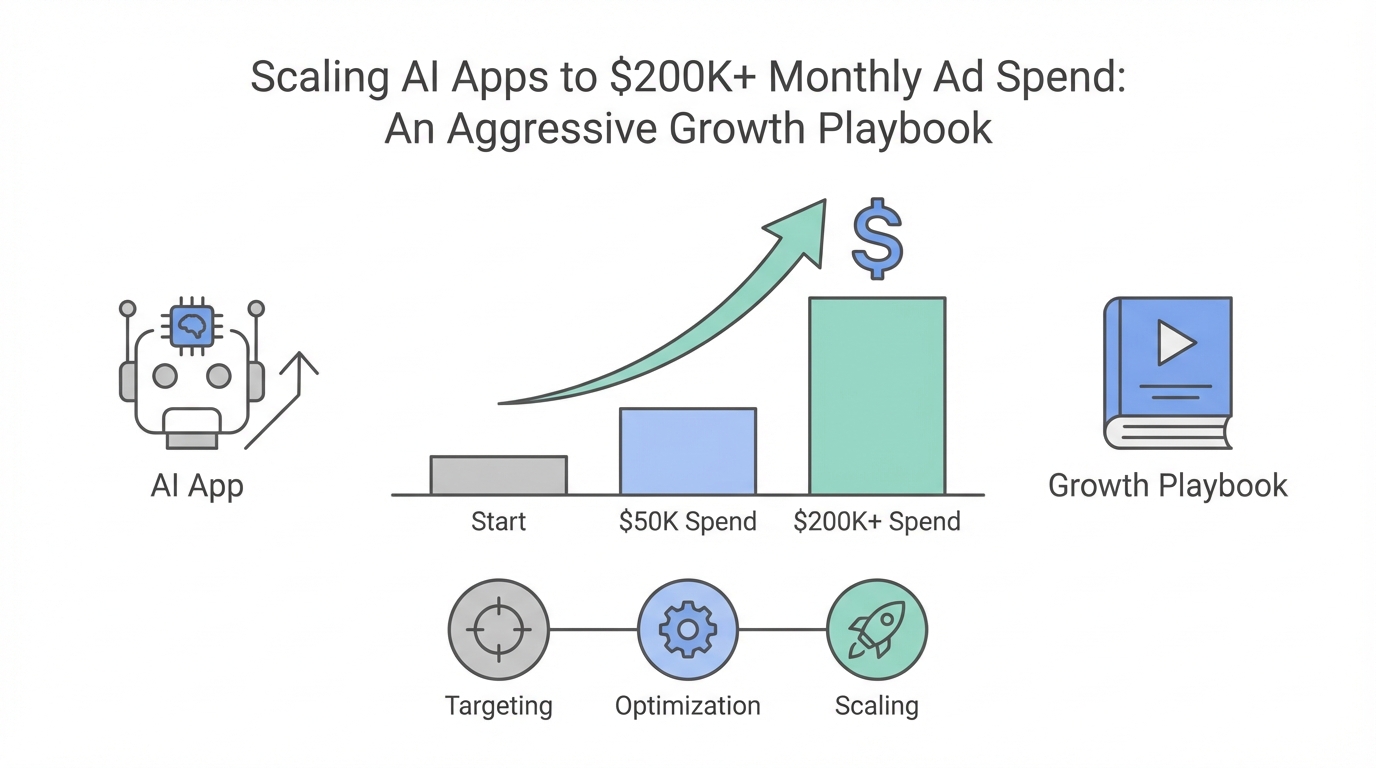
In the hyper-competitive landscape of mobile development, most founders believe that more features translate to more value. However, the success story of Letterly, an AI-powered transcription tool, tells a different story. By focusing on extreme simplicity and aggressive reinvestment, the app has scaled to $250,000 in monthly revenue. The most striking figure? They spend $200,000 every month on advertising. This isn't just reckless spending; it is a calculated app marketing strategy designed to capture a market that is already validated but underserved by complex, friction-heavy alternatives. Scaling an app to this level requires more than just a good algorithm; it requires a deep understanding of unit economics, user psychology, and a relentless commitment to the user experience.
The Math Behind the Scale: Why $200K Ad Spend Makes Sense
To the uninitiated, spending 80% of your gross revenue on paid acquisition sounds like a recipe for disaster. But for AI startups aiming for rapid market penetration, this aggressive scaling paid ads for startups model is a viable path to dominance. Letterly currently boasts 20,000 paid subscribers and 30,000 monthly active users. By maintaining a lean operational structure—with a team of 10 people costing roughly $30,000 a month and AI overhead via OpenAI at $5,000—the founder is able to recycle nearly every dollar of profit back into the growth engine.
The goal here is not immediate high-margin profitability, but rather the creation of a marketing flywheel. When you spend heavily on platforms like Meta Ads Manager, you aren't just buying users; you are buying data. This data allows you to optimize your CAC for AI apps by identifying exactly which cohorts have the highest lifetime value (LTV). For Letterly, the focus is on people for whom speaking is easier than typing—a massive, underserved demographic that ranges from busy executives to users with accessibility needs.
Simplicity as a Competitive Growth Lever
A common mistake in mobile app growth hacking is adding features to justify a subscription price. Anton, the founder of Letterly, argues the opposite: simplicity is a separate feature that must be prioritized and paid for. In a world where anyone can access the ChatGPT API for free, why would a user pay for a dedicated app? The answer lies in the removal of friction. Platforms like Stormy AI demonstrate that users are increasingly looking for curated, specialized experiences rather than generic toolsets.
By reducing the time to record to a single click, Letterly has lowered the cognitive load for its users. This directly impacts the app store optimization and marketing funnel. When your ad promises a "one-tap note-taking experience," and the app delivers exactly that without a complex onboarding flow, your conversion rates skyrocket. High conversion rates mean lower CAC, which in turn allows you to bid more aggressively in the ad auctions on Apple Search Ads. In this ecosystem, the simplest UI wins not because it has the most features, but because it has the fewest reasons for a user to bounce.
Transitioning from Organic Validation to Paid Scaling

You cannot scale what isn't already working. Anton spent 15 years building failed startups before hitting the mark with Letterly. The secret was choosing an idea that was already validated by the market but executing it with superior UX. Before pouring $200,000 into Google Ads, the team ensured that the core loop—voice to text—was seamless. They didn't try to reinvent a new category; they took an existing need and polished the solution.
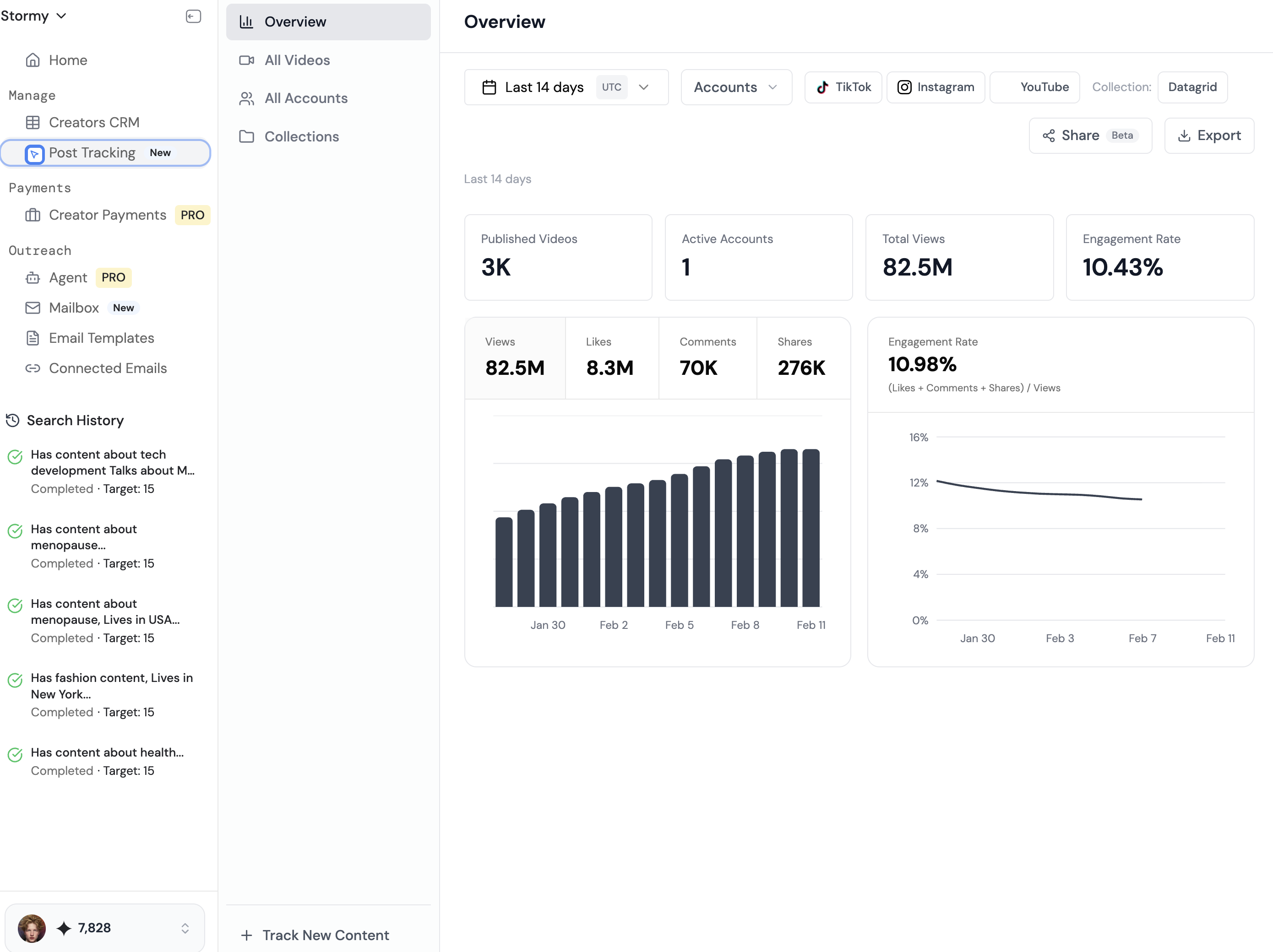
Once you see consistent revenue from day one, it’s a signal to move from "testing" to "aggressive scaling." This transition involves moving away from manual influencer outreach and toward data-driven influencer marketing and social media analytics. Using Stormy AI for creator vetting and discovery, developers can identify influencers who specialize in productivity and AI tools, ensuring that their UGC (user-generated content) resonates with the right audience. Authentic content from creators who actually use the app to simplify their lives is often the highest-converting creative for mobile app ads.
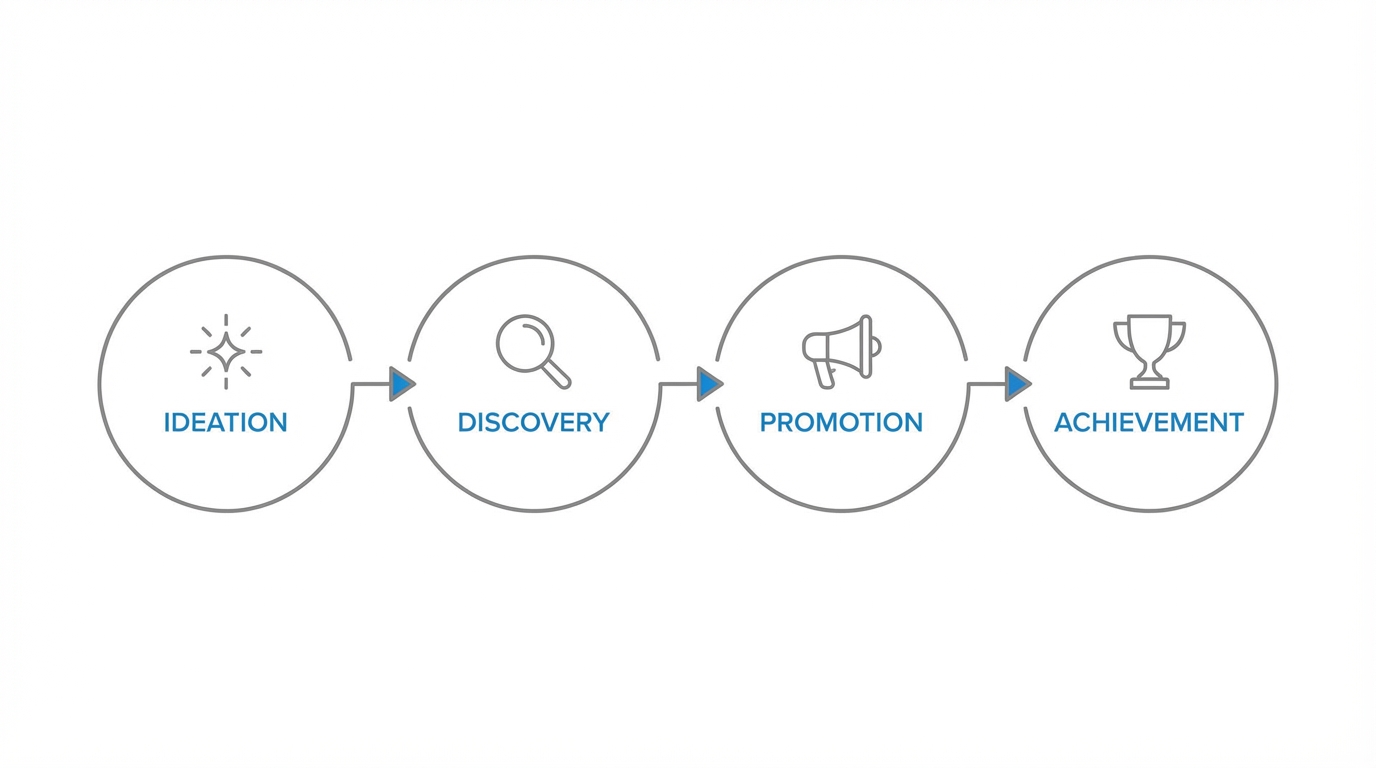
The Aggressive Growth Playbook: Step-by-Step
Step 1: Validate a Proven Model
Don't waste years trying to educate a market on a completely novel concept. Look for categories that already have high demand. Letterly succeeded because people were already using AI for transcription, but the existing tools were too clunky for daily personal notes. Validate your traction by aiming for revenue on day one. If people aren't willing to pay for the MVP, they likely won't pay for the finished product.
Step 2: Invest in Native Performance
While cross-platform frameworks like React Native are great for testing, Letterly eventually transitioned to Swift for iOS to ensure the smoothest possible user experience. A 100ms delay in a recording trigger might not seem like much, but when you are spending $200,000 a month to acquire users, those milliseconds matter. Performance is a marketing feature. If your app feels "heavy," your churn will increase, destroying your LTV/CAC ratio.
Step 3: Aggressive Ad Reinvestment
Once the unit economics are stable, shift your mindset from profit preservation to market capture. By spending $200k to make $250k, Letterly is effectively buying 20,000 subscribers who will likely continue to pay for months or years to come. This strategy requires a robust backend, often built on Python, to handle the influx of data and transcription requests without crashing.
Step 4: Optimize Creative with UGC
The biggest bottleneck to scaling ad spend is creative fatigue. To spend $200k monthly, you need a constant stream of fresh videos. This is where user-generated content becomes vital. For mobile app developers, finding creators who can explain the app's value proposition in 15 seconds is key. Utilizing Stormy AI to automate personalized outreach and find high-quality UGC creators can help you scale your ad creative as fast as your budget allows.
Managing Technical and AI Costs at Scale

As you scale your mobile app growth hacking efforts, your infrastructure costs will inevitably rise. Letterly manages this by keeping a very tight AI cost-to-revenue ratio. At $5,000 in AI costs for $250,000 in revenue, their margin on the technology itself is excellent. This is achieved by optimizing how the app interacts with Large Language Models (LLMs) and ensuring that they aren't over-processing simple requests.
For founders looking to replicate this, the advice is clear: build something you can launch in one to two months. Avoid the trap of "feature creep." Every new button you add to the UI is another thing that can break, another thing that needs to be localized, and another reason for a user to get confused and delete the app. Use your social media analytics to see which features users are actually talking about, and double down on making those as fast and easy to use as possible.
Conclusion: The Simplicity Manifesto
Scaling to $200K+ in monthly ad spend is not about having the most complex product; it’s about having the most efficient growth engine. By combining a validated business model with extreme simplicity, Letterly has created a product that users love and that can be marketed with high efficiency. The takeaway for any developer or marketer is simple: eliminate friction, validate early, and when you find a channel that works, reinvest aggressively.
If you are ready to start finding the creators who will help your app reach the next level of scale, consider using platforms designed for high-growth startups. Leveraging tools like Stormy AI for discovery and creator management can be the difference between a stagnant app and a $250,000/month success story. Keep your UI simple, your ads honest, and your growth strategy focused on the numbers that matter.