The digital advertising landscape is currently undergoing a seismic shift, moving away from simple automation toward fully autonomous execution. For performance marketing agencies, the challenge has always been the same: how to scale client accounts without a linear increase in headcount. Traditional marketing agency automation has hit its ceiling, leaving media buyers buried under manual data exports and constant monitoring. Enter OpenClaw, the viral open-source framework that has birthed the "Crustacean Cult" and introduced the Digital Employee model. This isn't just another tool; it's a fundamental change in how performance marketing is executed at scale.
The Rise of the Digital Employee in Performance Marketing
For years, agencies have relied on "AI assistants" to help write copy or generate images. However, the true breakthrough of 2025 is the transition to agentic AI. Unlike a chatbot that merely responds to queries, an agent like OpenClaw executes complex workflows across ad accounts. According to IAB Europe, roughly 85% of marketing companies are now leveraging AI-based tools, but the elite tier of agencies is moving toward models that don't require manual oversight.
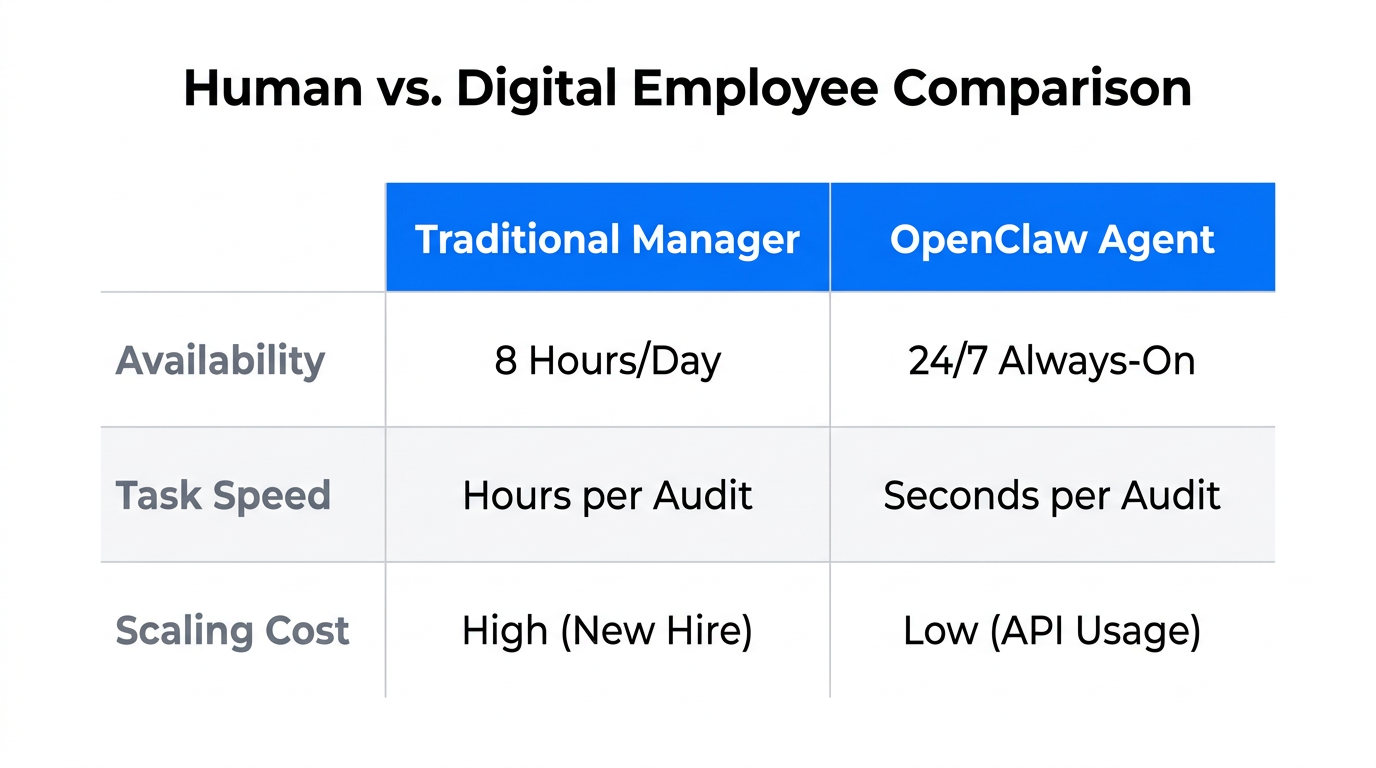
The "Digital Employee" model treats AI as a virtual team member with a specific job description. Instead of a media buyer spending four hours a day checking ROAS thresholds, an OpenClaw agent is "hired" to perform automated ad auditing 24/7. This shift allows human talent to focus on high-level strategy and creative direction while the agent handles the technical heavy lifting.
"The move from Generative AI to Agentic AI represents a $217 billion market shift where execution, not just creation, is the primary driver of agency profitability."
Solving the Mac Mini Shortage: Why Local Hosting Matters
One of the most surprising trends in the performance marketing tools space was the global sell-out of Mac Mini units in early 2026. This was driven entirely by the OpenClaw community. Because OpenClaw runs locally on your own hardware, agencies have scrambled to set up dedicated "agent servers" in their offices. But why the obsession with local hardware?
The answer lies in data privacy and cost-efficiency. By running OpenClaw locally or on a private VPS like DigitalOcean, agencies avoid sending sensitive first-party client data to third-party cloud servers. This is critical for compliance with GDPR and CCPA. Furthermore, running local LLMs or connecting to APIs like Anthropic’s Claude 3.7 through a dedicated local host provides the compute power necessary for 24/7 monitoring without the latency or privacy concerns of fully cloud-based SaaS platforms.
| Hosting Method | Primary Benefit | Agency Suitability |
|---|---|---|
| Local Mac Mini | Zero data latency & Privacy | High (Boutique & Mid-size) |
| DigitalOcean VPS | 24/7 Uptime & Scalability | High (Large Agencies) |
| Standard SaaS | Easy Setup | Low (Data Privacy Risks) |
Implementing Automated Ad Auditing and Alerts
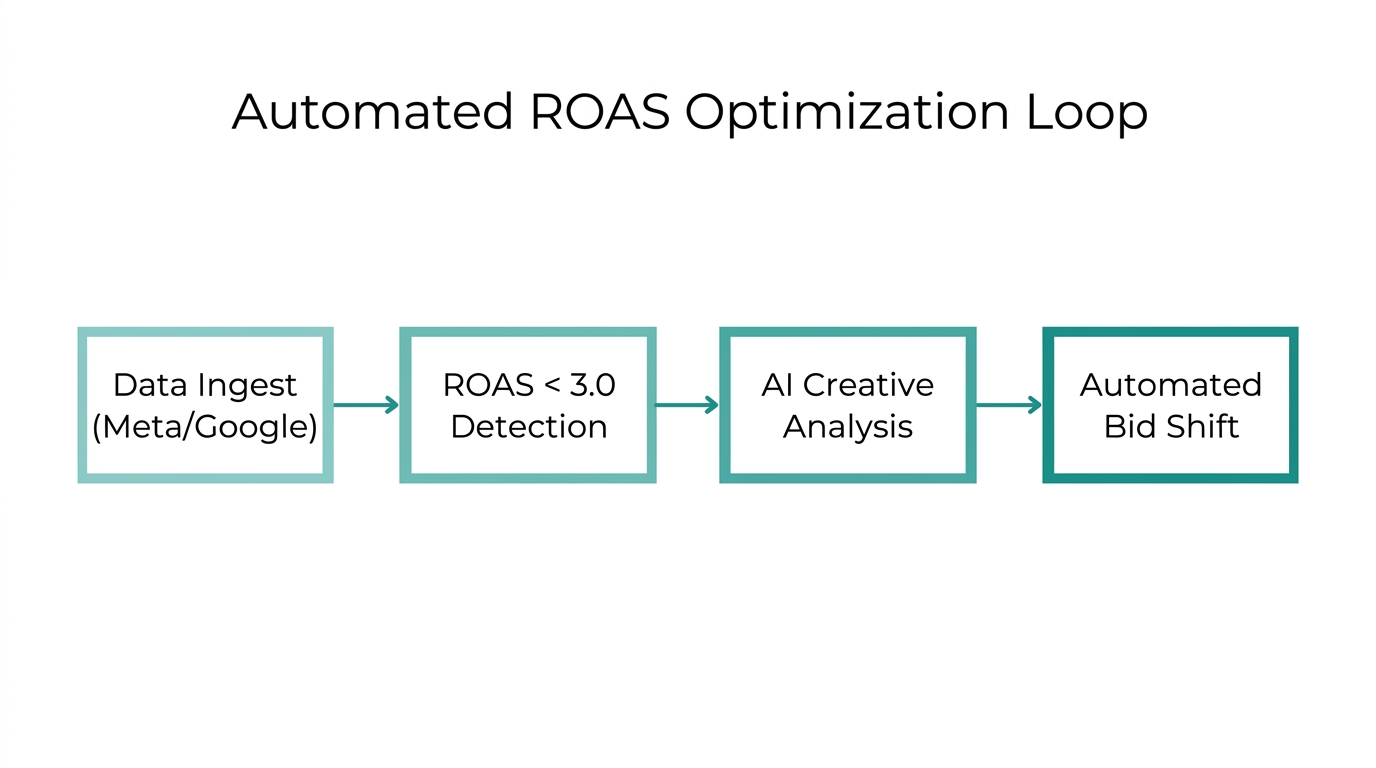
The core value of OpenClaw for agencies is its ability to monitor accounts in real-time and trigger notifications when performance deviates from the norm. Using messaging apps like Slack or Telegram, the agent provides a "Human-in-the-Loop" notification flow. For example, if your ROAS on Meta Ads dips below a 2.0 threshold for more than four hours, the agent doesn't just record it—it messages the media buyer with a specific diagnosis.
To implement this, agencies utilize the Adspirer plugin, which offers zero-config support for 100+ ad tools. This allows the agent to "read" the account structure across TikTok, Google, and Meta simultaneously. By setting up AI for ROAS optimization, agencies can detect creative fatigue 14 days earlier than traditional methods, preventing budget bleed on declining ad sets.
"Real-time auditing isn't about looking at the past; it's about the agent predicting a CTR decline before the human media buyer even opens the dashboard."
Scaling Client Accounts Without Increasing Headcount
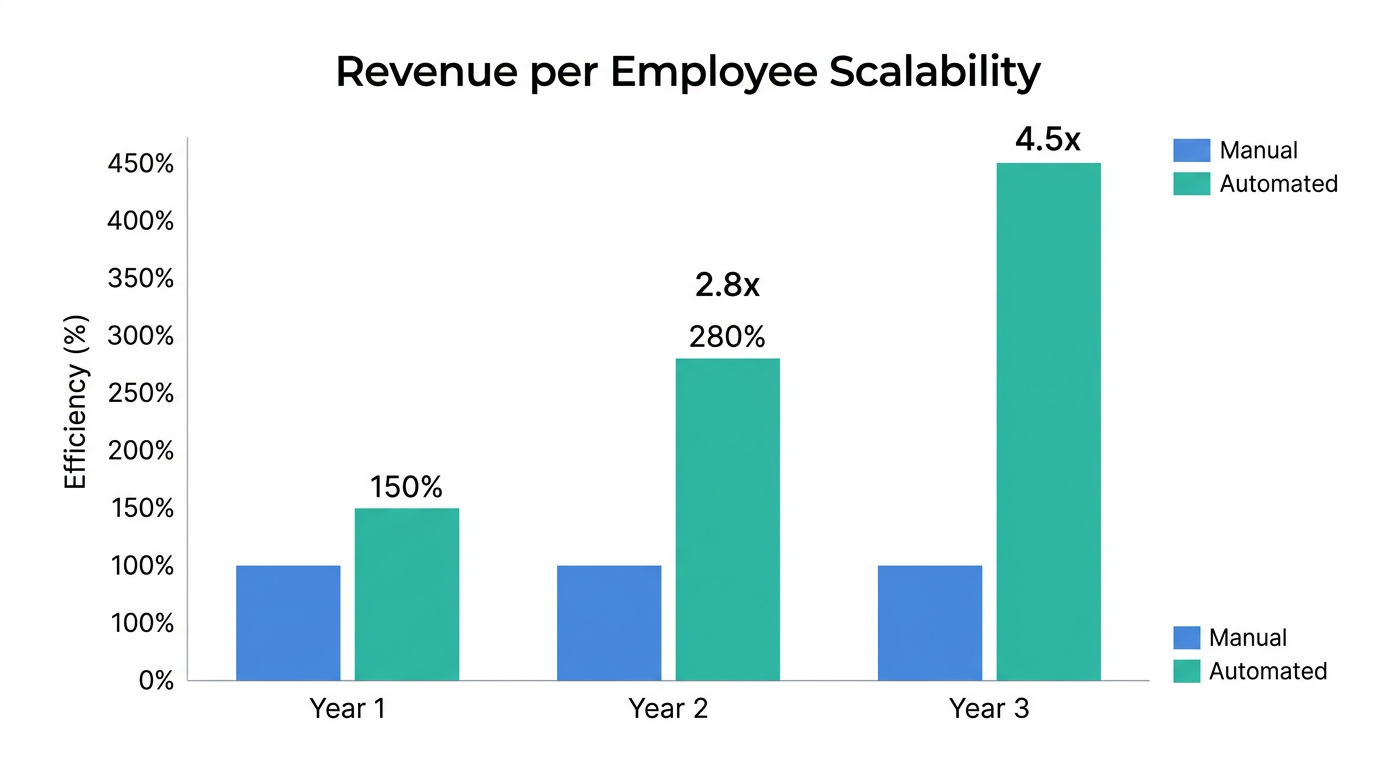
The traditional agency growth model is broken: more clients equals more employees, which equals thinner margins. The Digital Employee model solves this by using "Skills." In the OpenClaw ecosystem, a Skill is a markdown file that teaches the agent a specific workflow. These can be sourced from the ClawHub registry or specialized providers like Ryze AI.
By dropping these skill files into the agent's workspace, a single media buyer can suddenly manage 5x the number of accounts. The agent handles the mundane tasks—bid management, budget adjustments, and weekly reporting—while the media buyer focuses on creative testing and high-level strategy. To ensure these creative tests are fueled with high-quality content, many agencies are integrating these workflows with platforms like Stormy AI to source UGC creators who can produce the assets the AI agents then manage and optimize.
The Ad Context Protocol (AdCP) Advantage
A major technical hurdle for marketing agency automation has been the fragmentation of ad platform APIs. OpenClaw overcomes this using the Ad Context Protocol (AdCP). This standardized protocol allows the agent to interpret data from Meta and TikTok using the same logic. This means you can "hire" one agent to oversee your entire cross-channel performance without needing custom scripts for every platform.
Best Practices for Agency Implementation
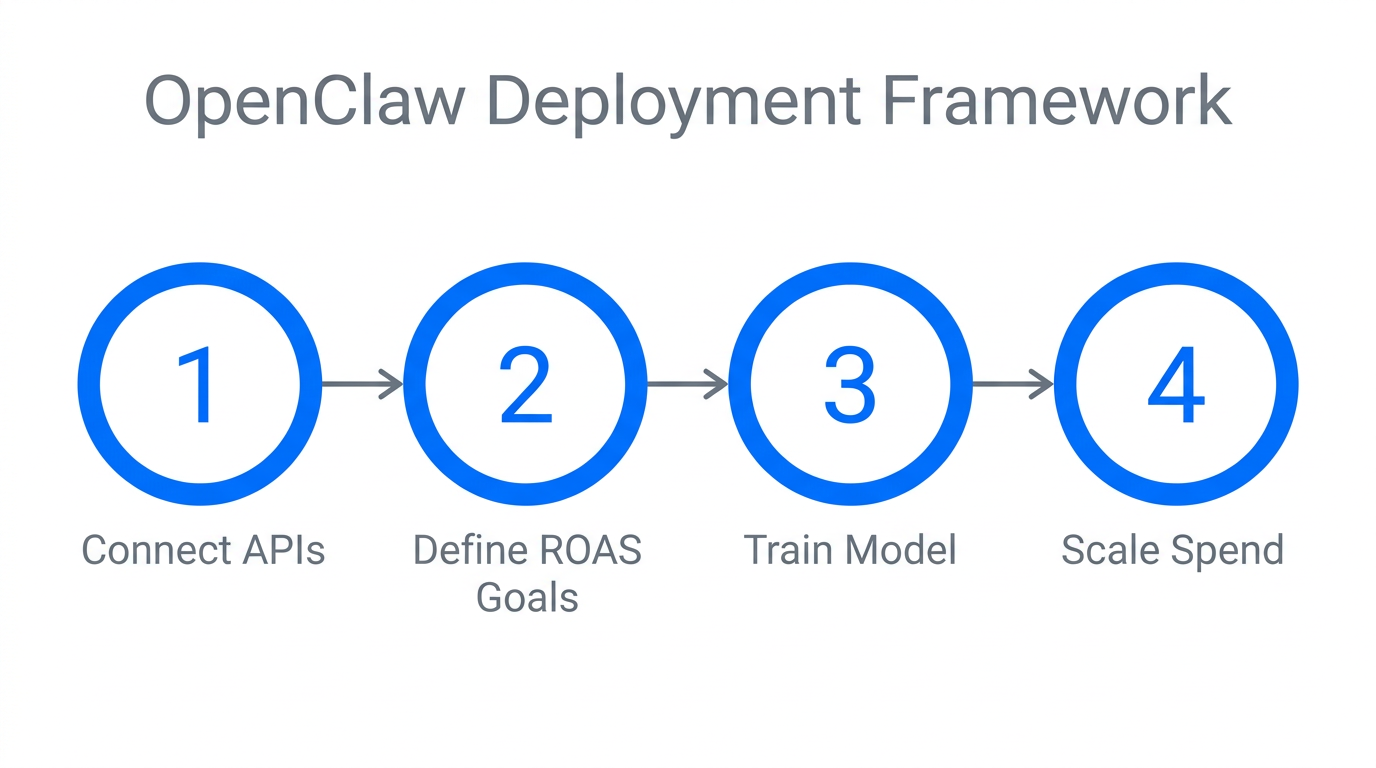
Success with OpenClaw for agencies requires a structured approach. You cannot simply "set and forget" an agent and expect a 10x ROAS. It requires a Human-in-the-Loop (HITL) Gate. This means the agent can suggest budget changes or ad set pauses, but a human must click "confirm" in the Telegram or Slack chat before the action is executed.
- Define the Soul: Use a
SOUL.mdfile in your workspace to define the agency's brand voice and risk tolerance. - Establish High-Level Thinking: Configure the
/thinklevel in OpenClaw to "High" for any budget-related decision-making. - Monitor Token Usage: Use the
/usage tokensfooter in your messaging app to keep an eye on API costs from providers like OpenAI or Anthropic. - Standardized Reporting: Have the agent generate a daily summary of "Actions Taken" and "Performance Insights" to keep the human team informed without them needing to log into 10 different ad managers.
"The agencies that will win the next decade are those that view AI agents not as tools, but as a scalable, digital workforce."
Conclusion: The Future of the Autonomous Agency
The era of the manual media buyer is coming to a close. By adopting marketing agency automation through the OpenClaw framework, agencies can finally break the link between revenue growth and headcount growth. Implementing AI for ROAS optimization through a local-first, agentic model ensures that data remains private, performance remains high, and the team remains focused on what humans do best: creativity and relationship management. Whether you are using OpenClaw on GitHub to build your own custom stack or leveraging tools like Stormy AI to discover the creators that power your ad creative, the goal is the same: maximum efficiency and superior client results.