The era of manual dashboard-hopping is coming to an end. In 2025, the digital advertising landscape has undergone a tectonic shift from "generative" AI—where we chat with bots—to "agentic" AI, where AI tools execute complex workflows autonomously. According to data from Social Media Examiner, 88% of marketers now use AI tools daily, a massive jump from just 37% a year prior. For agencies, this isn't just about writing better headlines; it's about redefining the operational backbone of multi-platform ad strategy.
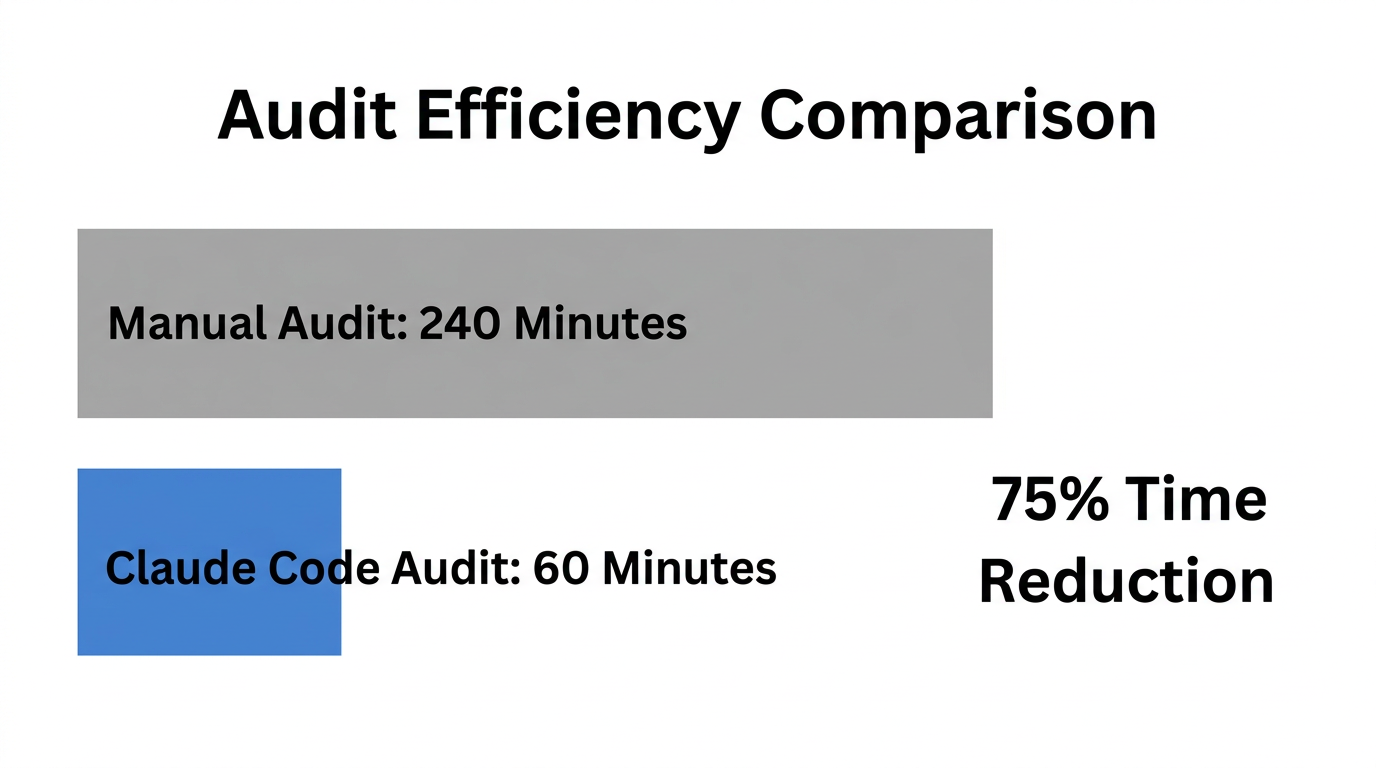
By leveraging Claude Code, the primary AI CLI (Command-Line Interface) tool by Anthropic, agencies can now trigger hundreds of parallel checks across Google, Meta, and LinkedIn accounts simultaneously. This transition allows teams to move from being data entry clerks to becoming high-level strategic architects, turning what used to be 8-hour manual audits into 2-hour automated workflows.
"The shift from simple generative AI to agentic AI is the single most important technology trend for agencies this year." — Cloud Campaign Team
The Agentic Advantage: Why Agencies are Moving to the CLI
Traditional PPC management involves logging into multiple platforms, navigating dense UI menus, and manually exporting CSVs into Excel for analysis. This process is inherently slow and prone to human error. AI marketing efficiency is best realized when we bypass the visual interface entirely through what experts call "Vibe Querying."
Vibe Querying is the ability to ask natural language questions directly to your ad data via a terminal. Instead of building a complex Pivot Table, you simply ask Claude: "Analyze our Google Ads spend for the last 7 days. Which 3 ad groups saw the biggest jump in CPA, and what was the likely cause?" The CLI then uses the Model Context Protocol (MCP) to pull live data and provide an executive-ready summary in seconds.
Implementing the 'Claude Ads Skill' for 190+ Parallel Checks
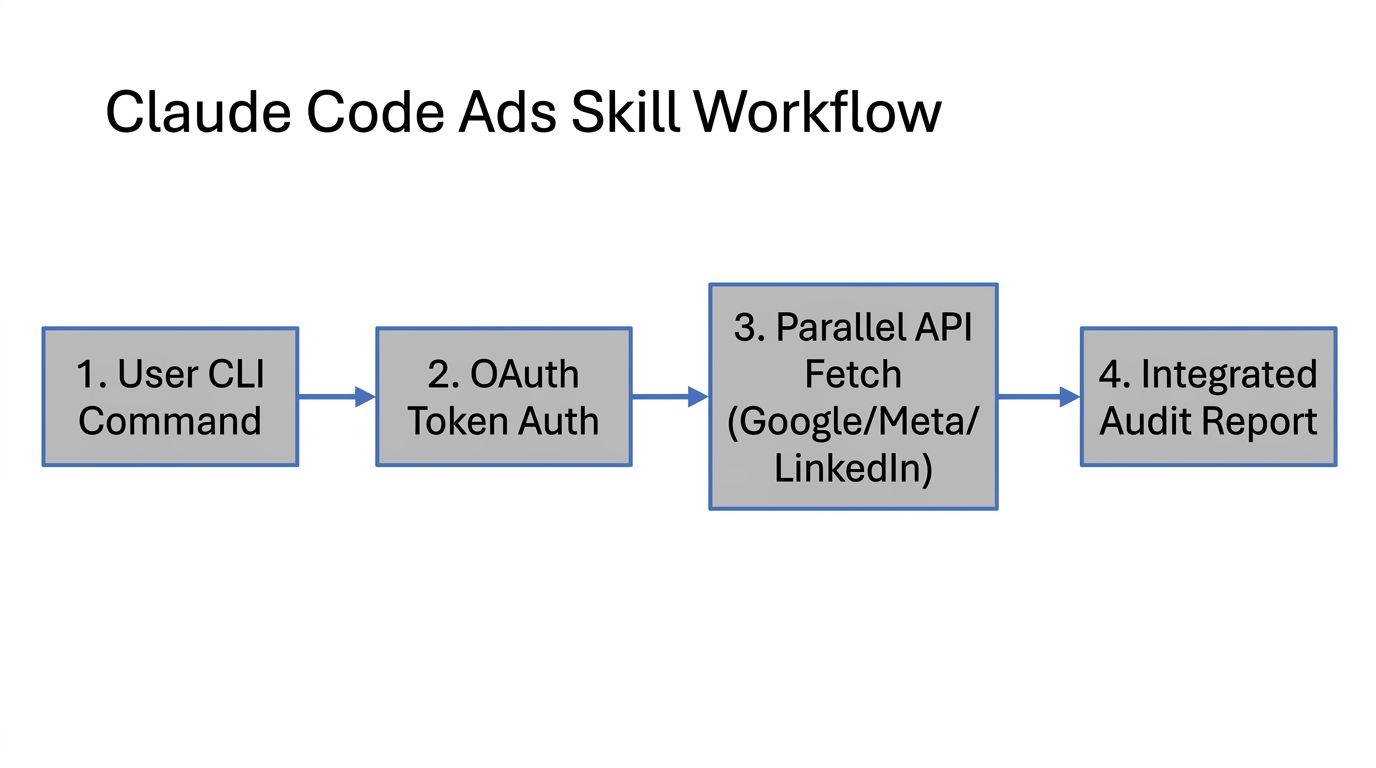
The centerpiece of PPC agency automation is the Claude Ads Skill developed by Daniel Agrici. This specialized toolkit allows Claude Code to run over 190 different PPC checks in parallel, scanning for everything from wasted spend to tracking errors and creative fatigue.
The Setup Process
- Install Claude Code: Ensure you have the Anthropic CLI environment configured on your machine.
- Connect the Bridges: Use tools like GAQL.app or TrueClicks to generate the necessary GPT tokens that allow Claude to "talk" to Google and Meta Ads APIs.
- Trigger the Audit: Run the command
/ads auditin your terminal to initiate the sub-agents.
By running these checks in parallel, agencies report a 75% reduction in analysis time, as documented by Digital Applied. This efficiency allows a single account manager to handle a significantly higher volume of clients without sacrificing the depth of the audit.
Scaling Client Reporting with Automated PDF Audits
One of the biggest bottlenecks for agencies is generating high-quality reports that clients can actually understand. Claude Code doesn't just analyze data; it can generate formatted reports, including charts and visualizations, directly from the command line.
| Feature | Manual Audit Workflow | Claude Code CLI Workflow |
|---|---|---|
| Data Collection | 2-3 Hours (Logins, CSV Exports) | 30 Seconds (API Call) |
| Analysis Depth | Sample-based (Human limit) | 100% Account Scan (190+ checks) |
| Report Generation | 1-2 Hours (PowerPoint/Canva) | Instant (PDF via CLI) |
| Cost Efficiency | High (Human labor hours) | Low (API tokens) |
For agencies looking to scale, this automation is transformative. Instead of spending Friday afternoons building slide decks, team members can spend that time on high-level creative strategy and client relationship management. This is particularly effective when managing cross-platform campaigns where you need to compare ROAS between Google Search and Meta Video ads in real-time.
"Treat Claude as an analytical partner, not a hands-off pilot. Security requires your data to remain local and well-permissioned." — Malcolm Gibb, PPC Specialist
Strategic Budget Reallocation: The AI Fractional Strategist
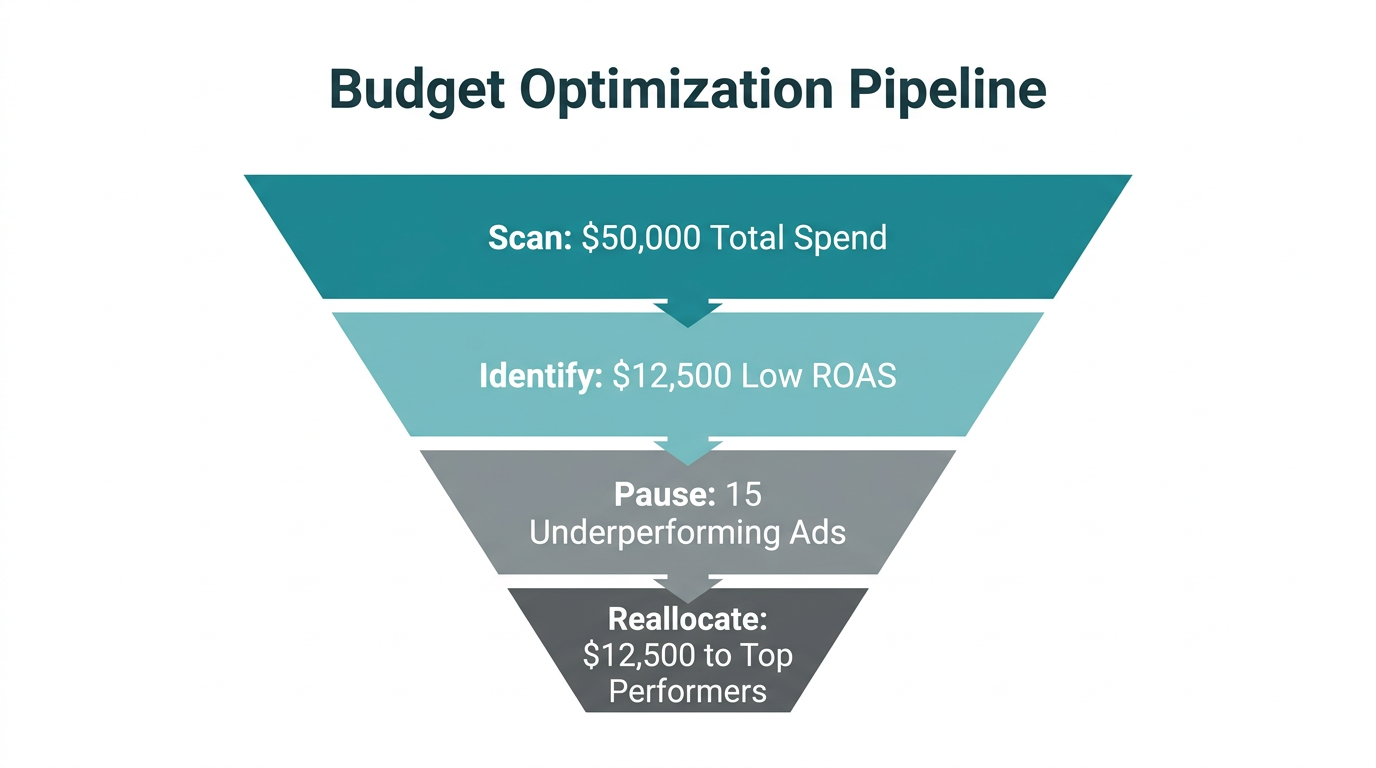
Beyond simple audits, Claude Code can act as a "Fractional Strategist." While Google Ads' built-in recommendations often prioritize "Reach" (which benefits Google's bottom line), an independent AI agent can be instructed to prioritize Profit or LTV (Lifetime Value).
You can prompt the agent to perform a marginal return analysis: "I have an extra $5,000 this month. Analyze my current ROAS across Brand and Generic campaigns and identify where that budget will have the highest marginal return based on historical performance."
This level of automated ad reporting and strategic insight allows agencies to provide bespoke financial advice to clients that was previously only possible for large-scale enterprise firms with dedicated data science teams. For instance, combining this with UGC creator management via tools like Stormy AI allows agencies to identify which creators are driving the most profitable traffic and reallocate budget to those specific video assets instantly.
Best Practices for Data Security and Token Management
With great power comes great responsibility. Handling multiple client accounts through a CLI requires a rigorous approach to data security. Expert Malcolm Gibb emphasizes that marketers must treat their developer tokens with the same level of care as their banking passwords.
- Use Official Connectors: Avoid unvetted third-party MCP servers. Stick to official enterprise connectors or well-known open-source repositories like n8n for self-hosted automation logic.
- Read-Only Barriers: By default, ensure your MCP setup is read-only. This prevents the AI from making live bid changes without human approval—a critical safeguard against "hallucinated" performance signals.
- Plan Mode: Always use Plan Mode (Shift+Tab in Claude Code) before execution. This allows you to review the AI's intended actions before it interacts with any live campaign data.
Conclusion: The Transition to Strategic Architect
As we move toward 2026, the role of the agency professional is evolving. As noted by Writer.com, marketers are shifting from being content creators to becoming strategic architects. You aren't just playing every instrument in the orchestra anymore; you are conducting it.
By implementing Claude Code for multi-platform ad strategy, you reclaim the time needed to focus on what humans do best: empathy, creative vision, and high-level business strategy. Whether you are using Stormy AI to discover and vet the next generation of UGC creators or using Claude to prune thousands of negative keywords, the goal remains the same: leveraging automation to drive superior client results.
"Marketers are evolving from content creators to strategic architects. You aren't playing every instrument; you're conducting the AI orchestra."
To begin your journey into agentic ad ops, start by setting up a local terminal environment and experimenting with simple performance queries. The 75% reduction in analysis time is not a theoretical benchmark—it is an operational reality for the agencies willing to embrace the CLI.