The era of the digital marketing agency as a simple middleman is officially over. As we move through 2026, the industry is witnessing a seismic shift from passive automation to "agentic" execution. For boutique agencies and indie hackers, this isn't just a technological update; it is a fundamental reconfiguration of creator economy business models. While legacy agencies are still debating the ethics of AI-generated copy, a new wave of entrepreneurs is leveraging tools like OpenClaw to build high-margin, recurring revenue machines that operate while they sleep.
The 67% Success Rate: Why Execution Agents Are Winning
According to recent industry data, an estimated 67% of indie hackers and boutique agencies using OpenClaw reported generating direct revenue from automated agent services within their first 30 days of implementation. This high success rate stems from a critical distinction in technology: the move from reactive chatbots to proactive execution agents. Unlike legacy AI that requires constant prompting, OpenClaw is designed to "wake up," audit an account, and execute changes based on pre-defined "skills."
"The 'Chatbot Era' is over. The focus has moved to Execution Agents like OpenClaw that don't just suggest changes but click the buttons and execute them."
This shift is particularly vital for marketing agency growth in a crowded market. By utilizing the Google Ads Python SDK, these agents can perform high-speed GAQL queries and bulk operations that would take a human account manager hours, if not days, to complete. For those without API Developer Tokens, the framework even supports Browser Automation Mode via Playwright, allowing agents to drive the actual Google Ads interface directly. This versatility is documented extensively on aitoolsreview.co.uk, highlighting how agencies are bypassing traditional technical hurdles.
Building a 'Managed OpenClaw' Service: Productizing AI Marketing Services
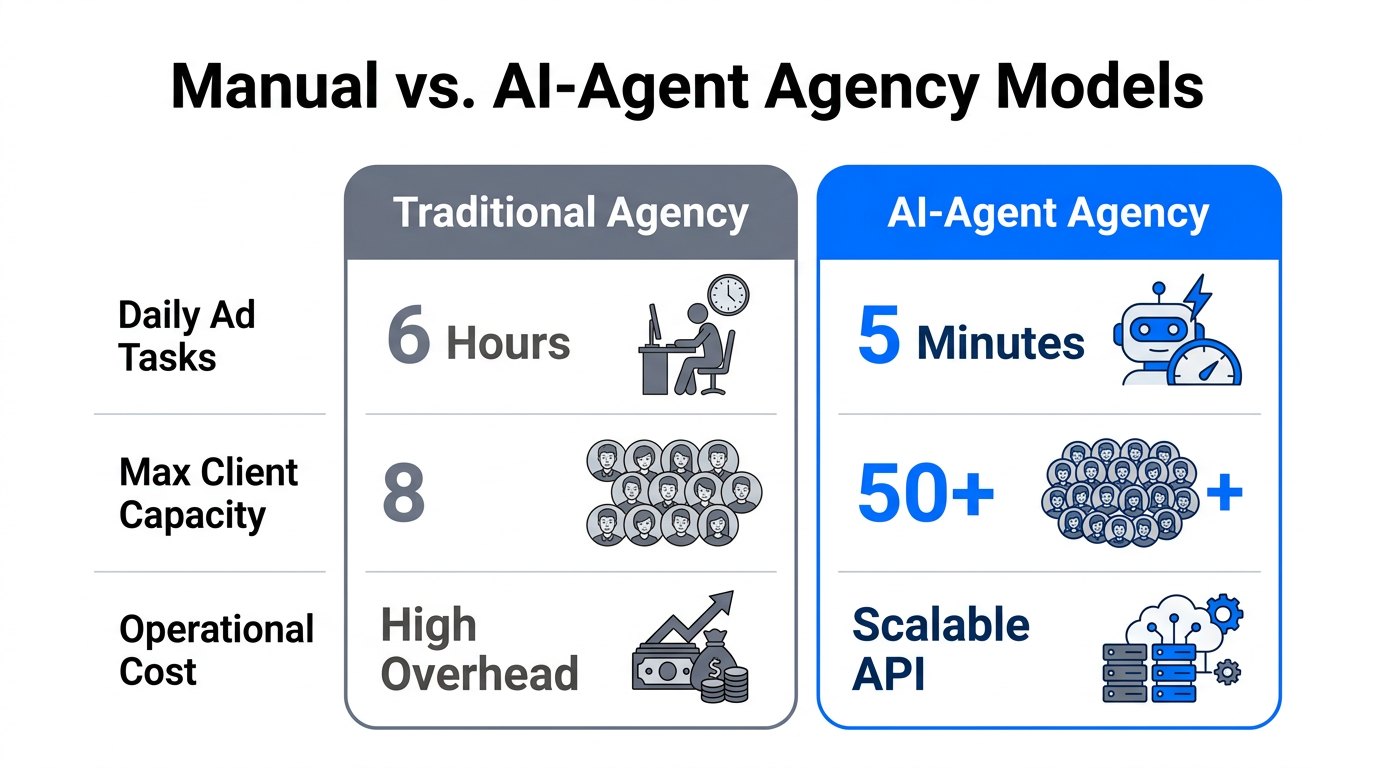
To truly scale a digital agency, you must move away from selling hours and toward selling outcomes. The most successful AI marketing services in 2026 are being packaged as "Managed OpenClaw" tiers. Large-scale agencies like INSIDEA are already embedding these frameworks into their operational layers to offer predictive targeting and revenue forecasting as high-ticket packages. This allows agencies to offer enterprise-level sophistication to mid-market clients who previously couldn't afford a full-time data science team.
When building your service menu, consider the following high-value "Agent-as-a-Service" offerings:
- The Performance Auditor: A weekly automated health check that flags conversion tracking gaps and ROI anomalies before they become catastrophes.
- The Bid & Budget Manager: Real-time budget shifting to high-performing campaigns based on Target CPA (tCPA).
- The Creative Analyst: Automated diagnosis of creative fatigue by tracking CTR trends over 7, 14, and 30-day windows.
| Service Metric | Traditional Agency Model | Agent-Led (OpenClaw) Model |
|---|---|---|
| Audit Frequency | Monthly or Weekly | Real-time / 24-7 |
| Response Time | 24-48 Business Hours | Instant Execution |
| Creative Refresh | Manual (Reactive) | Trigger-based (Proactive) |
| Scalability | Linear (Need more hires) | Exponential (Add more instances) |
By productizing these features, agencies can secure high monthly retainers while maintaining low overhead. As noted on leanware.co, the key is positioning the agent as a "proactive partner" rather than just another software tool. This shift is critical for those looking to implement white label AI agents that carry the agency's unique branding and strategy logic.
Risk Mitigation: Navigating the 2026 OAuth 'Ban Wave'
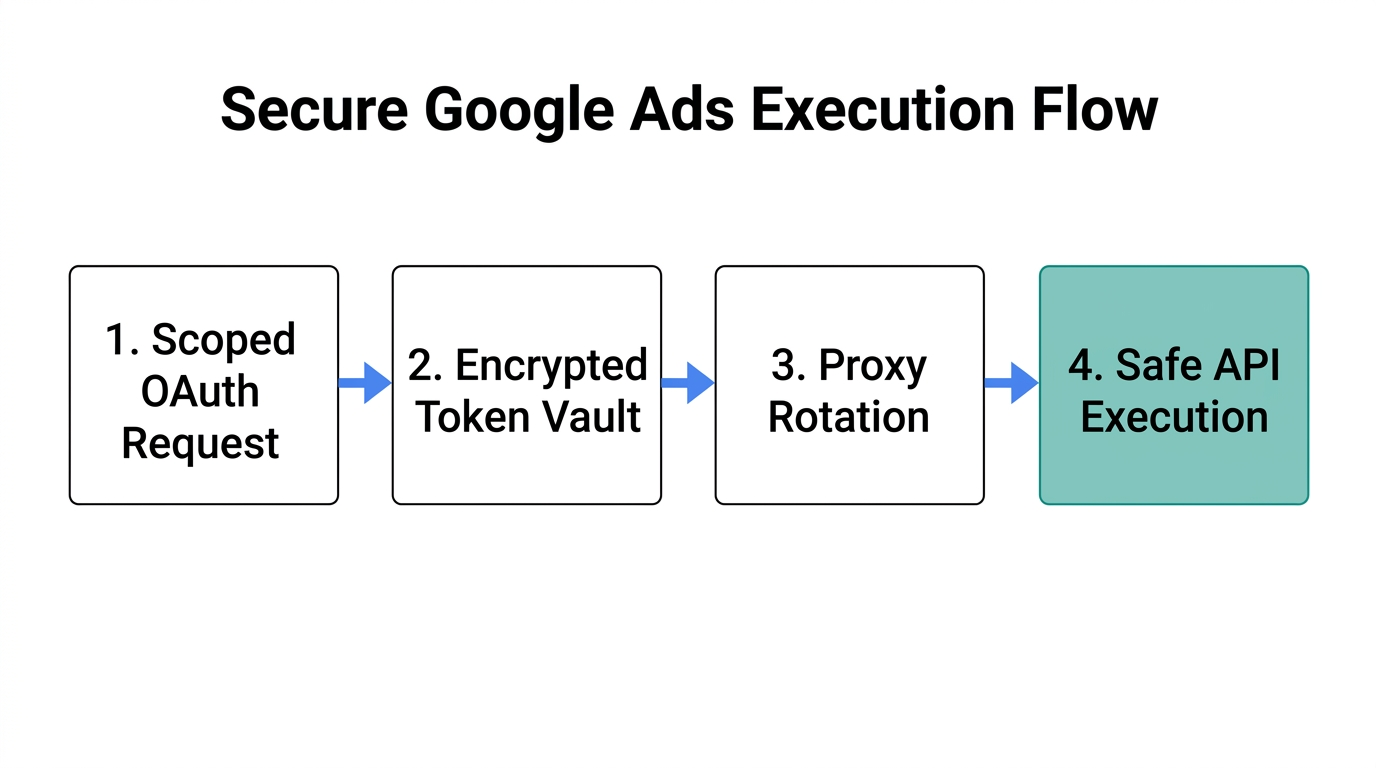
As with any gold rush, there are significant risks. The most prominent threat in early 2026 is the crackdown by Anthropic on "token arbitrage." Many early adopters made the mistake of using personal Claude Pro OAuth tokens to power high-frequency agent calls. This has led to a massive "Ban Wave" where accounts are being flagged and suspended for violating terms of service by using subscription tokens for high-throughput automation.
To mitigate this risk, agencies should strictly follow the Google Ads API Reference and utilize official developer tokens. For more details on avoiding these common pitfalls, developers often share their "war stories" and solutions on platforms like Reddit and various marketing Substack newsletters, where the community discusses the latest enforcement trends from big tech providers.
Security Best Practices for Agencies: Protecting Client Data
Because OpenClaw requires "full system access" to be truly effective, it has been described as a "Sauron’s Eye" by security researchers at Cybernews. For an agency, the security of a client’s Google Ads account is non-negotiable. Running an agent on a local laptop is a recipe for disaster. Instead, professional agencies must use a dedicated Virtual Private Server (VPS).
Providers like DigitalOcean and Hostinger are the industry standards for hosting these agents. This approach provides several advantages:
- Dedicated IP: Reduces the risk of being flagged for suspicious login activity.
- 24/7 Uptime: Ensures your agent is auditing the account even when your team is offline.
- Isolated Environment: Protects your main business infrastructure from potential vulnerabilities in the agent's code.
Furthermore, never run the OpenClaw Gateway on public ports without a robust password. Leaving port 18789 open and unprotected is the fastest way to lose control of your clients' ad spend. As highlighted on fotiecodes.com, implementing a Human-in-the-Loop (HITL) configuration via SOUL.md can act as a final safety barrier, requiring the agent to send a "Draft Approval" message via Telegram or Slack before executing any major bid changes.
Using ClawHub to Build Proprietary Skills
In the creator economy business models of 2026, your "skills" are your IP. The ClawHub skill registry allows you to download and customize modular markdown files that define agent behavior. To truly stand out, agencies should develop proprietary skills that solve niche problems.
"Your competitive advantage is no longer just 'managing' ads; it's the proprietary logic you code into your agent's decision-making matrix."
For example, a boutique agency focusing on mobile apps might develop a "UGC Performance skill" that monitors how different influencer-led video ads are performing and automatically adjusts bids based on creator-specific ROAS. When paired with tools like Stormy AI, which excels at discovering and vetting creators for your campaigns, you create a powerful flywheel. Use Stormy AI to source the right influencers for your UGC assets, and then let your customized OpenClaw agent manage the distribution and optimization of those assets across Google’s network.
Documentation on customizing these skills can be found at docs.openclaw.ai and is frequently analyzed by technical experts on engineerscodex.com.
The Agency Playbook: Setting Up Your Agentic Operation
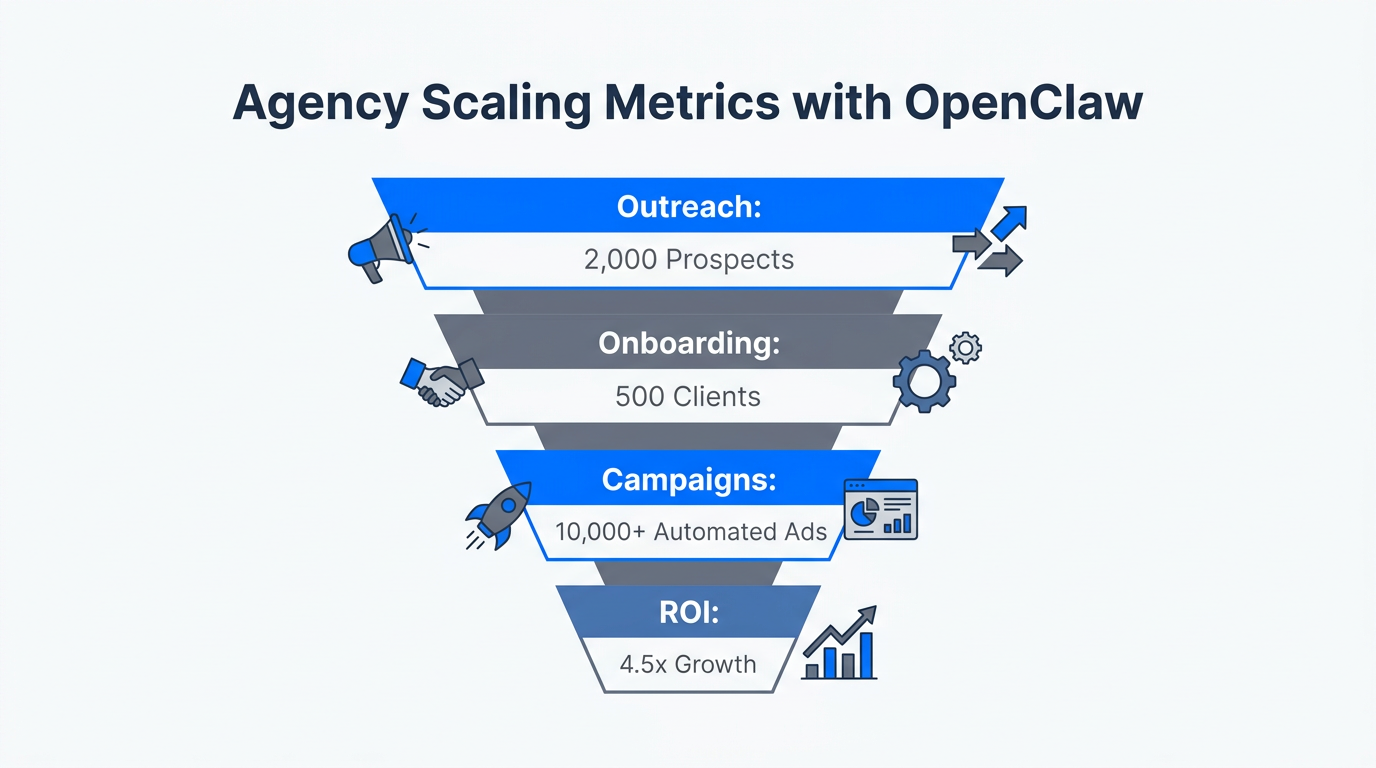
Ready to pivot? Follow this clear playbook to integrate execution agents into your workflow, as suggested by best practices on playbooks.com.
Step 1: Secure Your Infrastructure
Spin up a VPS on DigitalOcean. Install the OpenClaw framework and connect your official Google Ads API keys. Do not skip this; security is the foundation of your agency's trust.
Step 2: Start with Observation Skills
Install the Performance Auditor and Keyword Opportunity Finder first. These are "read-only" skills that generate value without the risk of the agent spending money incorrectly. Use these reports to prove value to your clients during the first month.
Step 3: Gradually Enable Mutation
Once the reports are accurate, enable the Bid and Budget Manager with HITL (Human-in-the-Loop) permissions. Set a rule that any change over 20% requires a manual "OK" from your team. This protects your clients and provides a "sanity check" for the agent's logic.
Step 4: Scale and Productize
Take your learnings and create a "Standard Operating Procedure" (SOP). Package this as a white label AI agent service. For campaigns involving creator-led content, platforms like Stormy AI streamline creator sourcing and outreach, creating an end-to-end AI-powered marketing stack.
Conclusion: The Future of the Agentic Agency
The transition to agentic marketing is not a trend; it is the new standard for scaling a digital agency. By moving from manual management to automated execution with OpenClaw, boutique agencies can achieve levels of efficiency previously reserved for global firms. However, success requires more than just installing software. It demands a rigorous focus on security, a commitment to official API protocols, and the creative vision to productize these agents into high-value services.
As you build your 2026 growth strategy, remember that the most successful agencies will be those that blend AI-powered discovery with AI-powered execution. The tools are here. The playbook is written. The only question is how fast you will move to implement it.