In the high-stakes world of performance marketing, the gap between a profitable agency and one that is underwater isn't just the quality of their creative—it's the speed of their execution. As we move further into 2025, the industry is witnessing a seismic shift from standard automation to agentic workflows. While traditional automation follows a rigid 'if-this-then-that' logic, agentic systems use tools like Claude Code to reason through complex data, making real-time decisions that were once the sole domain of senior media buyers. By moving from a "Chat AI" mindset to an "Action AI" operation, agencies are seeing a 65% reduction in campaign launch times and a significant boost in operational scalability according to research on AI-driven marketing transformation.
The Shift to Action AI: From Chatbots to Agents
For the past two years, most marketers used AI as a fancy writing assistant. You would ask Claude or ChatGPT to write a headline, then copy-paste it into the Google Ads interface. That era is over. With the release of Claude Code, Anthropic's agentic CLI tool, AI has moved into the terminal. This allows marketers to treat their ad accounts like software, writing and deploying automation scripts without ever leaving the command line. This transition is critical because, while 80% of advertisers now use some form of automated bidding, the competitive advantage now lies in how you manage the automation itself.
To get started with this new paradigm, your technical stack needs to be modernized. Claude Code requires Node.js to run. Once installed via npm install -g @anthropic-ai/claude-code, the agent can interact with your local environment and, through the Model Context Protocol (MCP), connect directly to live Google Ads data. This "bridge" is what transforms a language model into an autonomous growth agent capable of auditing accounts and executing bid changes in real-time.
"The era of the 'Chat AI' marketer is dead. We are now in the age of 'Action AI,' where agents don't just suggest strategies—they deploy them."
Automated Ad Ops: Reducing Campaign Launch Times
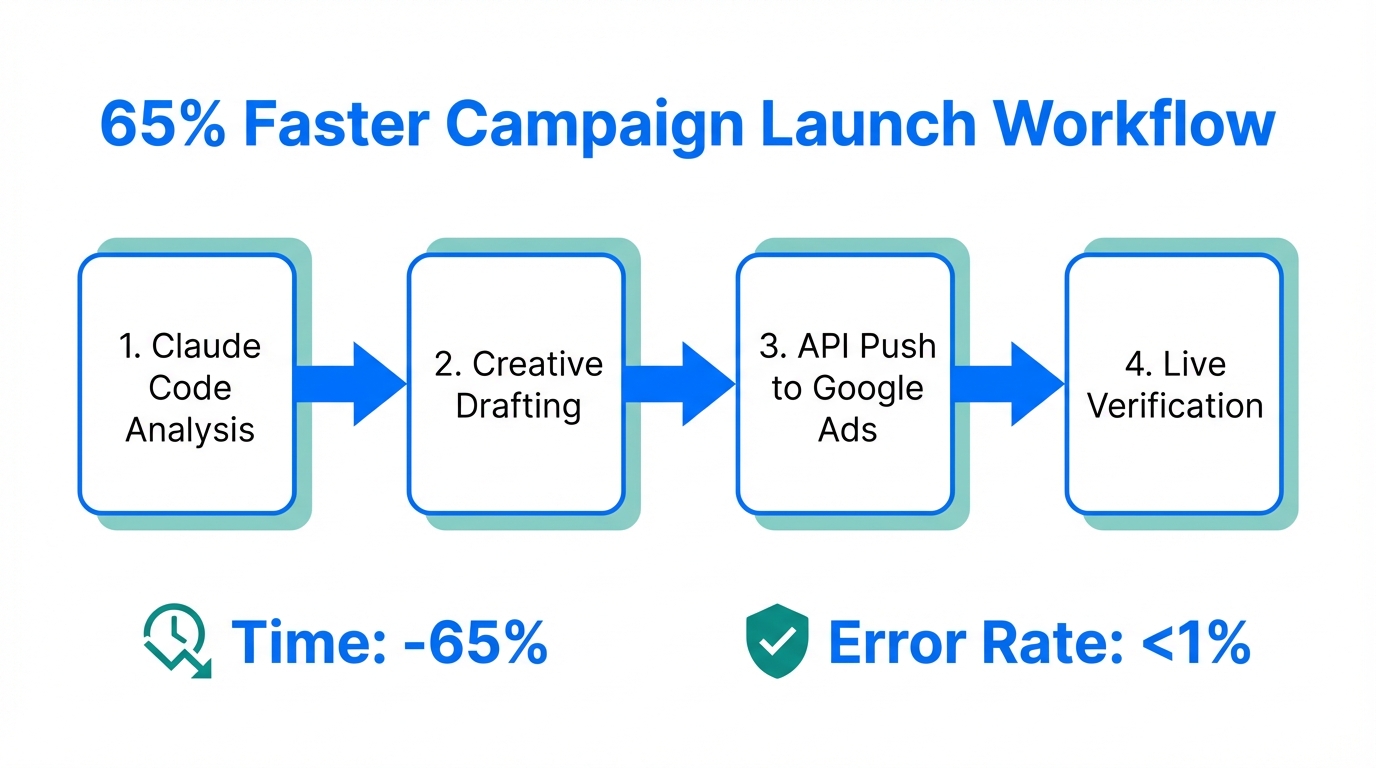
One of the most labor-intensive parts of running a PPC agency is the 'boilerplate' maintenance: negative keyword pruning, search term analysis, and ad copy refreshes. By integrating GAQL.app with Claude Code, you can automate these tasks entirely. For instance, you can instruct the agent to analyze Search Term Reports and identify any term with more than $50 in spend and 0 conversions. Instead of generating a report for you to read, the agent can write the script to add those terms to your negative keyword list automatically.
The 'CPA Watchdog' Implementation
Beyond simple maintenance, agencies are using tools like n8n to create fail-safe mechanisms. A common strategy is the 'CPA Watchdog': if the Cost Per Acquisition (CPA) spikes 40% above the 7-day average, the agent is triggered to pause the specific ad group and alert the team via Slack. This level of automated ad ops prevents the 'bleeding spend' that often occurs over weekends or holidays when human oversight is lower. Research shows that AI-driven optimization can reduce Google Ads costs by up to 50% by catching these inefficiencies early.
The 'Vibe Query' and Instant Budget Tiering
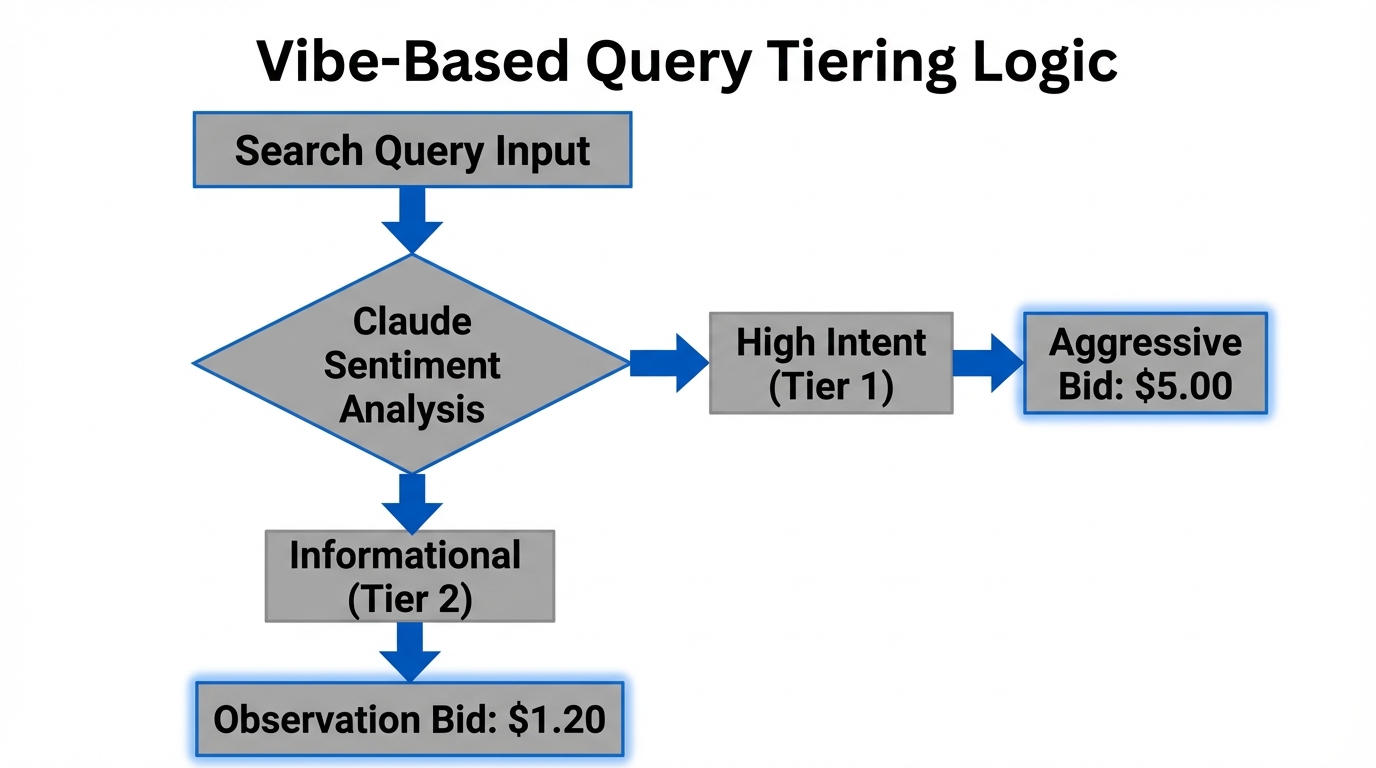
In the past, reallocating budgets across a portfolio of clients required hours of Excel number-crunching and pivot tables. Today, managers are using "vibe querying" via the CData MCP Server. By connecting live data sources to Claude, you can ask natural-language questions like, "Which of my Tier 2 campaigns are currently hitting their ROAS targets but are budget-capped?"
| Task | Manual Process (Hours) | Claude Code Agent (Minutes) |
|---|---|---|
| Search Term Audit | 2.5 Hours | 4 Minutes |
| Cross-Platform Rebalancing | 4.0 Hours | 12 Minutes |
| Weekly Client Reporting | 3.0 Hours | Instant (Automated) |
| Ad Copy Refreshes | 1.5 Hours | 5 Minutes |
This approach allows for Demand-Led Bidding, a strategy championed by firms like Farsiight, where fixed monthly budgets are replaced by dynamic scaling. Instead of a hard $10k/month cap, the agent scales spend up when market intent is high and pulls back when conversion costs rise. This ensures that you are never leaving money on the table during peak demand periods.
Cross-Platform Budget Rebalancing in Real-Time
Agencies often struggle to move budget between platforms like YouTube, and LinkedIn because the data is siloed. Using Claude Code workflows, you can create a centralized view that monitors ROAS across all channels. If your YouTube ROAS is 20% higher than LinkedIn, the agent can detect this discrepancy and propose an instant budget shift. This is particularly useful for agencies managing complex app install campaigns where performance can fluctuate wildly based on creative fatigue.
"The vibe query transforms hours of Excel grunt work into a 30-second conversation with your data, allowing for truly dynamic budget reallocation."
When you are managing these cross-platform spends, you also need a steady stream of high-quality creative content. This is where platforms like Stormy AI become invaluable. While Claude handles the bidding and backend logic, Stormy AI allows agencies to source and manage the UGC creators needed to fuel those high-performing YouTube and TikTok ads. Integrating AI for both content sourcing and ad operations creates a full-funnel growth engine that is nearly impossible for manual-heavy agencies to compete with.
Saving 10+ Hours Per Week on Google Ads Reporting Automation
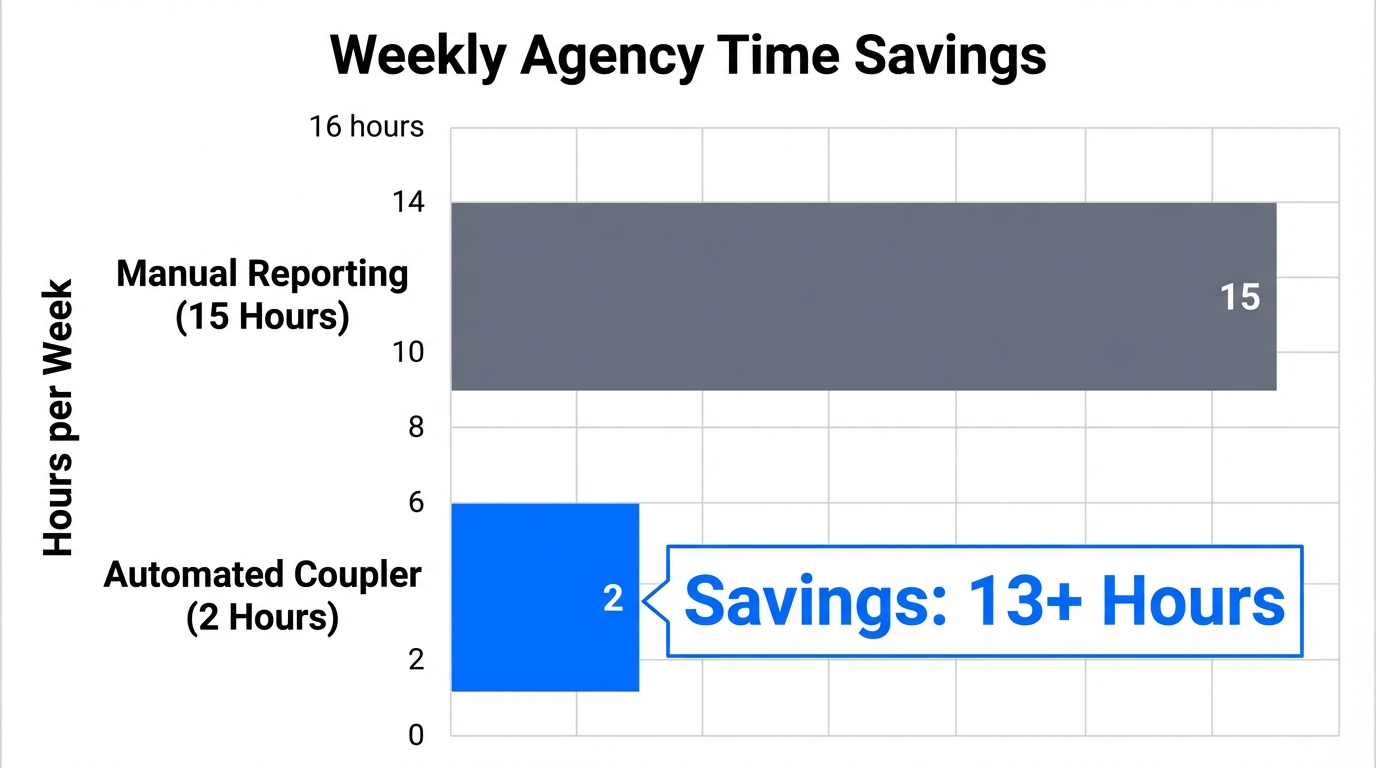
Perhaps the biggest drain on agency resources is the dreaded weekly report. By connecting a data connector like Coupler.io to Claude, agencies are automating the entire data entry process. Instead of manually pulling metrics from the Google Ads API, Coupler.io pushes the data into a structured environment where Claude can then analyze it, highlight wins, and draft the executive summary for the client. Users on Reddit/r/ClaudeAI have reported saving over 10 hours per week using this exact stack.
This level of google ads reporting automation doesn't just save time; it improves client retention. Clients get faster insights, more frequent updates, and more accurate data. In an era where 25% more conversions are being reported by advertisers using advanced AI optimization, the ability to communicate those wins clearly is a major differentiator.
Pitfalls to Avoid: The 'Error Gap' and Hallucinations
While the potential for scaling ppc campaigns is massive, it is not without risks. A 2025 study found a 20% average error rate in AI-generated PPC advice, often due to "hallucinations" regarding Google Ads API limits. It is crucial to never let an agent set bids without a Max CPC cap; otherwise, you risk entering "auction wars" that can spiral costs out of control. Furthermore, as Google continues to push Broad Match, experts at Search Engine Land warn that neglecting Exact Match is a mistake, as it remains the highest-converting type for most accounts.
Additionally, avoid "frequent tinkering." Both Google's internal algorithms and your custom Claude agents need a learning period. Making major budget changes more than once every 7 days prevents the system from stabilizing. Successful marketing agency efficiency comes from setting the strategy, letting the agent handle the maintenance, and intervening only when the data suggests a fundamental shift in the market.
The Future: Becoming an 'Action AI' Marketer
The transition to automated ad ops is inevitable. Agencies that embrace Claude Code workflows today will be the ones that can manage 10x the client load with 1/10th of the overhead. By automating the boilerplate tasks and focusing on high-level strategy and UGC content sourcing through tools like Stormy AI, you can ensure your agency remains at the forefront of the growth marketing industry. The future belongs to those who move beyond the chatbot and start building autonomous growth agents.