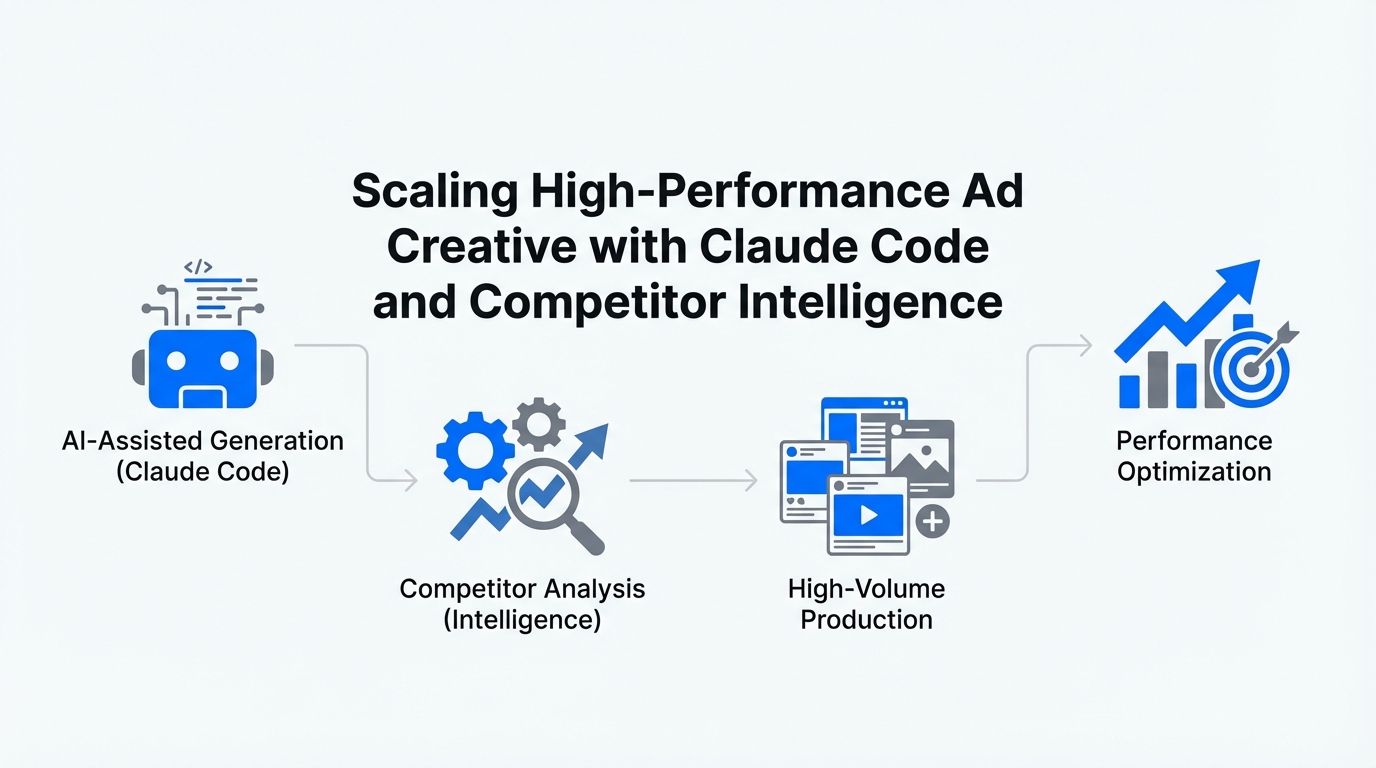
In the high-stakes world of digital advertising, the bottleneck is no longer the media buy—it is the creative. While platforms like Meta Ads Manager have mastered the art of targeting, growth teams are still drowning in the manual labor of creative production. However, a seismic shift is occurring. Marketers are moving from "predictive" AI to "agentic" AI, where tools do not just suggest ideas but execute complex workflows. By leveraging Claude Code automation and competitor intelligence, performance marketers are now generating high-converting variants at ten times their previous speed, effectively closing the gap between strategy and execution.
The Rise of Agentic Ad Creative: From Planning to Execution
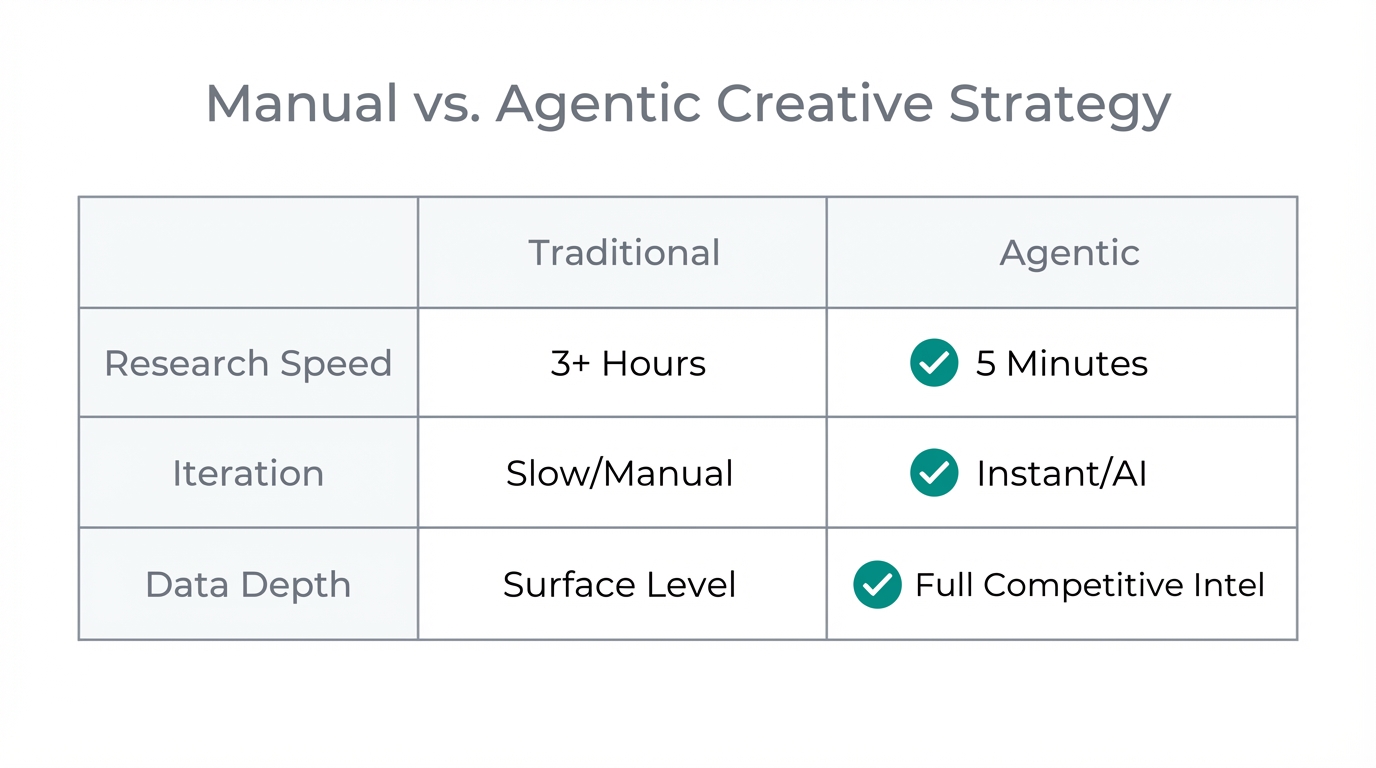
The digital advertising landscape is currently facing a massive efficiency crisis. According to the Smartly 2026 Trends Report, marketers estimate that 20% to 30% of their annual digital spend is wasted on non-performing impressions, bot traffic, or incorrect targeting. This waste is often the result of "stale" creative—ads that haven't been refreshed quickly enough to keep up with shifting consumer sentiments on platforms like TikTok and Instagram.
The solution emerging in 2025 is what experts call agentic orchestration. It is predicted that by 2026, 60% of e-commerce transactions will involve agentic AI interactions where AI "buyers" evaluate ads based on structured data rather than emotional creative, according to iOPEX Technologies. For the human side of the equation, this means a structural shift in marketing from labor-intensive planning to capital-intensive execution. Instead of spending weeks on a creative brief, teams are using agentic AI to act as a bridge between data and production.
The Shift to "Vibe Marketing" and Strategic Nuance
What exactly is "Vibe Marketing"? It is the transition away from rigid, overly-engineered brand guidelines toward a more fluid, reactive approach that prioritizes intention and clarity. Erika Rollins, VP of Marketing at CallTrackingMetrics, notes that agentic AI allows teams to communicate with greater strategic nuance by handling the repetitive, data-heavy tasks that usually drain a team's creative energy.
This isn't about letting the AI take over the brand; it’s about using AI to ensure the "vibe" is consistent across thousands of variants. By utilizing local project files and brand assets, Claude avoids the generic, low-effort outputs—often dismissed as "AI slop"—that plague web-based chat interfaces. The goal is to move from predictive guessing to proactive optimization, where the AI suggests a creative pivot before a human even sees the performance dip.
"Agentic AI represents a structural shift where the focus moves from the 'how' of execution to the 'why' of strategic intention, allowing brands to scale without losing their soul."
The Playbook: Automating Competitor Ad Analysis
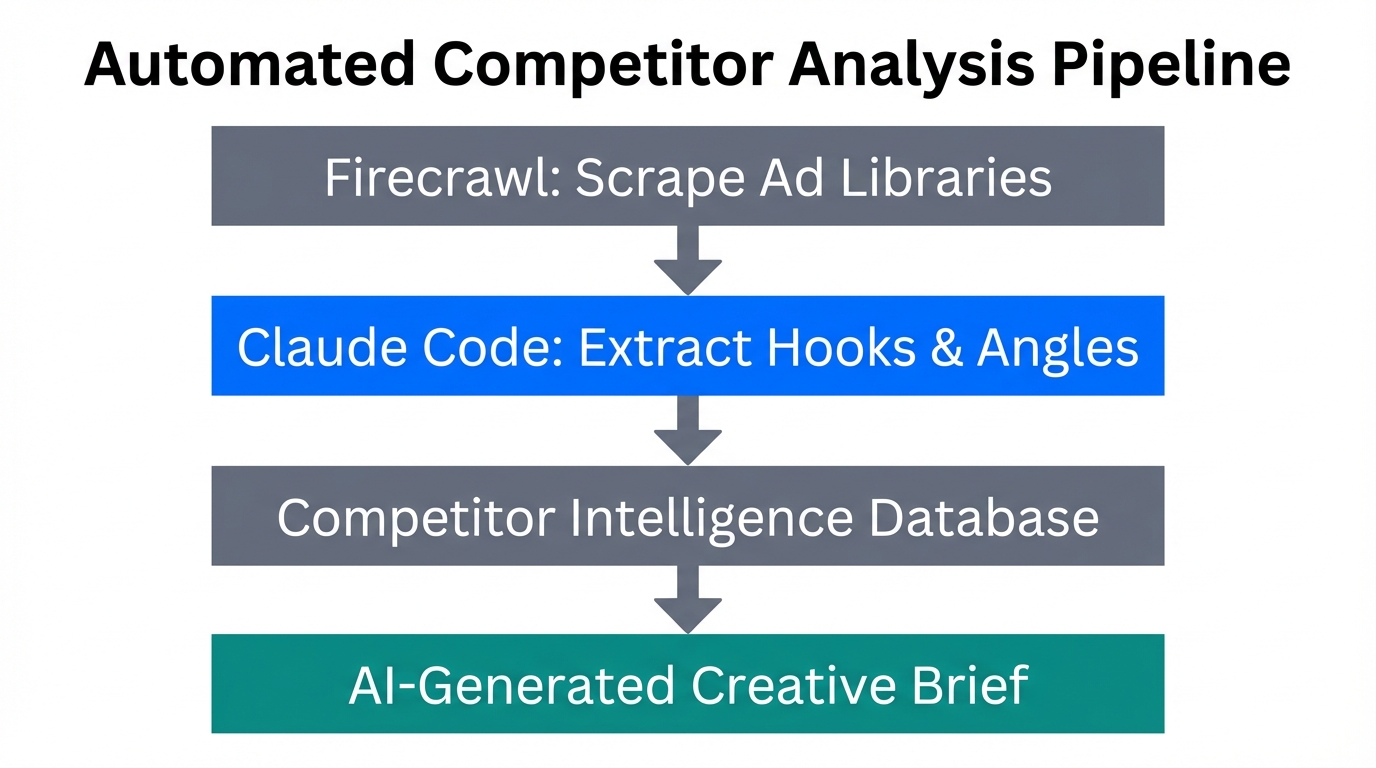
To win in a competitive auction, you must know exactly what your rivals are offering. Competitor ad analysis used to involve manual screenshots and spreadsheets. Now, it can be fully automated using Claude Code, Firecrawl, and Playwright.
Step 1: Scrape Competitor Landing Pages
Using Firecrawl, growth teams can crawl the top five competitors in their niche to extract core offers, pricing structures, and unique selling propositions (USPs). This data provides the raw material for AI creative strategy. Firecrawl handles the complexities of modern web scraping, ensuring the data is clean and structured for the LLM.
Step 2: Identify Core Offers with Claude Code
Once the data is ingested, you can command Claude Code to analyze the competitive landscape. A simple prompt like "Analyze these five competitor landing pages and identify their primary emotional hook and pricing offer" can save hours of manual research. You can even use tools from the Marketing Skills Pack to further refine these insights.
Step 3: Draft Counter-Positioning Meta Headlines
With the competitor data in hand, Claude can draft Meta ad headlines that specifically counter-position your brand. For example, if a competitor is focusing on "Lowest Price," Claude might suggest a headline focused on "Lifetime Value" or "Premium Quality," directly attacking the competitor's weakness. This level of avoiding generic, low-effort outputs is what separates high-performance growth teams from the rest.
| Workflow Phase | Traditional Method | Agentic AI Method (Claude Code) |
|---|---|---|
| Research | Manual screenshots & sheets | Firecrawl & Playwright automation |
| Copywriting | 2 hours per set of ads | 15 minutes for 100+ variants |
| Analysis | Weekly CSV exports | Live data via MCP (Model Context Protocol) |
| Optimization | Reactive human adjustments | Autonomous budget guardrails |
Ad Creative Generation: The Anthropic Case Study
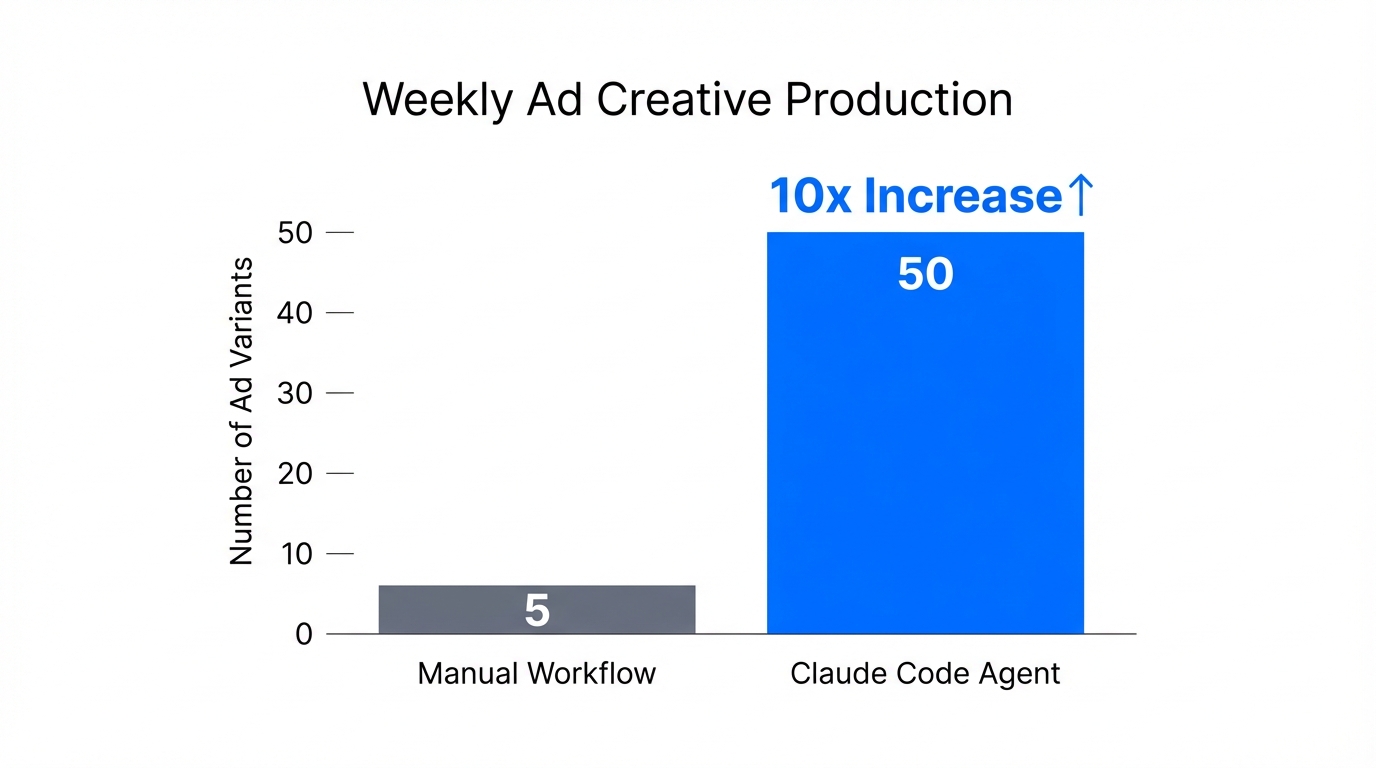
The internal growth team at Anthropic provides the ultimate proof of concept for this workflow. By using Claude Code to automate ad creative generation, they reported that ad copy creation time plummeted from 2 hours to just 15 minutes. This isn't just about saving time; it's about the volume of experimentation.
With the time saved, they achieved a 10x increase in creative variants tested. In the world of Google Ads and Meta, performance is a numbers game. The more high-quality variants you test, the faster the algorithm finds a winner. By coupling this with 10x increase in creative variants tested, the team significantly lowered their CPA while maintaining high brand standards.
"The Anthropic team reduced creative generation time by 87%, allowing them to focus on high-level strategy while the AI handled the heavy lifting of variant production."
Similarly, agencies like Digital Applied have implemented sub-agent orchestration—using separate AI specialists for SEO and PPC—to complete content audits 81% faster and reduce costs for clients by 70%. This trend is also extending into the world of User-Generated Content (UGC). For brands that need raw creator content to feed into their agentic workflows, platforms like Stormy AI streamline creator sourcing and outreach, providing the "human" touch that AI then optimizes.
Integrating Live Data via MCP for Real-Time Optimization
One of the most powerful features of Claude Code automation is the Model Context Protocol (MCP). This allows Claude to read real-time ad data directly from your accounts without the need for manual CSV exports. By connecting to the Meta Ads MCP or the Google Ads MCP Server, you can ask Claude questions like, "Analyze my spend from the last 48 hours and identify which creative has the highest CPA."
This real-time connection allows for the deployment of "Guardrail Scripts." For instance, you can use the MCP Market to find or generate scripts that automatically pause underperforming ads if the Target Cost Per Acquisition (tCPA) exceeds a specific threshold. This ensures your budget is always flowing toward high-performing creative, resulting in an average 37% reduction in CPA, as noted by the Eminence 2026 AI Report.
Common Mistakes: Avoiding the "Context Death Spiral"
While the potential for scale is massive, there are several traps growth teams must avoid to ensure their AI creative strategy doesn't backfire.
- The "Broad Audience" Trap: Native platform tools often recommend broadening your audience to increase spend. Brands should be wary of these "optimization scores" if they lead to lower-quality leads, as warned by experts at Yotpo.
- The Context Death Spiral: Starting a new chat for every task causes the AI to lose your brand voice. To fix this, use
CLAUDE.mdfiles to store persistent brand guidelines and performance history in tools like Notion, as recommended in the Claude Code Docs. - Over-Automation: As seen in the McDonald's 2025 holiday ad backlash reported by DesignRush, publishing AI-generated content without a final human check can lead to tone-deaf results.
- Misaligned Metrics: Don't optimize for vanity metrics like CTR. Ensure your prompts prioritize Return on Ad Spend (ROAS) and pipeline value, as highlighted by Martech Edge.
Conclusion: The Future of Performance Marketing
The era of manual ad creative production is coming to an end. By integrating Claude Code automation into your growth stack, you can transform your team from a production house into a strategic powerhouse. Leveraging tools like Firecrawl for competitor ad analysis and agentic workflows for variant generation allows you to test more, learn faster, and significantly reduce ad waste.
For brands looking to scale even further, managing the influx of creators and UGC required for these high-volume campaigns is essential. Platforms like Stormy AI can help source and manage UGC creators, ensuring you always have fresh, human-centric raw materials for your AI agents to optimize. The future belongs to those who can marry the efficiency of AI with the authenticity of human-led creative. Start by auditing your current workflow—how much of your week is spent on tasks that a Claude skill could handle in seconds?
To learn more about the technical foundations of these tools, explore the Node.js documentation required for Claude Code, or join a community like the AI Marketing Hub to stay ahead of the curve.