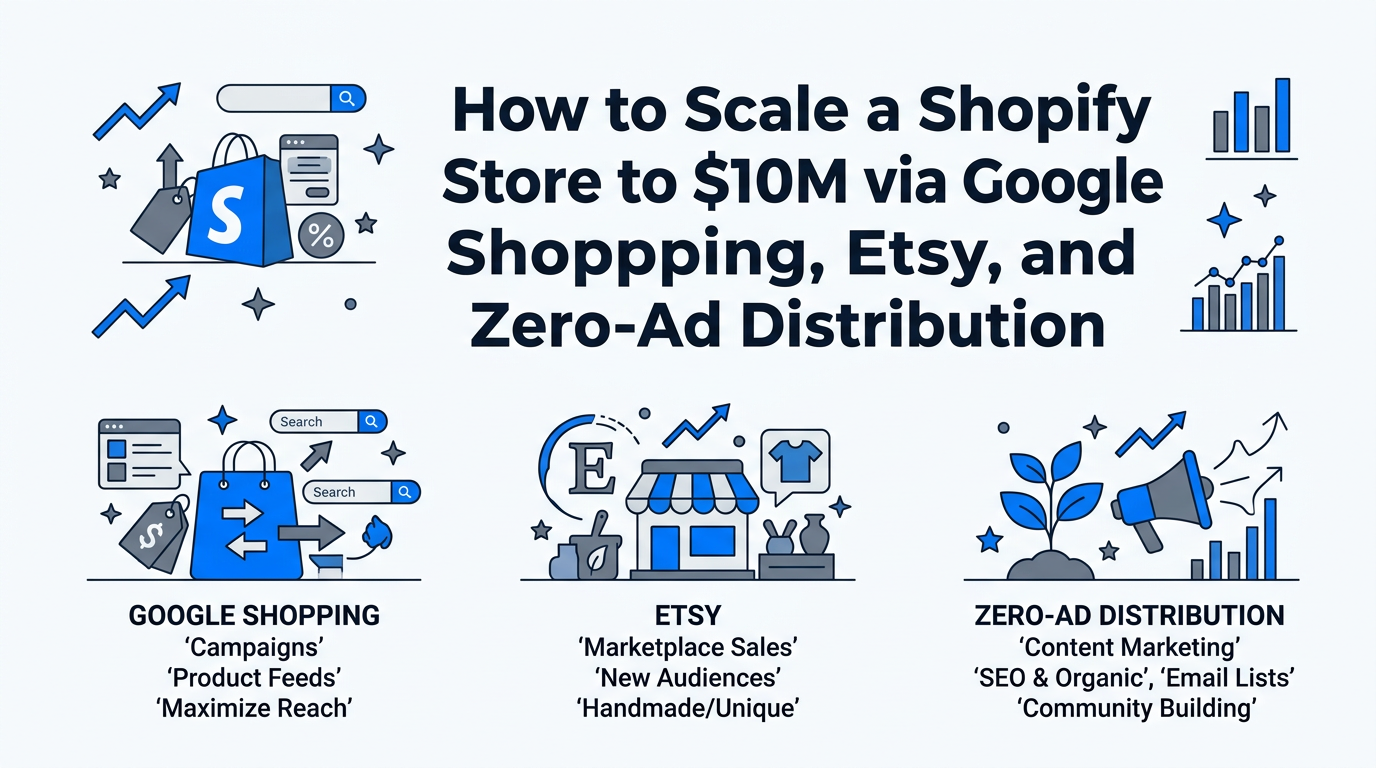
In the high-stakes landscape of Shopify growth strategy 2026, the old playbook of 'burning cash on Meta ads to find an audience' has been replaced by a more surgical, sustainable approach. The most successful e-commerce founders are no longer just 'store owners'; they are distribution masters. Take the story of Karthik, a founder who transformed a mere $500 investment into a $10 million e-commerce empire while working a full-time job. His secret? Dominating high-intent distribution channels and leveraging third-party marketplaces as a 'free' customer acquisition funnel. This article breaks down the operational playbook for bootstrapping e-commerce marketing by moving beyond interruptive social ads and into the world of organic search and marketplace dominance.
The Marketplace-First Strategy: Using Etsy and Google Shopping as Free Funnels
Karthik explains how they acquired their first customers and scaled through early distribution channels.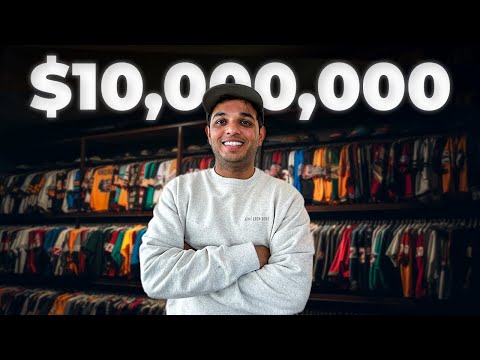
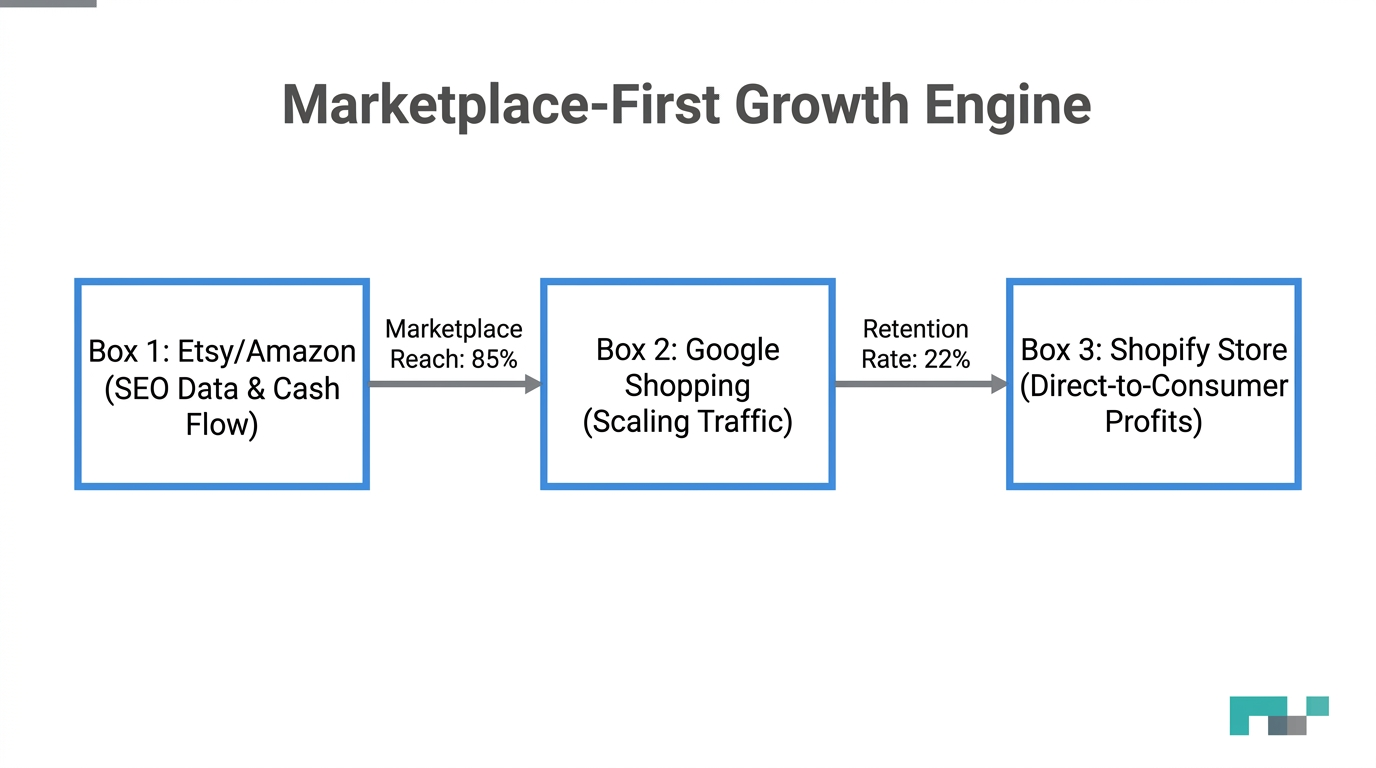
For most brands in 2026, the biggest barrier to entry is the skyrocketing Customer Acquisition Cost (CAC) on platforms like TikTok and Instagram. Karthik’s breakthrough came from a simple realization: Why pay to find customers when you can be present where they are already looking to buy? By utilizing Etsy for business and Google Shopping, you tap into high-intent traffic—users who have their credit cards out and a specific product in mind.
"Get into these marketplaces; that's free marketing. If you can get your product on Etsy or Google Shopping, do it. People are literally clicking the shopping tab to aggregate everything they want to buy."This 'Marketplace First' strategy allows you to bypass the initial branding hurdle. Instead of trying to convince a social media user to stop scrolling, you are appearing in search results for specific queries. For Karthik’s brands, like Greek House and Athlete’s Thread, this meant appearing exactly when a student searched for their specific fraternity or favorite athlete. This is the cornerstone of a modern e-commerce distribution channels strategy.
| Feature | Social Media Ads (Interruptive) | Marketplace/Search (High Intent) |
|---|---|---|
| User Intent | Browsing/Entertainment | Ready to Purchase |
| Primary Driver | Creative/Algorithm | SEO/Product Fit |
| Initial Cost | High (CPC/CPM) | Low (Listing Fees/Organic) |
| Scalability | Requires constant budget increases | Scalable through SKU expansion |
Optimizing for High-Intent Search Queries vs. Interruptive Ads
Success on Shopify in 2026 requires a deep understanding of Google Shopping SEO. When a user searches for a specific item, Google’s algorithm prioritizes product data quality, relevance, and price. To dominate this channel, your product titles, descriptions, and backend metadata must be flawlessly aligned with how users actually search.
Instead of broad keywords, focus on long-tail, hyper-specific queries. For example, rather than targeting 'sports t-shirt,' Karthik’s team targets specific athletes through their Name, Image, and Likeness (NIL) licenses. This allows them to capture traffic that is 100% relevant to the product. When you align your Shopify growth strategy 2026 with high-intent search, you are not just buying traffic; you are harvesting demand that already exists.
How to Manage 1,000+ SKUs Without Massive Overhead
One of the biggest challenges in scaling to $10M is the operational complexity of managing a massive product catalog. Karthik’s brands manage thousands of SKUs across multiple marketplaces. This is only possible through a tech-enabled supply chain. They don't manufacture in-house; instead, they use a network of production partners managed through a custom-built Vendor Portal.
By providing manufacturers with a dedicated vendor portal, you remove the administrative friction. Orders flow directly from the Shopify backend into the production line. This 'asynchronous harmony' allows a lean team to manage a volume of orders that would typically require a massive staff. If you are looking to scale, your focus should be on building systems and processes that make your partners' lives easier. When your vendors can fulfill orders with 'one-tenth of the admin time,' you become their preferred partner, leading to better pricing and faster turnaround times.
"We provide our production partners with tech so that servicing our account takes a fraction of the time. We automate the admin so they can focus on the printing."Transitioning from Marketplace Buyer to Loyal Brand Advocate
Learn the importance of using social channels to transform standard customers into active brand advocates.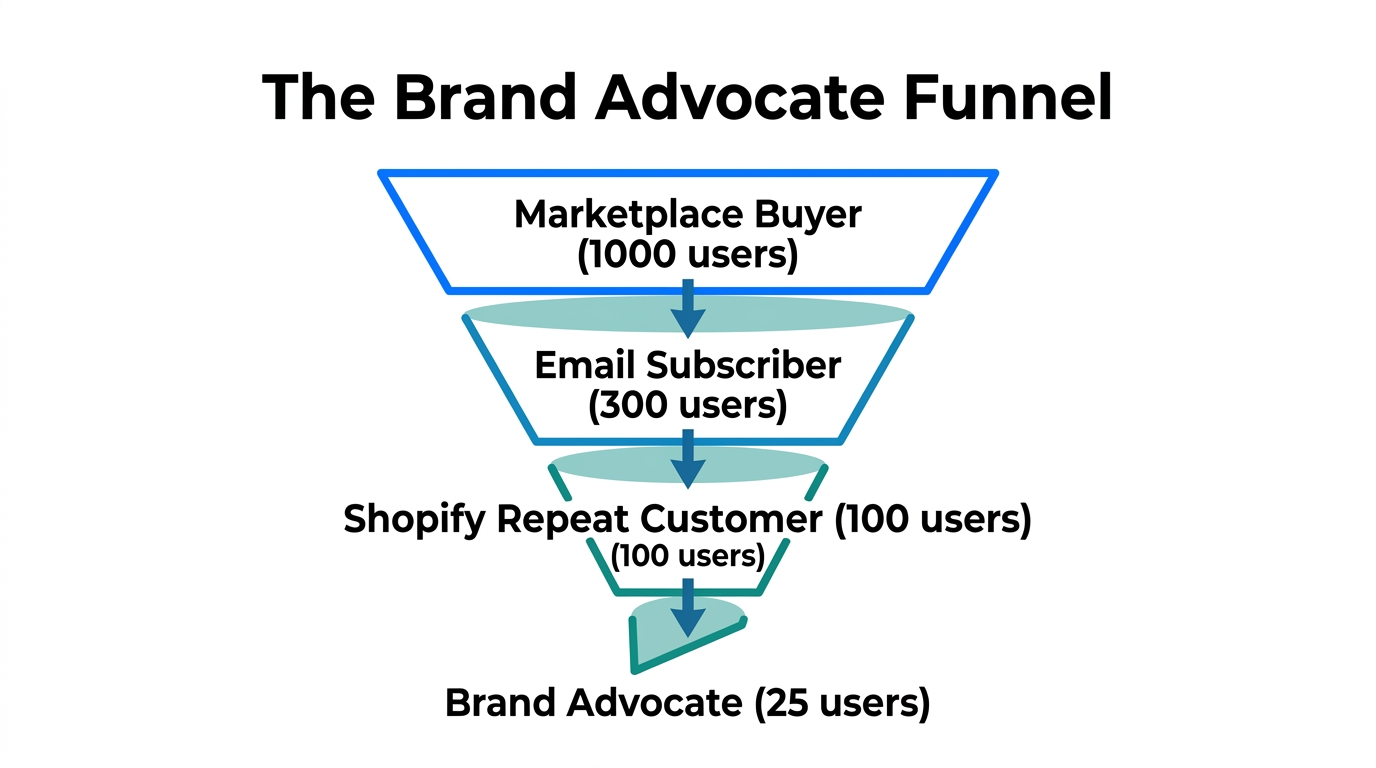
Marketplaces are great for acquisition, but true growth happens when you own the customer relationship. Once a buyer discovers you on Etsy, the goal is to move them into your own ecosystem. This is where affiliate and ambassador programs become critical. Karthik leverages a young, sports-obsessed team to build relationships with athletes and students, turning them into advocates who sell the brand on their behalf.
To scale this part of the business, many brands are turning to AI-powered discovery tools. For example, platforms like Stormy AI allow you to find the perfect niche creators or 'nano-influencers' who already have a following in your specific category. By using Stormy AI to discover and outreach to these advocates, you can automate the process of finding people to promote your brand, ensuring you have a constant stream of User Generated Content (UGC) and social proof without the manual grind of searching through TikTok or Instagram yourself.
The $40,000 Lesson: Humility and Compliance
Hear about a critical operational mistake involving reporting and how the team addressed it.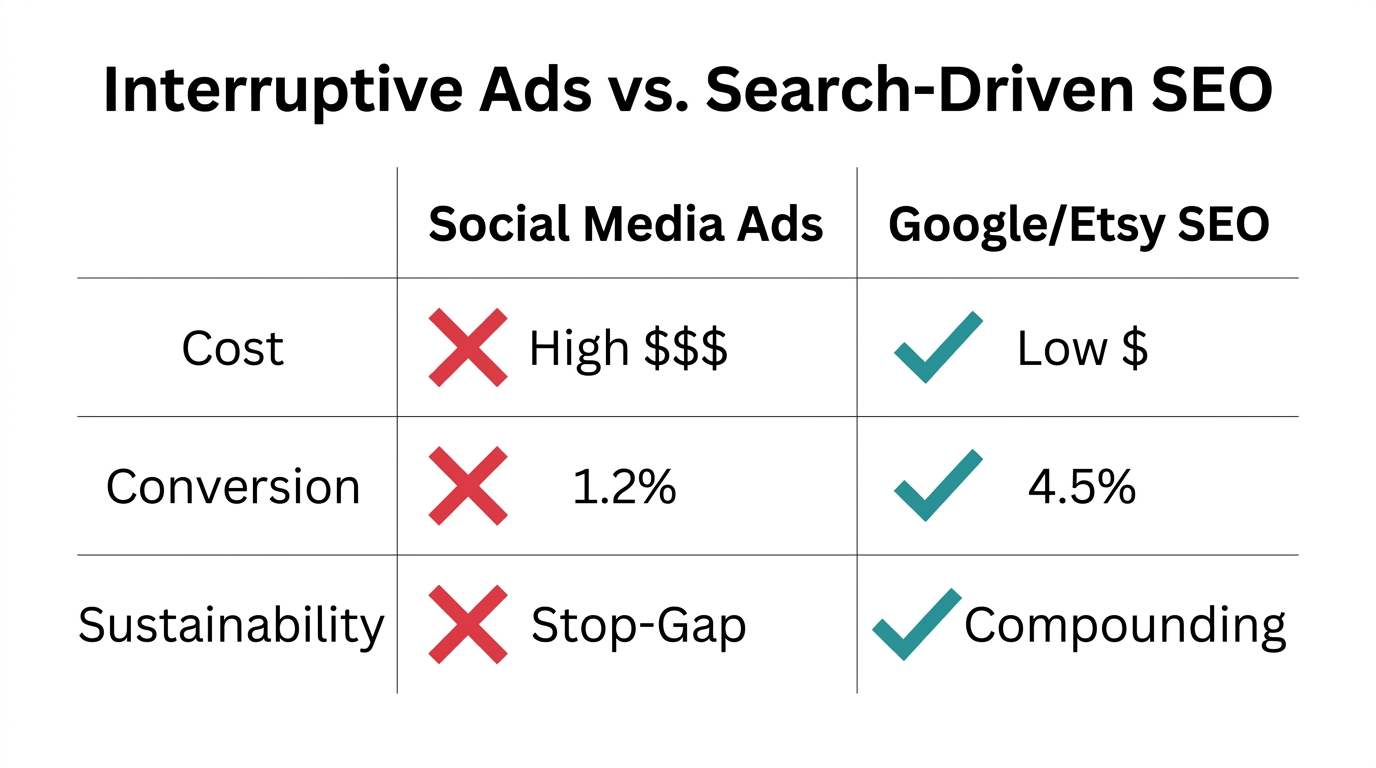
Scaling a business is rarely a straight line. Four months after going full-time, Karthik faced a $40,000 audit bill for unpaid royalties—a mistake that could have ended the business. The lesson here for any bootstrap ecommerce marketing enthusiast is two-fold: First, intellectual property and licensing are non-negotiable hurdles. Second, humility and communication are your best assets when things go wrong.
By being transparent with the licensing agency and setting up a payment plan, they survived. This underscores the importance of having a 'learning mindset.' In the world of 2026 e-commerce, the technical barriers (setting up a store) are low, but the operational hurdles (compliance, supply chain, customer service) are high. Differentiation comes from amazing customer service—responding to inquiries in under four hours and meeting strict shipping SLAs (Service Level Agreements).
"The ability to learn anything or teach yourself something is the most important skill. Everything is a Google search away if you have the intellectual curiosity."The 2026 E-commerce Growth Playbook Summary
Karthik shares the essential mindset and tactical advice for building a successful entrepreneurial venture.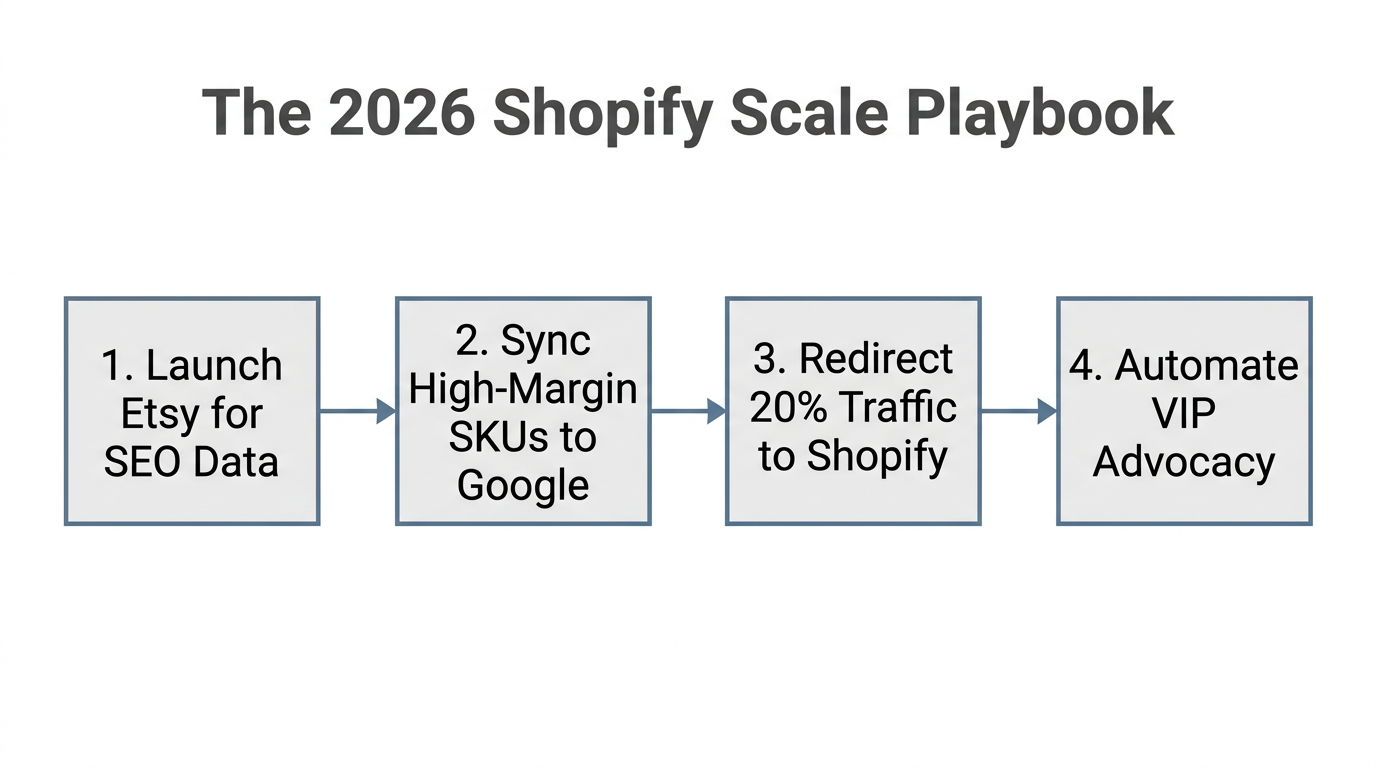
To reach the $10M mark without a massive ad budget, follow these steps in order:
- Identify High-Intent Channels: List your products on Etsy and optimize for Google Shopping early on.
- Build a Tech-First Supply Chain: Use vendor portals and order management systems to handle SKU growth without adding headcount.
- Dominate a Niche through Licensing: Use barriers to entry (like NIL or college licenses) to thin out the competition.
- Scale via Advocacy: Transition from marketplace sales to an ambassador-led model. Use tools like Stormy AI to find and manage these creators efficiently.
- Obsess over Delivery: Use custom packaging, neck labels, and 4-hour response times to build a true brand that stands out in a crowded market.
Scaling to $10M is not about having the biggest ad budget; it's about having the most efficient distribution. By focusing on where customers are already searching and automating the operational 'boring' parts of the business, you can build a sustainable, profitable empire from the ground up.