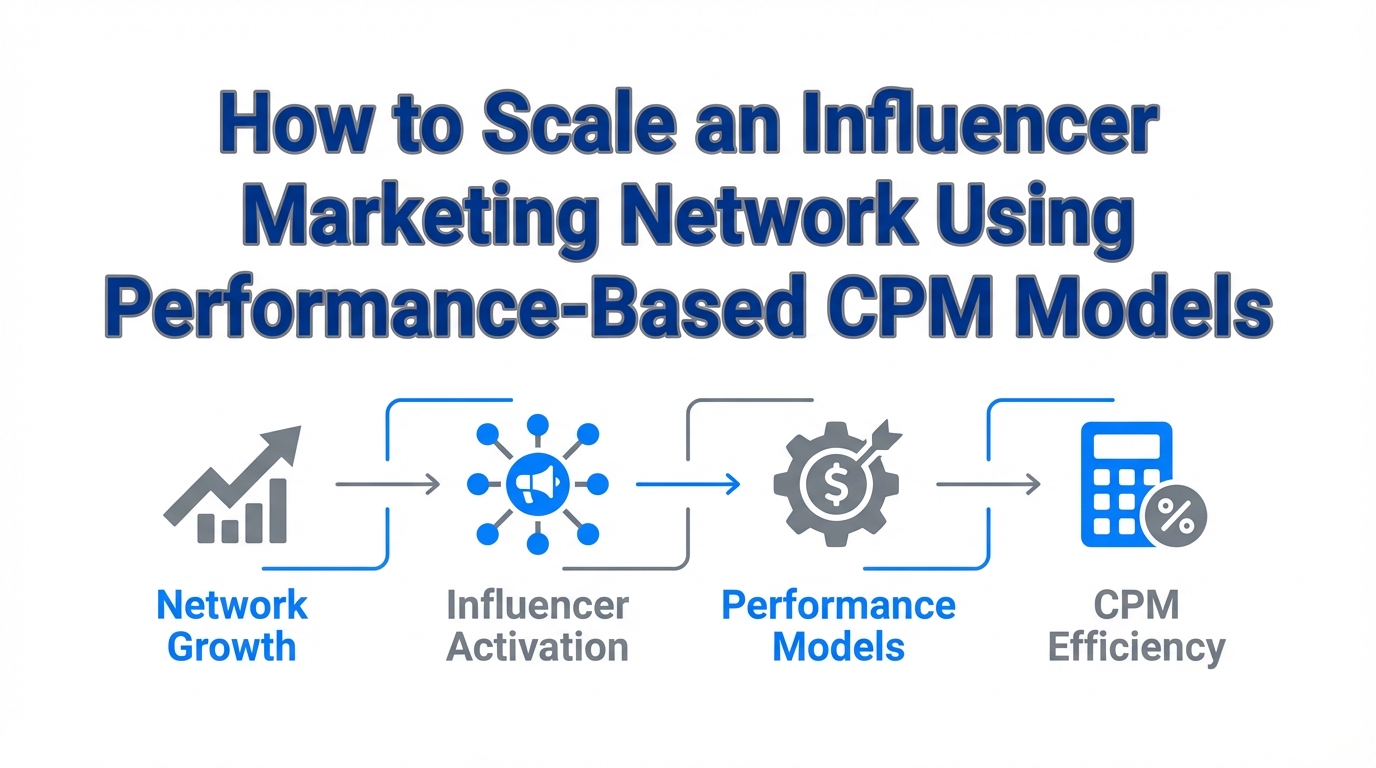
Scaling a brand to 44 million organic views per month is usually a feat reserved for massive marketing departments with eight-figure budgets. However, Jay, the solo founder of the travel app Nomad Table, achieved this milestone by building a decentralized army of over 60 creators while maintaining a monthly revenue of $65,000. The secret isn't a massive VC war chest or a team of agents; it is a clinical approach to performance-based influencer marketing that flips the traditional retainer model on its head.
By utilizing a $1-$2 CPM (Cost Per Mille) benchmark, Jay has created a self-sustaining UGC machine where creators are incentivized by results rather than fixed fees. This strategy allows a solo founder to manage a vast network without the financial risk of expensive, underperforming contracts. In this guide, we will break down the mechanics of creator network operations, the metrics that predict virality, and how to negotiate deals that high-quality creators actually want to sign.
The Foundation of Predictable Virality
Before you ever recruit your first creator, you must prove that your product can actually go viral. Jay didn't start by hiring 60 people; he started by getting in the trenches and testing formats personally. He generated the first 200,000 downloads for Nomad Table by filming his own content in hostels across Thailand and Europe. This personal validation is critical: it transforms you from a "client" into a "director" who knows exactly what works.
The biggest mistake most founders make is falling for the "view trap." Jay recounts an early experiment where a video hit 300,000 views but only garnered 174 likes. The hook was clickbait—promising a gross hostel reveal but delivering an app demo—which led to high views but zero engagement and poor conversions. To scale TikTok or Instagram campaigns, you need high-intent views, not just raw numbers.
The Metric That Matters: 3-Second Retention
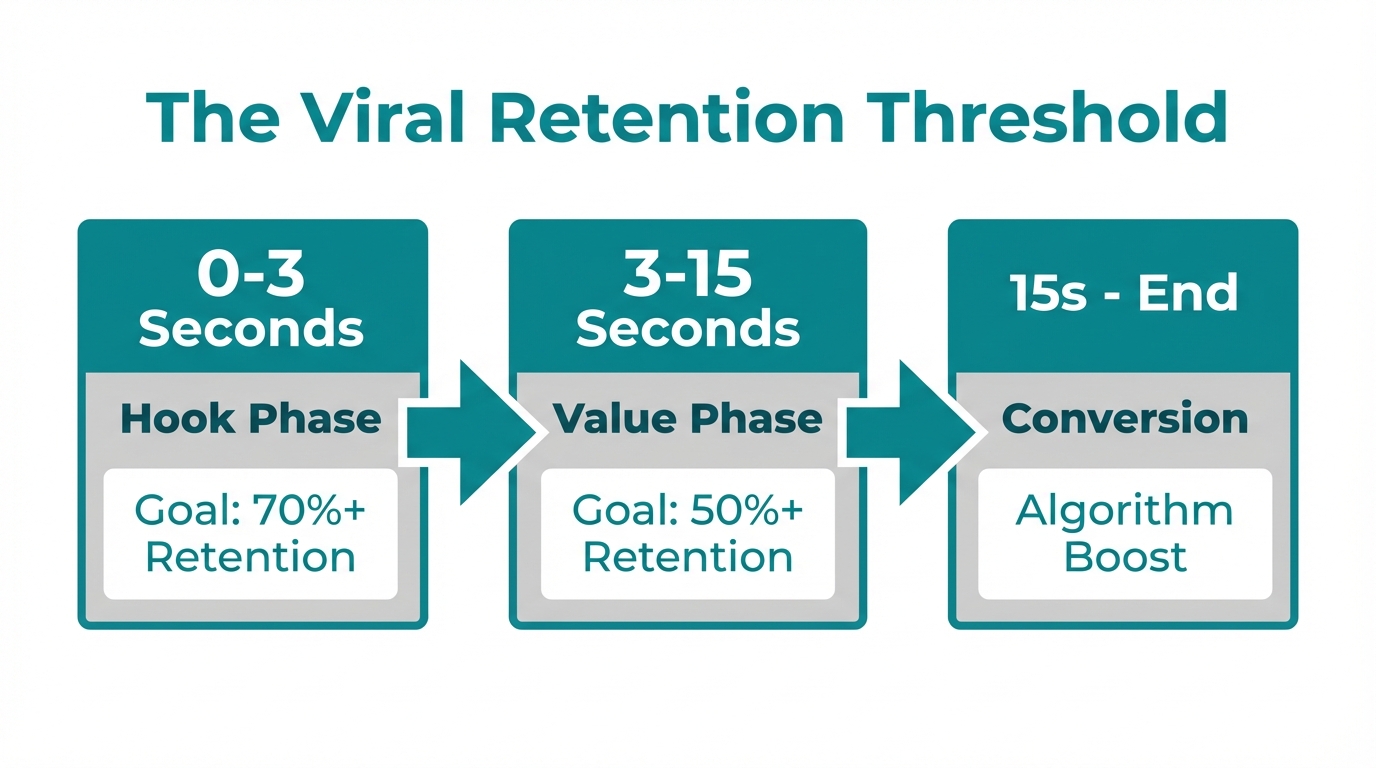
When managing UGC creators at scale, you need a single source of truth for content quality. Jay's research found that the ultimate predictor of virality is watch time past the 3-second mark. If a video achieves 75% to 80% retention in the first three seconds, it is almost guaranteed to eventually go viral given enough reps.
This "hook rate" is the heartbeat of your influencer marketing ROI. By analyzing data from tools like Superwall and Spy Talk (often researched via PiPiADS), which track outlier viral videos, you can identify patterns that stop the scroll. For Jay, this meant using "hook-demo-hook" structures, such as: "Imagine being scared of solo traveling when this literally exists."
"If your 3-second retention is between 75% and 80%, you have a viral format. It’s no longer a lottery; it’s a matter of volume and timing."The Performance CPM Model vs. Retainers
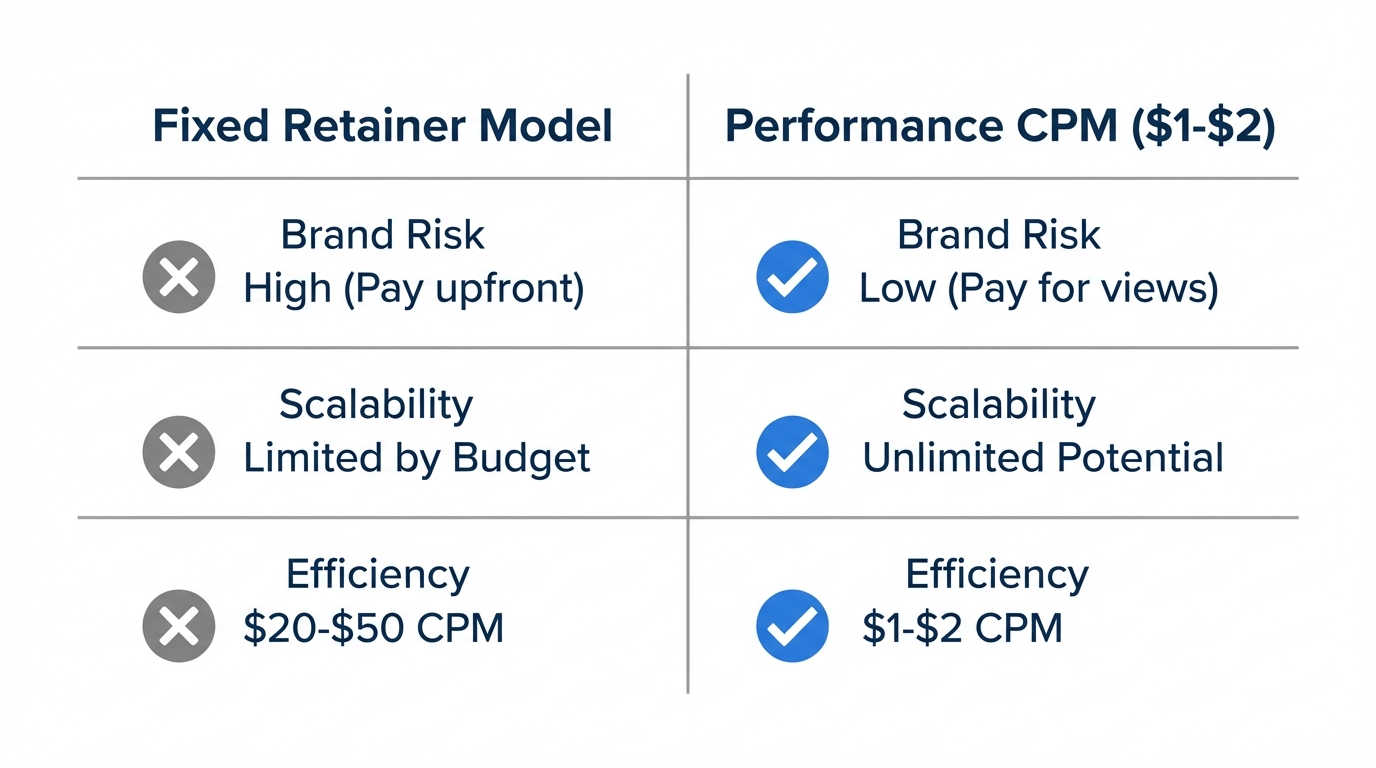
Most influencer agencies push for fixed retainers (e.g., $500/video). For a startup, this is a death sentence for margins. Instead, Jay uses a performance-based influencer marketing model where creators are paid based on the views they generate. This aligns incentives: the creator wants to go viral to make more money, and the brand only pays for actual reach.
| Metric | Traditional Retainer | Performance CPM Model |
|---|---|---|
| Cost Risk | High (Pay regardless of views) | Low (Pay for results) |
| Creator Incentive | Minimal (Check-the-box) | Maximum (Driven by virality) |
| Scalability | Linear (Budget-capped) | Exponential (Infinite upside) |
| Typical Rate | $200-$1,000+ per post | $1.00 - $2.00 per 1,000 views |
While a $1-$2 CPM might sound low to an outsider, the math works in the creator's favor. Jay's top-performing creators have earned as much as $8,000 in a single month by hitting 8 million views on a single outlier video. This exceeds what most mid-tier creators earn on fixed retainers, making the model highly attractive once you prove the "sauce" works.
How to Convince Creators to Accept Performance Deals
The hardest part of managing UGC creators is the initial pitch. Why would a talented creator take a performance deal when other brands offer guaranteed cash? The answer lies in proving the probability of success. Jay uses his own viral history as collateral. By showing creators his own dashboard and saying, "I’ve used this hook 10 times and it hits 4k views minimum every time," he removes the perceived risk.
To build a high-volume network, you need a robust sourcing strategy. Modern platforms like Stormy AI allow you to discover creators who are already comfortable with UGC formats and performance-based niches. Once you find them, the pitch is simple: "I have the formats that are guaranteed to get views. I'm not asking you to be a creative director; I'm asking you to be an actor in a proven play."
"You aren't just hiring a creator; you are providing them with an 'Easy Money' playbook. If they follow your hooks, they make more than they would on a retainer."Operational Workflow: Managing 60+ Creators Solo
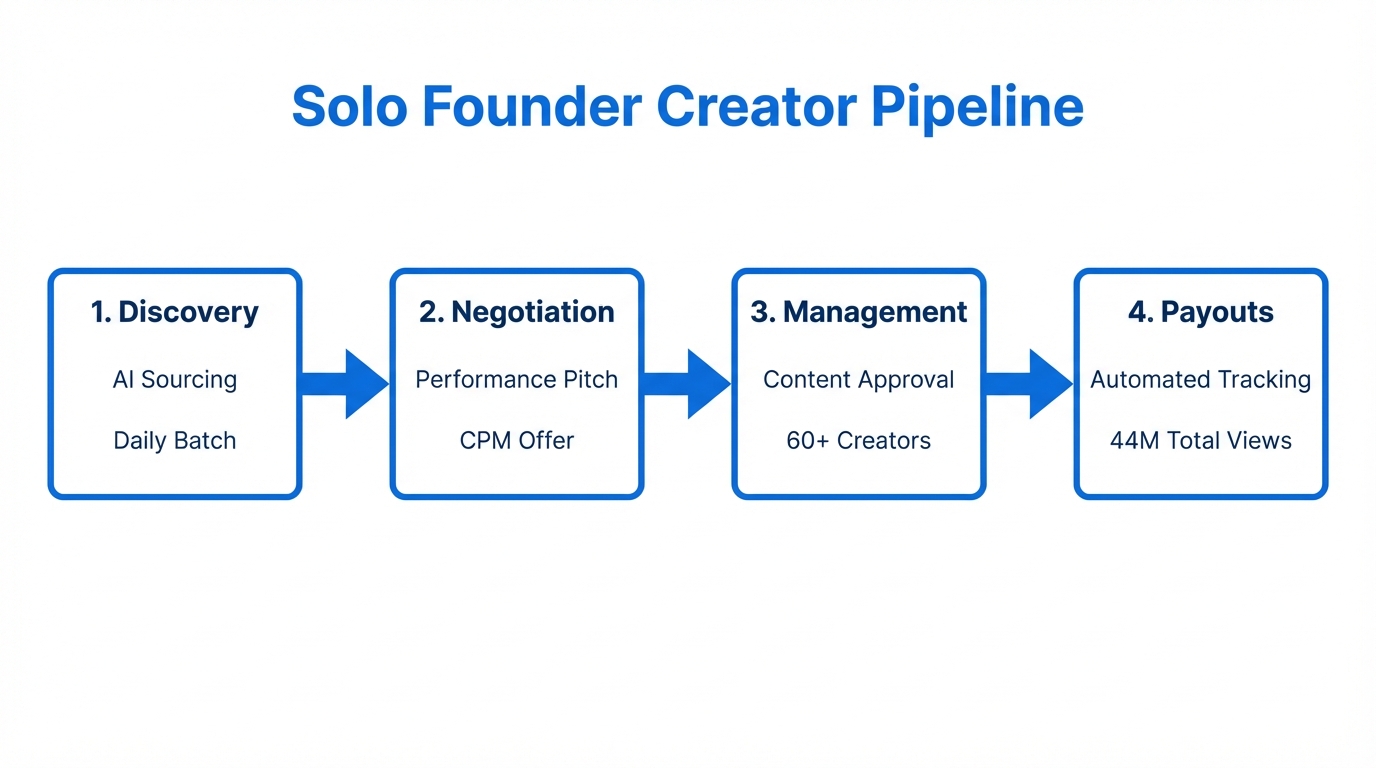
Managing 60+ creators without a team requires a lean operations stack. Jay uses WhatsApp for one-on-one feedback and group motivation. However, as your network grows, using a dedicated creator CRM like the one found in Stormy AI can help track deal stages, store content briefs, and automate the discovery of new talent.
The Weekly Rhythm:
- Daily Posting: Every creator posts once a day. This ensures a high "surface area of luck."
- The Feedback Loop: Jay reviews the 3-second retention of flopped videos and suggests hook tweaks in real-time.
- The Trench Strategy: Jay continues to post alongside his creators. When they see the founder getting the highest views, it validates the strategy and motivates the team.
Tracking, Attribution, and Payouts
Attribution in organic social is notoriously difficult. Jay attributes 85-90% of his traffic to UGC based on onboarding surveys and correlated download spikes. For payouts, the system must be mathematically fair. Tracking views across 60 accounts manually is a nightmare; many founders use automated tracking tools or spreadsheets linked to social APIs to calculate the monthly $1-$2 CPM totals.
For mobile apps, this organic traffic is often more valuable than paid acquisition. As Jay notes, for a social app with low ARPU (Average Revenue Per User), paid ads via Google Ads or Meta often don't pencil out. Organic UGC provides a lower CAC (Customer Acquisition Cost), which is essential for solving what Andrew Chen calls The Cold Start Problem in social networks.
Negotiation Tactics for Solo Founders
When dealing with creator DMs or agents, solo founders must lead with data. If an agent asks for a $2,000 retainer, counter with: "Our creators currently average a $2 CPM, and our top video this month paid out $8,000. I’m happy to offer a performance deal that gives your creator uncapped upside based on our proven hooks."
Keep these three rules in mind during negotiation:
- No Caps on Payouts: If a creator hits 20 million views, pay them the full $20,000-$40,000. It feels painful, but that video likely generated 10x that in subscription value.
- Provide the Assets: Use tools like Canva or CapCut to provide creators with templates and overlays so they spend less time editing and more time filming.
- Fairness First: If the algorithm changes, be willing to adjust the CPM. The goal is a long-term partnership, not a one-month exploit.
"The most expensive creator is the one on a retainer who gets zero views. The cheapest creator is the one you pay $8,000 for 8 million views."Conclusion: Building Your Creator Machine
Scaling an influencer marketing network to 44 million views is a marathon of validation and volume. By moving from a fixed-cost mindset to a performance-based CPM model, you insulate your business from risk while attracting creators who are confident in their ability to go viral. Start by testing the formats yourself, identify the hooks that hit that 75% retention mark, and use tools like Stormy AI to find and manage the talent that will take your brand to the next level. The era of the expensive, unmeasured influencer retainer is over—the era of the performance-based creator network is here.