How to Scale Your Growth Engineering Loop with Claude Code in 2026
Master growth engineering strategies 2026 by scaling loops with Claude Code. Learn how to deploy automated A/B testing loops and variant clusters for CRO.
In 2026, the traditional marketing funnel is not just leaking—it is obsolete. As we navigate a landscape where global online sales have surpassed $6.8 trillion, the difference between market leaders and also-rans comes down to experimentation velocity. The manual process of a growth marketer writing a brief, a designer creating a mockup, and an engineer coding a single A/B test is too slow for a world where AI agents now execute purchases autonomously. To stay competitive, growth leads are shifting toward agentic growth engineering, leveraging tools like Claude Code to turn manual tasks into self-reinforcing loops.
Adopting the Reforge Growth Engineering Framework: From Funnels to Loops
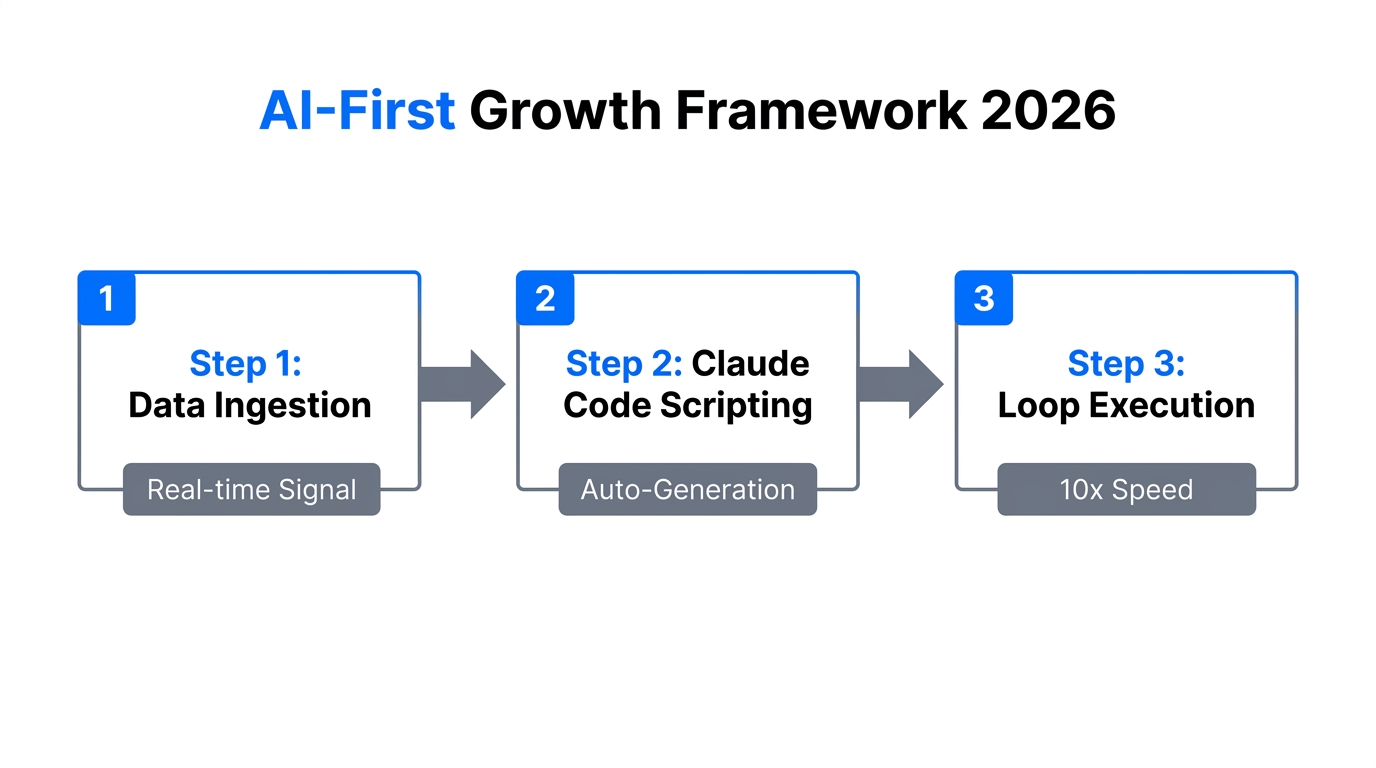
For years, marketers were obsessed with the linear funnel: Awareness, Acquisition, Activation, Retention, Referral, and Revenue. However, the Reforge growth framework 2026 update emphasizes that sustainable growth comes from loops, not funnels. A loop is a closed system where the output of one cycle becomes the input for the next, creating compounding returns.
In a funnel, you pour money into the top and hope something comes out the bottom. In a loop, an acquisition (e.g., a new user) naturally leads to more acquisition (e.g., through viral content or data-driven personalization). Brian Balfour, CEO of Reforge, argues that the winners of this year are those building proprietary data loops—systems where your AI learns from unique user interactions that your competitors cannot replicate.
"The era of 'growth-at-all-costs' is dead. In 2026, the only metric that matters is how quickly your growth loop can self-correct and scale without human intervention."
The Shift to 'Vibe Coding' for Growth Marketers
We have entered the era of "Vibe Coding," a term popularized by Andrej Karpathy that describes intent-based development. Growth engineers no longer spend hours debugging CSS or writing boilerplate API calls. Instead, they describe a desired growth outcome—the "vibe"—and let agentic environments like Claude Code handle the technical execution. This is one of the most significant conversion rate optimization trends of 2026.
For example, instead of asking an engineer to "change the CTA button to blue," a growth lead uses Claude Code to: "Analyze the last 30 days of Mixpanel data for high-intent mobile users, identify three friction points in the checkout flow, and deploy three React-based UI variants to address them." Claude Code then autonomously plans, writes, and tests the code across the repository, ensuring deep dependencies—like pricing APIs or inventory checks—remain intact.
| Feature | Traditional Growth Engineering | Agentic Growth (Claude Code) |
|---|---|---|
| Experiment Setup | Manual (2-5 days) | Autonomous (Minutes) |
| Deployment | Single A/B Test | Variant Clusters |
| Coding Style | Syntax-heavy | Intent-based (Vibe Coding) |
| Velocity | 1-2 tests per week | 20-50 tests per week |
Deploying 'Variant Clusters' Instead of Single A/B Tests
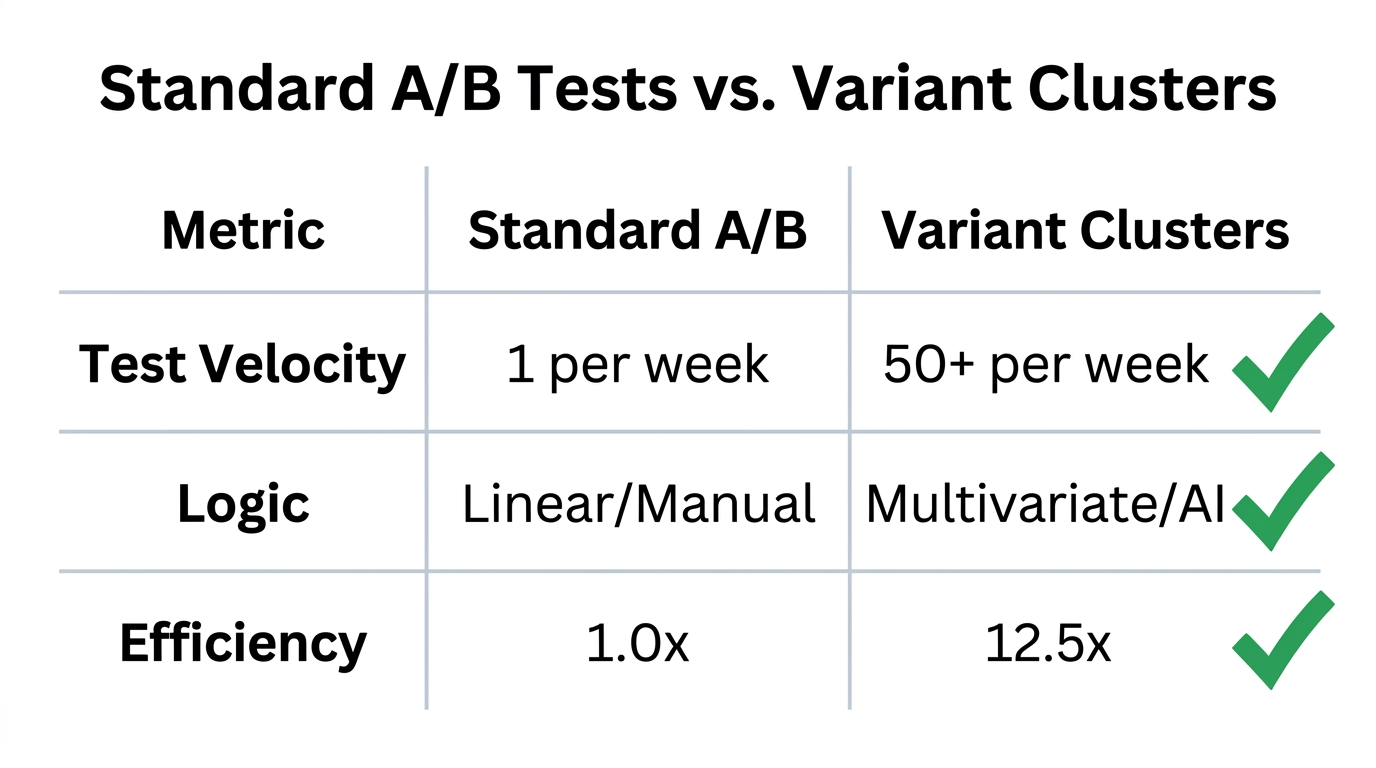
Single A/B tests are too granular for the speed of 2026 commerce. Modern growth engineering strategies 2026 rely on variant clusters. A variant cluster is a group of simultaneous experiments designed to test a high-level hypothesis across multiple touchpoints.
Using Claude Code, you can point the agent at your landing page and have it generate 10 hypotheses based on successful industry patterns. It can then write the code for all 10 variants at once. This approach allows brands to identify high-intent user segments with surgical precision. Last year, Signifyd reported that conversions from AI-driven referrals increased by 1,247%, largely due to the ability of AI to personalize the experience at a scale humans cannot manage.
"Testing one headline is a 2020 strategy. In 2026, we test ten value propositions, five UI layouts, and three pricing models simultaneously as a single cluster."
To support this high-velocity content creation, many brands use Stormy AI to discover and vet UGC creators who can provide the raw video assets needed for these multi-variant landing pages. While Claude Code handles the technical deployment of the page, Stormy AI ensures the creative pipeline is always full.
Case Study: MarketBetter’s 47% Conversion Breakthrough
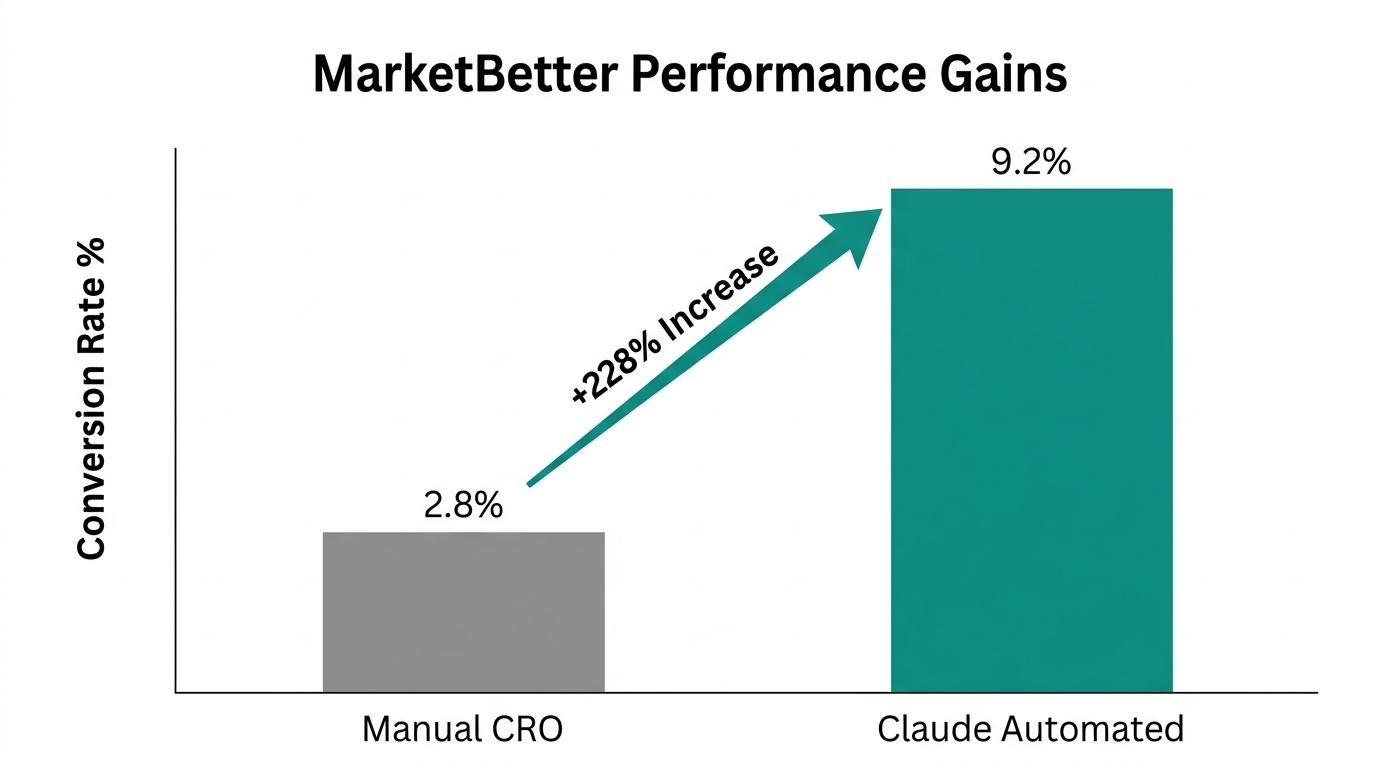
The power of Claude Code for marketing is best illustrated by companies like MarketBetter. They implemented an AI-powered system that achieved a 47% cumulative improvement in reply rates. Their secret? They stopped testing subject lines and started testing value proposition framing.
Using agentic coding, they built a loop that analyzed competitor reviews on platforms like Trustpilot, identified specific customer pain points (such as shipping delays), and automatically generated personalized outreach sequences. This wasn't just "mail merge"—it was an autonomous engine that researched, wrote, and optimized its own code to improve engagement. This level of automated A/B testing loops is now the baseline for high-growth startups.
The 2026 Growth Engineering Playbook: Step-by-Step
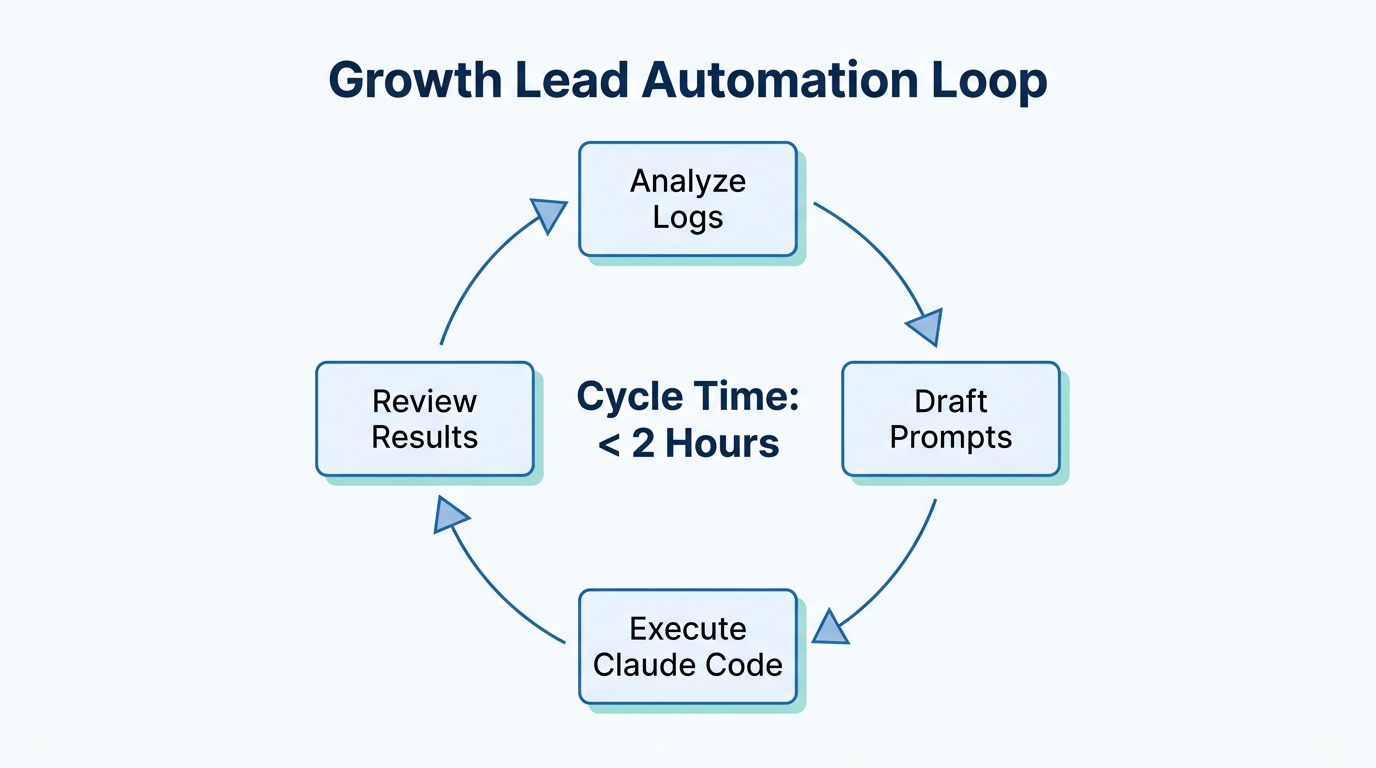
If you want to scale your growth engineering loop using Claude Code, follow this actionable playbook:
- Audit Your Data Hygiene: Before deploying AI, ensure your customer data is structured. Industry experts note that 68% of AI projects fail due to "unclean data." Spend 80% of your time on data transformation using tools like dbt.
- Define Your High-Intent Outcome: Don't just "test." Define a specific outcome, such as "Reduce cart abandonment for first-time mobile shoppers in the UK."
- Initialize Claude Code: Open your terminal and run Claude Code. Use the
/mapcommand to let it index your entire repository so it understands how your frontend interacts with your NeonDB database. - Prompt for the Cluster: Provide the intent: "Create a variant cluster for the checkout page that tests three different trust signals (reviews, security badges, and social proof) and track the results in our Segment dashboard."
- Review and Deploy: Audit the generated code for security—AI-assisted devs can ship 10x more security risks if not checked (Fast Company)—then push the PR.
"The future of growth isn't about being a better marketer; it's about being a better orchestrator of AI agents."
Common Pitfalls: Shadow Engineering and Performance Tax
While Claude Code accelerates development, it introduces new risks. Shadow engineering—where developers or marketers deploy AI-generated code without oversight—can lead to massive technical debt. Furthermore, there is the Performance Paradox: adding too many AI-powered widgets can slow down your site. A 1-second delay in mobile load time can decrease conversions by 20%.
Always use Meta Ads Manager or Google Ads tracking to ensure that your new AI-generated variants aren't negatively impacting your Core Web Vitals or ad spend efficiency.
Conclusion: Closing the Loop
Scaling your growth engineering loop in 2026 requires moving away from manual experimentation and toward autonomous agentic workflows. By leveraging Claude Code for technical deployment and the Reforge framework for strategic loops, growth leads can achieve unprecedented velocity.
The ultimate goal is a system that discovers creators via Stormy AI, generates content automatically, and then uses Claude Code to deploy that content into highly-optimized, self-correcting variant clusters. The brands that build these loops today will own the market of tomorrow.