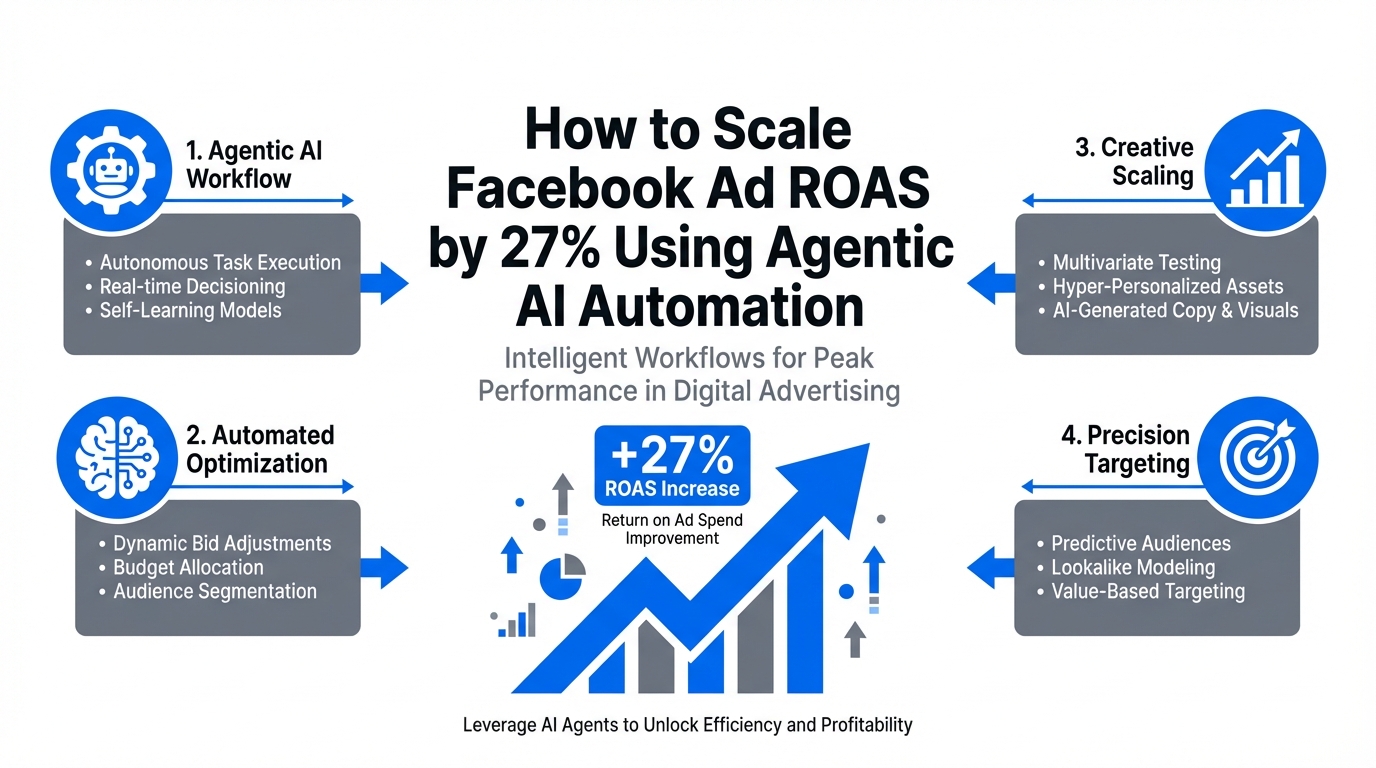
In the high-stakes landscape of 2025–2026, the performance delta between standard advertisers and those using autonomous systems has widened into what experts call the "Efficiency Gap." With the average Cost Per Lead (CPL) climbing to $27.66—a staggering 20% year-over-year increase—manual bidding is no longer just inefficient; it is a financial liability. To thrive, growth marketers are shifting away from "Chat AI" toward "Action AI," utilizing agentic tools that don't just suggest copy but execute entire campaign cycles autonomously.
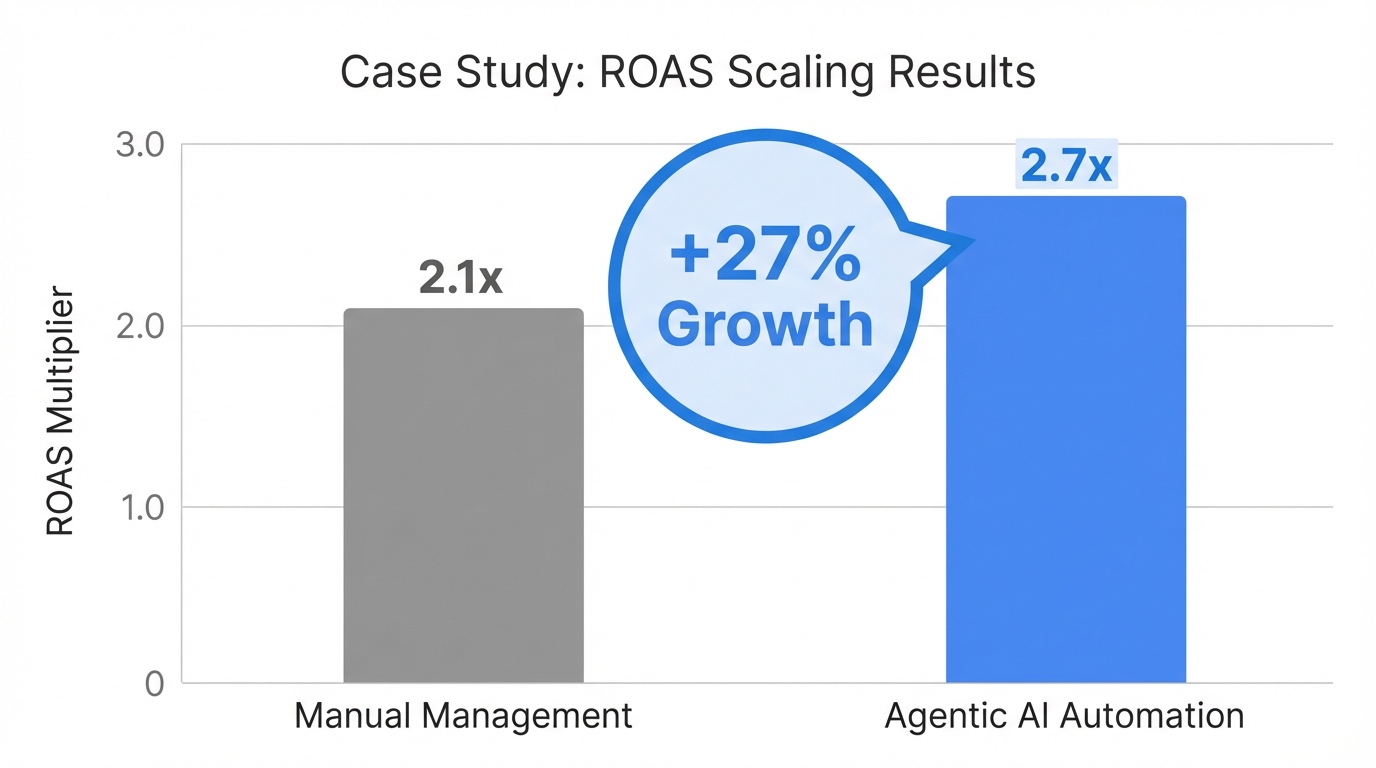
By implementing a custom automated management loop, brands are seeing a 27% higher ROAS compared to traditional manual oversight. This playbook breaks down the transition from "dashboard-first" to "code-first" marketing, showing you exactly how to bridge your Meta Business Manager with terminal-based AI agents to outperform the market.
The Data Behind the 27% ROAS Lift: Why Agentic AI Wins
The core reason agentic AI marketing outperforms standard bidding lies in its ability to eliminate the "Context Death Spiral." According to data from Azarian Growth Agency, marketers lose an average of 12 hours per week simply switching between browser tabs, from Meta Ads Manager to Google Sheets and back. Agentic systems like Claude Code centralize these functions, allowing for real-time data manipulation and instant execution.
Unlike basic automation, agentic AI operates with "Action intent." While 82% of marketers now use Meta Advantage+, the top 1% are leveraging autonomous agents to manage the nuances Advantage+ misses—such as niche audience segmentation and specific creative rotations that prevent homogenization. This proactive approach leads to a 15.6% reduction in ad fatigue by ensuring that creative variants are swapped the moment performance dips, not days later when a human finally checks the dashboard.
| Feature | Manual Bidding | Meta Advantage+ | Agentic AI Automation |
|---|---|---|---|
| Optimization Speed | Daily/Weekly | Real-time (Broad) | Real-time (Niche-Specific) |
| Creative Output | Low | Medium | High (10x Increase) |
| ROAS Performance | Baseline | +12% Avg. | +27% Avg. |
| Workflow Focus | Dashboard-first | Black-box AI | Code-first (Customizable) |
Setting Up the Technical Bridge: Connecting AI to Meta API
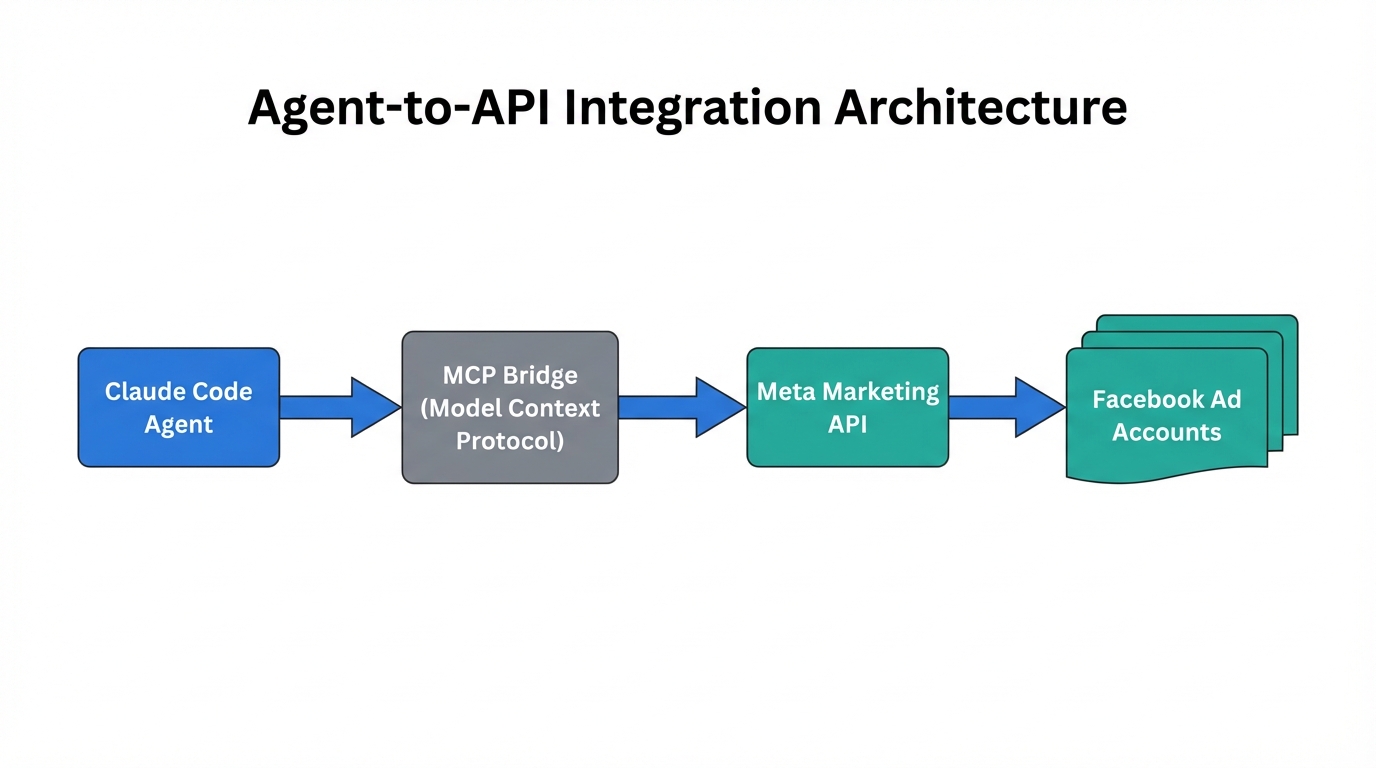
To give an AI agent the power to manage your ads, you must move beyond the chat interface. This requires the Model Context Protocol (MCP), a technical bridge that allows tools like Claude Code to "talk" directly to the Meta Marketing API. Without this link, your AI is just a copywriter; with it, it becomes an autonomous media buyer.
You can use a bridge tool like Pipeboard or CData Connect AI to create an MCP server. Once configured, you add the server URL to your Claude Desktop configuration. This setup allows the agent to query live ad performance data, analyze PostHog traffic metrics, and execute changes across your account via simple terminal commands. This is what experts call the "Funnel as Code" approach, where every ad variant and landing page is treated as a deployable codebase.
"The real value of AI in 2026 isn't in brainstorming ideas; it's in the autonomous execution of files, API calls, and live testing loops that never sleep."
Implementing the 'Ralph Wiggum' Optimization Technique
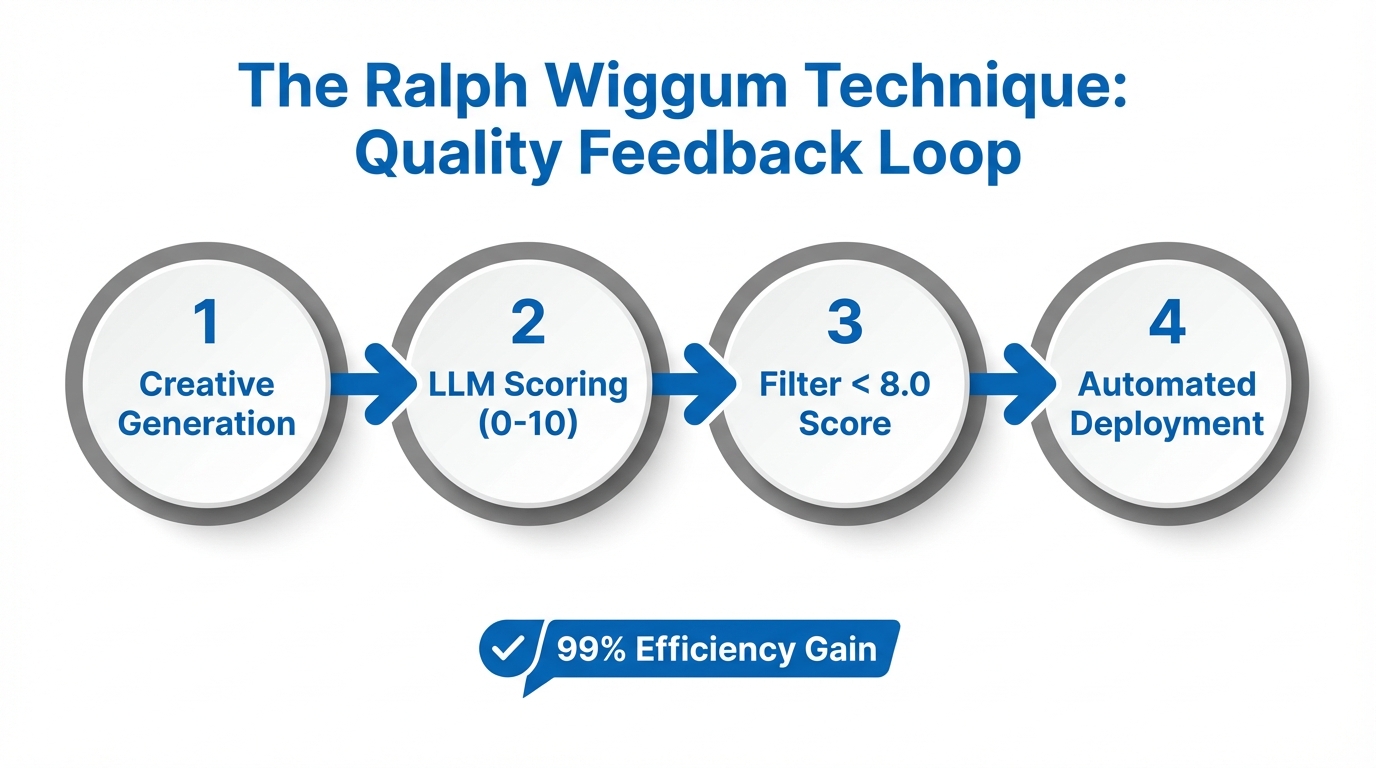
One of the most effective strategies for autonomous ad management is the "Ralph Wiggum" technique—a persistent, self-correcting loop where the AI iterates on a task until it hits a specific KPI. This is a game-changer for maintaining high Click-Through Rates (CTR) and ensuring ad copy always meets strict brand guidelines without human intervention.
- Define the Success Criteria: Create a
CLAUDE.mdfile in your directory that contains your brand voice, character limits, and KPI targets (e.g., target CTR > 2.0%). - Execute the Refinement Command: Use a command like
/RSA --refine --target-ctr=2.5%. - The Persistent Loop: The agent generates copy, checks it against the
CLAUDE.mdconstraints, simulates performance based on historical data via Madgicx, and iterates until the output is statistically likely to hit the goal.
This technique ensures that your creative output is not just voluminous, but consistently high-quality. By automating these creative rotations, marketers are seeing 45% more ad variants generated, allowing for much more aggressive testing of niche hooks and visual styles.
Case Study: How Anthropic Achieved 10x Creative Output
The Anthropic growth team, led by marketer Austin Lau, provided a blueprint for this transition. By using Claude Code to build a custom bridge between Figma and their ad platforms, they managed to increase their creative output by 10x. Instead of manually exporting files and building CSVs for Google and Facebook, they wrote scripts that automated the entire export-to-upload workflow.
In another experiment, developer Giorgio Liapakis allowed an agentic AI to autonomously manage a $1,500 Meta spend. The AI didn't just tweak bids; it conducted ICP research, built landing pages using Next.js, and used PostHog data to pause underperforming ads in real-time. This level of autonomy is the future of Meta ads optimization, where the role of the marketer shifts from "button-pusher" to "system-architect."
Balancing Meta Advantage+ with Custom Agentic Oversight
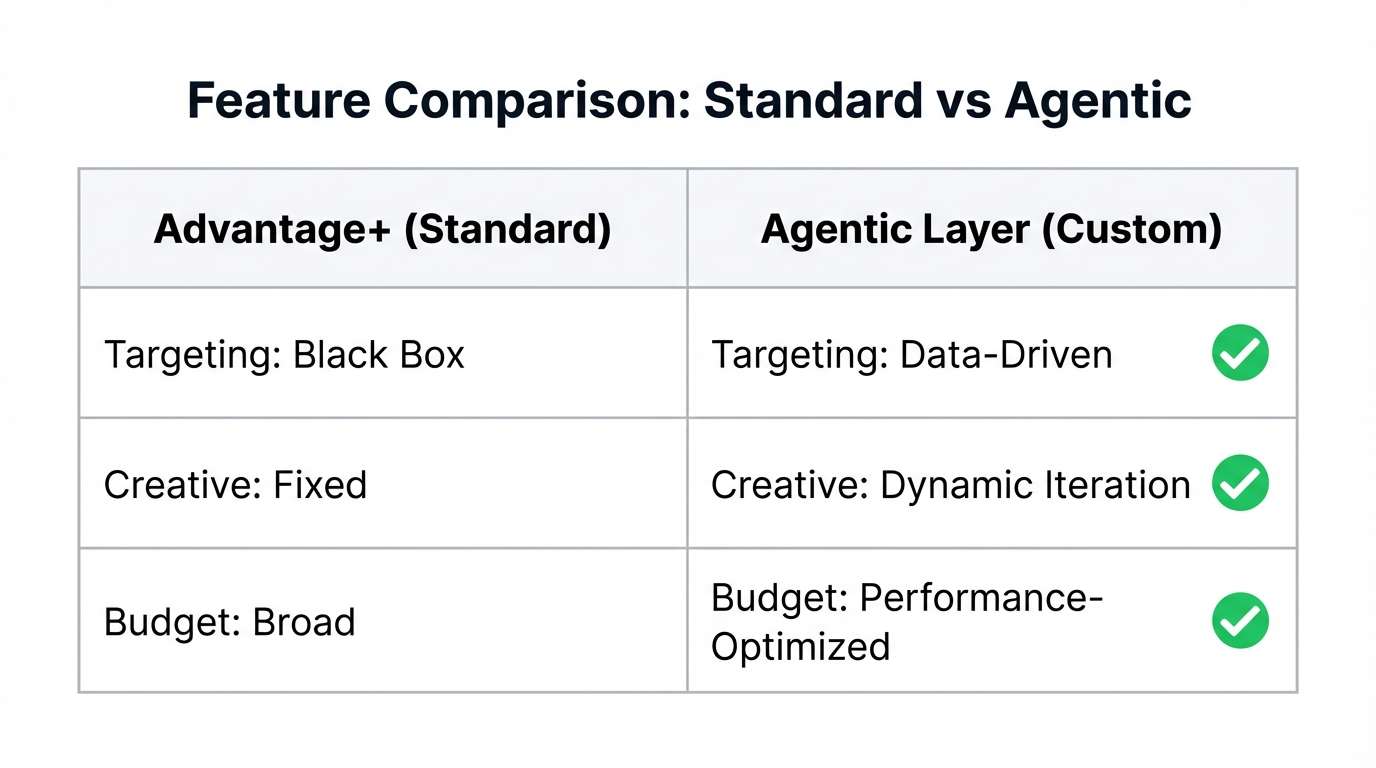
While 79% of marketing AI interactions are now "Action AI" based on community discussions, a common mistake is over-relying on Meta's black-box Advantage+ tools. Relying 100% on Meta's internal AI can lead to "creative homogenization," where your ads look and target exactly like your competitors'.
The solution is a hybrid model. Use Meta Advantage+ for broad-reach efficiency, but use agentic AI marketing to suggest and test "outlier" audience segments that the primary algorithm might overlook. This is particularly effective for UGC-heavy campaigns. While your agent handles the technical bidding, sourcing high-quality UGC creators to feed the machine can be streamlined using platforms like Stormy AI, which helps brands discover and vet creators who fit specific niche demographics.
"Automation handles the tactics, but the human must handle the strategy. Scaling your errors with AI is the fastest way to blow a budget."
Common Mistakes to Avoid in Autonomous Ad Management
Even the most advanced agentic AI marketing system will fail if built on a shaky foundation. Before you set your agents live, ensure your Conversions API (CAPI) and Facebook Pixel are verified. Automating on top of bad data will only "scale your errors," leading to significant budget bleed. Additionally, be mindful of API rate limiting; querying the Meta API too frequently via your terminal can trigger temporary account locks.
Finally, avoid the "Set it and Forget it" myth. While agents can manage 24/7 optimization, they require regular strategic check-ins. You should use tools like Zapier or Make to set up "kill-switch" alerts that notify you if your ROAS drops below a critical threshold, ensuring your autonomous system remains within the guardrails of your overall business goals.
Conclusion: Building Your Autonomous Growth Engine
Scaling your Facebook ad ROAS by 27% is no longer about finding a "secret" interest group or a perfect bid number. It is about building a code-first growth engine that reacts to data faster than any human possibly could. By bridging Claude Code with the Meta API and implementing persistent refinement loops like the Ralph Wiggum technique, you can reclaim hours of your week while driving superior performance.
Start small: automate your creative exports, then your creative rotations, and finally your bidding logic. As you move toward Action AI, you'll find that the true power of marketing in 2026 isn't just in the data you have, but in how autonomously you can act upon it. For those looking to scale their creative pipeline further, using Stormy AI to find the right creators to fuel your AI-managed campaigns is the final piece of the modern growth stack.