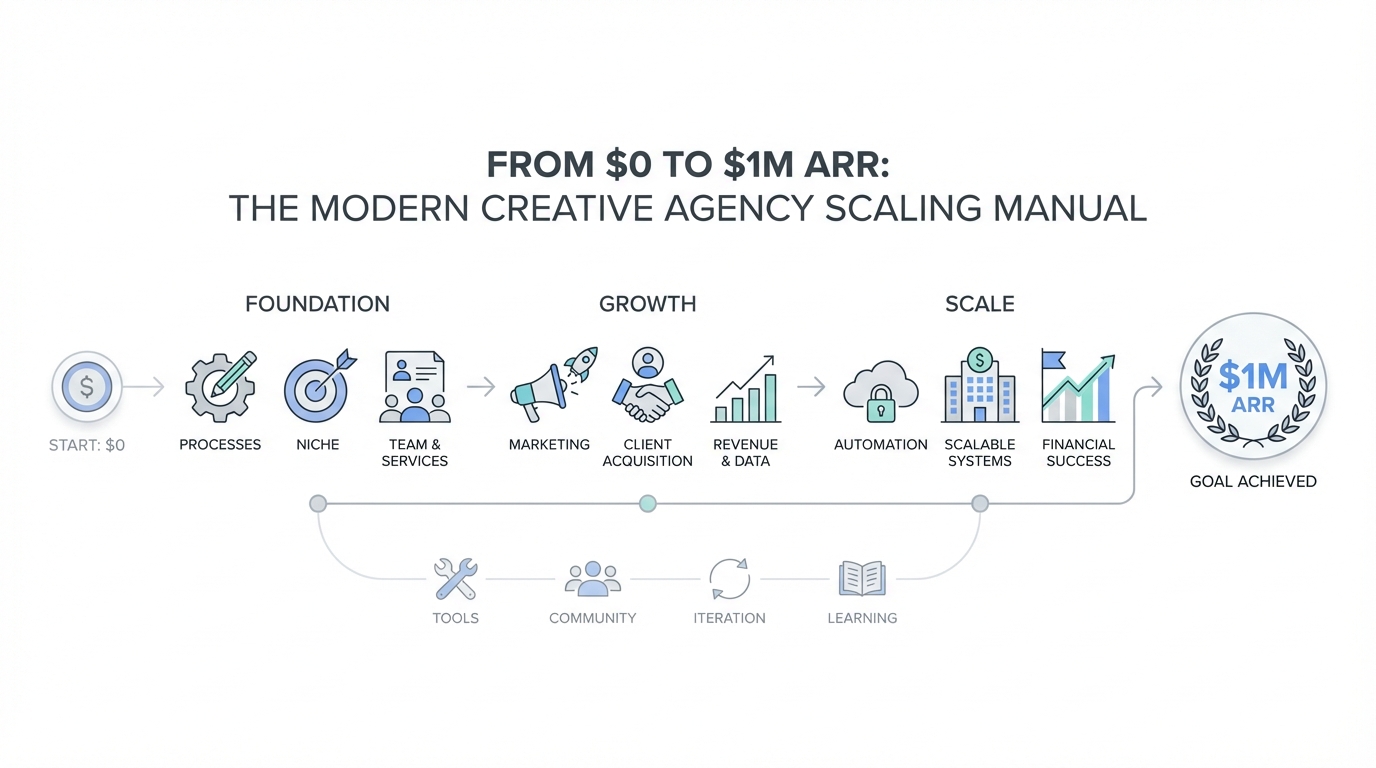
Imagine building a million dollar service business in just 10 months at the age of 19. While most founders spend years iterating on a product-market fit that never comes, a new wave of entrepreneurs is proving that the right agency business model, combined with aggressive positioning in the AI sector, can lead to explosive growth. By moving away from the race-to-the-bottom pricing of freelance marketplaces and embracing a high-leverage "viral design" strategy, it is possible to scale a design agency from a solo operation to a 20-person powerhouse with $80,000 in monthly revenue. This isn't just about making things look pretty; it is about building a marketing engine that turns transparency into a client-acquisition machine.
Niche Selection: Why Viral Design and AI Companies Rule
The first step in building a high-growth agency is choosing a niche where the demand far outstrips the supply. For Mark, a 19-year-old founder from Kazakhstan, that niche was the intersection of AI and Viral Design. In a market saturated with agencies focused on conversion rate optimization (CRO) and small landing page tweaks, there is a massive opening for agencies that help brands get noticed. When you work with the biggest names in the AI space, such as Perplexity AI, the goal isn't just a 2% lift in signups; it's about creating a visual identity that goes viral and defines a category.
Choosing a lucrative niche like AI allows you to command premium pricing. When you position your services as a growth lever rather than a commodity, you stop being a "vendor" and start being a "partner." High-growth startups in Silicon Valley are flush with capital and need to move fast. They don't have time for six-month brand audits; they need launch videos, Times Square billboards, and high-fidelity websites delivered at lightning speed. Platforms like Stormy AI (an all-in-one AI search engine across TikTok, Instagram, and YouTube) are seeing similar trends, where brands are increasingly looking for creators who can produce content that cuts through the noise of the digital landscape.
By focusing on "Viral Design," you are selling a result that is inherently social. Every project you complete for a client like Bnew or Korea AI becomes a portfolio piece that naturally attracts the next client. You aren't just building a website; you are building a cultural moment. This positioning is the secret sauce to reaching $80,000 a month in revenue without having to manage hundreds of small accounts.
The High-Ticket Retainer Model: Quality Over Quantity
One of the biggest mistakes founders make when trying to scale a design agency is staying stuck in the "project-based" trap. If you are charging $500 or $1,000 for a one-off logo or landing page, you are on a treadmill that never stops. To build a million dollar service business, you must transition to high ticket retainer pricing. Mark’s agency model thrives by juggling only six to seven clients at a time, with an average retainer price of $20,000 per month.
Why do clients pay $20,000 a month? Because they are paying for capacity, speed, and specialized expertise. A retainer model provides the agency with predictable cash flow, which is essential for hiring a 20-person team and investing in high-end tools. It also allows the agency to deeply integrate with the client’s brand. Instead of shipping a design and moving on, the agency becomes an outsourced creative department, handling everything from Framer development to 3D motion graphics in Blender.
To implement this model successfully, your creative agency operations must be built around high-value outcomes. You aren't billing by the hour; you are billing for the value of being "top of mind" in a competitive industry. When a client sees that your work led to millions of views on social media or a successful product launch, a $20,000 monthly fee feels like a bargain compared to the cost of an in-house creative director and a team of specialists.
The 'Work in Public' Playbook: Getting Clients Overnight

Marketing for a modern agency doesn't happen through cold emails or expensive trade shows. It happens on X (formerly Twitter). The "Work in Public" philosophy is about showing your process, your wins, and even your "free work" to build an audience that eventually turns into a lead pipeline. Mark’s strategy for going from zero to 25,000 followers—and generating 25 million views—is a repeatable blueprint.
Step 1: The High-Quality Free Redesign
If you don't have a portfolio, you build one by redesigning the world's most viral brands. Mark started by redesigning the Perplexity AI landing page and posting it publicly. The post blew up to 110,000 views overnight, leading to 10-12 call bookings. He did the same for Acquisition.com, which caught the attention of Alex Hormozi and resulted in 15-16 call bookings from a single tweet.
Step 2: Engagement and Community Building
Before you have an audience, you must borrow other people's audiences. This means leaving at least 50 comments a day on the posts of established designers and founders in your niche. By providing value in the comments, you funnel traffic back to your profile. This is where tools like Stormy AI can be invaluable for finding the right creators and influencers to engage with by using natural-language search to pinpoint specific niches.
Step 3: Growth Through Giveaways
To bridge the gap from a few hundred to a few thousand followers, use giveaways. Offer knowledge (a guide), a product (a template), or a service (a free audit) in exchange for a follow, a retweet, and a comment. Mark used just three giveaways to grow from 500 to 5,000 followers. This creates a "viral loop" that the X algorithm loves.
Step 4: Analyze and Replicate Viral Content
Don't guess what works. Use tools like the Tweet Hunter extension to see the most viral content in your niche. Study the hooks, the formatting, and the visual assets. Your goal is to replicate the structure of viral success while injecting your own unique design aesthetic.
Creative Agency Operations: The Tech Stack for Scale
Scaling to a million dollar service business requires a lean but powerful tech stack. The beauty of a modern design agency is that the tools used at the $0 level are often the same tools used at the $1M level. However, the way you use them changes as you scale. For managing creative agency operations, transparency and speed are the two most important metrics.
- Design & Prototyping: Figma is the industry standard. It allows for real-time collaboration between your 20-person team and your clients. For 3D elements that make designs "pop," use Blender and Cinema 4D.
- Web Development: To move fast, move away from heavy coding. Using Framer allows you to turn designs into live, high-performance websites in a fraction of the time, enabling your team to ship multiple landing pages per month for a single retainer client.
- Communication & Documentation: Slack is for the day-to-day chatter, but Notion is the brain of the agency. Every project, client feedback loop, and internal SOP (Standard Operating Procedure) should live here.
- Inspiration: To maintain high quality at scale, your designers need a constant stream of high-level references. Tools like Mobbin provide a massive vault of real-world product designs from the best apps, helping your team build 10x faster by using proven UI patterns.
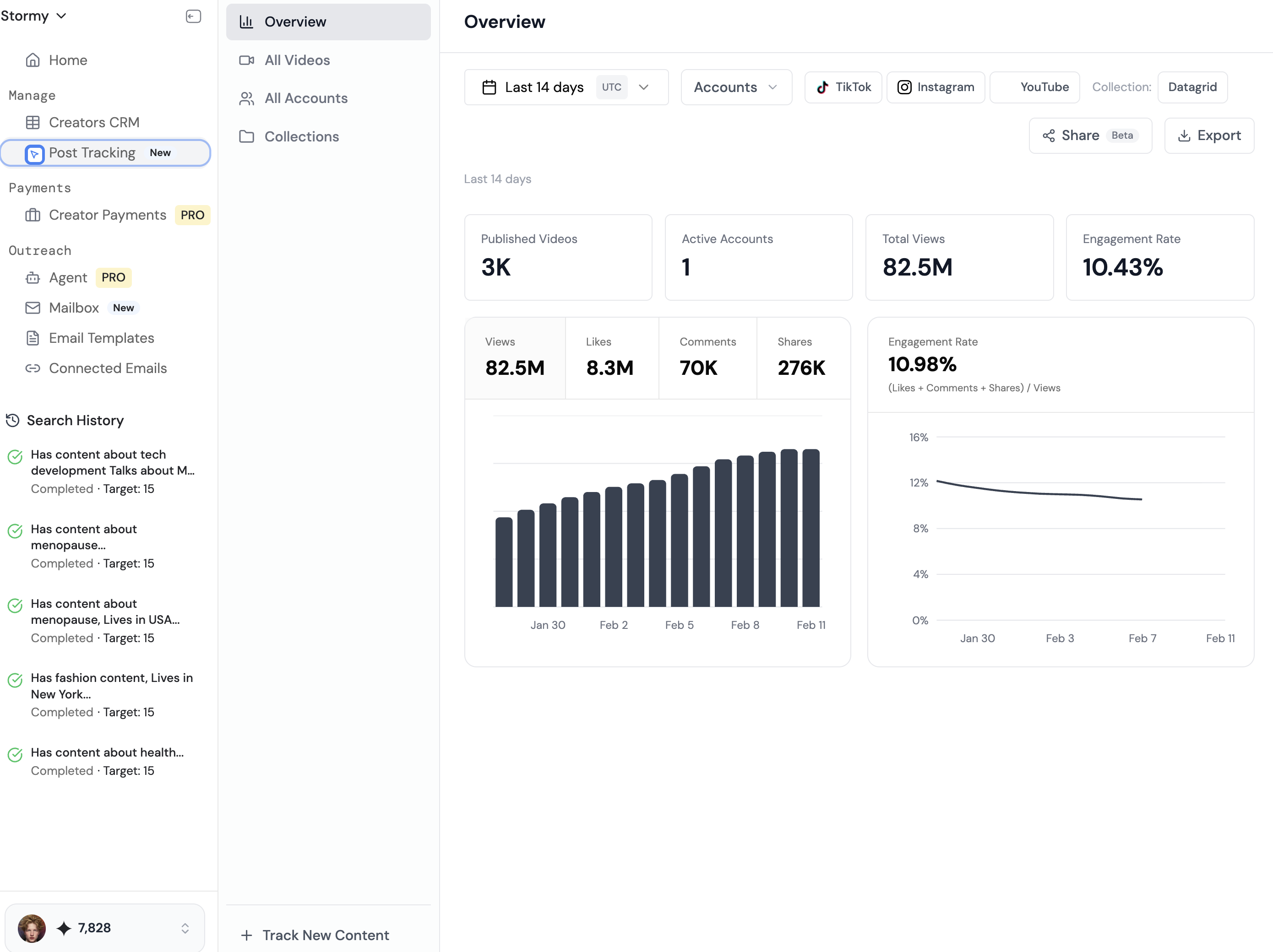
When your agency focuses on UGC (user-generated content) for mobile app marketing or app install campaigns, your tech stack needs to handle high volumes of video assets. This is where AI-powered discovery and tracking tools like Stormy AI complement your operations, helping you monitor views, likes, and engagement for the viral launch videos you design for your clients.
Building and Managing a 20-Person Remote Team

You cannot scale a design agency to $1M ARR as a solopreneur. Eventually, you will hit a ceiling where your time becomes the bottleneck. Mark scaled his team to 20 people in less than a year to keep up with the doubling of revenue every two months. The key to managing a large remote team is moving from "doing" to "systematizing."
In the early stages, the founder is the lead designer. At 20 people, the founder is the Visionary and the Lead Salesperson. Your team should consist of specialists: 3D motion designers, Framer developers, and project managers who can handle the day-to-day communication in Slack. Hiring for talent is important, but hiring for speed is critical. In the "Viral Design" world, a designer who can ship a stunning hero section in 4 hours is more valuable than one who takes 4 days to perfect a button radius.
To maintain quality, implement a "Creative Review" process where every piece of work is vetted against the agency's high standards before it reaches the client. This ensures that even as you scale, the output remains consistent with the work that originally went viral on X. By using creative agency operations that prioritize transparency, you can manage a 20-person team from anywhere in the world, whether you're in Kazakhstan or Silicon Valley.
Conclusion: Your Path to a Million Dollar Service Business
The journey from $0 to $1M ARR in under a year is not a matter of luck; it is a matter of aggressive positioning, high ticket retainer pricing, and a relentless commitment to working in public. By choosing a high-growth niche like AI and focusing on viral outcomes rather than commodity services, you can scale a design agency faster than ever before.
Start by building your presence on X, engaging with the community, and showing your skills through free, high-impact redesigns. Transition your clients to $20,000 monthly retainers to stabilize your cash flow, and invest in a robust tech stack featuring Figma, Framer, and Notion. As you grow, leverage platforms like Stormy AI to automate your creator outreach and integrate influencer strategies into your creative offerings, making your agency an indispensable partner for the next generation of tech giants. The only question left is: how many times are you willing to repeat the work until the chances of failure become zero?