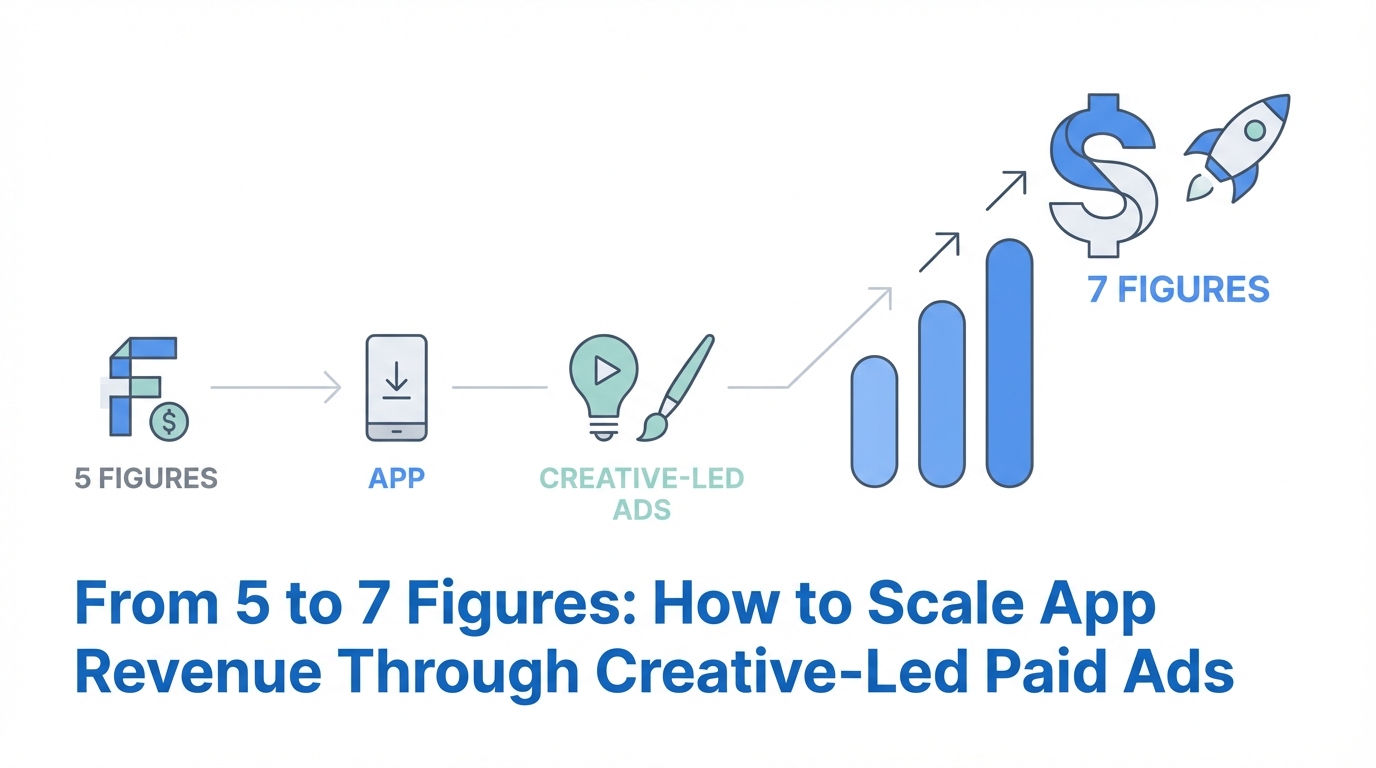
Most mobile app founders spend weeks obsessing over the color of their 'Sign Up' button or the exact microcopy on their checkout page. They believe that conversion rate optimization (CRO) is the silver bullet that will take them from a struggling startup to a million-dollar exit. However, the most successful consumer apps—those hitting $200 million to $300 million in ARR—have a different secret: creative-led growth strategy. They realize that if your ad creative is powerful enough to stop a user in their tracks and solve a burning problem, that user will crawl through a broken checkout flow just to give you their money. This is the 'Yoga Body' method of scaling, and it’s how modern founders are building empires in record time.
Why Your Checkout Flow Matters Less Than Your Ad Creative

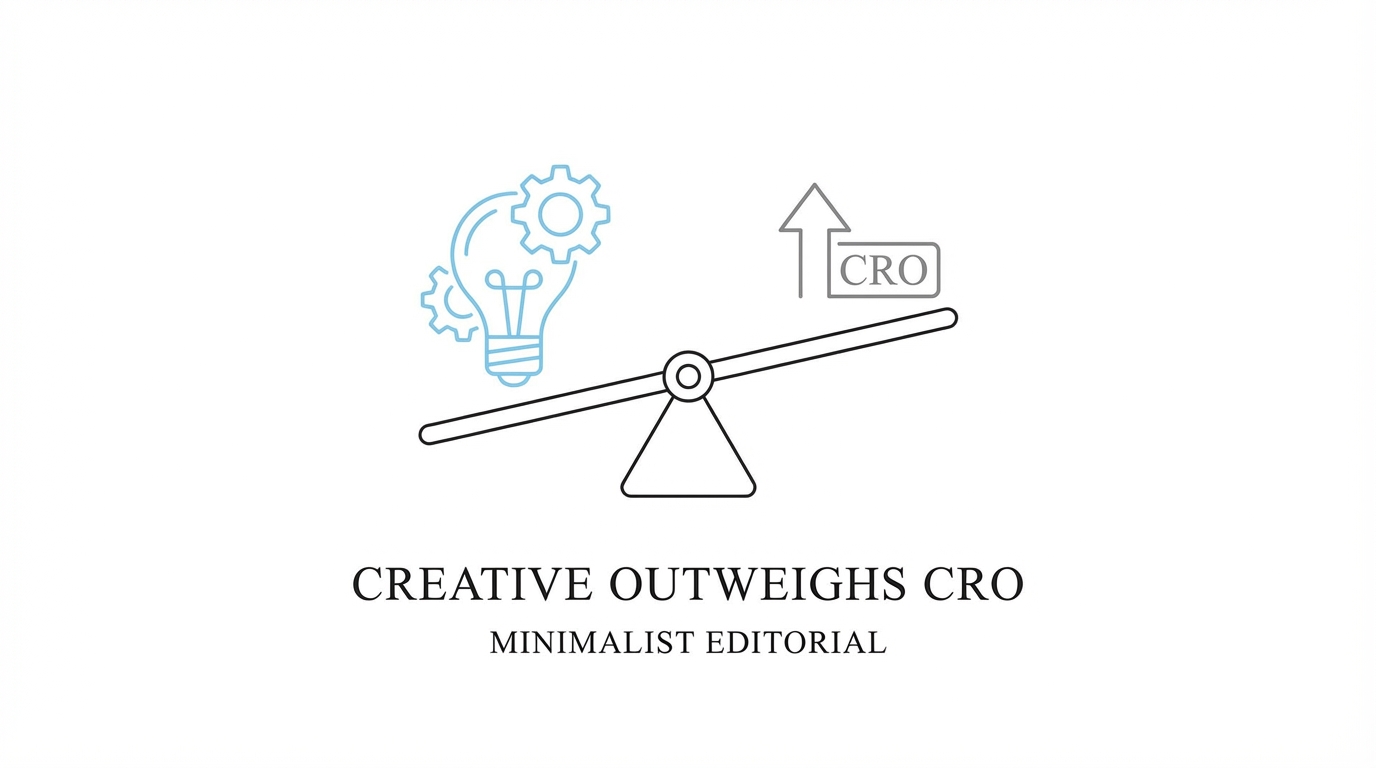
The obsession with technical optimization often masks a lack of product-market fit or a weak marketing hook. Consider the story of Yoga Body, a stretching course company that runs some of the most efficient Meta Ads in the health and fitness space. Their ads are so compelling that they've been running the same creative for nearly two years, generating millions in revenue. The founder of Massive, Dan, recently noted that when he purchased a $100 course from Yoga Body, the checkout experience was arguably 'insane'—it took nearly 15 minutes, the mobile site was broken, and the checkout button was hidden.
Yet, he still fought through the friction to complete the purchase. Why? Because the ad creative was so specific to his pain point that he felt he needed the solution. This is a vital lesson for anyone looking to scale app revenue: if you make people want your product enough, they will break down walls to get it. High-quality, problem-oriented creative acts as the ultimate top-of-funnel filter. While tools like Superwall are essential for managing paywalls and reducing friction, they cannot fix a product that no one was hooked on in the first place.
The Problem Awareness Funnel: Educating Cold Traffic

To successfully run performance marketing for startups, you must understand the different levels of user awareness. Most marketers target 'solution-aware' users—people already looking for a job or a fitness app. But the real scale happens when you target the 'unaware' or 'problem-unaware' audience. This is where you inform a user they have a problem they didn't even know existed.
In the Yoga Body example, an ad might start with: 'If you are running more than 10 miles and you have tight hips, here is why.' The user might not have known their hip pain was connected to their running volume until that moment. Suddenly, they are problem-aware, and you are the one who provided the insight, making you the natural authority to provide the solution. For apps like Massive, which uses AI to automate job applications, the hook shifted from 'find a job' to 'stop using LinkedIn to apply.' This specific callout targets a white-collar demographic that is frustrated with the manual labor of job searching, moving them instantly from frustration to curiosity.
Scaling from $20k to $200k MRR: Shifting to Paid Arbitrage

The jump from 5 to 6 figures in monthly recurring revenue (MRR) usually requires a shift from 'organic shots on goal' to predictable paid arbitrage. Organic content is great for testing ideas, but it is notoriously difficult to scale because platforms like TikTok optimize for views, not conversion events. A video can get 11 million views and result in zero revenue if it hits the wrong audience. Platforms like Stormy AI help bridge this gap; Stormy is an AI-powered platform for creator discovery, especially for mobile app marketing and UGC campaigns, allowing brands to discover creators who can produce consistent, high-converting content rather than just chasing viral 'slop.'
To scale predictably, you need to transition to Google Ads or Apple Search Ads where you can optimize for specific conversion events. Take Headway, for example. The book summary app scaled to over $200 million in ARR by mastering paid ads for mobile apps. They weren't just looking for views; they were looking for users who would complete a subscription. By identifying the exact cost per acquisition (CPA) they could afford and using Stormy AI to monitor post performance and engagement, they turned their marketing into a 'money printer' where every dollar spent returned two or three in lifetime value (LTV).
The Playbook for High-Converting UGC Creative
User-Generated Content (UGC) is the current gold standard for creative led growth strategy, but most founders do it wrong. They hire 100 creators and hope for the best. Instead, you should use Stormy AI to find creators using natural-language search and then follow the '80/20 rule' of creative replication:
- 80% Replication: Find a format that is already going viral in your niche or a related vertical and replicate the structure.
- 20% Innovation: Test net-new hooks or 'blue ocean' concepts that haven't been seen before.
A proven format that Dan identifies as 'Career Dave style' involves a 'discovery' hook—a creator seemingly stumbling upon a secret tool or life hack while filming. It feels organic, non-commercial, and highly authentic. The key to making this work is consistent iteration. If a video gets 6,000 views, don't abandon the concept. Analyze why it performed better than the 500-view videos and tweak the micro-expressions, the background, or the first three seconds. Successful creators often pump out dozens of variations of the same winning concept for weeks before hitting the multi-million view 'winner.'
Scientific Audience Targeting Through Hooks
In a world without granular IDFA tracking, your ad creative is your targeting. For instance, Massive found that using the word 'Indeed' in an ad attracted a blue-collar audience that was hostile toward paid job-search tools. However, using the word 'LinkedIn' attracted a white-collar demographic willing to pay a premium for automation. By simply changing one word in the first three seconds of a video, you can shift your entire user base and LTV. This is why app store optimization and ads must work in tandem; your ad brings the right person, and your store page closes the deal.
The Dangers of 'Gray Hat' UGC and Fake Viral Hooks
As the competition for attention increases, some brands have turned to 'Gray Hat' marketing tactics. This includes using fake layoff videos, staged job offers, or misleading 'Trojan Horse' comments. While these might generate a temporary spike in views, they are incredibly dangerous for long-term brand equity.
Not only are these tactics often illegal under FTC guidelines, but they also poison the well for the entire consumer subscription industry. When users feel tricked into an app, your churn rates skyrocket and your reputation is destroyed. High-scale apps like Headway or Massive succeed because they solve a real problem, not because they lied to the user in the first three seconds. Focus on authentic discovery and genuine problem-solving to build a company that lasts more than a single viral cycle.
How to Identify and 'Rip' High-Performing Flows
One of the most efficient ways to scale is to stop reinventing the wheel. If you see a competitor or a massive app in a different vertical (like a language learning app if you're in fitness) that has a smooth onboarding flow, analyze it and 'rip' the structure. This doesn't mean stealing assets; it means understanding the psychological journey the user is taking.
For example, the Maestro funnel used by Master School turned a standard boot camp application into an 'AI scholarship' discovery journey. This single change in positioning—targeting 'vibe coders' and offering government-backed scholarships—tripled their revenue in less than a quarter. By observing how others handle friction, paywalls, and value demonstration, you can implement 'proven distribution' without the trial-and-error of building from scratch. Using Superwall allows you to swap these paywall designs instantly, testing which 'ripped' flow works best for your specific audience.
The Path to 7 Figures Starts with Conviction
Scaling an app from 5 to 7 figures is less about technical perfection and more about marketing conviction. You must care deeply enough about the problem you are solving to find every possible way to tell the world about it. This means moving beyond the 'Indie Hacker' mindset of building in a vacuum and embracing the role of a performance marketer.
Stop obsessing over weightlists—they are often 'useless' signals of intent. Instead, get people to pay as quickly as possible. Use influencers to validate your message, use Stormy AI for finding UGC creators and influencers to scale your UGC volume, and use paid ads to create a predictable engine of growth. When you find a hook that resonates, double down until it breaks. The 'Yoga Body' method proves that if the value is there, the users will follow. Execute, fail 80% of the time, and scale the 20% that works.