In 2026, the barrier between a mediocre marketing campaign and a 3.0x ROAS (Return on Ad Spend) isn't your ability to navigate Meta Ads Manager; it is your ability to produce high-velocity, high-quality creative. The industry has undergone a fundamental shift: the ad is now the targeting. As algorithms on platforms like TikTok Ads Manager become more autonomous, they rely on the visual content of your ad to find the right audience. If your creative doesn't speak to a specific persona, the algorithm won't find them.
This playbook details how performance marketers are using ChatGPT 4o, OpenAI’s multi-modal powerhouse, to break the creative bottleneck. By shifting from manual design in Canva to AI-driven bulk generation, growth teams are now testing 100+ variations per week to find winning hooks and visual aesthetics that drive app installs and e-commerce conversions.
The Death of Manual Targeting: Why Creative Rules in 2026
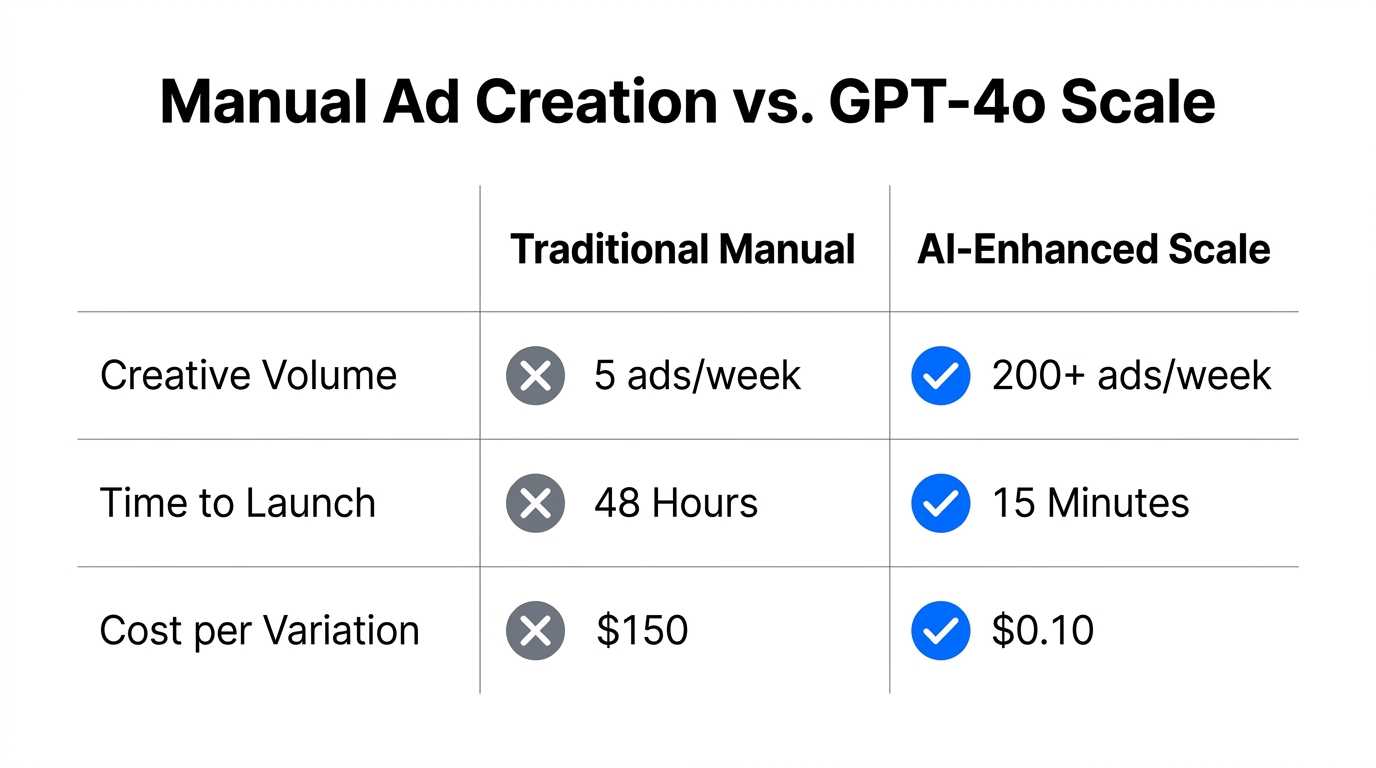
Gone are the days of hyper-granular interest targeting. In the current landscape, the most successful growth marketers focus on high-volume ad testing. According to recent McKinsey research on generative AI, by feeding the AI 100 different personas—changing variables like age, hair color, background setting, and emotional tone—you allow the platform's machine learning to do the heavy lifting. You no longer guess who your customer is; you flood the feed with variations and let the data tell you.
"You don't know if it's a woman looking left or looking right, with blonde hair or red hair, that's going to be the difference between a 1.6 ROAS and a 2.8 ROAS."
The Multi-Modal Workflow: From Inspiration to Ad-Ready Asset
 2:50
2:50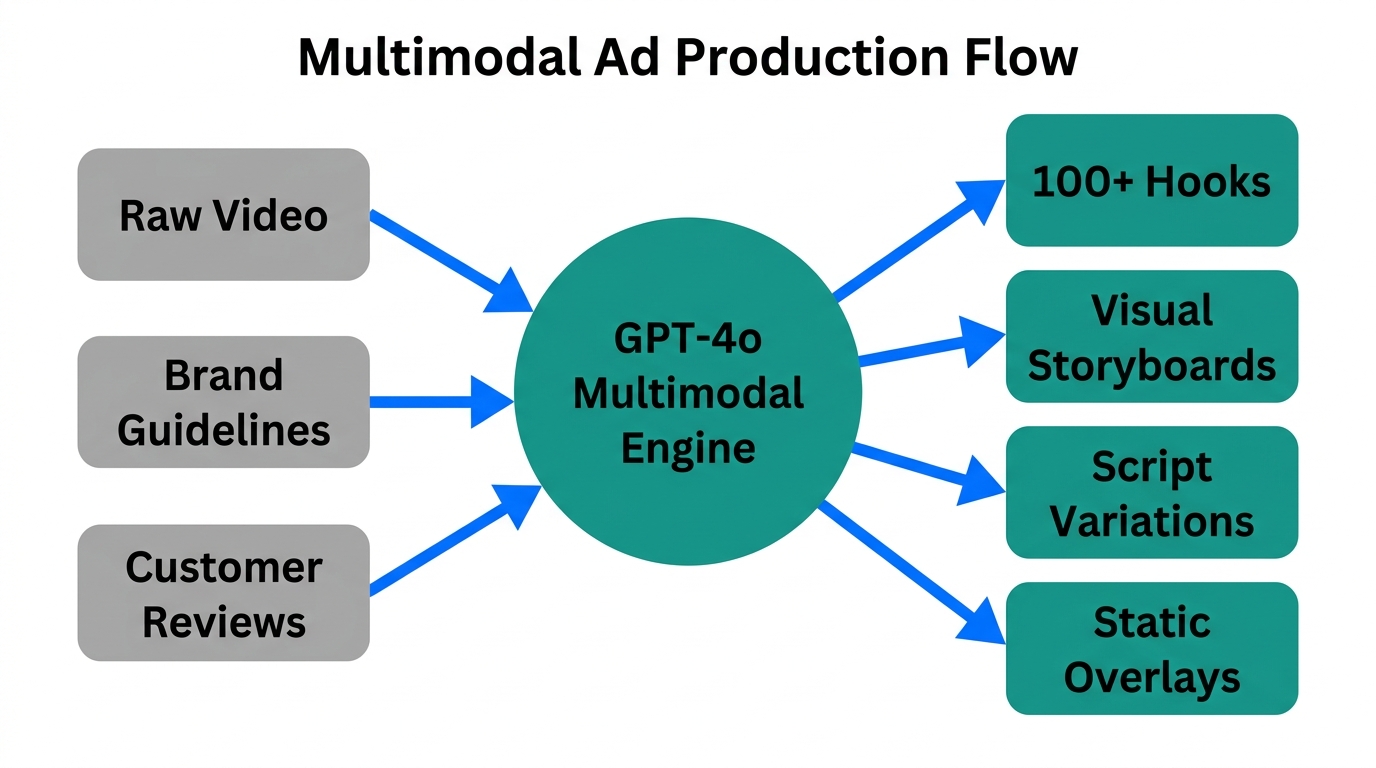
The secret to using ChatGPT 4o effectively isn't just in the text prompt—it’s in the multi-modal inputs. Because 4o is a language model that understands images, the most reliable way to get a high-performing ad is to provide a reference. You aren’t starting from scratch; you are remixing proven winners.
- The Inspiration Image: Take a high-performing ad from a competitor or an aesthetic you love (found via tools like Google Ads transparency tools).
- The Product Image: Provide a clean, high-resolution shot of your own product.
- The Instructions: Ask ChatGPT to "recreate this ad style but swap the product for my image and adjust the background to fit my brand's luxury aesthetic."
This method, championed by experts like Jacob Pozos, bypasses the need for complex prompt engineering. By using a reference image, you provide the AI with a visual blueprint for composition, lighting, and typography, which is often worth a thousand words of descriptive text.
| Feature | Manual Creative (Old School) | AI-Scaled Creative (2026) |
|---|---|---|
| Production Time | 2-5 days per variation | 2 minutes per variation | Cost | $500 - $2,000 per shoot | <$1 in compute costs | Testing Capacity | 3-5 ads per week | 100+ ads per week | Optimization | Reactive based on low data | Proactive high-volume experimentation |
Avoiding the 'AI-Look' with Photo-Realistic Keywords
One of the biggest pitfalls for growth marketers is generating ads that look "uncanny valley" or overly cartoonish. To ensure high conversion rates, your ads must look like professional photography. The "alpha" in 2026 lies in specific photo-realistic keywords.
When prompting, always include terms like "ultra-realistic," "photo-realism," or "captured in mid-stride with performance gear." To get even better results, many marketers are looking at the Sora explore page to study how the world’s best AI artists are structuring their prose descriptions. Detailed prose that describes lighting (e.g., "cinematic golden hour lighting") and camera specs (e.g., "85mm lens, f/1.8") can drastically improve the output quality.
Setting Up an Experimentation Framework
5:08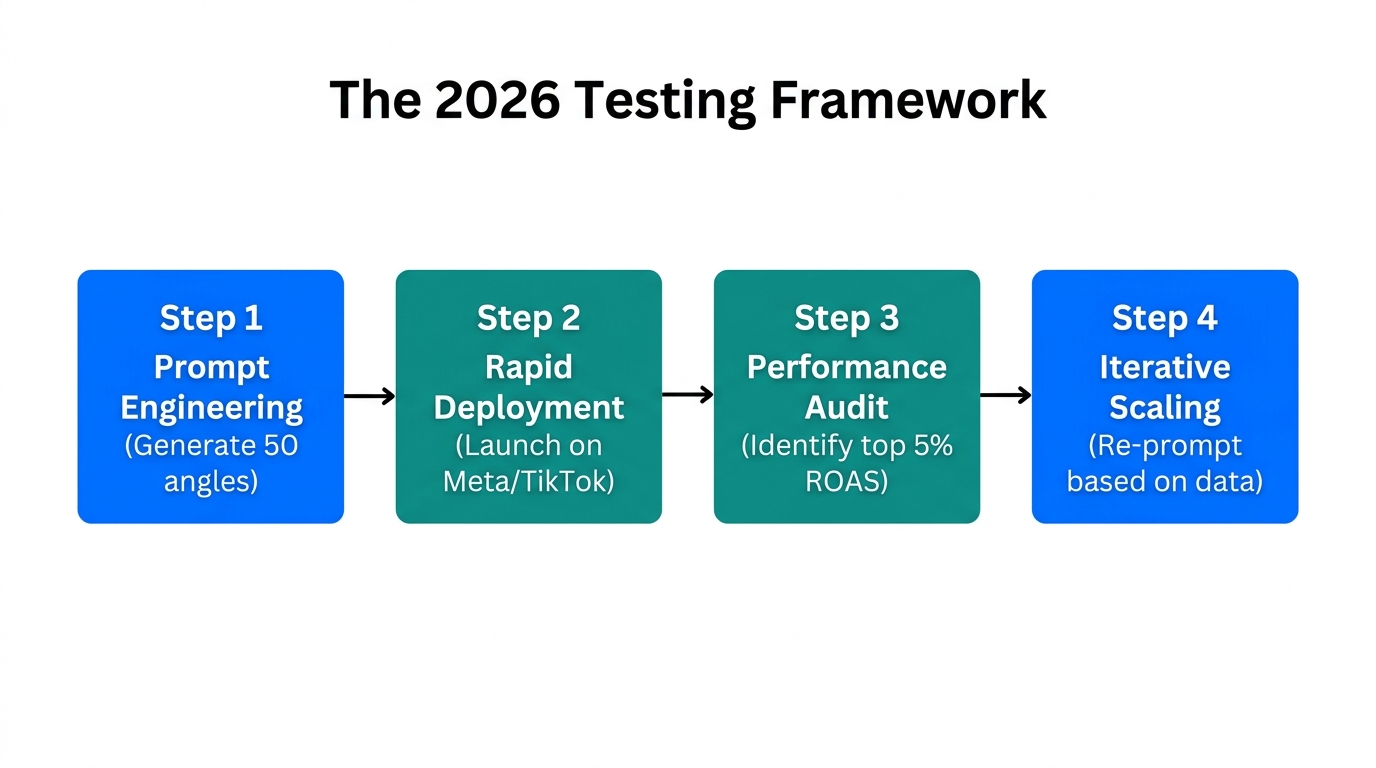
To scale social media ad automation, you need a system. You shouldn't just generate random images; you should test specific hypotheses. For instance, if you are marketing a fitness app, your experimentation framework might look like this:
- Variable A (Persona): 25-year-old athlete vs. 45-year-old professional vs. 60-year-old retiree.
- Variable B (Environment): High-end luxury gym vs. grit-and-grind outdoor park vs. home living room.
- Variable C (Copy Tone): Fear of missing out (FOMO) vs. aspirational success vs. scientific benefit.
In 2026, many brands use Stormy AI to find the initial creator content and real-world human references that feed these AI models. By sourcing authentic UGC (User-Generated Content) on Stormy AI, you can use those faces as "base references" for your ChatGPT 4o iterations, ensuring that even your AI ads maintain a sense of human authenticity and brand affinity.
"The game right now is looking for an aesthetic that isn't being used in your space. If you can find it and remix it, you win."
Scaling Creative Production with the ChatGPT API
4:33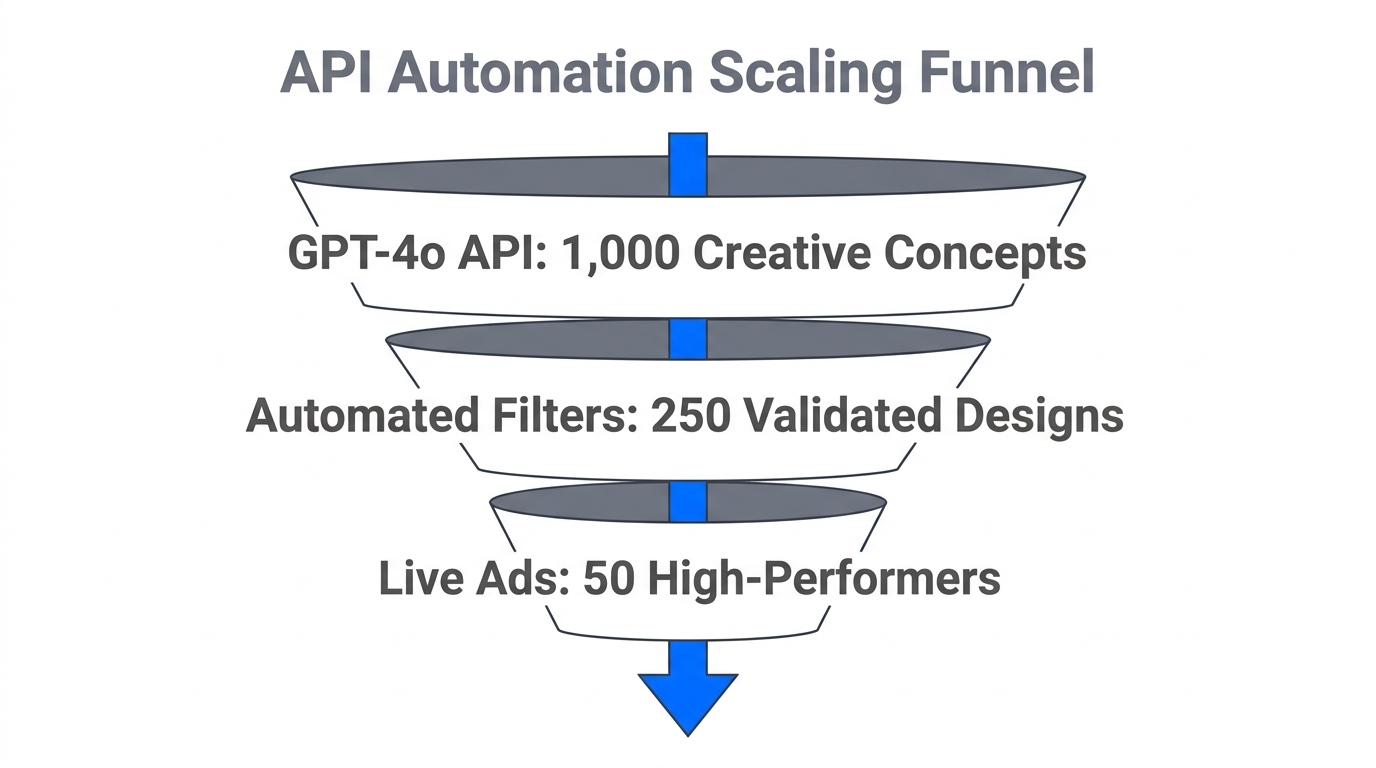
While manual prompting in the ChatGPT interface is great for finding your first few winners, true scale happens via the API. In 2026, general availability of the multi-modal API allows growth teams to hook their creative workflow directly into tools like Zapier or Make.
This level of AI ad creative automation means you can react to news cycles in real-time. If a specific meme goes viral on X (formerly Twitter), your AI agent can generate a branded version of that meme and have it running as a paid ad within 10 minutes, capturing cultural relevance before the trend dies.
Live Cooking: A Real-World Example
21:23Consider a design agency like Late Checkout. By providing screenshots of their futuristic landing page and a reference image of a vintage Rolex ad, they can instruct ChatGPT 4o to "capture the luxury vibe of the company while maintaining the modern AI-first aesthetic."
The result? A digital ad that features a high-end, authoritative persona pointing toward a headline like "Leaders at billion-dollar brands choose LCA to define their future." By iterating and telling the AI to "replace the watch with a collage of partner logos like Salesforce and Slack," the team can create a hyper-personalized, high-authority asset that would have previously taken a creative director a week to produce.
Conclusion: The Future of Growth Marketing
Scaling ad creative in 2026 is no longer a matter of budget—it is a matter of workflow efficiency. By mastering ChatGPT 4o marketing and integrating it with high-volume experimentation frameworks, you can ensure your brand remains competitive in an increasingly automated ad landscape.
Start by identifying your top-performing "legacy" ads, feeding them into 4o as references, and generating your first 10 variations today. For those looking to bridge the gap between AI efficiency and human authenticity, platforms like Stormy AI are essential for sourcing the initial creator talent and real-world assets that make your AI-generated creative truly resonate. The marketers who experiment the most will ultimately win the ROAS battle.