When Gordon "Butch" Stewart started selling air conditioners door-to-door in Jamaica, he wasn't just fighting for sales; he was fighting for survival against the Goliaths of industry. Companies like General Electric and Westinghouse had deeper pockets, bigger sales forces, and decades of brand equity. Yet, Stewart didn't try to out-spend them. Instead, he out-maneuvered them by identifying a "Speed Gap" that the giants were too slow to see. This approach eventually birthed the Sandals business model, a multi-billion dollar empire built on the back of radical competitive differentiation strategy. For any modern founder or growth marketer, the story of Stewart’s rise offers a masterclass in using customer service as a marketing tool to disrupt even the most entrenched markets.
Identifying the Speed Gap: The Appliance Traders Origin Story
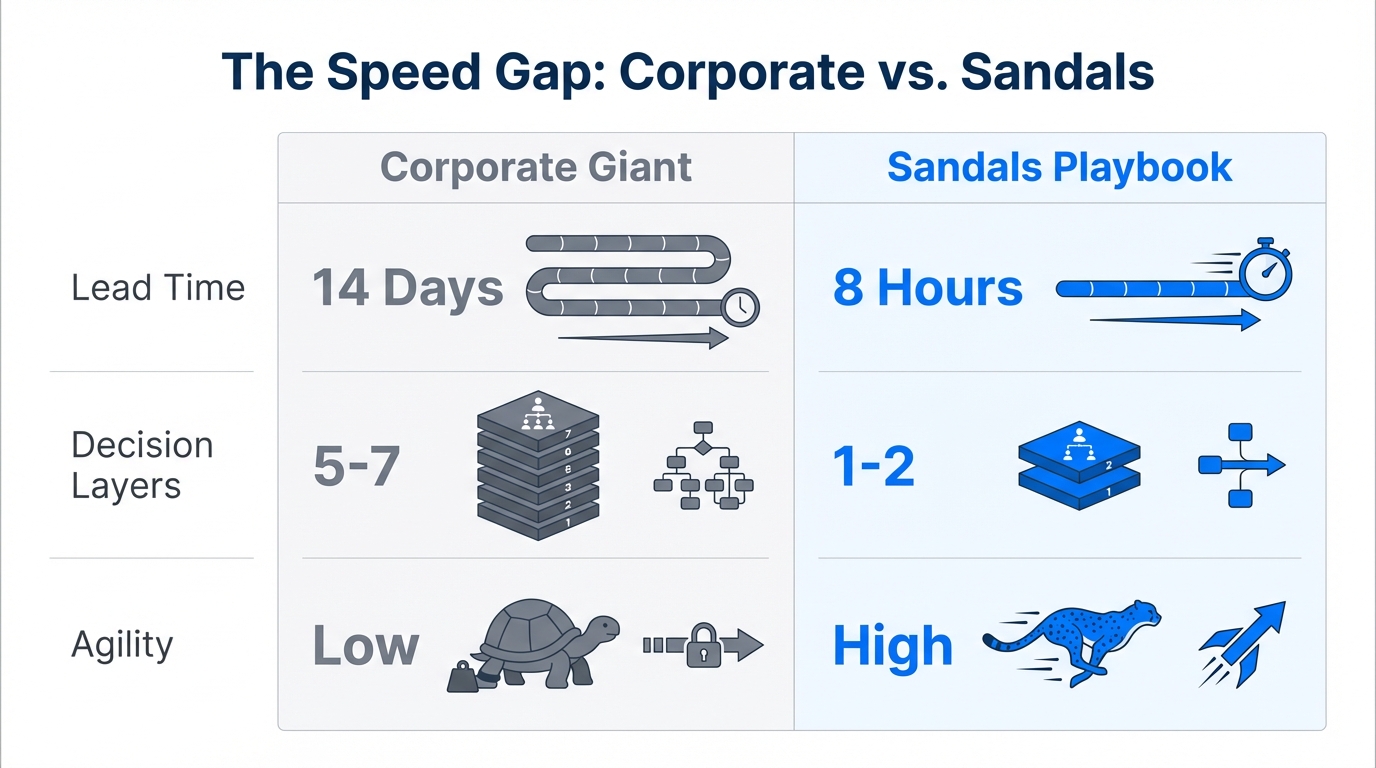
In the early days of Appliance Traders Limited (ATL), Butch Stewart realized that in the sweltering Caribbean heat, an air conditioner wasn't a luxury—it was a business necessity. However, the corporate giants dominated the market by focusing on the product itself. Stewart asked a different question: "What can the big guy not do?" The answer was simple: Speed. Large corporations were bogged down by bureaucracy, logistics, and a lack of urgency. If a business owner in Kingston needed an AC unit, they might wait weeks for a site visit and even longer for installation.
Stewart turned this weakness into his greatest weapon. He promised an 8-hour installation vision. If you called ATL, your unit would be installed and running before the sun went down. This wasn't just a goal; it was an operational mandate. By prioritizing the most recent call over the oldest call and optimizing dispatch logistics, he created a service experience that GE and Westinghouse simply could not replicate without dismantling their entire corporate structure.
"Speed is the ultimate competitive advantage because the big guys are too heavy to move, and the small guys are too scared to try."
Working Backward: The 8-Hour Installation Vision
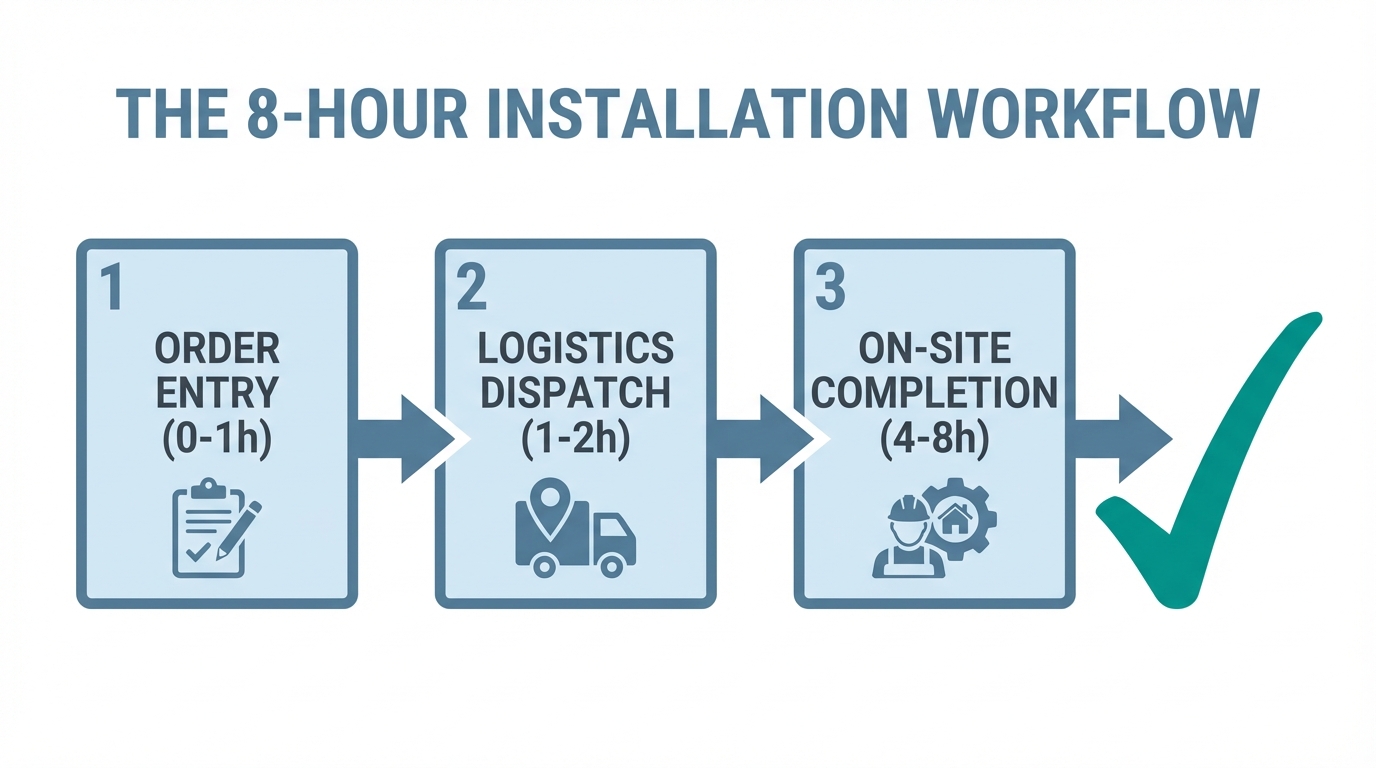
Most companies build their operations first and then decide what their "service level agreement" (SLA) will be. Stewart did the opposite. He set a seemingly impossible customer promise and worked backward to build the infrastructure required to fulfill it. To hit an 8-hour window, he had to rethink every touchpoint of the customer journey:
- Call Dispatching: Moving away from linear queues to dynamic, real-time response.
- Staffing: Hiring "island boys" who were motivated by hustle and performance rather than corporate titles.
- Inventory: Ensuring units were always on hand, even if it meant taking higher inventory risks than the big players.
This commitment to operational efficiency for startups allowed ATL to dominate the Jamaican market. It also taught Stewart that service isn't a cost center—it is the most potent form of advertising. When a business owner saw an ATL truck arrive hours after a phone call while their competitors were still waiting for a callback from a multinational office, the brand trust was cemented instantly.
Extreme Service as a Market Disruption Tactic
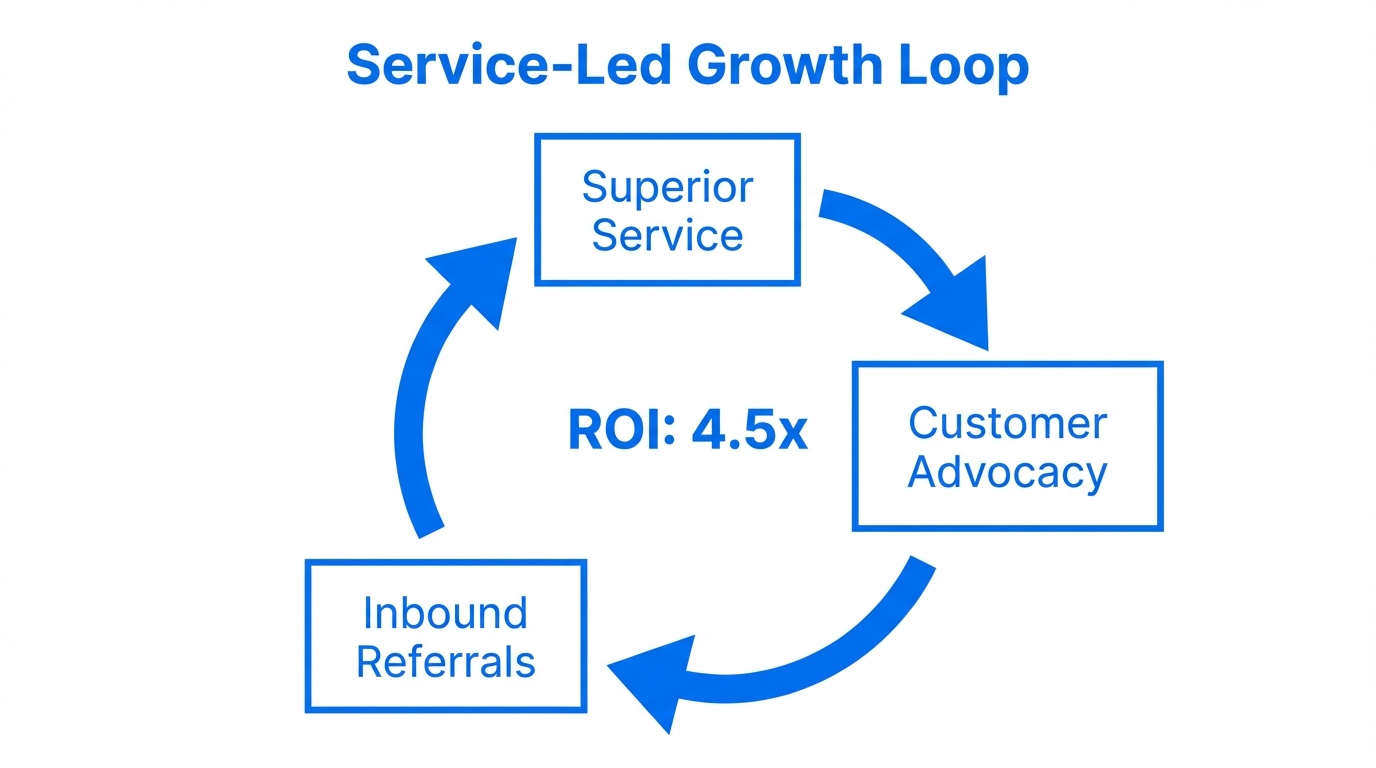
Stewart’s second pillar of market disruption tactics was an extreme service guarantee. AC units break, especially in harsh tropical environments. Instead of charging for repairs or offering convoluted warranties, Stewart offered to fix any unit, anytime, for free, and fast. This reduced buyer friction to zero. In a market where reliability was everything, ATL became the only logical choice for B2B customers who couldn't afford a single hour of downtime.
Using customer service as a marketing tool meant that every service call was an opportunity to upsell or gain a referral. By the time Stewart moved into the hospitality sector, he had already mastered the art of extreme hospitality. He understood that if you could manage the "last mile" of the customer experience, you owned the customer for life.
| Strategy Pillar | Corporate Incumbents (GE/Westinghouse) | The Disruptor (Appliance Traders) |
|---|---|---|
| Response Time | Days or Weeks | 8 Hours or Less |
| Service Model | Fee-based Maintenance | Extreme Free Repair Guarantees |
| Focus | Product Specifications | Customer Outcomes (Cooling Now) |
| Operations | Rigid and Bureaucratic | Agile and Result-Oriented |
The Sandals Pivot: Applying AC Logic to Luxury Resorts
In 1981, Stewart bought Bayrock, a rundown, distressed hotel in Montego Bay. At the time, Jamaica was struggling with crime and a poor tourism reputation. But Stewart saw an opportunity to apply his service-first philosophy to hospitality. He rebranded the resort as "Sandals"—a name that immediately evoked relaxation and beach culture. More importantly, he introduced the concept of "All-Inclusive Luxury."
He realized that travelers hated being "nickel and dimed" for drinks, food, and activities. By offering one upfront price for a standardized luxury experience, he removed the financial anxiety from the vacation. But the real genius was his niche positioning. Stewart decided that Sandals would be "Couples Only." He noticed that families and honeymooners often clashed at resorts; by focusing on a "killer use case" (romance), he created a sanctuary for a specific, high-paying demographic.
"The most valuable real estate and the hardest real estate to build is the one in the consumer's mind. That's always where I start."
Vertical Integration and Brand Building
Stewart wasn't just a hotelier; he was an "old school adman" who understood the power of the funnel. When he realized that the airline experience to Jamaica was poor, he didn't just complain—he bought the airline. By taking over Air Jamaica, he vertically integrated the entire vacation. He used the airline as a "flying billboard" to market his resorts. He understood that if a customer got off a plane angry, the vacation was ruined before they reached the beach. This level of control is something modern platforms like Stormy AI facilitate today by helping brands source and manage UGC creators who can document these seamless end-to-end experiences.
To reach his target audience, Stewart poured millions into advertising in lifestyle magazines like Playboy and Cosmo. He didn't just sell a room; he sold a symbol of commitment. Much like the "Diamonds are Forever" campaign, a Sandals vacation became the ultimate proof of love. For modern marketers using Meta Ads Manager or Google Ads, the lesson remains: your product must represent a transformation or a milestone in the consumer's life.
A Framework for Identifying Competitor Weaknesses
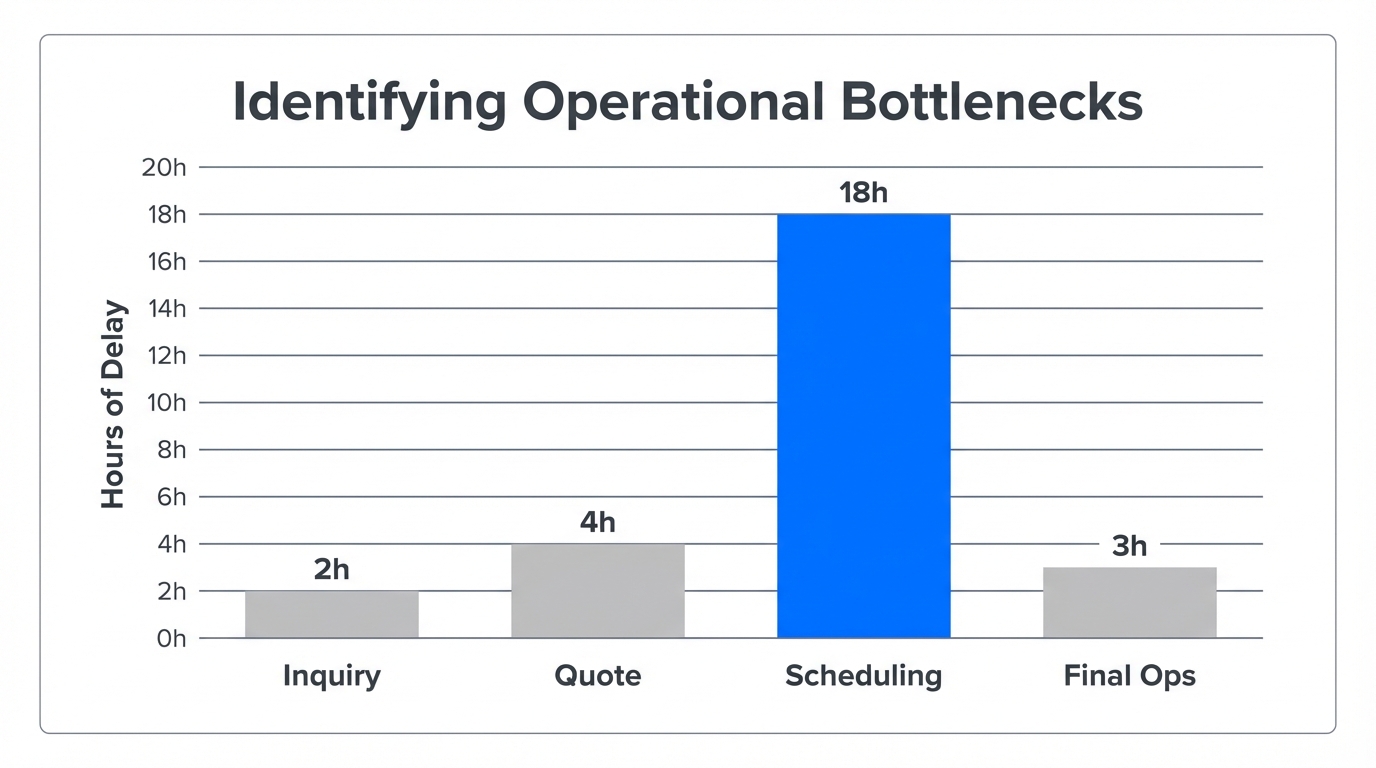
How can your startup or mid-sized company use the Sandals playbook to steal market share? Follow this step-by-step framework to identify and exploit operational gaps in your industry:
Step 1: Audit the "Corporate Lag"
Analyze the top three incumbents in your space. Call their sales line. Request a demo. File a support ticket. Measure the exact time it takes to get a human response. This "lag time" is your primary entry point.
Step 2: Define the "Would Not Dare" Threshold
What is a service promise that would make a corporate legal or operations team faint? For Stewart, it was an 8-hour install. For a SaaS company, it might be 24/7 live video support or a 100% money-back guarantee with no questions asked. If your competitors won't dare to do it, you must.
Step 3: Work Backward from the Promise
Don't build your product features based on what's easy; build them based on what's necessary to fulfill your "Would Not Dare" promise. Use tools like Salesforce for CRM management or Stormy AI to discover creators who can demonstrate your superior service speed in real-time.
The Michelangelo Effect: Cultivating the Right Talent
Ultimately, Stewart’s success came down to the people he hired and the culture he built. He followed what psychologists call the Michelangelo Effect—the idea that by affirming the greatness in others, you "chip away" the stone to reveal the masterpiece inside. He told his employees they were the best in the world, and he treated them as such, eventually employing over 10,000 Jamaicans and revitalizing the local economy.
Whether you are running a competitive differentiation strategy for a physical product or a digital service, the principle holds: your team must believe in the vision of "extreme hospitality." When your repeat rate hits 50%, as Sandals' did for decades, you know you haven't just built a business; you've built a movement.
Conclusion: Building Your Own Sandals Empire
The Sandals business model is proof that a "brute force, first principles" approach to growth works. By identifying the Speed Gap, committing to a radical vision, and vertically integrating the customer experience, Butch Stewart turned a $3,000 investment into a global icon. Today’s founders can achieve similar results by focusing on operational efficiency for startups and treating customer service as a marketing tool. Start by finding the one thing your competitors are too slow to do, and make it the foundation of your brand.