In the high-stakes world of software, most founders believe that scaling to a million-dollar run rate requires a massive venture capital injection or a complex outbound sales team. However, a new breed of entrepreneurs is proving that organic SaaS growth can be achieved through a far more accessible medium: high-volume video content. By leveraging a B2B video marketing playbook centered on radical consistency and raw authenticity, companies like Arvo have scaled from zero to $70,000 in Monthly Recurring Revenue (MRR)—a million-dollar annual business—using nothing but a YouTube channel and a basement setup. This isn't just about "going viral"; it's about building an automated trust engine that sells your product while you sleep.
The 45-Day Consistency Challenge: The Ultimate Growth Catalyst


The biggest hurdle in any SaaS marketing strategy is not the lack of creative ideas, but the lack of volume. Vasco, the founder of Arvo, posits a challenge that sounds almost too good to be true: commit to posting one video every single day for 45 days. The logic is simple yet brutal. Most founders will read this and do nothing. Of the few who start, most will quit after the first week when they see only 10 views. However, the 1% who persist for the full 45 days almost invariably see success in organic SaaS growth. Vasco is so confident in this framework that he offers a bold guarantee: if you post for 45 days and don't make at least $5,000, he’d pay you out of pocket.
Why 45 days? It takes roughly six weeks for the YouTube algorithm to categorize your channel and begin serving your content to the right "lookalike" audiences. In the world of content marketing for software, this period serves as a data-gathering phase. You aren't just making videos; you are testing hooks, keywords, and value propositions. By the end of this sprint, you will have 45 data points telling you exactly what your market wants. Using Google Ads insights alongside your organic analytics can further refine this trajectory, but the core of the strategy remains the daily discipline of hitting "upload."
The Know-Like-Trust Factor: Why Video Beats Blogging and Twitter
In B2B SaaS, the sales cycle is often hindered by skepticism. Potential customers need to know who is behind the tool, whether they like the philosophy of the product, and most importantly, if they can trust the software with their business data. While blogging and Twitter (X) are excellent for reach, they lack the emotional resonance of video. YouTube for SaaS growth works because it allows a founder to speak directly to the camera for 20 to 30 minutes, establishing a human connection that text cannot replicate. When a user hears your voice and sees your face daily, the barrier to purchase drops significantly.
For Arvo, which helps marketing agencies and business owners automate SEO with AI, this trust was built by showing the "behind the scenes" of the tool. Instead of polished commercials, they produced long-form tutorials. This transparency transformed the product from a faceless utility into a trusted partner. Stormy AI helps brands maintain this trust by allowing them to vet creator profiles and detect fake followers or engagement fraud in seconds. This shift toward UGC-style founder content is the most effective way to lower Customer Acquisition Cost (CAC) in 2025. If people feel they know you, they are far more likely to convert into one of your 600+ paying clients without ever needing a demo call with a sales rep.
The Content Flywheel: Managing the Three Buckets of Video

A successful B2B video marketing playbook doesn't rely on one type of content. To reach a million-dollar valuation, you need to balance your output across three specific buckets:
- Evergreen Tutorials: These are the workhorses of your channel. These videos target specific search queries like "How to create a Wikipedia page" or "Best AI SEO writer." These videos might only get a few hundred views a day, but they rank on both YouTube and Google Search, providing a steady stream of leads for years. One of Arvo's early tutorials still generates 1.2 million impressions years after it was posted.
- News-Relevant Spikes: When a major industry shift occurs—such as a Google Core Update or a new OpenAI release—you must be the first to cover it. These videos generate massive initial views and subscriber spikes but usually die out after a few days. They are your primary tool for audience acquisition.
- Viral Creative: These are high-concept videos, often described as "MrBeast for Software." They involve sharing massive case studies, "impossible" challenges, or controversial industry takes. While harder to produce, they define your brand's authority in the space.
The key is to mix these buckets. The evergreen content provides the floor for your MRR, while the news and viral content provide the ceiling-shattering growth spurts. When you find a video in any bucket that starts to stagnate but previously showed high conversion rates, you can revive it using in-feed ads via the Meta Ads Manager or YouTube's native ad platform to keep the sales coming in.
The Minimalist SaaS Stack: Producing High Value on a Low Budget
One of the biggest myths in content marketing for software is that you need a professional studio. In reality, some of the most successful SaaS YouTube channels are recorded in basements or spare bedrooms. The audience doesn't want Hollywood production; they want high-value insights. Vasco’s "million-dollar stack" is surprisingly simple and emphasizes hardware over software.
The Software Stack
For screen recording and tutorials, Loom is the gold standard. Use the premium version to ensure you are recording in 1080p or 4K. To visualize complex concepts or workflows, Miro acts as a digital whiteboard, allowing you to "draw" your thoughts as you speak. Finally, for editing, a tool like Camtasia provides enough power for B2B needs without the steep learning curve of professional cinema software.
The Hardware Priorities
While software can be basic, your audio and lighting must be professional. Low-quality audio is the number one reason viewers drop off. Investing in a high-end microphone, such as the Shure SM7B, is non-negotiable for serious creators. Combine this with basic three-point lighting and a clear webcam or DSLR, and your "basement" setup will out-convert a $10,000 studio production every time because it feels authentic and relatable.
The $1M YouTube Playbook: Step-by-Step Execution
Step 1: Define Your Evergreen Keywords
Start by identifying the "how-to" questions your potential customers are asking. Use tools like Semrush or YouTube's auto-complete feature to find search terms. These will form the basis of your evergreen bucket. Aim for 20-30 minute deep dives that genuinely solve a problem using your software as the solution.
Step 2: Execute the 45-Day Sprint
Commit to a daily publishing schedule. Do not worry about perfection. Record your screen, walk through a process on Miro, and upload. The goal is to build the muscle of consistency. This phase is where most organic SaaS growth is sparked, as the volume forces the algorithm to take notice of your niche authority.
Step 3: Optimize CTAs for Retention
Traditional advice suggests putting your Call to Action (CTA) at the end of the video. This is a mistake. Most viewers drop off well before the 80% mark. Instead, move your primary CTA to the beginning and middle of the video. Make them specific—don't just say "visit our site." Tell them to "Use the coupon code 'YouTube' in the support chat for a 20% discount." This not only increases sign-ups but also allows you to track exactly which videos are driving revenue.
Step 4: Scale Through Creator Multipliers
Once you have a winning formula, you can't be the only face of the brand forever. To scale, find potential creators on platforms like Upwork. Look for people who already have videos on their profiles; this indicates comfort in front of the camera. You can also use Stormy AI to set up an autonomous AI agent that discovers, outreaches, and follows up with creators on a daily schedule—fully automating your creator discovery and management via a built-in CRM.
Step 5: Revive with In-Feed Ads
Identify your "money-making assets"—the videos that have historically driven the most sign-ups. When their organic reach begins to plateau, don't record the same video again. Instead, use Apple Search Ads logic for mobile apps or YouTube In-feed ads for desktop SaaS. These ads appear as recommended videos on the homepage and sidebar, looking indistinguishable from organic content. This turns a stagnating video back into a consistent lead generation machine.
Advanced Tracking: How to Know What's Working

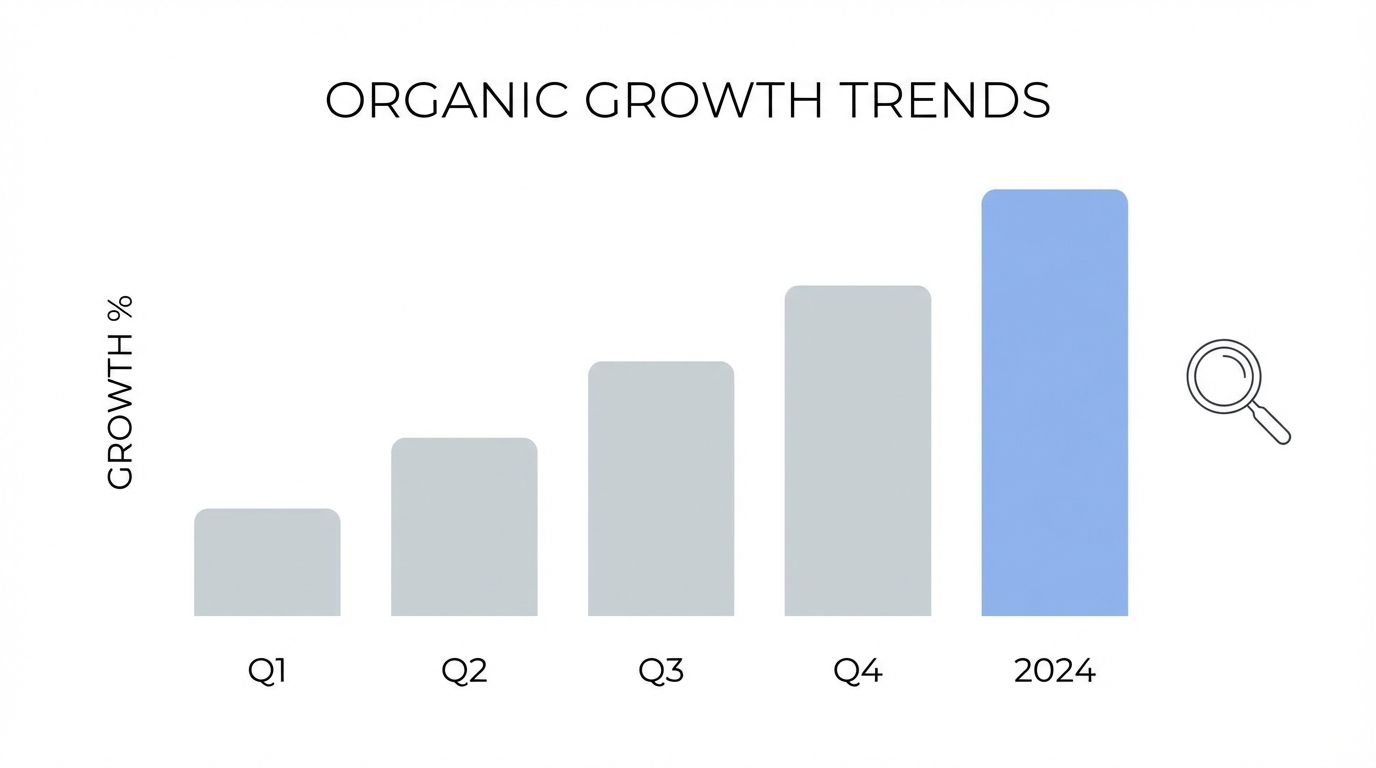
The common complaint about YouTube is that it's hard to track. To scale a SaaS marketing strategy to $1M, you need data-driven attribution. Implement a three-tier tracking system:
- Dedicated UTMs: Use a unique UTM link for every single video description. Even if only 1% of users click them, it provides a baseline for conversion rates.
- Video-Specific Coupons: Mention a unique code in the video audio. Encourage users to tell your support team they "came from Vasco's video" to unlock a deal. This captures the high percentage of users who watch on one device and sign up on another.
- Post-Signup Questionnaires: Include a "How did you hear about us?" survey in your onboarding. If they select YouTube, show them the faces of your various creators so they can pick exactly who referred them.
For more comprehensive monitoring, Stormy AI allows you to track accounts and individual videos, monitoring views and engagement across your entire campaign performance automatically.
Conclusion: Building the Future of SaaS Marketing
The era of relying solely on expensive PPC and cold outreach is fading. In 2025, the most resilient organic SaaS growth comes from being a known entity in your space. By following this B2B video marketing playbook, you aren't just creating content; you are building an ecosystem of trust that compounds over time. Whether you are using Stormy AI for search and discovery or grinding through a 45-day solo sprint, the path to a million-dollar SaaS is paved with video. Stop over-analyzing your production quality and start providing value. The algorithm—and your MRR—will reward you for it.