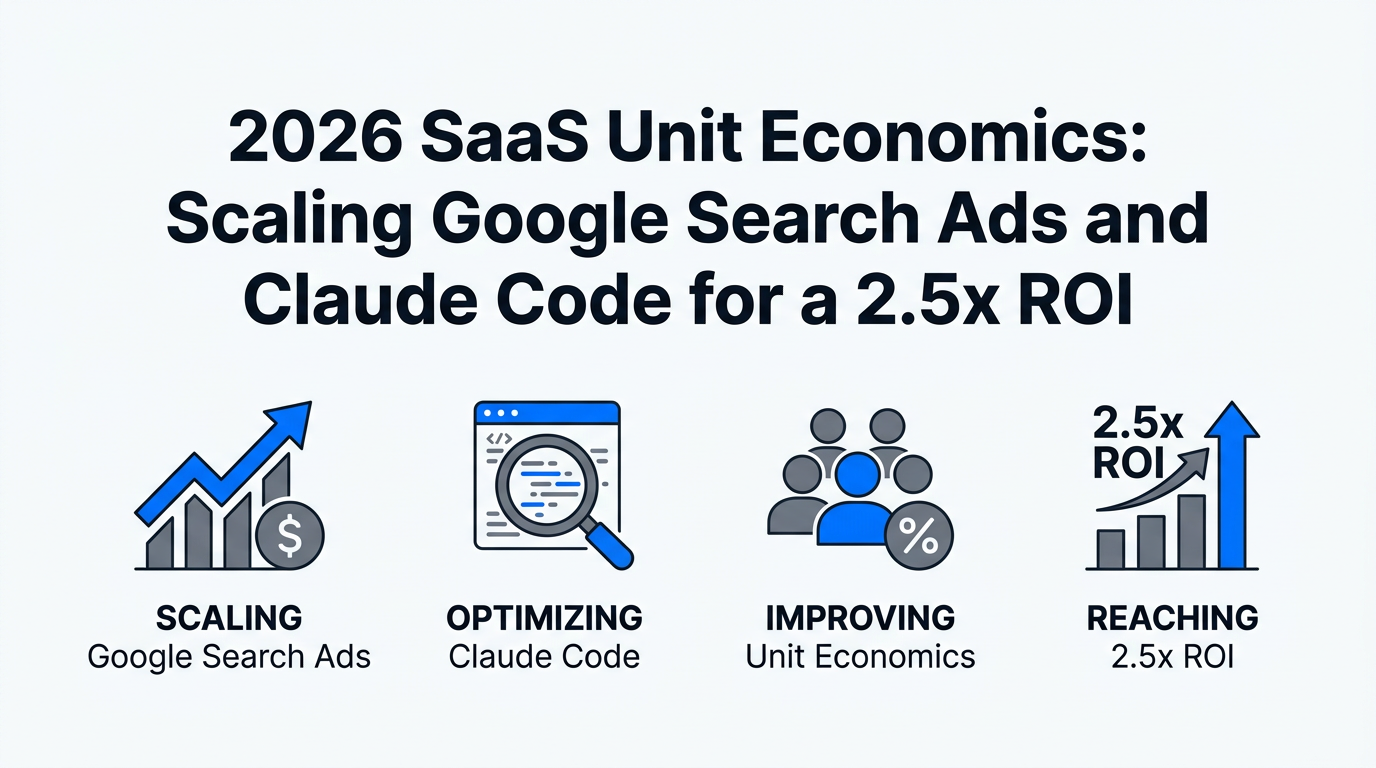
In the high-stakes world of software-as-a-service, growth is often mistaken for a stroke of viral luck or the result of a perfectly timed social media trend. However, as we move through 2026, the most successful founders are proving that sustainable scaling is actually a math problem. Take the case of Mickey, a Spanish founder who scaled his app, Late Social Media API, from zero to over $40,000 in monthly recurring revenue (MRR) in just seven months. He didn't chase TikTok trends; he built a predictable revenue engine using Google Ads and rigorous unit economics. By treating distribution as a series of calculated experiments rather than a gamble, Mickey achieved a 2.5x return on ad spend (ROAS), proving that Google Search remains the gold standard for high-intent customer acquisition.
"Growth isn't about being everywhere; it's about picking one high-intent channel and getting obsessed with the math behind it."The SaaS Growth Myth: Why 2026 is the Year of the Revenue Engine
Learn what most founders get wrong about distribution and scaling SaaS businesses.
Many developers believe that the key to distribution is a presence on every platform—Reddit, X, LinkedIn, and organic social. In reality, modern distribution is about capturing existing intent rather than trying to manufacture it through viral content. For a B2B SaaS, a user searching for a specific solution like a "Twitter automation tool" has a 10x higher intent to buy than someone scrolling through a social feed. This shift in 2026 highlights the importance of intent-based queries over informational ones. While informational SEO (how-to guides) has been largely disrupted by AI-generated answers, transactional keywords remain the lifeblood of profitable SaaS growth.
By focusing on bottom-of-the-funnel keywords, founders can build what Mickey calls a "guaranteed revenue engine." This approach requires a shift in mindset: instead of hoping for organic reach, you buy your way into the conversation using paid search and then use that data to fuel your organic strategy. This synergy ensures that every dollar spent on Google Search Ads contributes to long-term SEO dominance, creating a virtuous cycle of customer acquisition.
The Math of Scaling: Turning $8,000 into $15,000 Predictably
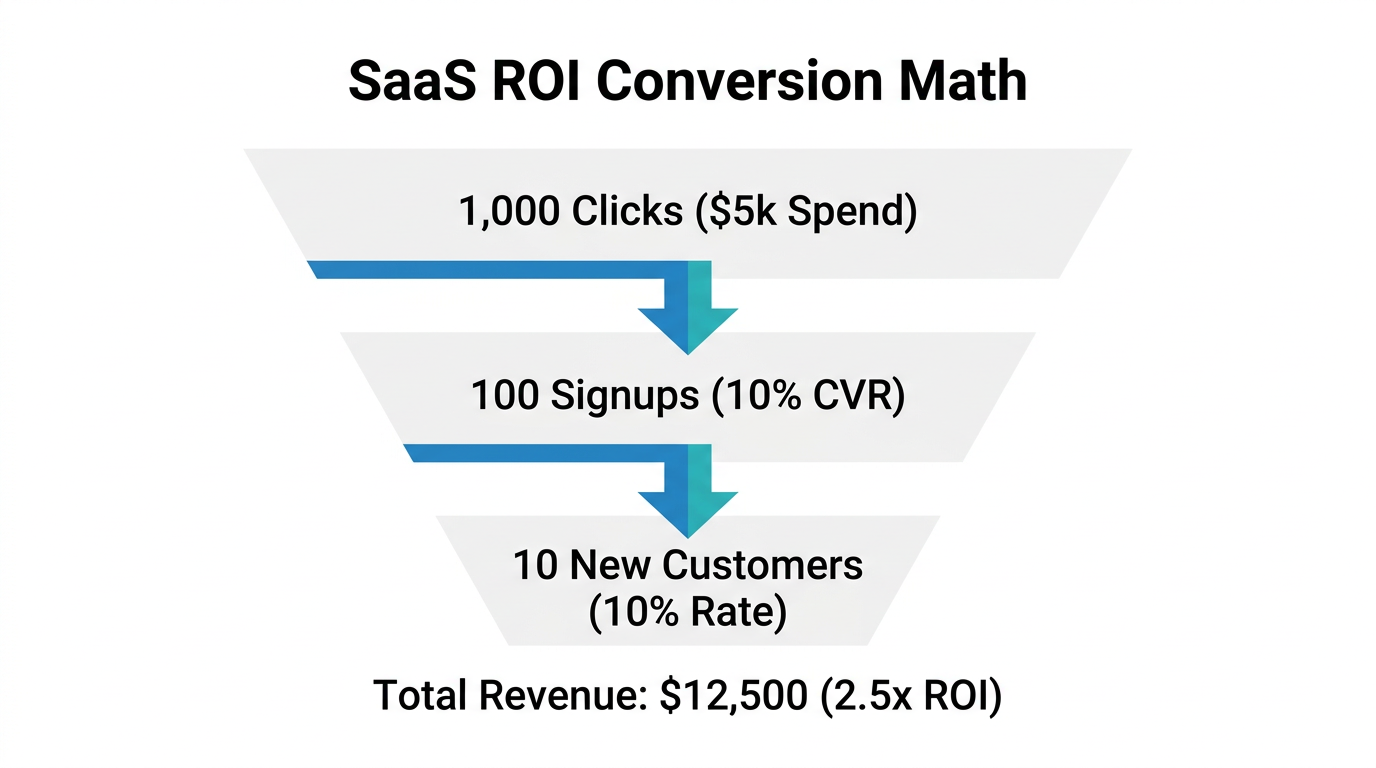
The foundation of the Mickey-style playbook is a simple equation: spend $8,000 per month on ads to generate $15,000 in new MRR. When you factor in an additional $8,000 in organic revenue generated through SEO, the unit economics become incredibly attractive. To achieve this, you must track your Customer Acquisition Cost (CAC) with surgical precision. The 2026 benchmark for a healthy bootstrapped SaaS is to keep your CAC under 30% of the first-year revenue. If your lifetime value (LTV) is high and your churn is low—Mickey maintains a churn rate of less than 10%—you can reinvest profits back into the engine with zero hesitation.
Tracking these metrics requires a modern stack. Tools like PostHog for product analytics and DataFast for revenue tracking are essential for visualizing the connection between an ad click and a long-term subscription. When you see that a specific keyword, such as "social media API," consistently brings in users with a 40% higher LTV, you know exactly where to increase your budget. This is not gambling; it is reinvestment in a proven asset.
| Metric | 2026 Benchmark | Scaling Strategy |
|---|---|---|
| ROAS | 2.5x - 3.0x | Focus on bottom-of-funnel intent |
| CAC/LTV Ratio | 3:1 Minimum | Optimize landing pages with AI |
| Payback Period | < 6 Months | Use automated bidding thresholds |
| Churn Rate | < 10% | Focus on developer-friendly docs |
Claude Code: The Secret Weapon for Hyper-Relevant Landing Pages
Explore the different types of landing pages and free tools to capture leads.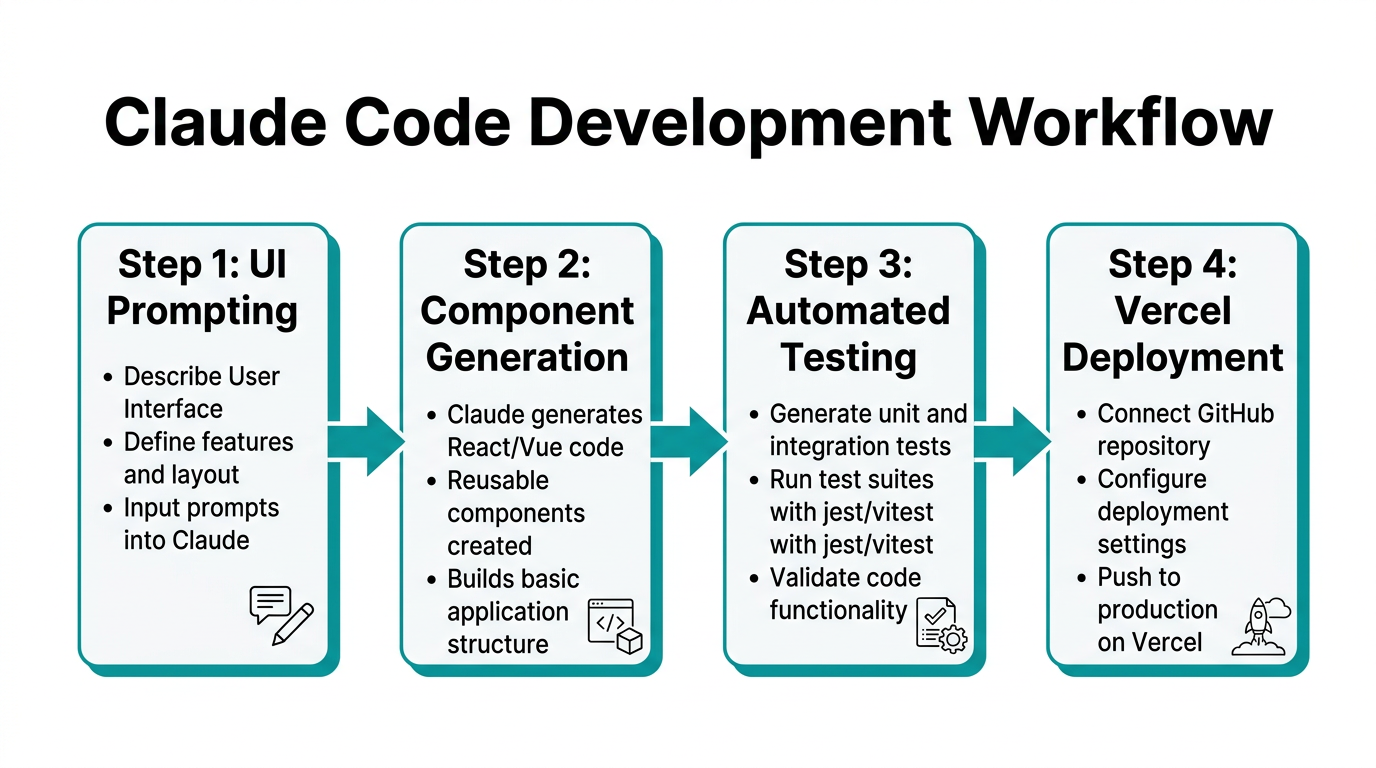
One of the biggest bottlenecks in traditional Google Ads management was the creation of bespoke landing pages for every ad group. In 2026, Claude Code has eliminated this friction. Instead of sending all traffic to a generic homepage, Mickey’s strategy involves creating custom landing pages tailored to specific keywords. If a user searches for an "Instagram API," they shouldn't land on a general social media page; they should land on a page that screams "Instagram Integration Made Easy."
Using Claude Code, founders can rapidly iterate on HTML/React components, generating high-converting layouts that mirror the user's search intent in seconds. This hyper-relevance drives up the Quality Score in Google Ads, which in turn lowers the cost-per-click (CPC). By automating the design and copy process, you can launch 10 or 15 different landing pages in the same time it used to take to build one. This speed is what allows a lean team to scale to $40k MRR without a massive marketing department.
"The winner in 2026 isn't the one with the biggest budget, but the one who can create the most relevant experience for the user the fastest."Mastering Google Search Ads: The 2026 Automated Bidding Strategy
Discover the specific marketing channel that actually worked to scale the business quickly.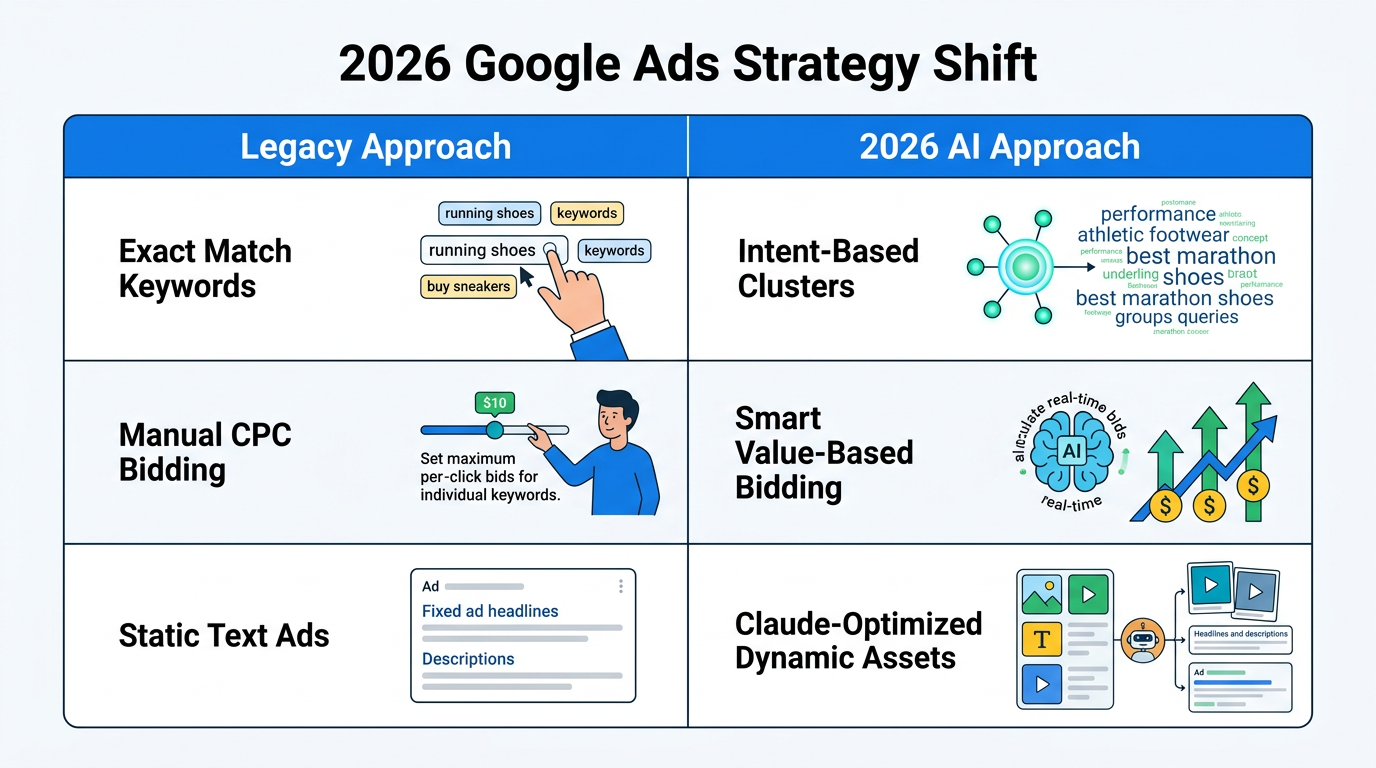
The days of manual bid adjustments are over. The most profitable paid search strategies in 2026 lean heavily on automated bidding algorithms. Mickey recommends setting a Target CPA (Cost Per Acquisition) at a specific threshold—in his case, $120 per customer. This tells Google's algorithm exactly what a conversion is worth to you, allowing it to optimize bids across millions of signals that no human could track manually. This "smart bidding" approach ensures you are only competing for clicks that have a high probability of converting into paying users.
On the creative side, the focus has shifted from cleverness to direct value propositions. Headlines like "Scale 30 days of social media in 1 hour" or "Reach 100k followers fast with our API" outperform generic branding every time. By testing 3-5 copy variations per ad group and using PostHog to track post-click behavior, you can identify which messaging resonates with high-LTV users and double down on those winning combinations. This data-driven approach is how you maintain a 2.5x ROAS even as competition increases.
The Playbook: A 5-Step Guide to Profitable Paid Search
The exact strategy for launching search ads with the right data and messaging.Scaling a SaaS isn't a mystery; it's a process. Here is the exact playbook used to hit $40,000 MRR in less than a year:
- Identify Core Keywords: Use tools like Ahrefs to find keywords with 300-800 monthly searches. These are the "Goldilocks" keywords—low enough competition to rank, but high enough intent to convert.
- Build Intent-Specific Content: Create 10-15 high-quality articles or landing pages in your first week. Use Claude Code to ensure they are technically sound and optimized for mobile performance.
- Launch Targeted Ads: Set up Google Search Ads targeting the same keywords you are trying to rank for organically. This provides immediate data on which keywords actually drive revenue.
- Optimize Based on ROI: Don't just look at clicks. Track which keywords lead to paid subscriptions. Pause the underperformers and double the budget on the high-ROI winners.
- Benchmark and Scale: Maintain a dashboard (using Google Sheets or PostHog) to monitor your CAC. Aim for a 20-40% CAC/LTV ratio and reinvest profits to scale monthly.
As you scale, you may find that certain segments require more personalized attention. For example, once you begin landing enterprise clients who demand compliance, platforms like Vanta can help automate security certifications like SOC 2, ensuring that your growth isn't stalled by administrative hurdles. Additionally, for companies looking to expand their reach beyond search, using an AI-powered creator discovery tool like Stormy AI can help you find UGC creators to build social proof that supports your paid search efforts.
"Treat your ad spend like a science experiment. If the math works, keep pouring gasoline on the fire."Unit Economics Benchmarks: CAC, LTV, and the 2.5x ROAS Goal
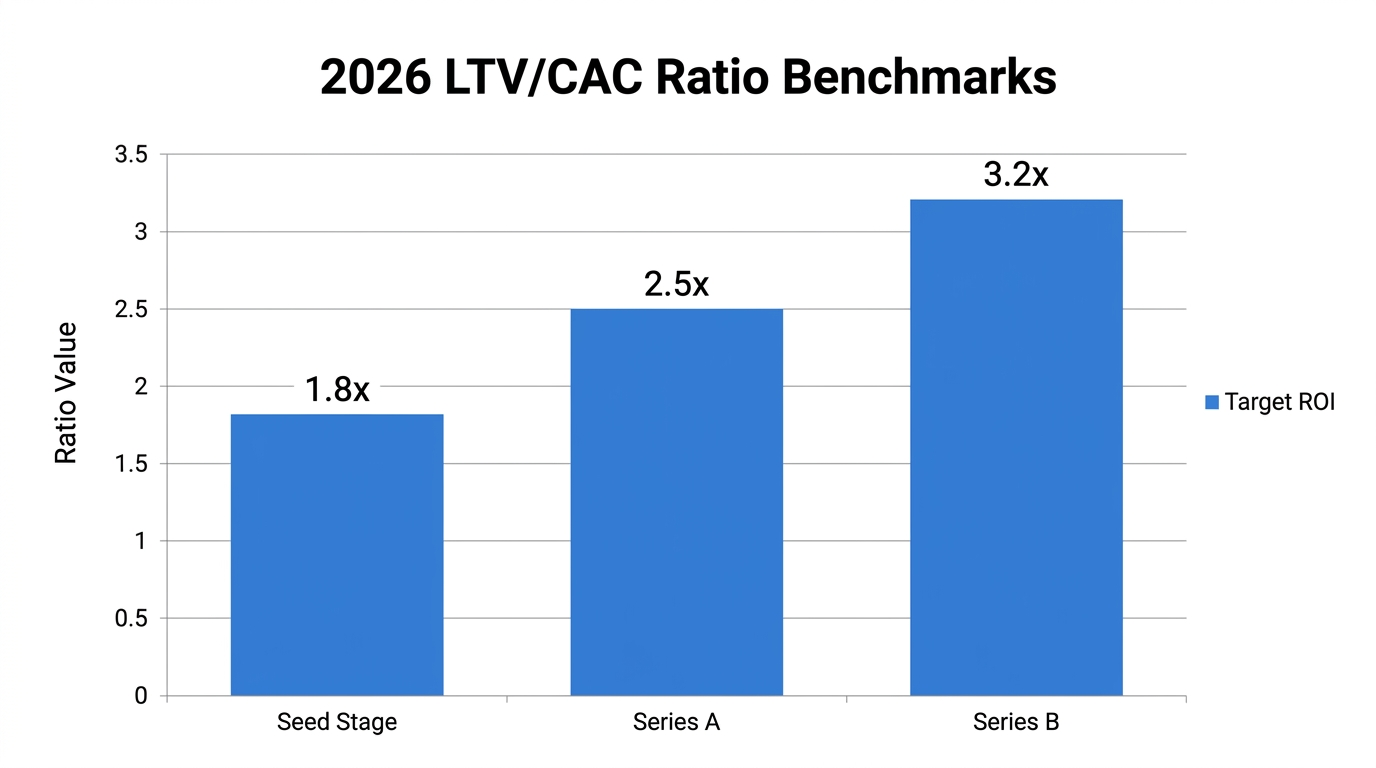
To truly master your SaaS unit economics guide, you must understand the relationship between acquisition and retention. A 2.5x ROAS is a fantastic starting point, but the long-term goal is to drive that number higher by increasing LTV. Mickey achieved this by making his product essential for developers—specifically focusing on comprehensive documentation and a developer-friendly API structure. When your product is hard to leave, your LTV increases, which effectively lowers your CAC over the long term.
Furthermore, the synergy between organic SEO and paid search cannot be overstated. By using paid data to identify which keywords deserve long-form content investment, you ensure that your SEO efforts are never wasted. This "paid-first" SEO strategy allows you to dominate the search results page for your most profitable terms. If you are struggling to find the right creators to boost your brand's authority alongside your search strategy, modern AI platforms can streamline the process of sourcing and managing influencer relationships, adding another layer of predictability to your growth stack.
Scaling to $40k MRR in 2026 is entirely possible for a lean team if they stop trying to be everything to everyone. The lesson from Mickey's success is clear: pick one growth channel, master the math, and measure it relentlessly. Whether you are using Google Search Ads to capture intent or leveraging Stormy AI to automate your creator outreach, the key is to build a system that works while you sleep. Distribution is no longer a mystery—it's a math problem waiting to be solved.