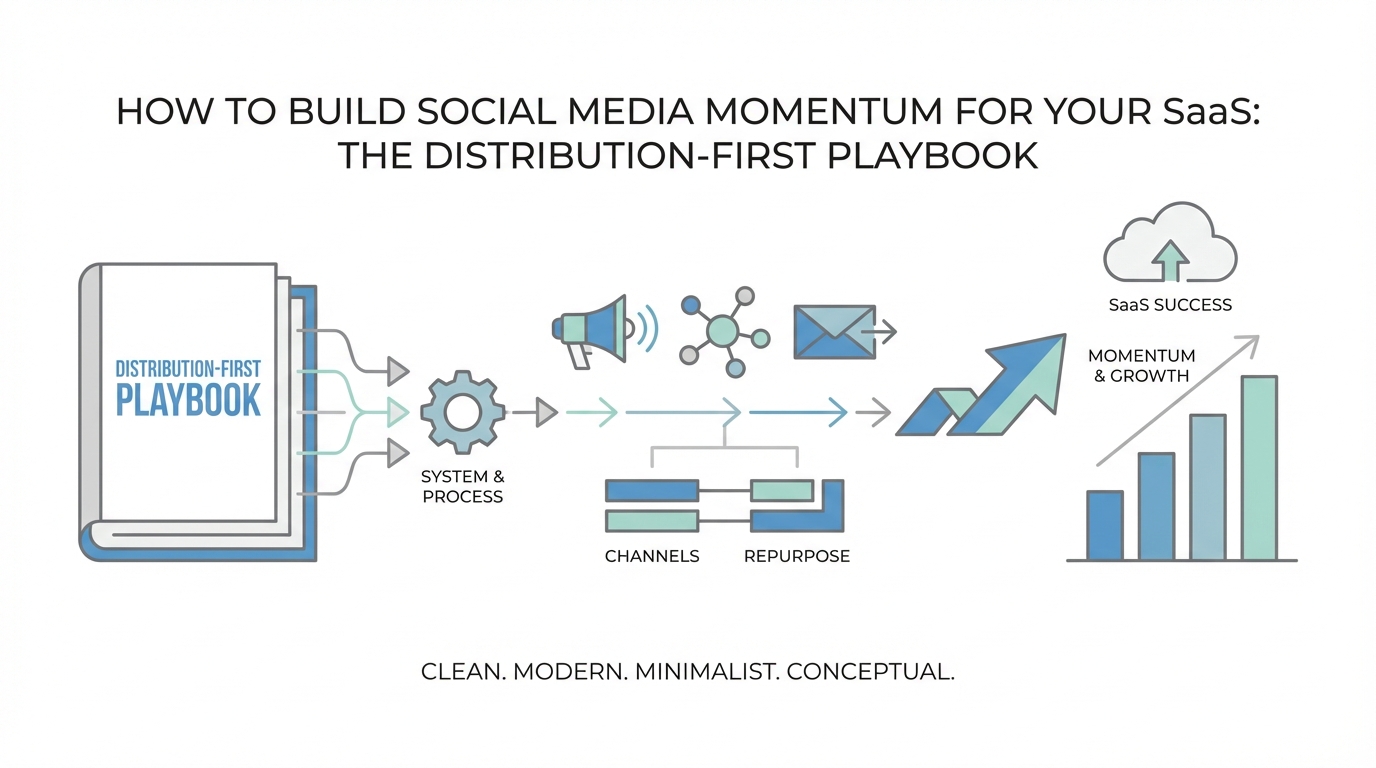
The graveyard of the software world is not filled with poorly coded applications; it is filled with engineering masterpieces that nobody ever heard of. For many founders, the hardest part of building a startup isn’t the Next.js configuration or the Supabase database schema—it is the silence that follows a launch. Thomas Sanlis, the founder of Uneed, knows this better than anyone. After building over 30 failed products, Thomas finally cracked the code to a $10,000 monthly recurring revenue (MRR) business by realizing one painful truth: the phrase "build it and they will come" is a lie that kills startups. To succeed, you must adopt a distribution-first mindset that prioritizes social media momentum over feature perfection.
The Fallacy of 'Build It and They Will Come'


Most developers suffer from a common delusion: they believe that if they just add one more feature, or if the UI is just a little bit sleeker, users will magically appear. Thomas's GitHub profile is a testament to this struggle, littered with abandoned repositories like Gum Affiliates and Griddly. These projects didn't fail because the code was bad; they failed because the SaaS distribution strategy was non-existent. When you focus solely on development, you are essentially building a store in the middle of a desert without any roads leading to it.
Marketing is not an afterthought; it is the engine. As Thomas points out, no matter how amazing your features are, if you don’t do any social media marketing for startups, no one will ever see them. Shifting from a feature-centric approach to a distribution-centric one means spending as much time talking about the product as you do building it. This shift requires understanding that your SaaS growth tactics must begin before the first line of code is even written. According to research from Reforge, the most successful companies build growth loops directly into their distribution model rather than relying on linear funnels.
The Loss of Momentum Trap
The most dangerous phase of a startup is the "Loss of Momentum" period. This occurs when a founder stops talking about their project for a week or two to "focus on the product." In the fast-paced world of Twitter/X and LinkedIn, out of sight truly means out of mind. Every time you post an update, you create a small wave of momentum. If you stop, the water goes flat, and you have to expend twice the energy to get moving again.
Thomas highlights that consistency is the only defense against this trap. If you stop talking about your product for a month, you aren't just pausing; you are resetting your progress to zero. To avoid this, founders need tools that help them find the right people to engage with. This is where Stormy's AI search becomes invaluable. Instead of shouting into the void, you can use natural language to find specific creators and influencers in your niche who can help sustain your momentum through collaborations and shoutouts. Engaging with the Indie Hackers community or similar circles can also provide the initial spark needed for long-term growth.
Building in Public: Turning Followers into a Pre-Validated Audience
The build in public movement is not just a trend; it is a sophisticated how to market a SaaS strategy. By sharing your journey—the wins, the bugs, and the $0 revenue days—you build a parasocial relationship with your audience. They aren't just users; they are stakeholders in your success. Thomas used this exact method to turn Uneed into a viable Product Hunt alternative. By being transparent about his process, he reached 40,000 users and 2,000 paying customers.
When you build in public, you are performing market validation in real-time. If you post a mockup on social media and get zero engagement, that is a signal that your saas distribution strategy needs a pivot before you waste months on code. It is much easier to sell a product to a thousand people who have watched you build it for six months than it is to sell to a thousand strangers on launch day. Using a tool like Typefully can help you schedule these updates, but the real magic happens when you engage with the people replying to those posts. Many founders find that sharing their Stripe revenue milestones is one of the most effective ways to build credibility during this process.
Leveraging Stormy AI for Creator-Led Distribution
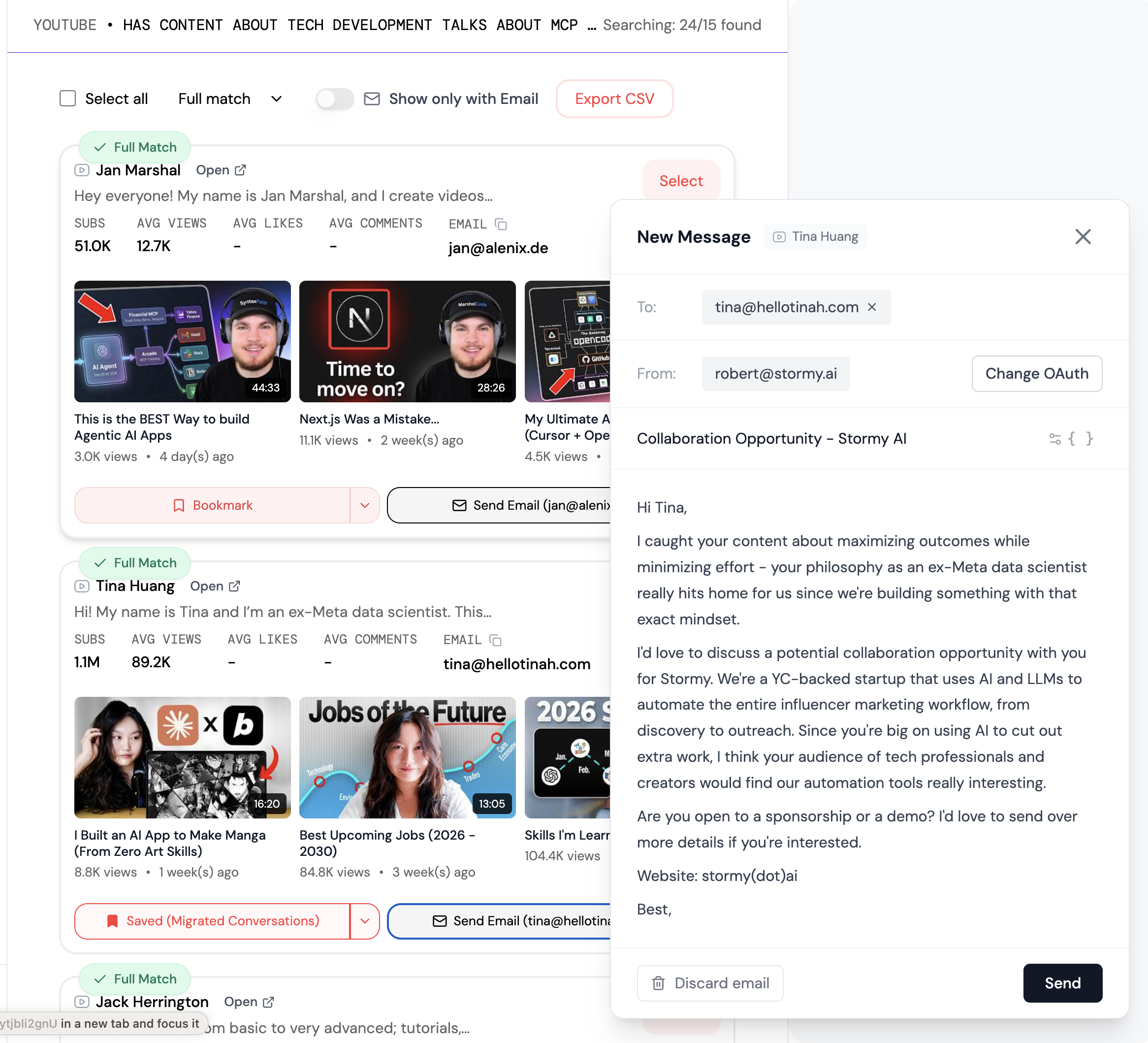
Once you have the basics of building in public down, you need to scale your reach. You cannot rely solely on your personal brand forever. You need to leverage other people's audiences. This is where many founders get stuck because manual outreach feels like a full-time job. However, modern saas growth tactics involve automation. Stormy's AI outreach allows you to connect multiple Gmail accounts and set up an autonomous AI agent that discovers and contacts creators for you.
Imagine having an AI agent that identifies 10 relevant creators on TikTok or YouTube every morning and sends them a hyper-personalized email about your SaaS while you are still drinking your coffee. This kind of scale is how you move from a small project to a $10k/mo business. By automating the outreach and follow-up process, you ensure that your distribution engine never runs out of fuel, even when you are busy fixing bugs or handling customer support through tools like Plausible or Polar. This is significantly more efficient than legacy manual methods used by older platforms like Julius or NeoReach.
The Distribution-First Playbook: A Step-by-Step Guide
To implement this in your own startup, you need a repeatable process. Here is the playbook for building social media momentum from day one:
Step 1: Validate the Market Distribution
Before writing code, identify where your potential users hang out. Is it LinkedIn? Are they looking at app designs on Mobbin? If you don't know how you will reach them, the idea is fundamentally flawed. As Thomas suggests, look for competitors. Competition is proof of a distribution channel that already works. You can research market trends via Semrush to see where your competitors are getting their traffic.
Step 2: Establish a Daily Social Presence
Create a schedule where you share one "building" update per day. This could be a screenshot of your Supabase dashboard, a design struggle, or a customer feedback loop. Use a SaaS growth tactic of high-frequency, low-friction posting to stay top-of-mind. Tools like Buffer can help manage this frequency across multiple channels.
Step 3: Scale via Outreach
Once you have a baseline of content, start reaching out to influencers who serve your target demographic. Don't just ask for a shoutout; offer value. Use Stormy's creator CRM to track these relationships and negotiations so no opportunity falls through the cracks. This transition from 'solitary builder' to 'connected founder' is what separates $100/mo projects from $10,000/mo businesses.
Step 4: Track and Iterate
Marketing is a series of experiments. You need to know which posts and which creators are actually driving traffic. By utilizing Stormy's post tracking, you can monitor the engagement and views of your campaign in real-time. If a specific narrative is working on social media, lean into it. If your social media marketing for startups efforts are falling flat, pivot your messaging just as Thomas pivoted Uneed from a directory to a launch platform. You should also integrate Google Analytics to track the conversion rate of the traffic hitting your landing page.
The Sustainability Factor: Avoiding Founder Burnout
Thomas’s final lesson is perhaps the most important: building a SaaS is a marathon, not a sprint. You cannot maintain social media momentum if you are burnt out. He emphasizes the need for a personal life—cycling, seeing friends, and stepping away from the screen. A saas distribution strategy that requires 18 hours of work a day is not a strategy; it’s a death sentence for your creativity.
Sustainable growth comes from systems. Systematize your development with frameworks like Next.js, host reliably on platforms like Hetzner or Coolify, and systematize your marketing with AI. When you have an AI agent handling your discovery and outreach, you buy back the time needed to go for that bike ride or spend time with family. This balance is what allows you to stay in the game long enough for the "timing" to finally swing in your favor, as noted in various Harvard Business Review studies on founder mental health.
Conclusion: Distribution is the Product
In the modern SaaS landscape, your distribution channel is just as much a part of your product as the code itself. Thomas Sanlis didn't succeed with Uneed because he was a better coder than he was during his previous 30 failures; he succeeded because he learned how to market a SaaS through consistent social momentum and timing. He stopped waiting for users to find him and started building the roads that led them to his door.
By prioritizing build in public transparency, maintaining a relentless social media routine, and leveraging AI-powered tools like Stormy AI for influencer vetting and automated follow-ups, you can break the cycle of failed launches. Stop building in the dark. Start sharing, start reaching out, and build the momentum your software deserves.