By mid-2026, the software industry has reached a definitive crossroads. For over a decade, the "per-seat" licensing model was the undisputed king of B2B growth, fueling the rise of giants like Salesforce and HubSpot. But as AI agents began doing the work of five humans, the math stopped working. This year, the industry is witnessing a "SaaS-pocalypse" where legacy platforms must either evolve their pricing to reflect actual value or face a slow slide into irrelevance. Companies that once bragged about employee headcounts are now looking for efficiency, leading market leaders to pivot toward outcome-based growth.
The SaaS-pocalypse: Why the Seat-Based Model is Failing in 2026
The core problem in 2026 is that software has become too efficient for its own good. When Square and other tech leaders began laying off significant portions of their staff—sometimes up to 40%—while maintaining or increasing output, it sent a shockwave through the SaaS ecosystem. If a company needs 100 fewer marketing managers because AI handles the grunt work, they also need 100 fewer licenses for their CRM.
"The seat-based model is inherently at odds with AI-driven productivity. If your software makes me five times faster, why should I pay you less because I have fewer people?"
As noted in recent Substack analysis, we are entering an era where software adoption is decoupling from headcount. This uncertainty has led to massive volatility in public markets, with HubSpot seeing its market cap fluctuate as investors grapple with what the future of cash flow looks like. The HubSpot growth strategy in 2026 is no longer about adding more users; it's about becoming a system of action rather than just a system of record.
| Metric | 2022 Benchmark | 2026 Reality |
|---|---|---|
| Pricing Driver | User Licenses (Seats) | API Calls / Successful Outcomes |
| Retention Focus | Usage Adoption | AI Agent Autonomy |
| Primary User | Human Employees | AI Agents & Automated Workflows |
HubSpot’s Pivot: From System of Record to System of Action
 44:05
44:05To navigate these SaaS pricing trends 2026, HubSpot is projecting a staggering $3.7 billion in revenue by the end of this year. They are achieving this by integrating "Agentic Features" directly into the core CRM. No longer is the CRM a passive database where humans manually enter data. In 2026, the best AI CRM marketing tools are those that clean themselves, score leads autonomously, and trigger outreach without a human ever touching a keyboard.
This shift allows HubSpot to maintain a $14 billion market cap even as headcount across their customer base fluctuates. By focusing on outcomes—such as the number of qualified leads generated or the reduction in churn—HubSpot aligns its revenue with the actual success of the business. This is the moat: once an AI agent is deeply integrated into your workflows, removing the software isn't just a matter of switching tools; it's like firing a productive, 24/7 employee.
Integrating Agentic Features: The Future of AI CRM Marketing
47:15What does an "Agentic CRM" actually look like? It’s not just a chatbot in the sidebar. It’s a series of autonomous processes that act on the data within the system. For example, legacy platforms used to require a sales development rep (SDR) to manually vet every lead. Today, platforms like Stormy AI are revolutionizing the discovery and outreach phase by using AI agents that find creators, vet their quality, and handle personalized emails while the marketer sleeps.
When HubSpot integrates these types of agentic features, they move up the value chain. They are no longer competing on "features" but on "labor replacement." This is particularly visible in industries where technical talent is scarce. For a roofing company in Tennessee or a local HVAC service, they don't want to learn how to use a complex CRM; they want the CRM to book appointments for them. This is where outcome-based pricing models become the ultimate retention tool.
Implementing Outcome-Based Pricing: Credit vs. Success Billing
61:59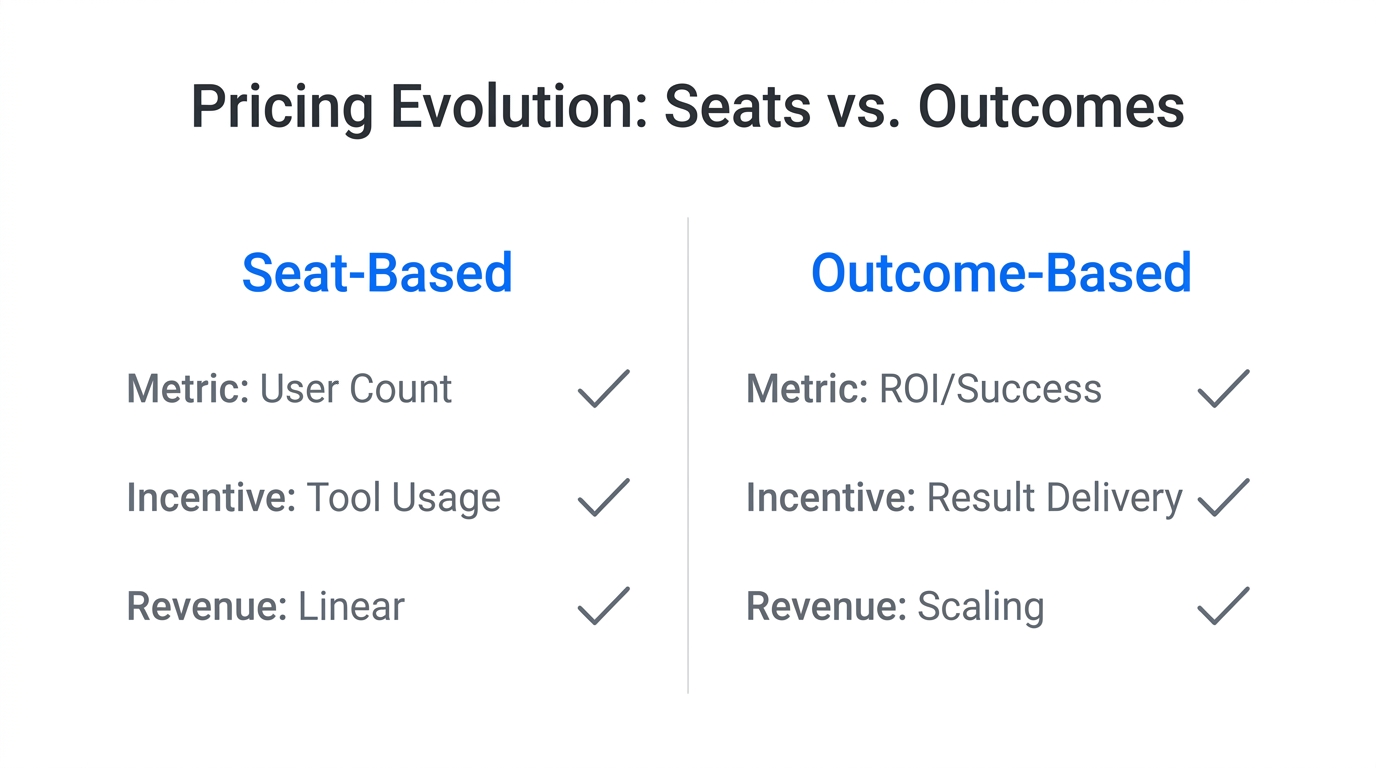
The transition to outcome-based pricing models is the most significant shift in SaaS pricing trends 2026. We see this successful implementation in specialized verticals already. Take Harvey AI, which has reached $200 million in revenue by providing AI-driven legal services. Their average contract value is around $190,000—not because they have thousands of users, but because they are capturing the labor spend that used to go to human lawyers.
Other companies are following suit by implementing credit-based or success-based billing. Consider these two emerging models:
- Credit-Based Billing: Users pay for "usage units" (e.g., Suno for music generation or SendCutSend for custom parts). This allows for flexible scaling without the friction of adding/removing seats.
- Success-Based Billing: Charging a percentage of the value created. TrueMed uses this by taking a cut of the tax savings they generate for customers via HSA/FSA integrations.
"In a world where software execution is a commodity, the only thing that matters is the result. If you don't bill for the result, you're leaving money on the table."
Retention Playbooks for SMBs: Delivering Value to Non-Technical Industries
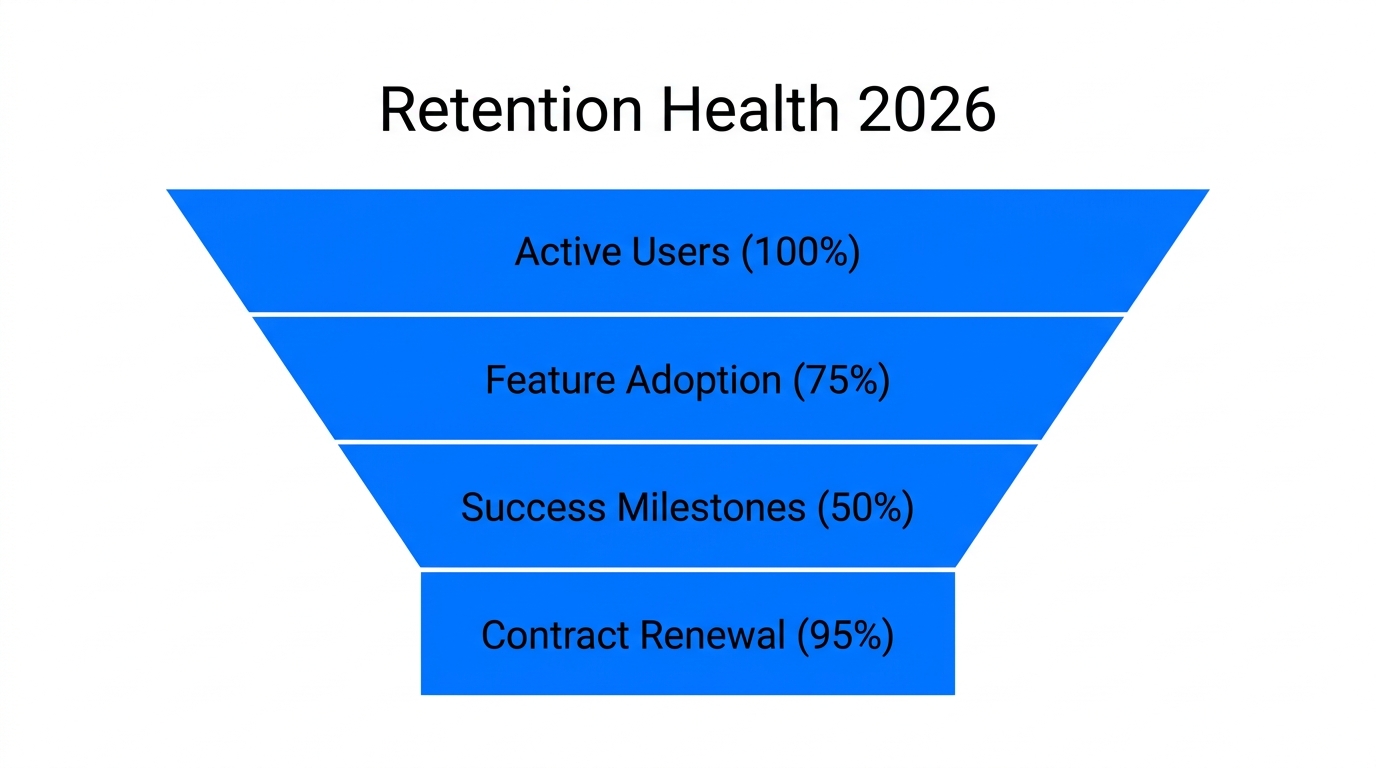
For small and medium-sized businesses (SMBs), the B2B SaaS customer retention strategy in 2026 is simple: invisible software. Non-technical industries don't want to manage a tech stack. They want solutions that integrate with their existing banking (like Column or Plaid) and handle the heavy lifting of customer acquisition and service.
HubSpot’s success in this sector comes from its ability to productize AI. They aren't just selling "tools"; they are selling a "growth engine." By providing pre-built AI agents for specific tasks—like managing a Shopify store's customer service or optimizing Google Ads spend—they create a high-switching-cost environment. When the software is the one doing the work, the business owner is free to focus on operations, creating a deep relationship moat.
Building a Moat in a Commoditized Software World
As software implementation becomes commoditized through vibe coding and low-code AI builders, the real "moat" isn't the code itself. It’s the trust and the data. HubSpot’s advantage is its massive distribution network and its reputation as a reliable partner for over two decades. It is much easier to add an AI feature to an existing, trusted CRM than it is to build a new CRM from scratch around AI.
Analysts at SemiAnalysis suggest that the infrastructure buildout for AI is so capital-intensive that established players like HubSpot have a natural advantage. They can afford the GPUs and the inference costs to provide agentic features that a startup might struggle to subsidize. This "big gets bigger" trend is the defining characteristic of the 2026 market.
Conclusion: The 2026 Retention Roadmap
The HubSpot growth strategy serves as a blueprint for all SaaS companies navigating the 2026 landscape. To survive the SaaS-pocalypse, businesses must shift their focus from seats to outcomes. This means:
- Embracing Agentic Workflows: Letting software do the work, not just record the work.
- Aligning Pricing with Value: Moving to credit-based or success-based models.
- Owning the Relationship: Building moats through distribution and trust, not just code.
As we look toward the second half of 2026, the winners will be those who use AI to amplify their customers' success rather than just billing for their users' access. Whether you are a small agency using Stormy AI to scale creator campaigns or a global enterprise managing thousands of leads on HubSpot, the goal remains the same: deliver an outcome that makes the software indispensable.