For most founders, the dream of building a software business starts with a recurring revenue graph that trends upward forever. We are told that the subscription model is the gold standard, the holy grail of SaaS. But for a solo founder with zero brand recognition and a brand-new product, the "subscription default" is often a recipe for silence. When Prren, a software engineer who walked away from a $250,000 salary, launched his first AI app, he followed the playbook: he built a web app with a free trial and a monthly fee. The result? Almost zero traction. It wasn't until he pivoted his SaaS pricing strategy to a one-time purchase that everything changed. In just six months, he generated $80,000 in revenue by embracing the very thing many VC-backed companies avoid: the Lifetime Deal (LTD).
The Problem with the "Subscription Default" for New Products
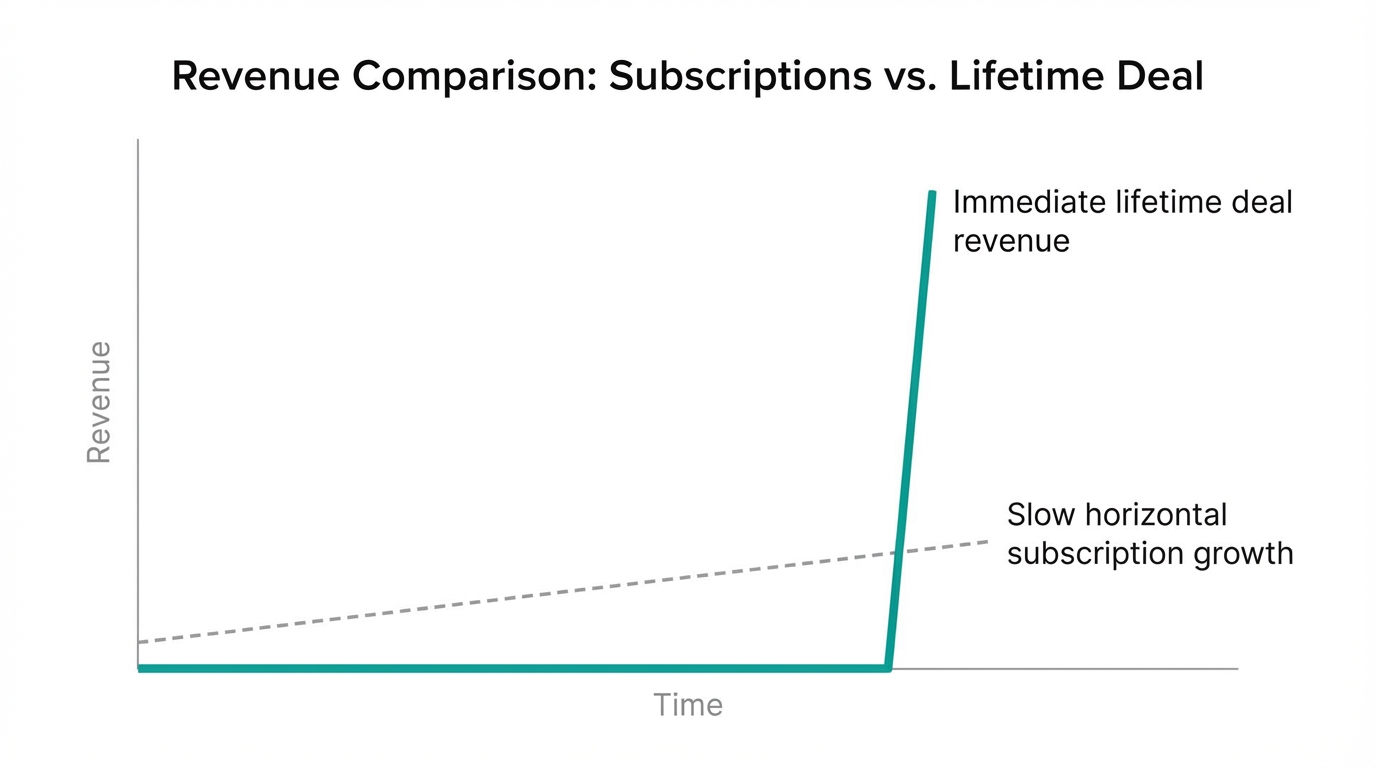
In the current market, subscription fatigue is real. Users, especially the "Power AI Users" that Prren was targeting, are already paying for ChatGPT Plus, Midjourney, and perhaps five other specialized tools. When you ask them to add another $20/month commitment to an unproven product from an unknown founder, the friction is immense. This is the fundamental challenge of bootstrap software revenue: you lack the venture capital to "buy" your way through the trust-building phase.
Prren realized that his Ideal Customer Profile (ICP) was saturated. By insisting on a subscription, he was competing for a slot in their monthly budget alongside established giants. For a bootstrapped founder, trying to maintain a SaaS monetization model based on recurring fees before achieving Product-Market Fit (PMF) can actually delay your growth. Instead of relying on manual tracking, you can use Stormy AI to vet creators and analyze deep audience demographics to ensure your product hits the right niche. For Prren, the breakthrough came when he stopped trying to be another monthly bill and started being a valuable one-time investment.
The Morale Boost and Capital of Lifetime Deals

One of the most overlooked benefits of the lifetime deal vs subscription debate is the psychological impact on the founder. Bootstrapping is a lonely, grueling process. Seeing a few $10/month subscriptions trickle in doesn't feel like a business; it feels like a hobby. However, when you sell a lifetime deal for $49 or $99, you are collecting months of revenue upfront. This cash flow provides the "morale boost" necessary to keep building. More importantly, it provides the capital to reinvest in the business without giving up equity.
Platforms like Stormy AI help founders find the right creators with an AI search engine that scans TikTok, Instagram, and YouTube to showcase these early versions of their products. By generating a chunk of cash through an LTD, a founder can actually afford to hire UGC creators to produce high-performing ads for the App Store or social media, creating a virtuous cycle of growth. This upfront revenue allows you to transition from a "skillsman"—someone just building for their peers—to an actual entrepreneur focused on market rewards.
The Playbook: Building a Tiered Pricing Ladder
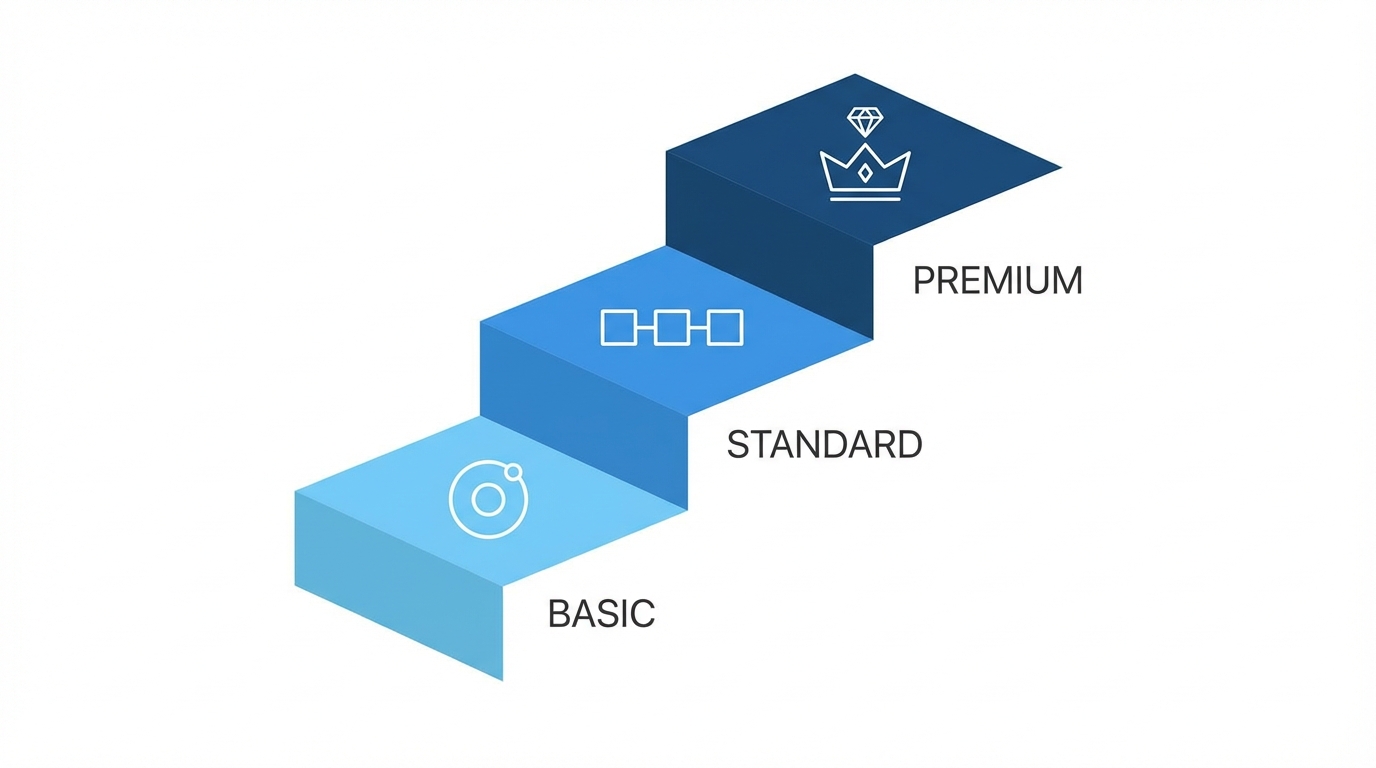
You shouldn't just pick a high price out of thin air. The most successful LTD strategies use a tiered pricing ladder that rewards early adopters. This creates a sense of urgency and scarcity that a standard subscription simply cannot match. Here is the step-by-step playbook for scaling your SaaS pricing strategy from $0 to $80,000:
Step 1: The Initial Validation Tier
Start with a price point that makes the purchase a "no-brainer." For Prren, this was $29 for the first 100 users. At this level, you aren't looking for profit; you are looking for validation. You want to see if strangers on the internet will actually open their wallets. If you can't sell 100 spots at $29, you don't have a pricing problem—you have a product problem.
Step 2: The Momentum Tier
Once you hit that first milestone, bump the price immediately. Prren moved to $49 once he crossed the 100-user mark. This price increase signals to your community that the product is evolving and its value is increasing. It also encourages people who were "on the fence" to buy before the next hike. This is where you begin to see significant bootstrap software revenue accumulation.
Step 3: The Scaling Tier
As you approach 500 to 1,000 users, your price should reflect the added features and stability of the app. By the time Prren reached 1,200 users, he had generated $80,000 in gross revenue. At this stage, you have enough data to understand your margins and can begin planning the transition back to a recurring model for new users.
The BYOK Model: Eliminating Variable Costs
The biggest risk of an LTD is the "infinite cost" problem. If your software incurs server or API costs every time a user uses it, a lifetime deal can eventually bankrupt you. To combat this, Prren utilized a Bring Your Own Keys (BYOK) model. By building his app, Electron-based, and running it locally on the user's desktop, he offloaded the server costs.
Furthermore, by requiring users to plug in their own API keys from providers like Vercel AI SDK or OpenAI, he ensured that the variable costs of AI usage were handled by the customer. This turned his software into a pure-margin product. With his current setup, Prren’s monthly operating costs are roughly $50 for hosting and $200 for development tools like Cursor. This high-margin structure is what allowed him to keep $75,000 in profit from his $80,000 revenue.
Why LTD Users Provide Better Feedback
There is a common misconception that LTD users are "cheap" or overly demanding. In reality, the opposite is often true for bootstrapped startups. A user who pays for a lifetime deal is investing in the future of the product. They want the app to succeed because they want their one-time investment to remain valuable for years.
Unlike free-trial users who might spend five minutes in the app and never return, LTD buyers are much more likely to provide deep, actionable feedback. They become your "beta testers with skin in the game." Prren found that his LTD users were significantly more helpful in identifying bugs and suggesting features for his canvas-based AI tool than his initial free-trial users ever were. They were invested in the roadmap.
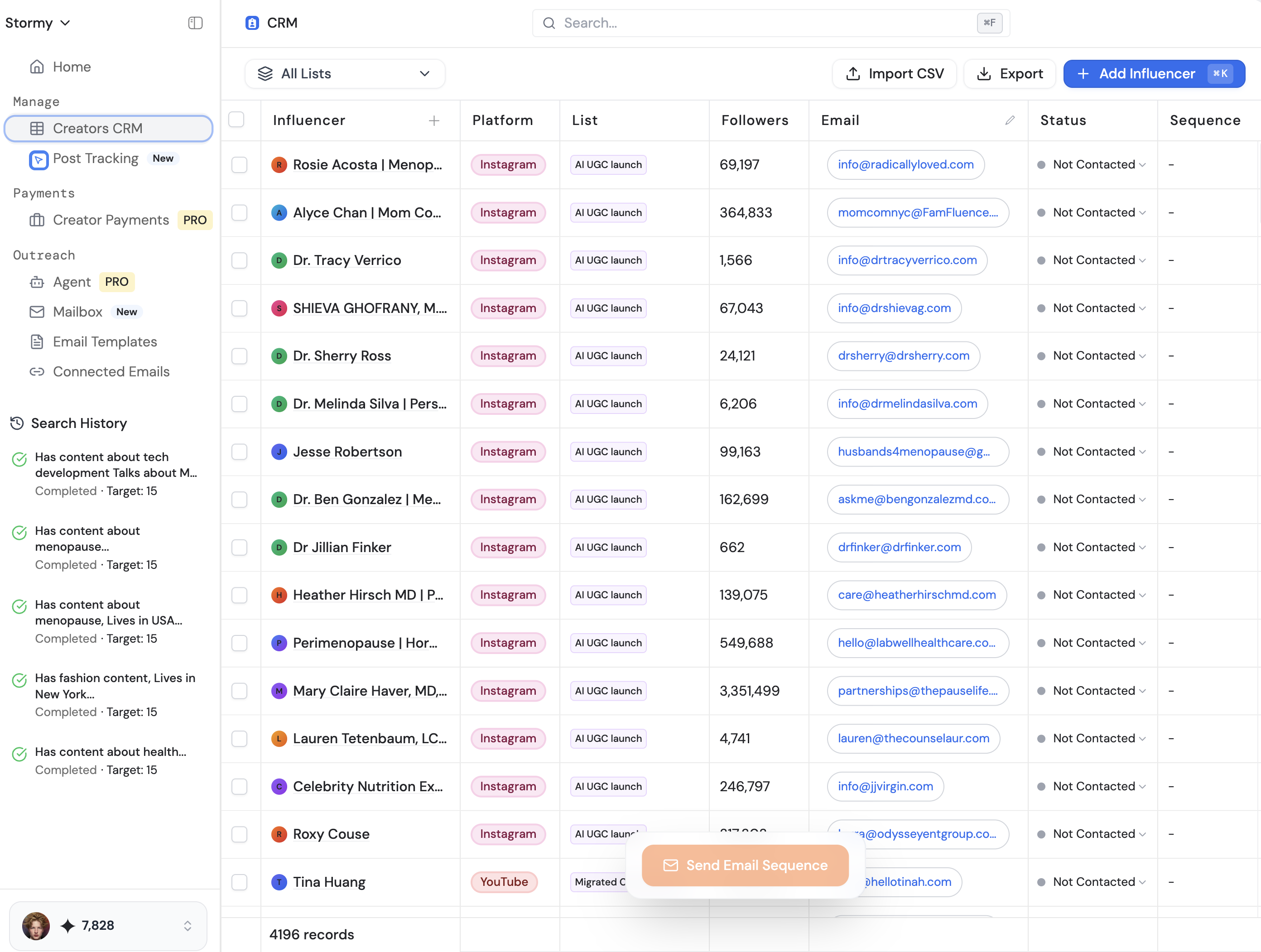
To find these high-quality early adopters, many founders use Stormy AI, which features a full Creator CRM for managing relationships and an AI-powered discovery engine to identify micro-influencers in specific niches—like AI productivity or developer tools—who can introduce the product to a dedicated community. These influencers can drive the initial 100-200 users needed to kickstart the tiered pricing ladder.
The Tech Stack for Rapid Launch

To successfully execute an LTD launch, you need to ship fast and keep costs low. Prren’s tech stack is a masterclass in efficiency for the modern bootstrapper. He used AI as a co-founder, leveraging tools to bridge the gap between his design skills and the necessary engineering. Here is the breakdown of the stack that powered an $80K launch:
- Frontend & Landing Page: Built with Next.js and hosted on Vercel for rapid deployment and world-class performance.
- Application Framework: Using Electron allowed him to build a cross-platform desktop app using web technologies (React and TypeScript).
- Development Tooling: Cursor served as the primary AI-powered code editor, enabling him to write complex logic much faster than a traditional workflow.
- Payment Processing: A simple Stripe integration handled the one-time payments, providing a secure and frictionless checkout for global users.
- Infrastructure: Cloudflare was used for hosting the app assets, ensuring low latency for users worldwide.
Transitioning from LTD to Recurring Revenue
An LTD is a launch strategy, not a forever strategy. Once you have reached 1,000+ users and validated that the market wants your product, it is time to transition to a recurring model. The 1,200 users Prren acquired aren't just a source of cash; they are social proof. You can now point to a thousand happy customers when asking new users for a monthly subscription.
The transition typically happens in one of two ways. You can either grandfather in your LTD users and move all new signups to a subscription, or you can offer a hybrid model where the base app is a one-time purchase but new "feature packs" or monthly updates require a small maintenance fee. Prren is currently moving toward a recurring model now that his product, Canvas Mode, has proven its value. By using the LTD to reach the $80,000 mark, he has bypassed the "trough of sorrow" where most bootstrapped startups die due to lack of funds.
Growth Strategies: Getting Your LTD in Front of Users
Even the best SaaS pricing strategy won't work if nobody sees it. Prren’s growth was driven by a combination of tight ICP targeting and organic social proof. He didn't just blast his link everywhere; he called out his target audience in his landing page H1: "Power AI Users."
He focused on Twitter (X), engaging in conversations about the "new age of AI" and the friction of existing linear chat interfaces. He didn't just say "buy my product"; he participated in the discourse and mentioned his tool as a solution to specific pain points. For founders looking to scale beyond organic tweets, leveraging Stormy AI's autonomous AI agent to discover and outreach to creators on a daily schedule is a highly effective way to create authentic-feeling video ads. These creators can demonstrate the product in a real-world setting, which is especially effective for the "one-time purchase" pitch, as it feels like a tangible tool the user can own forever.
The Path to Your First $80K
If you are a bootstrapped founder struggling to get your first 10 customers on a subscription, it is time to reconsider your SaaS pricing strategy. A lifetime deal is not a sign of weakness or a "cheap" product; it is a strategic tool for market entry. By using a tiered pricing ladder, offloading costs through a BYOK model, and focusing on a specific ICP, you can generate the capital and validation needed to build a sustainable business. Stop appealing to your peers and start seeking the market's reward. The goal of an entrepreneur is to find Product-Market Fit as fast as possible, and sometimes, a simple $29 Stripe link is the fastest way to get there. Whether you are building an AI canvas app or a niche utility tool, remember that the lifetime deal vs subscription debate isn't about which is "better"—it's about which one will get you to your first $80,000. For long-term scaling, utilizing Stormy AI to track campaign performance and post-analytics across all platforms will ensure you stay on the right path.