Most founders dream of the moment their product goes viral on Reddit. For David Bressler, the creator of Excel Formula Bot (now known simply as Formula Bot), that dream quickly turned into a high-stakes financial crossroads. Within days of launching his AI-powered tool, he was facing a $5,000 OpenAI bill and a user base that expected everything for free. His journey from a solo side project to a business with $26,000 in monthly recurring revenue (MRR) and a million-dollar valuation is a masterclass in SaaS pricing models and lean execution.
The Viral Trap: Managing High API Overhead
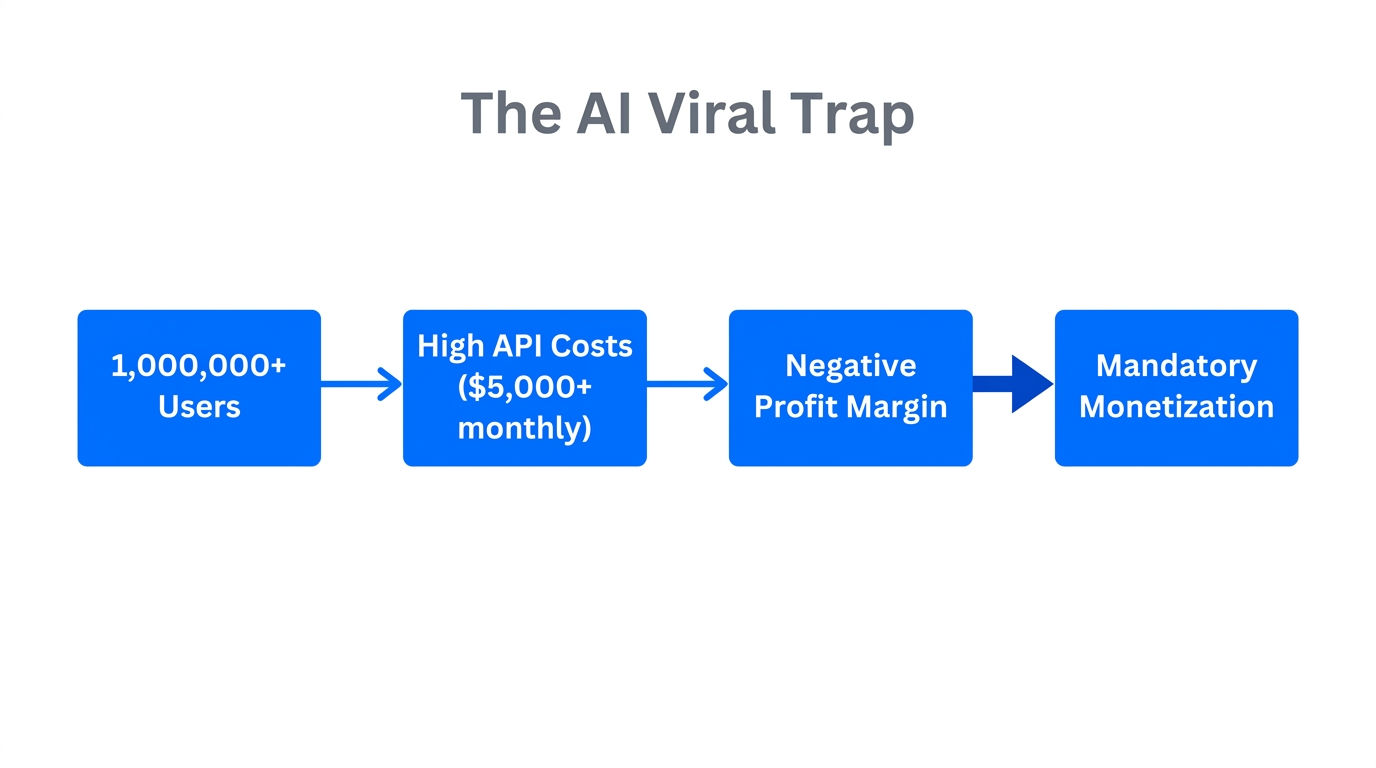
In July 2022, David used Bubble.io to build an MVP that translated plain English into Excel formulas. After posting to the r/excel and r/InternetIsBeautiful subreddits, the tool exploded. According to his interview with Starter Story, he gained thousands of users almost instantly. However, virality has a literal price tag in the world of AI app monetization.
When your product relies on third-party APIs like GPT-4, every free user costs you money. David had to decide: shut the project down or find a way to make it pay for itself. This is the first hurdle of scaling a side project to $1M. You must move from a "growth at all costs" mindset to a "sustainability first" model immediately upon hitting scale.
"I had a decision to make: it’s either shut it down or keep going. I blew through $5,000 in days."The 'Donation to Subscription' Transition
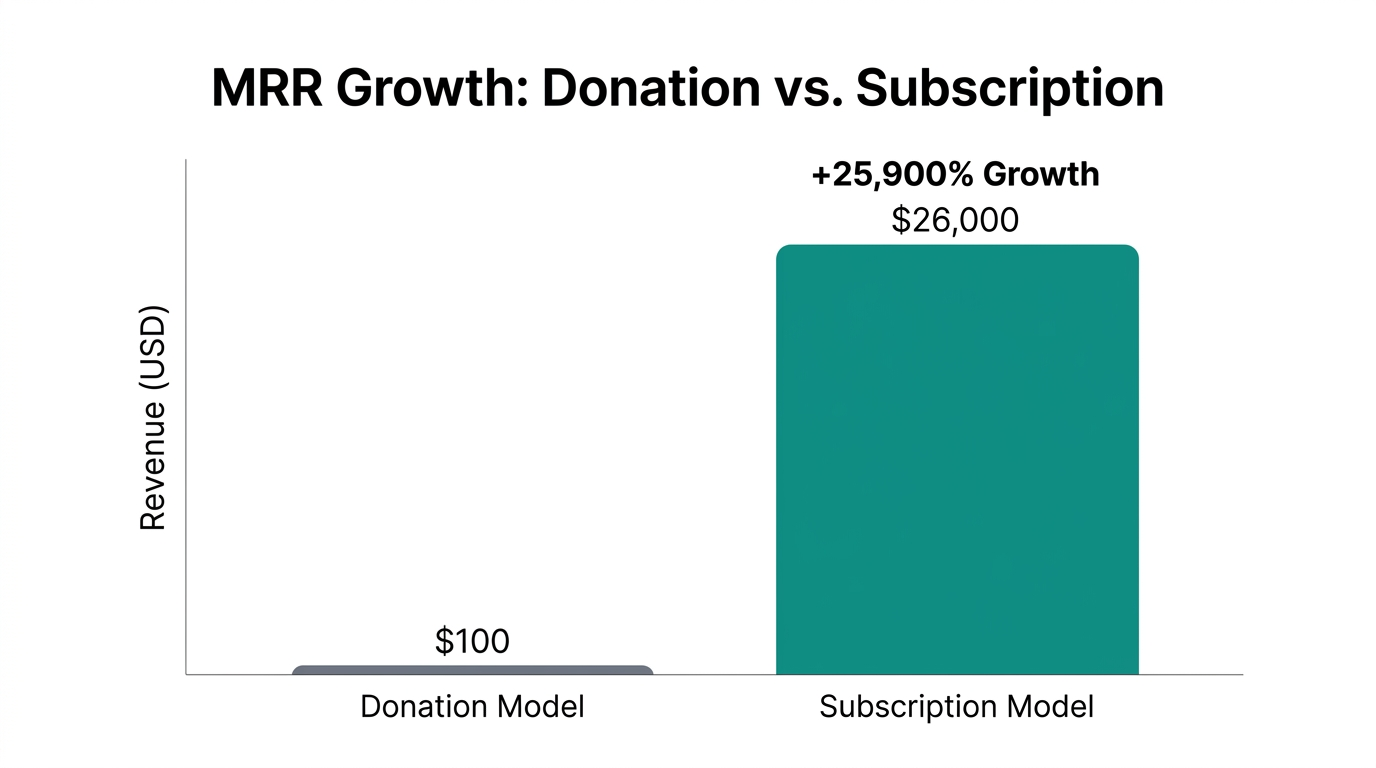
Before jumping into complex SaaS pricing models, David started with the simplest form of monetization: the donation button. He added a Stripe donation link, explaining that he was a solo founder paying for the API costs out of pocket. While this recouped a few thousand dollars, it wasn't a scalable business model.
He also experimented with unconventional revenue streams, such as a sponsorship from the ESPN Excel competition (Financial Modeling World Cup). While Google Ads and niche sponsorships provided a temporary cushion, they didn't offer the stability of monthly recurring revenue growth. The real shift happened when David implemented a hard paywall with a login system, moving from a free utility to a professional SaaS tool.
| Monetization Phase | Revenue Type | Outcome |
|---|---|---|
| Launch | Free / No Revenue | $5,000 debt in days |
| Scrappy Phase | Donations & Ads | Recouped costs, but unsustainable |
| SaaS Phase | Subscription (MRR) | $26k MRR & $1M+ Valuation |
Psychological Pricing: Why $3 Wasn't Enough
One of the most critical lessons in David’s journey was the evolution of his pricing. Initially, he priced the tool at $2.99 per month. His logic was simple: make it so cheap that nobody would say no. However, he soon realized that low prices can actually devalue a product and fail to cover the overhead of heavy users.
As he added features—like the Data Analyzer, which functions like an AI-powered Zapier for spreadsheets—he raised prices to $6.99 and eventually $9 per month for unlimited access. This move was supported by psychological pricing principles: users often equate price with quality. By positioning Formula Bot as a professional data tool rather than a simple "formula generator," he was able to attract 5,000 paying subscribers who saw the value in the $100/year range.
"You have to build something that cannot be replicated by ChatGPT or Microsoft. Convenience and customization are your only moats."Building Moats: Competing with Microsoft and ChatGPT
The biggest threat to any AI side project is "platform risk." When ChatGPT became a household name and Microsoft announced AI integration into the Office suite, David’s business model was under fire. To survive, he pivoted from a simple input/output box to a workflow-integrated platform.
Step 1: Focus on Convenience
David built add-ons that allowed users to generate formulas directly inside Google Sheets and Excel. This eliminated the need to switch tabs to ChatGPT, creating a "convenience moat."
Step 2: Deep Customization
Formula Bot supports thousands of languages and specific regional versions of Excel (e.g., Spanish speakers using the Spanish version of Excel). Generic AI tools often struggle with these nuances, giving David a localized edge.
Step 3: Advanced Data Features
By launching the Data Analyzer, David moved beyond formulas into data modeling and charting. This type of deep analysis requires a specific UI/UX that a general-purpose chatbot like Claude or ChatGPT doesn't provide natively.
The Solo Founder Playbook: Scaling Without a Team
David reached a million-dollar valuation while working a full-time job and raising a family. He achieved this by staying lean and using no-code tools to handle the heavy lifting. He credits "YouTube University" for his ability to master Bubble and build a production-ready application in weeks rather than months.
For marketing, he didn't hire an agency. He focused on community-led growth on platforms like Reddit and leveraged the SEO power of his domain name. Today, he manages over 750,000 users with a very small resource footprint. For founders looking to scale their own audience or find creators to promote their tools, platforms like Stormy AI can help source and manage UGC creators at scale, allowing solo founders to maintain their lean operations while expanding their reach.
David's strategy for managing customer feedback was equally scrappy. He would offer to do users' Excel work for them on a live call if they agreed to give him feedback on the product. These "impromptu phone calls" provided the roadmap for every major feature he built, ensuring he was solving real-world problems rather than guessing.
A Playbook for Your AI SaaS Monetization
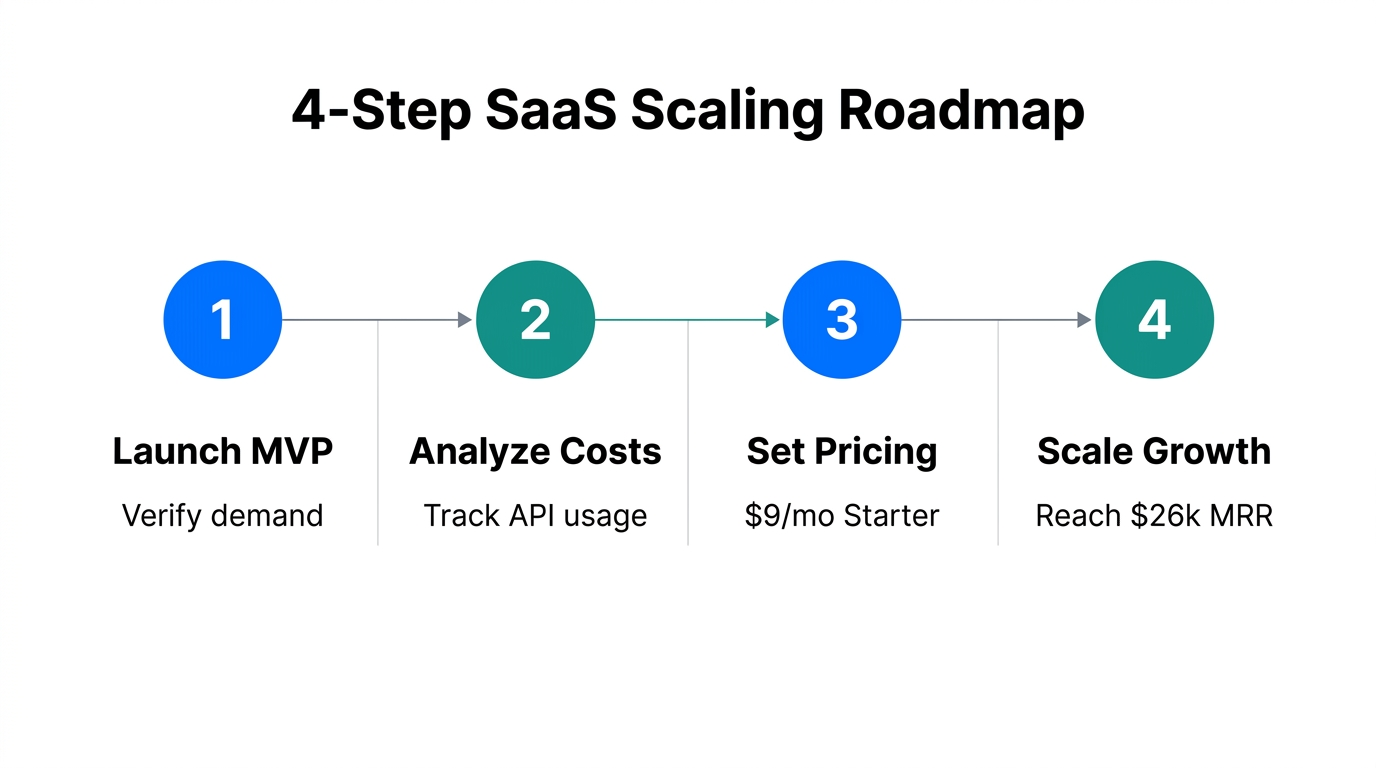
If you are building a side project today, David’s journey offers a clear SaaS pricing model blueprint:
- Launch an MVP fast: Use no-code tools like Framer or Bubble to get your idea in front of users.
- Monitor costs instantly: Set up usage alerts on AWS or OpenAI to avoid a viral-induced bankruptcy.
- Start with a simple paywall: Don't be afraid to charge from day one. Free users don't provide the same quality of feedback as paying customers.
- Iterate on pricing: Move from low-tier "no-brainer" pricing to value-based pricing as your feature set grows.
- Build a workflow moat: Focus on where your users spend their time (e.g., inside Excel or their CRM) and integrate there.
By following these steps, you can transition from a viral experiment to a sustainable business with monthly recurring revenue growth. David Bressler proved that a "normal guy" with a full-time job can build a million-dollar business by scratching his own itch and staying disciplined with his unit economics. Whether you're using Notion to plan your roadmap or using Stormy AI to discover creators for your next campaign, the key is to start building and never stop iterating on your value proposition.