In the early days of a startup, growth feels like a series of small, manual victories. You hustle for your first ten users, celebrate your first hundred, and eventually hit that coveted $20,000 Monthly Recurring Revenue (MRR) milestone. But for many founders, this is where the engine stalls. The initial momentum from friends, family, and casual social shares begins to fade, and the reality sets in: product excellence is not enough to sustain growth. To scale toward $100K or $200K MRR, you must stop thinking like a software developer and start thinking like a media executive. The modern era of software demands a robust SaaS distribution channel strategy that turns your brand into a content powerhouse.
The Media Company Mindset: Why Your SaaS Needs a Content Engine

Most SaaS failures don't happen because of bad code; they happen because of silence. A founder might spend six months in a "cave," building features they assume users want, only to launch to a vacuum. According to Tibo, a serial entrepreneur who has scaled four separate apps past $100K MRR, the biggest mistake is avoiding the hard work of talking to people. Building a "content engine" means you are no longer just selling a tool; you are owning the conversation around the problem that tool solves.
When you adopt a media-led mindset, your software becomes the solution to the stories you tell. Whether you are building for entrepreneurs or enterprise managers, your goal is to create a pipe of value that flows regardless of your product's latest feature release. This is where Stormy AI becomes invaluable for founders, as it allows brands to use an AI-powered search engine to find the right voices to tell these stories through user-generated content and influencer partnerships.
Scaling beyond $20K MRR requires a shift from growth hacking for startups—which often relies on one-off tricks—to building sustainable loops. This involves creating a "distribution pipe" that includes testimonials, case studies, and industry insights. By the time a prospect clicks your "Sign Up" button, they should already feel like they know your brand's perspective on the industry. You aren't just a utility; you are a trusted authority.
Building in Public: Getting Your First 1,000 Users for Free
The concept of building in public has transformed from a niche trend to a primary SaaS distribution channel. For founders starting at zero, Twitter (X) and LinkedIn offer a free, high-leverage way to validate ideas. The strategy is simple: document the struggle, the wins, and the process of building the software. This transparency builds a level of trust that traditional advertising simply cannot buy.
Tibo’s playbook emphasizes that the support link for your software should ideally direct people to your personal social DMs until you hit $10K MRR. This creates a direct feedback loop. When a user reports a bug and you fix it within ten minutes—and then post about that fix publicly—you don't just win a customer; you win an advocate. Building in public allows you to leverage the "shout-out" economy, where early adopters feel a sense of ownership over your success and share your journey with their own networks.
To succeed here, you must find five to ten core people who are deeply relevant to your target audience. Avoid the trap of seeking feedback from friends or family who don't feel the pain point your software addresses. Instead, go where your users live—be it subreddits, specialized Discord servers, or by using the natural-language search in Stormy AI to find relevant influencers—and engage them in a true relationship. If people are complaining about your software, it's actually a positive signal; it means they are committed enough to want it to be better.
The 12-Step Playbook for Scalable SaaS Growth
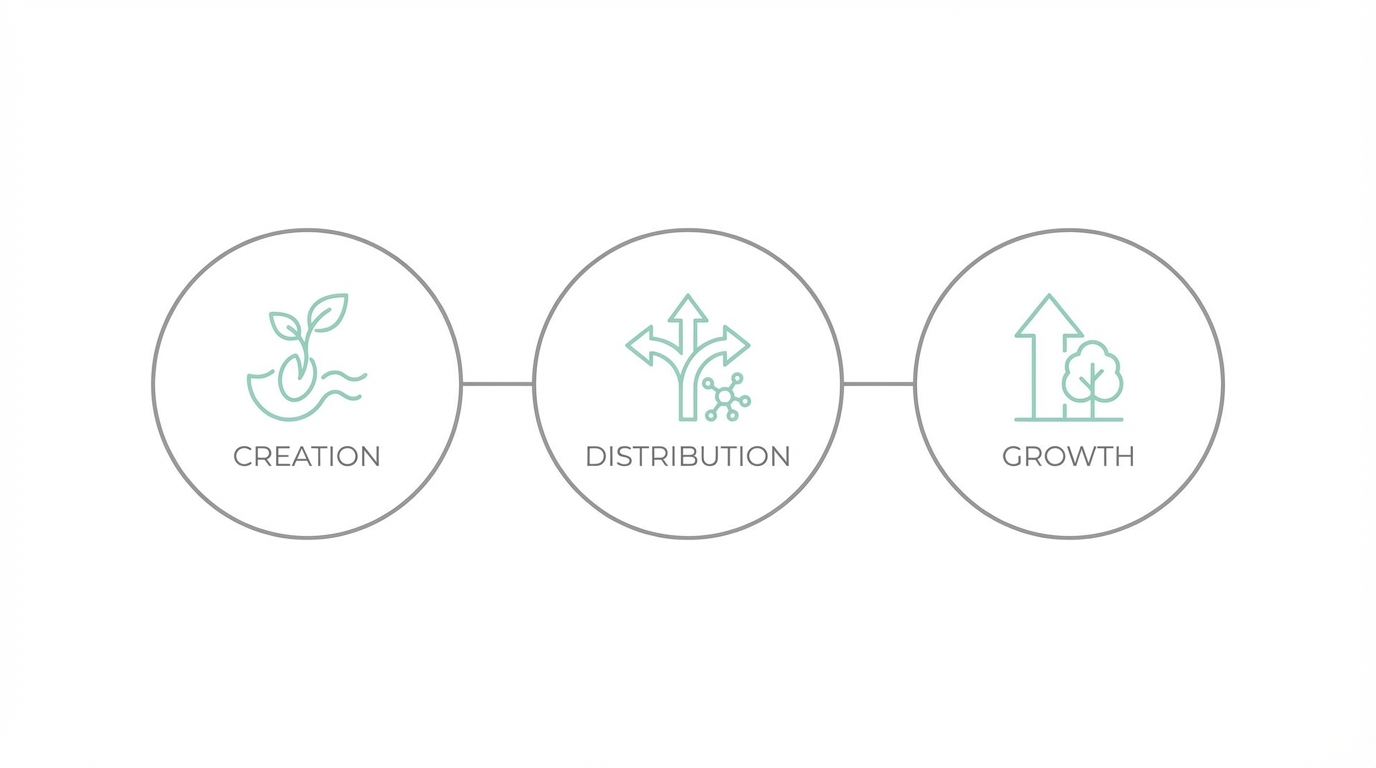
Building a successful SaaS isn't about one giant leap; it's about a series of repeatable steps. Following a structured approach can help you compress years of failure into weeks of iteration. Here is the playbook used by top founders to reach six-figure monthly revenues:
Step 1: Build Your MVP in Days
Do not spend months on a prototype. Use no-code tools like Bubble.io or utilize boilerplates to ship something functional within a week. The goal is to test the market's appetite, not your engineering prowess. Remember, you have a 90% failure rate early on—failing fast is a competitive advantage.
Step 2: Find Your Core Ten
Identify ten people who represent your ideal customer profile. Reach out via email, DM, or niche communities. Their feedback is the only data that matters at this stage.
Step 3: Build Real Relationships
Don't just collect data; understand their lives. What does their daily workflow look like? Where does the pain actually start? Deep empathy leads to stickier features.
Step 4: Talk to Users Every Single Day
Maintain a constant flow of communication. High-growth startups often keep their founders on the front lines of support. This reactivity creates a "customer for life" mentality.
Step 5: Understand the Ultimate Goal
Your users don't want a "blogging tool"; they want more traffic. Your users don't want a "video editor"; they want more engagement. Solve the ultimate goal, not just the technical task.
Step 6: Solve Their Problems, Not Yours
Be a user of your own product. If you find a tiny friction point, fix it immediately. This internal dogfooding makes you an expert on the problem space.
Step 7: Iterate and Maintain Social Presence
Keep the social engine running. Every new feature is an opportunity for a post, a thread, or a video demonstration.
Step 8: Focus on Retention Over Broad Acquisition
Do not go broad until your retention is rock solid. If you push 1,000 users to a leaky bucket, you've wasted your energy. Wait until they "cannot live without your software" before moving to massive distribution.
Step 9: Test All Channels
Once you have stickiness, go broad. Try social, Product Hunt, and cold outreach. See where the natural traction lies.
Step 10: Transition to a Media Company
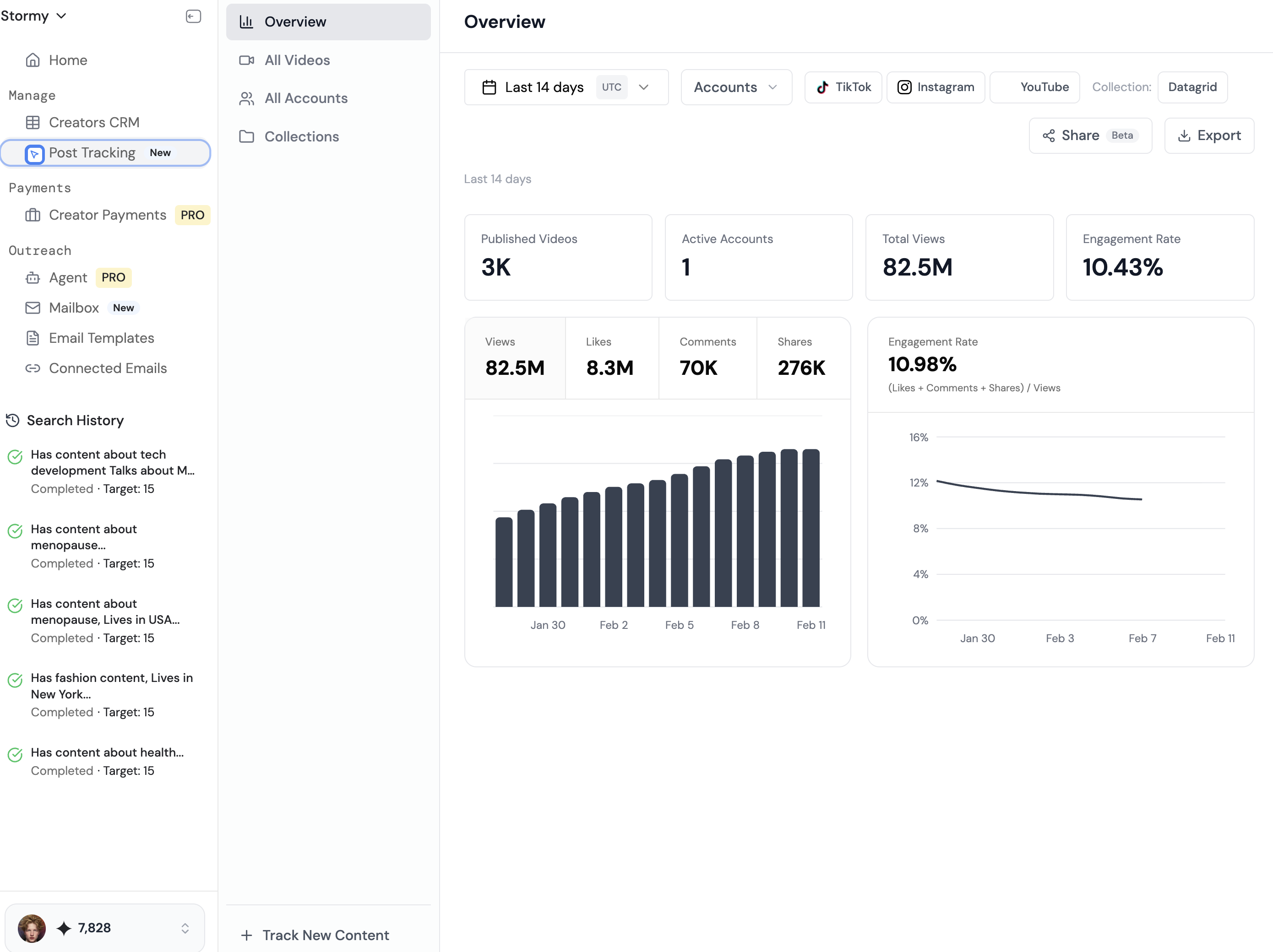
This is the turning point. Create a pipe of content—blogs, testimonials, and case studies—that fuels your brand. Use the post-tracking and performance analytics in Stormy AI to understand how AI and strategic partnerships are shifting the market.
Step 11: Implement Sustainable Scaling
Layer on SaaS SEO strategy, paid ads, and affiliate programs. These are the channels that scale beyond your manual effort.
Step 12: Double Down and Kill the Rest
Identify the one or two channels driving 80% of your growth. If SEO is working, hire a dedicated team for it. If ads are working, increase the budget on Google Ads. Stop wasting time on channels that aren't moving the needle.
Case Study: Scaling Outrank from $20K to $200K MRR
The story of Outrank provides a perfect blueprint for scaling. Originally launched as a simple blog post generator, it grew to its first $20,000 MRR almost exclusively through building in public and social media engagement. However, the founders realized that social growth has a ceiling. To reach $200,000 MRR, they had to "layer" their acquisition strategies.
First, they transitioned from a single-tool focus to an all-in-one SaaS SEO strategy. They stopped just talking about their tool and started producing high-quality content that ranked for keywords their users were searching for. Second, they ramped up their affiliate program. By making it incredibly easy for others to recommend Outrank, they turned their user base into a secondary sales force.
Finally, they leveraged paid acquisition. By using platforms like Meta Ads and Apple Search Ads, they were able to turn $1 of ad spend into predictable revenue. The lesson here is clear: social media gets you off the ground, but systems get you to the moon. They didn't abandon what worked; they added sustainable, scalable layers on top of it.
Testimonials and Case Studies: The Fuel for Your Distribution pipe
If content is the engine, customer success stories are the fuel. A common mistake in SaaS content marketing is focusing too much on the product's UI and not enough on the user's ROI. To scale, you need a system for capturing and distributing testimonials. These aren't just quotes for your landing page; they are assets for your entire marketing funnel.
Consider using User-Generated Content (UGC) as a primary ad creative. Modern consumers, especially in the mobile app space, are blind to polished corporate ads. They want to see a real person using the software to solve a real problem. For app developers, finding these creators is a hurdle that Stormy AI solves by allowing brands to instantly contact creators with hyper-personalized, AI-generated emails.
When you have a case study of a client who grew their traffic by 300% using your tool, that single piece of content can be repurposed into a Twitter thread, a LinkedIn post, a YouTube short, and a boosted Facebook ad. This is how you build a "distribution pipe" that works while you sleep. You are no longer manually hunting for users; you are providing evidence that your solution works, which naturally attracts more users.
The Power of Focus: Doubling Down on What Works

As you approach the $100K MRR mark, the temptation to be "everywhere" is high. Founders often feel they need to be on TikTok, LinkedIn, YouTube, and Pinterest simultaneously. However, the most successful SaaS companies usually attribute their scale to just one or two primary acquisition channels. Growth hacking for startups is about discovery; scaling is about focus.
If your SaaS SEO strategy is driving 70% of your new sign-ups, don't just maintain it—triple down. Find every secondary keyword, create comparison pages against your competitors, and invest in better backlink profiles. If your growth is coming from affiliate marketing, create better assets for your partners and increase their commissions. The complexity of managing ten mediocre channels will kill your speed. The simplicity of mastering two will fuel your growth.
Tibo’s portfolio approach also highlights a vital lesson in resilience. By running multiple products, he protects his income from platform changes—like when API changes or algorithm shifts threaten a specific business model. However, for each individual product, he follows the same rule: find the channel that works and push it to its absolute limit.
Conclusion: Building a Sustainable Future
Scaling a SaaS beyond $20K MRR is a psychological and strategic shift. You must move away from the comfort of the code and into the visibility of the media world. By building in public, creating a repeatable SaaS content marketing engine, and layering sustainable channels like SEO and paid ads, you create a business that is resilient to market shifts.
The path from founder to media mogul requires you to be an expert on your user's pain, an advocate for their success, and a consistent voice in their industry. Whether you are using Stormy AI to find and vet UGC creators for your next mobile campaign or hiring an SEO lead to dominate search rankings, the goal is the same: build a distribution pipe that never runs dry. Start today by talking to one user, fixing one pain point, and sharing that story with the world. Your next $100K in MRR is waiting on the other side of that conversation.