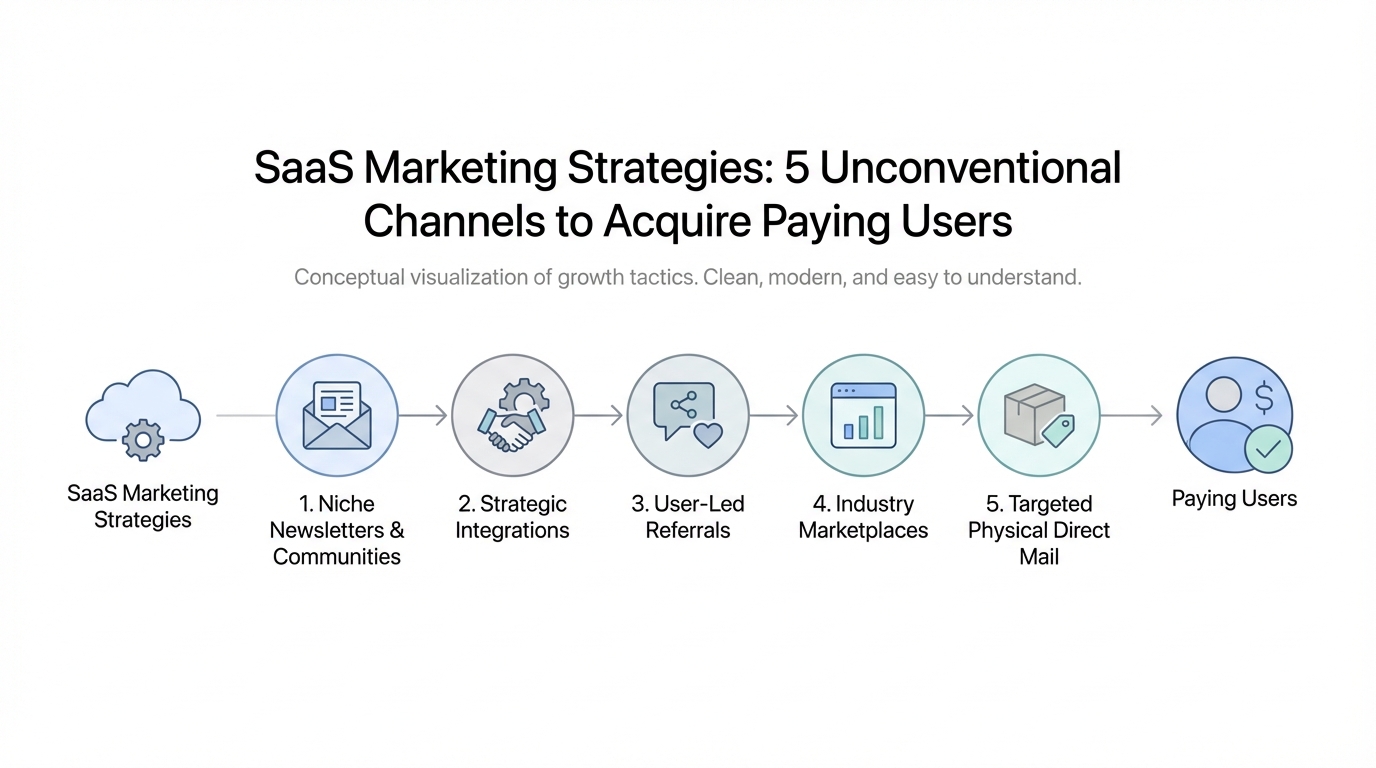
Most founders believe the path to $10k monthly recurring revenue (MRR) is paved with expensive Facebook ads and a massive sales team. However, as the digital landscape becomes increasingly saturated, these traditional channels are seeing diminishing returns and skyrocketing customer acquisition costs (CAC). For modern solopreneurs and small teams, a successful saas marketing strategy requires thinking outside the traditional advertising box. It requires finding high-intent users where they already spend their time, often in places your competitors are completely overlooking.
Take the case of Dmitro, founder of ScreenshotOne, who scaled his API-based product to over $12,000 MRR with 280 paying customers. He didn't build a massive ad engine; instead, he leveraged saas growth hacks centered around high-intent marketplaces, technical SEO, and persistent community engagement. By focusing on quality over quantity and manual outreach over automated spam, he managed to build a business with profit margins between 40% and 60%. This playbook explores the unconventional channels that fueled his growth and how you can apply them to your own B2B SaaS marketing efforts.
The Zapier and Make 'Inbound Hack': Marketplace SEO
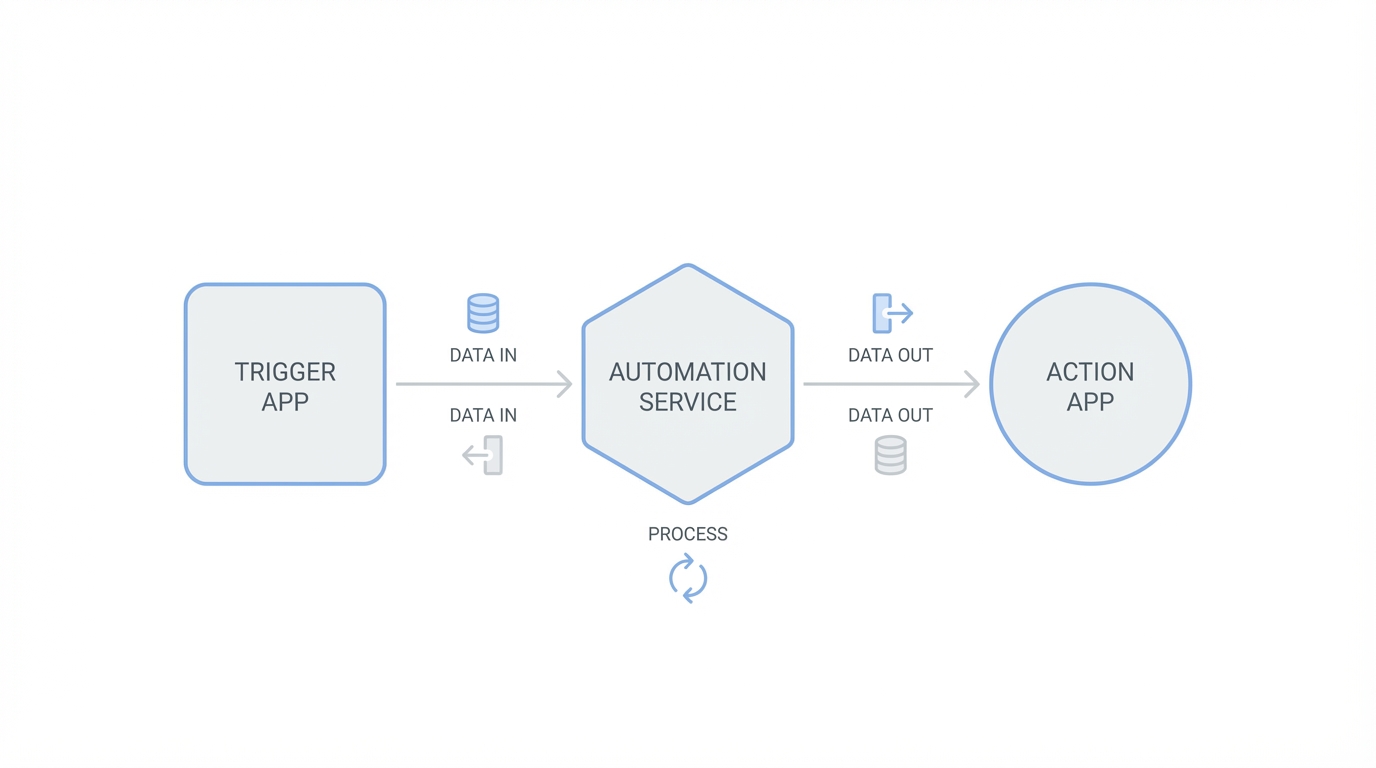
One of the most effective ways to solve the problem of how to get saas customers is to place your tool exactly where users are looking for a solution to a specific problem. Marketplaces like Zapier and Make (formerly Integromat) are goldmines for high-intent traffic. When a user is searching for a way to "automate screenshots" or "send data from Typeform to an API," they are already in a problem-solving mindset.
Listing your SaaS on these automation platforms acts as a passive lead generation engine. Because these platforms have high domain authority, your integration pages often rank on the first page of Google for long-tail technical queries. For ScreenshotOne, being an API-first product made this a natural fit. By building integrations, the product becomes a building block in the user's workflow, which significantly reduces churn. Users are less likely to cancel a subscription when your tool is the glue holding their automated business processes together.
YouTube SEO: Capturing Search Traffic Google Prioritizes

Many founders overlook YouTube because they think it's only for entertainers or lifestyle influencers. However, for B2B SaaS marketing, YouTube is a powerful SEO shortcut. Google frequently prioritizes video content in its search results, especially for "how-to" queries and technical tutorials. If you can't rank #1 on Google for a competitive keyword, you can often rank #1 for that same keyword on YouTube and have your video appear as a featured snippet in Google Search.
Dmitro discovered this when he noticed a paying customer came directly from a third-party tutorial showing how to send cold emails using his API. This realization shifted his focus: instead of just writing blog posts, he started looking at YouTube as a primary acquisition channel. You don't need high production value; you need to demonstrate utility. A screen-share tutorial solving a specific developer pain point can drive more qualified trials than a hundred generic LinkedIn posts.
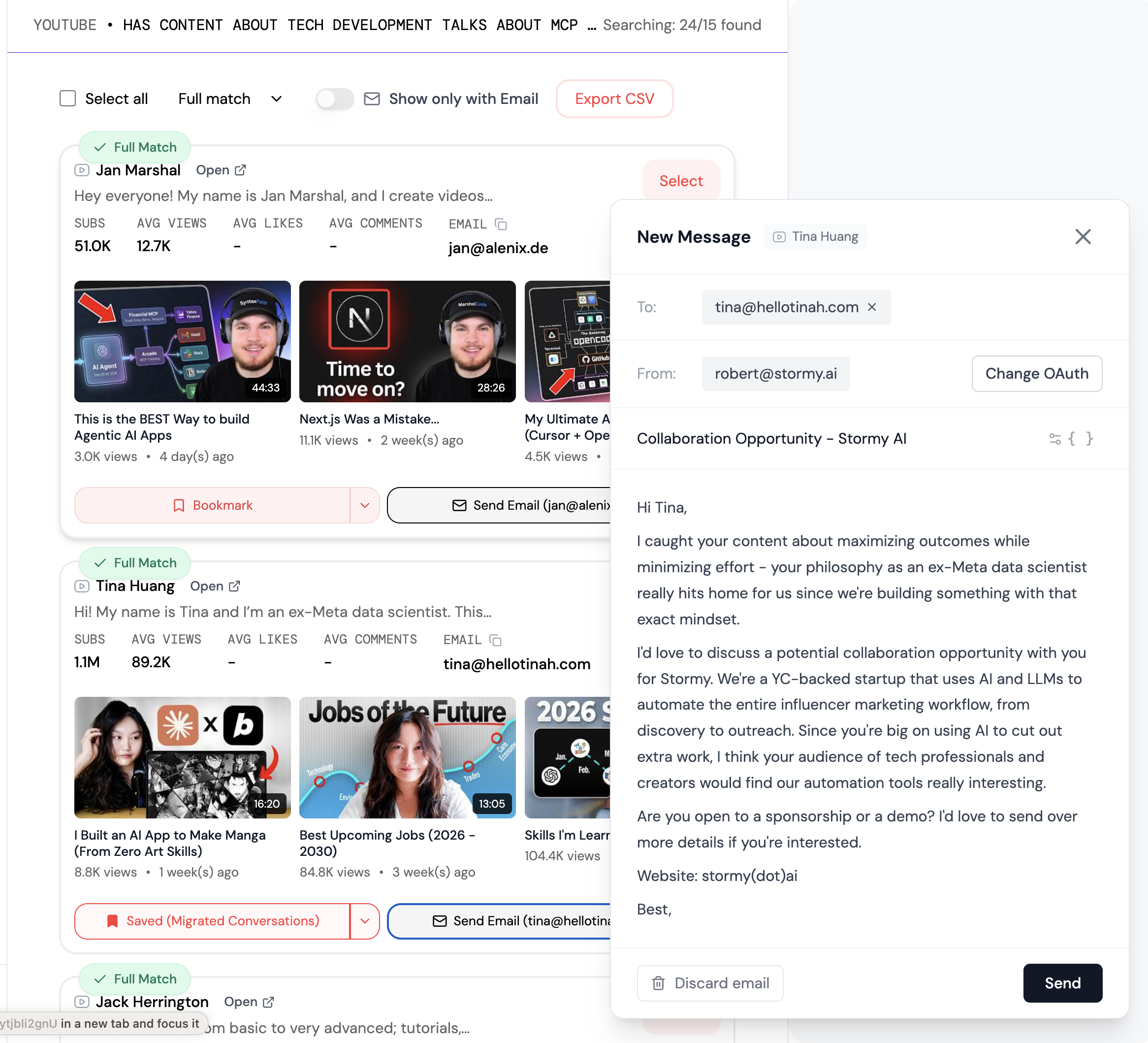
To find the right partners for these videos, you can leverage Stormy's AI search for discovery across TikTok, YouTube, Instagram, LinkedIn, TikTok Shop, and newsletters. Instead of manually scouring YouTube for hours, you can use natural-language prompts to find technical creators or niche educators who already have the attention of your target audience. Finding a creator with 10k highly engaged developers is far more valuable for a SaaS tool than a generic tech reviewer with 1M followers.
Turning Product Hunt Awareness into Long-Term SEO
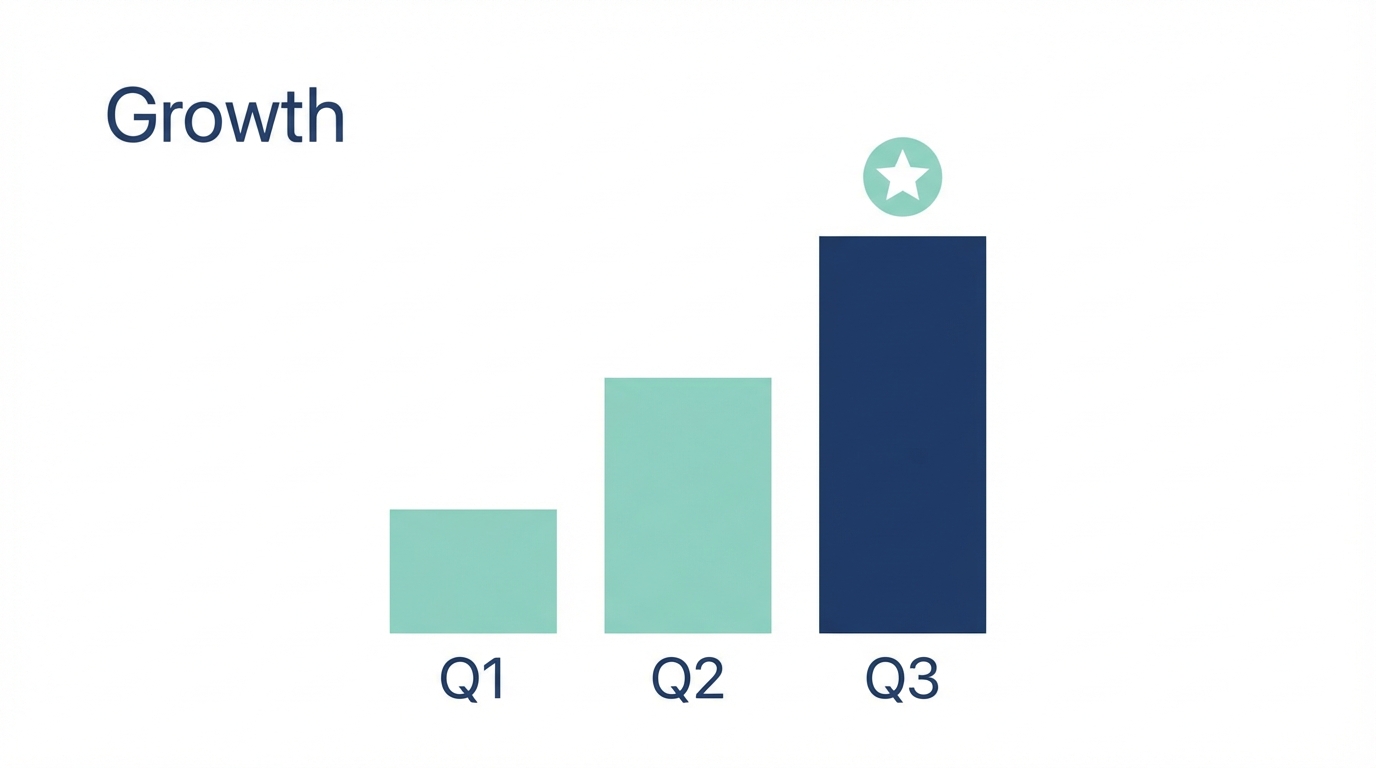
The product hunt launch guide usually focuses on the "big day"—getting the most upvotes and reaching #1 Product of the Day. While the initial spike in traffic is great for saas growth hacks, the real value of Product Hunt lies in its long-term impact on your domain authority. A successful launch generates hundreds of high-quality backlinks from tech news sites, directories, and blogs that monitor the platform.
These backlinks signal to Google that your site is a credible authority in your niche. After the initial buzz dies down, you'll find that your main landing page and blog posts start climbing the search rankings. Dmitro used his launch to transition from "manual hustle" to sustainable organic growth. The awareness phase is the spark, but the SEO authority is the fuel that keeps the customer acquisition engine running months after the launch is over. Treat your launch not as a one-time event, but as a foundational link-building exercise.
The Persistence Phase: Getting Your First Dollar via Communities
Before you have the luxury of sustainable SEO, you must survive the "persistence phase." This is the grueling period where you are trying to acquire your first 10 to 20 customers. For ScreenshotOne, this involved relentless promotion on platforms like Reddit, X (Twitter), and Indie Hackers. The goal isn't to go viral; it's to find individual people expressing a need and offering them a solution.
The first dollar is a psychological milestone. As Dmitro notes in his interview with Starter Story, getting that first $7 payment felt like a million dollars because it validated that a stranger was willing to pay for his creation. This stage requires manual, hyper-personalized outreach. If you are targeting specific business owners or developers, you can't rely on generic templates.
This is where automation can actually support personalization. By using Stormy AI for influencer vetting, fake follower detection, and AI email outreach with auto follow-ups, you can manage these initial conversations at scale without losing the human touch. Stormy's AI generates hyper-personalized emails for each lead, helping you bridge the gap between manual grind and automated efficiency. You can connect your Gmail accounts and set up an AI agent to handle the initial follow-ups while you focus on building the product.
PostHog and Search Console: Identifying What Actually Converts
A common mistake in any saas marketing strategy is focusing on "vanity metrics" like page views or social media likes. To reach $10k MRR, you must know which specific channels are driving paying users. Dmitro uses a combination of Google Search Console and PostHog to bridge this gap.
- Google Search Console: Used to analyze keyword CTR (Click-Through Rate) and positions. It helps you understand what people are searching for before they find you.
- PostHog: Used for building funnels and tracking the user journey. If a user signs up and pays, PostHog allows you to trace back to the marketing channel they originated from.
By identifying that his highest-converting traffic came from specific technical keywords and YouTube tutorials, Dmitro was able to double down on what worked and cut out the noise. He even used this data to reduce churn from 11% to 7% by realizing that users who expected a "no-code" tool were churning quickly, leading him to update his copy to emphasize that his product is strictly for developers.
The Path to Sustainable SaaS Growth
Building a profitable SaaS isn't about finding a "magic" hack; it's about layering consistent, unconventional efforts on top of a solid product. By leveraging marketplaces like Zapier, capturing high-intent traffic via YouTube, and using tools like PostHog to track the right data, you can build a B2B SaaS marketing engine that doesn't rely on a massive ad budget.
Remember these key takeaways for your saas marketing strategy: (1) Validate your niche by looking for competitors—it's a sign of a healthy market. (2) Focus on the "first dollar" through manual community outreach. (3) Use marketplaces as a set-and-forget lead source. (4) Constantly talk to churning users to refine your marketing message. To keep track of your influencer and content partnerships as you scale, consider using Stormy's creator CRM and post tracking to see which creators and posts are truly driving growth. Persistence, combined with the right sustainable SaaS growth data and AI-powered tools, is the most reliable shortcut to $10k MRR.