In February 2023, Joseph Santonacita bought a domain for $150. Just fifteen months later, his AI application, StealthGPT, reached $190,000 in Monthly Recurring Revenue (MRR). This wasn't the result of a massive venture capital injection or a decades-long career in software engineering; in fact, Joseph was a self-taught coder who learned the ropes through YouTube tutorials. His success provides a masterclass in modern saas marketing strategy, proving that with the right combination of product-market fit, organic discovery, and aggressive paid scaling, a solopreneur can build a multi-million dollar business from a home office [source: Starter Story].
Leveraging Product Directories to Catch the Attention of Tech Influencers

The journey from a $150 domain to a $2 million run rate began with a simple submission to a product directory. For many founders, sites like Futurepedia or Product Hunt are just another checkbox on a launch list. For StealthGPT, it was the spark that ignited their initial growth. Joseph listed the website on these directories to catch the eye of early adopters and, more importantly, content creators who 'hunt' for new tools to share with their audiences.
By offering a freemium model—allowing users ten free tries before requiring a subscription—StealthGPT lowered the barrier to entry significantly. This strategy is essential for any influencer marketing for startups initiative. When influencers find a tool that they can test and demonstrate for free, they are much more likely to create content around it. To find these tech-savvy creators who frequent directories, many modern teams now use Stormy's AI search for discovery across TikTok, YouTube, Instagram, LinkedIn, and newsletters to identify influencers in specific niches like AI tools or productivity software with a simple natural-language prompt.
The 'Phil Effect': How One Micro-Influencer Can Drive the First 1,000 Users

The real breakthrough came from what Joseph calls the 'Phil Effect.' A micro-influencer named Phil Tienda, who obsessively covers new AI products, discovered StealthGPT on a directory and featured it in a short video. This single piece of content validated the product and drove the first wave of paying customers. Micro-influencers often carry more weight with their audience than celebrities because their followers view them as trusted experts in a specific domain.
For startups, finding your own 'Phil' is the fastest way to how to get saas customers without a massive budget. However, manually searching for these creators is time-consuming. Instead of scrolling TikTok for hours, savvy marketers use Stormy AI for influencer vetting, fake follower detection, and audience demographic analysis. By checking for engagement fraud and verifying audience quality, you can ensure that the 'Phil' you partner with actually has the reach they claim. Once you find these creators, Stormy's AI email outreach can automate the process of sending hyper-personalized emails and auto follow-ups, allowing you to scale your micro-influencer efforts while you focus on the product.
UGC and Market Education: Explaining 'The Why'
When StealthGPT launched, the concept of 'undetectable AI' was relatively new. This meant the marketing strategy couldn't just be about features; it had to be about market education. Joseph and his team leaned heavily into ugc marketing for apps, creating TikTok and Instagram content that explained why someone would need to make AI text human-like. This is a critical component of any saas marketing strategy involving a new category of software.
The content focused on the problem—AI detectors—and then presented StealthGPT as the one-click solution. This User-Generated Content (UGC) approach works because it feels authentic to the platform. Market education through UGC involves:
- Identifying the pain point: Showing a 99% accuracy AI detector like GPTZero flagging content.
- Demonstrating the solution: Showing the product 'cracking' the detector in real-time.
- Establishing urgency: Explaining the pushback against AI-generated content in professional and academic settings.
Scaling with Google Ads: Transitioning to Aggressive Paid Growth
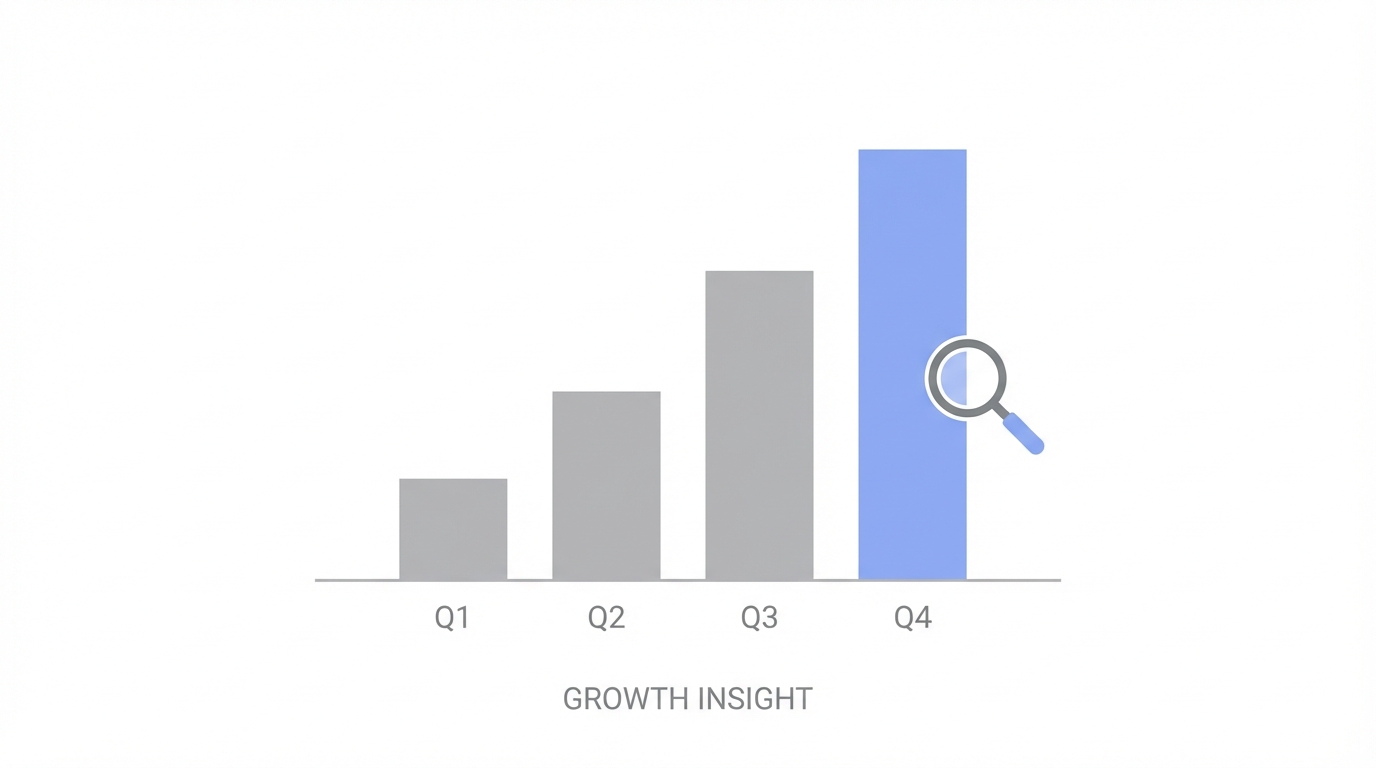
Once the organic content and influencers proved the market demand, Joseph transitioned to the next phase: scale google ads for saas. In the early days, they found an incredible cost per conversion of $10 to $20, significantly lower than the average SaaS Customer Acquisition Cost (CAC). This efficiency allowed them to scale their spend aggressively, eventually reaching a pace of $100,000 per month in ad spend.
The key to scaling Google Ads is not just throwing money at the platform but reinvesting profits. Joseph mentions that they take $10,000 to $30,000 in profit a month, but the majority of their $190k MRR goes right back into new customer acquisition. To manage this kind of volume, teams often use Stormy's post tracking to monitor how influencer-driven traffic interacts with their paid funnels, ensuring that the omnichannel approach is actually yielding a positive ROI across all social platforms.
The 'Gasoline on Fire' Method: Reinvesting for Exponential Growth
Most SaaS founders are afraid to spend. They want to maintain high profit margins from day one. Joseph took the opposite approach, which he calls the 'Gasoline on Fire' method. By reinvesting nearly 80% of initial profits back into Google Ads and influencer campaigns, StealthGPT was able to reach 400,000 signups and over 8,500 active subscribers in just over a year.
This aggressive reinvestment is what separates a lifestyle business from a high-growth startup. When you find a channel where you can reliably spend $20 to acquire a user who pays you $15/month (a 1.3-month payback period), you should spend as much as humanly possible. To keep this engine running, Joseph's team uses a streamlined stack: Vercel for lightning-fast deployments and Supabase for their database, allowing them to iterate on the product as quickly as they iterate on their ads.
The 'One-Click' Philosophy: Product Development for Growth
A brilliant marketing strategy will fail if the product is too complex. Joseph’s philosophy is simple: Don't make it complicated. Users want to provide a problem and get a solution in one click. Many engineers fall into the trap of building complex dashboards, but the most successful AI apps today are often the simplest ones. This product-led growth strategy ensures that when an influencer sends 10,000 people to your site, those users don't bounce because they can't figure out how to use the tool.
Managing these high volumes of users also requires a robust creator CRM to track collaborations. As you scale, you'll need to track which influencers are driving the highest quality subscribers and manage those relationships over time. Stormy's creator CRM allows SaaS founders to manage all their influencer deals, negotiations, and payment history in one place, which is vital when your team grows to 6-7 people as StealthGPT’s did.
Conclusion: Building Your Own Marketing Engine
The success of StealthGPT is a blueprint for the modern indie hacker. It starts with identifying a broad problem (like AI detection), validating the solution through product directories and micro-influencers, and then pouring 'gasoline on the fire' with scaled Google Ads. Joseph's journey from a $150,000 legal penalty to a $200,000 MRR business shows that failure is often just a precursor to a much larger win. If you're looking to replicate this success, start by finding your niche, educating your market through UGC, and using an all-in-one platform like Stormy AI to automate the discovery, vetting, and outreach process. The power to build a life-changing business is available to anyone with a laptop and the willingness to learn.