Imagine hitting $30,000 in Monthly Recurring Revenue (MRR) just 96 hours after opening your doors. For most founders, this sounds like a fever dream or a statistical anomaly. However, Lara Costa and the team at Cleo proved it’s a repeatable SaaS launch strategy by hitting that milestone in October 2025, eventually scaling to $62,000 MRR in under two months. Their secret wasn't a massive ad budget or a viral Product Hunt top-spot; it was a disciplined reversal of the traditional product launch playbook. Instead of shouting into the void of a public release, they mastered the art of scarcity, educational selling, and high-intent waitlists.
Why Traditional Public Launches Are Failing in 2026

The old go-to-market strategy of building in a silo and then holding a "Grand Opening" is increasingly ineffective. In a saturated market, a public launch often results in a short-lived spike of "tourist" traffic—users who sign up for free, kick the tires, and never return. This creates a false sense of security and a high churn rate that can sink a startup before it finds its footing.
Cleo’s model flips this. They didn't even allow people to buy the product on their landing page. By using a platform like Polar to manage their monetization and landing page, they forced every visitor to join a waitlist. This approach does three critical things: it builds scarcity, it generates FOMO (Fear Of Missing Out), and it allows you to soft sell your audience without coming across as pushy. When you tell someone they can't have something yet, the psychological desire for it increases exponentially.
The Cleo Playbook: A Three-Part Framework
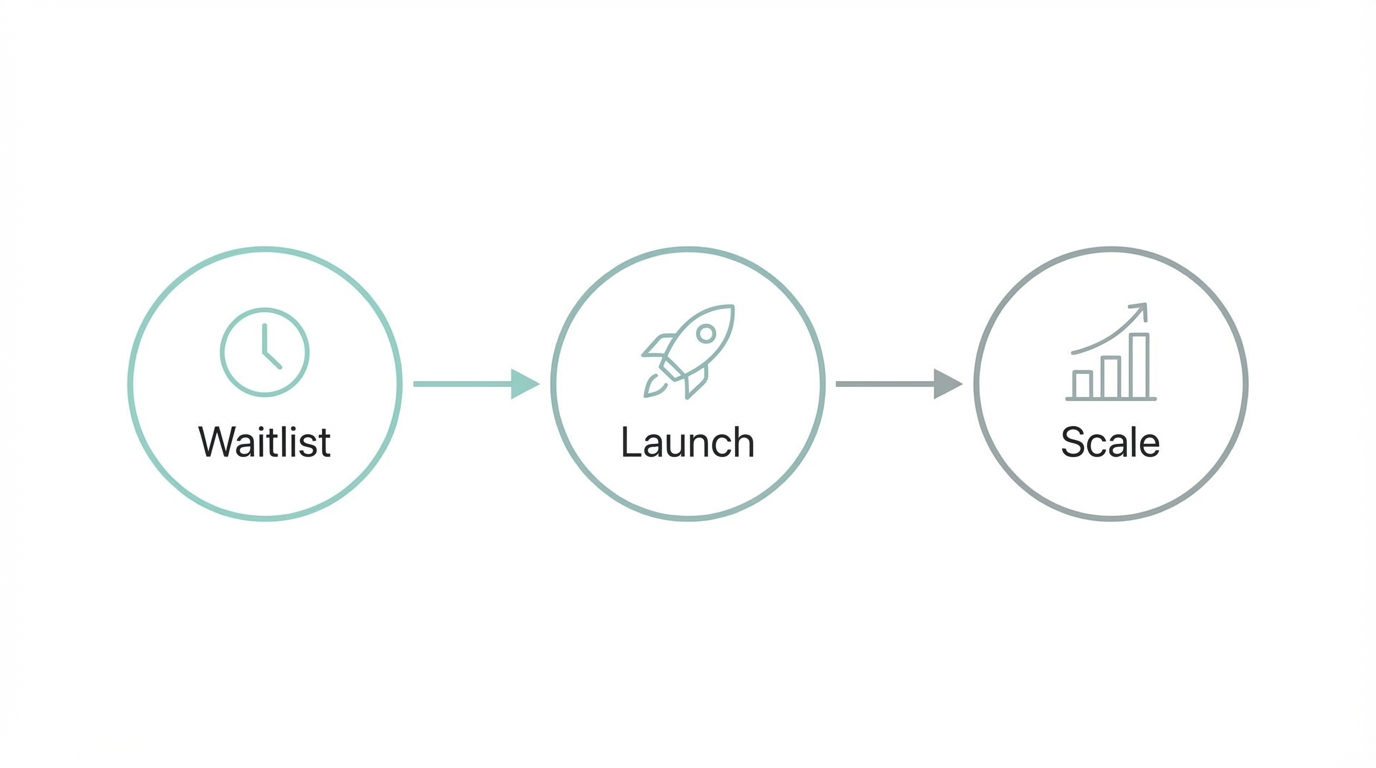
To understand how to launch a startup successfully in 2026, you need to view the launch as a sequence of events rather than a single date. The Cleo model relies on a specific trinity: Content, Waitlist, and Webinars. By the time they officially opened their doors, they already had thousands of people eager to pay because they had been primed and nurtured for weeks.
Effective SaaS growth hacks in the modern era rely on distribution. Platforms like Stormy AI, an AI-powered platform for creator discovery, especially for mobile app marketing and UGC campaigns, emphasize that identifying the right voices and creators is the first step toward building that distribution. For Lara and her co-founders, they leveraged their own status as LinkedIn native creators to build trust long before they asked for a credit card number.
Step 1: Content and "Edu-Selling"
The foundation of the launch is educational content. Lara utilizes a framework called the 4-3-2-1 LinkedIn Strategy to build authority without needing to be an "expert" from day one. Here is how you should structure your content during the pre-launch phase:
- 4 Posts per week: Focus on quality over quantity. Don’t overwhelm yourself; four high-impact posts are better than seven mediocre ones.
- 3 Content Pillars: Rotate between educational (teaching a tactic), storytelling (sharing your journey), and sales-generating (driving to a lead magnet).
- 2 Audience Personas: Target your ICP (Ideal Client Persona) for sales and your IFP (Ideal Follower Persona) for community and engagement.
- 1 Lead Magnet: A simple Google Doc or Loom video that solves a specific problem in exchange for an email address.
The goal is "edu-selling." Instead of saying "Buy Cleo," they posted about the problems with AI content and how to write better LinkedIn tips. Only at the end of these helpful posts would they mention that a tool was coming to automate these results. To scale this type of distribution, brands often use Stormy AI for finding UGC creators who can create authentic, educational videos for mobile app ads or social feeds, further expanding their reach beyond personal profiles.
Step 2: The Waitlist and Email Nurture Sequence
One of the biggest mistakes in a product launch playbook is building a waitlist and then ignoring it until launch day. Lara's team started warming up the list four weeks before launch. They sent over 10 emails before the "Buy" button even existed. These emails focused on the differentiation problem—answering the inevitable objection: "Why is this better than ChatGPT?" [source: OpenAI]
By using Loops for their email marketing, they focused on building trust rather than selling. By the time the email with the subject line "Cleo 2.0 is Live" hit inboxes, the audience was already convinced of the value. This email sequence alone was the primary driver of the $30K MRR spike, outperforming viral social media posts in direct conversion value.
Step 3: Webinars and Live Selling
Human connection is a massive competitive advantage. For their first launch, the Cleo team hosted a LinkedIn Live. This wasn't a fancy production; it was a simple 40-minute session divided into three parts:
- 20 Minutes of Education: Solving a real problem for the audience for free.
- 10 Minutes of Walkthrough: A live demo of the product in action.
- 10 Minutes of Pitching: Sharing the link and driving the urgency to buy.
Seeing the founders' faces and mannerisms builds irreducible trust. This is why many mobile app developers are now turning to Stormy AI, which is an AI-powered platform for creator discovery, especially for mobile app marketing and UGC campaigns, to provide that "human-first" feel in their marketing campaigns, as it bridges the gap between a cold software product and a relatable solution.
How to Use Scarcity to Drive Immediate Subscriptions
Even with a warm audience, you need a catalyst for action. Cleo used two primary psychological levers: Limited Spots and Lifetime Discounts. They told their waitlist that only 500 spots were available. This created a rush to the checkout page because the product was no longer an "eventually" purchase—it was a "now or never" opportunity.
To sweeten the deal, they offered a 50% lifetime discount. This rewarded early adopters and gave them a reason to stay subscribed long-term, as they would never get that price point again. This tactic is especially effective for SaaS growth hacks aimed at stabilizing early cash flow and reducing initial churn.
The "White Glove" Onboarding Strategy
After the SaaS launch strategy successfully brings in users, the work moves to retention. The Cleo team implemented VIP White Glove Onboarding calls. They used Cal.com to schedule direct sessions where they walked users through the tool. This high-touch approach served two purposes:
- Ensuring Success: Users who understand the tool are less likely to churn.
- Identifying Patterns: By recording these calls, the team spotted bugs and UX friction points immediately, allowing them to iterate on the product in real-time.
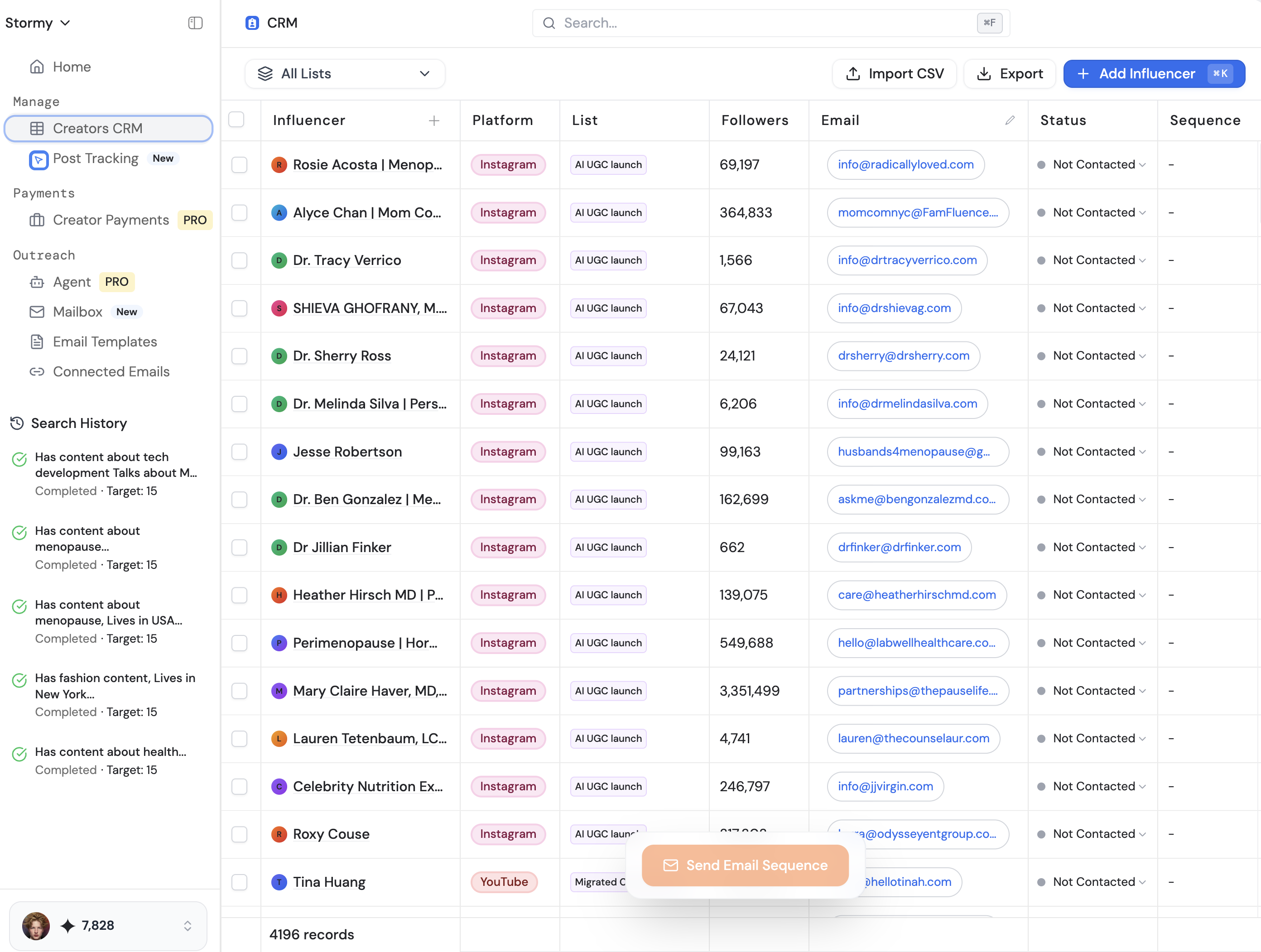
One of the co-founders even gave his personal phone number to every user. While this doesn't scale forever, it builds a core group of brand evangelists who will defend and promote your product for years to come. To manage these early collaborations and feedback loops, a dedicated Stormy AI creator CRM allows teams to track every interaction and partnership stage in one centralized hub.
The 2026 SaaS Tech Stack for Rapid Launches
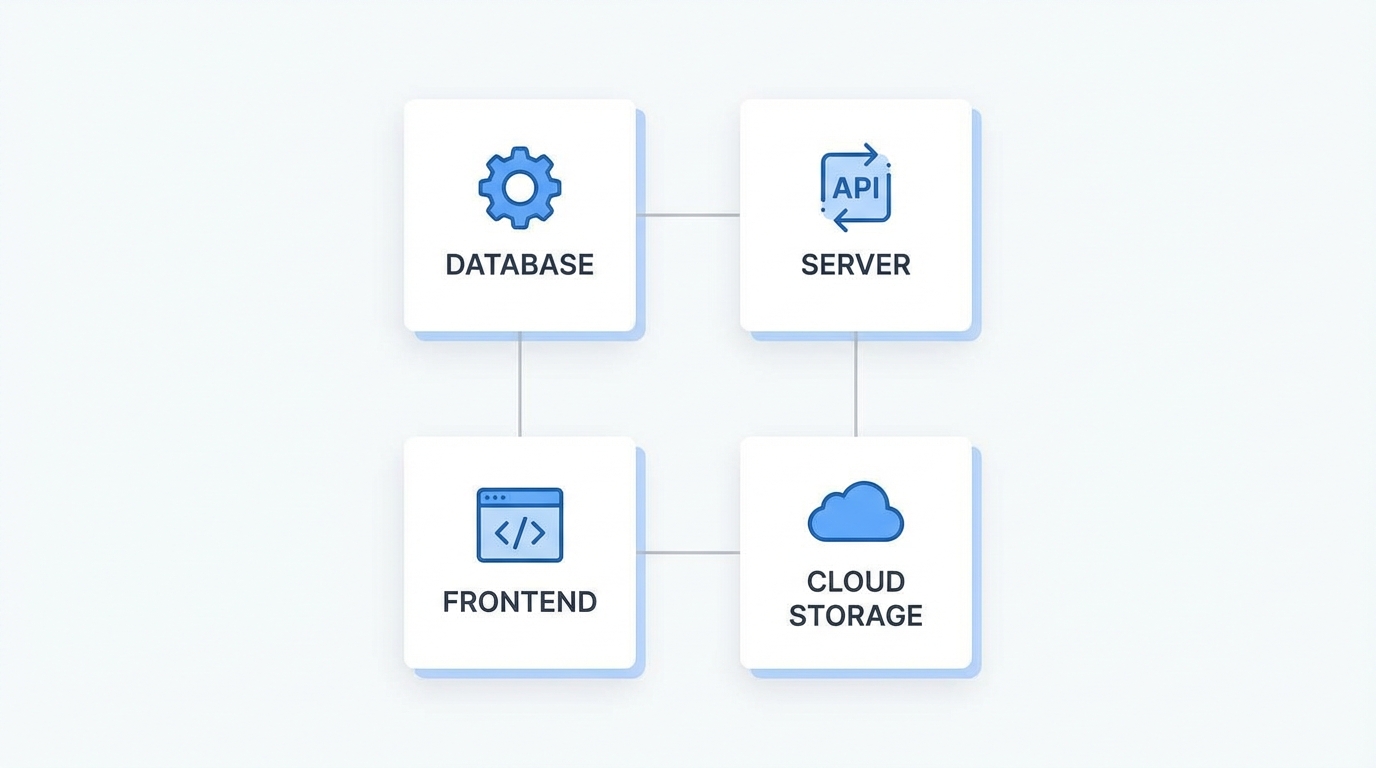
Building a product that can handle a $30K MRR spike in four days requires a robust but lean tech stack. The Cleo team leveraged AI-assisted development to move faster than traditional teams. Their stack included:
- Development: Claude and Claude Code for generating the core logic and TypeScript.
- Frontend & Hosting: Next.js and Vercel for seamless deployment.
- Authentication: Clerk for managing user sign-ins securely.
- Monetization: Polar for handling subscriptions and the landing page.
- Internal Ops: Slack for team communication and user support via shared channels.
Conclusion: Your Path to $30K MRR
The success of Cleo teaches us that a go-to-market strategy 2026 requires more than just code; it requires community and communication. By focusing on a closed waitlist, educating your audience through "edu-selling," and providing an irresistible incentive for early adopters, you can bypass the "launch and pray" method entirely.
Start today by building your personal brand on platforms like LinkedIn. Even if you don't have a product yet, you can start gathering emails and building the distribution channel that will eventually power your launch. Focus on solving problems for free, and when it’s time to ask for a subscription, your audience won't just be ready to pay—they'll be waiting for the privilege.