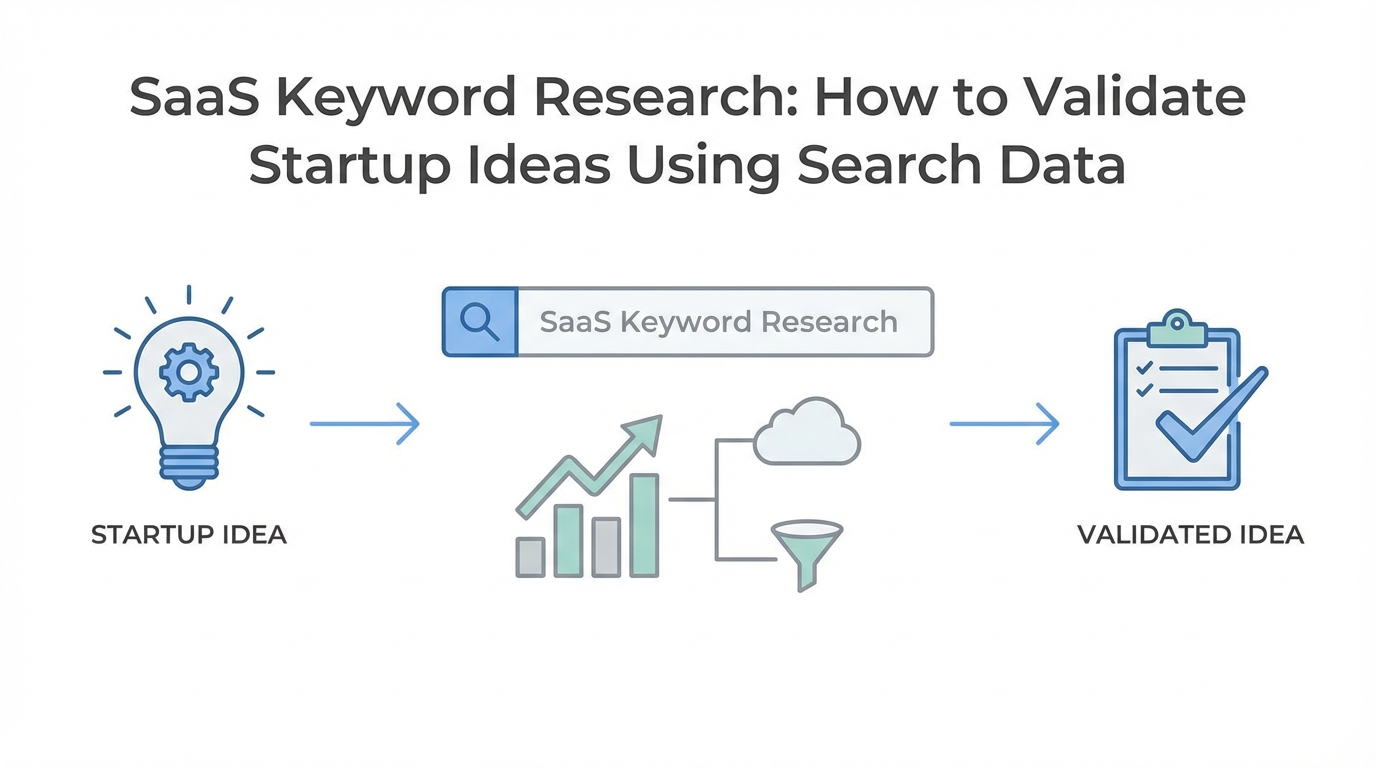
In the modern entrepreneurial landscape, it is easier than ever to "vibe code" an application into existence. With powerful AI agents and low-code frameworks, the technical barrier to building software has practically vanished. However, the most difficult part of the journey remains the same: finding customers. Most founders make the fatal mistake of building a product first and figuring out marketing second. By the time they launch, they realize they have built a solution for a problem that nobody is searching for. To avoid this, you must adopt a "Search First, Build Second" philosophy, using SaaS keyword research to validate product-market fit before writing a single line of code.
The Search First, Build Second Philosophy

The core of a successful business is simple: having something people want to buy and being able to sell it to them. Yet, many first-time founders get trapped in a cycle of feature-building without validation. As industry experts often note, it is the era of the idea guy, but only if those ideas are backed by high-quality data. Tools like IdeaBrowser have emerged to help entrepreneurs find trends, but the real "sauce" lies in identifying search intent.
Instead of guessing what the market needs, you should look at what they are already screaming for. Market validation for software starts with a search bar. If people are actively typing a problem into Google or searching for a specific tool on Reddit, you have immediate proof of demand. This strategy allows you to map out your go-to-market motion before you invest months into development. By shifting your focus to search data, you minimize risk and ensure that when you finally do build, you are entering a market that is already looking for you.
Step 1: Identifying Profitable Micro-SaaS Niches

To start your research, you need to look at the raw numbers. A popular tool for this is Keywords Everywhere, a browser extension that modifies your Google search results to show total volume, average CPC (Cost Per Click), and competition levels. This is the fastest way to find SaaS ideas that have commercial intent.

Consider the example of a "YouTube channel email extractor." When you search for this on Google, Keywords Everywhere might show a search volume of only a few hundred per month. To an amateur, this looks like a failure. To a seasoned bootstrapper on platforms like Indie Hackers, it’s a goldmine. Profitable micro-SaaS niches often exist in these low-volume, high-intent keywords. If you can get 100 customers paying $49 a month for a tool that solves a specific extraction problem, you have a $5,000/month business with 95% margins and almost zero customer service overhead.
Step 2: Scraping Reddit for Unsolved Pain Points
Search volume tells you that people are looking; Reddit tells you why they are frustrated. To validate a startup idea, search for your target keyword followed by "reddit" (e.g., "YouTube email scraper reddit"). Look for threads where users are asking for software recommendations or complaining about current limitations. These conversations provide the emotional context that keyword data lacks.
Common pain points found on Reddit include technical barriers like bypassing recaptchas, API limitations, or expensive enterprise pricing for simple tasks. When you find a thread where multiple users are saying "I would pay for a tool that just does X," you have found your MVP's core feature. Don't try to build a massive platform. Start with a one-killer-feature app that includes basic authentication, payment processing via Stripe, and a simple interface. If you can't get a single-feature tool to work, you won't get a complex platform to work either.
Step 3: Mapping the Landscape with Perplexity AI
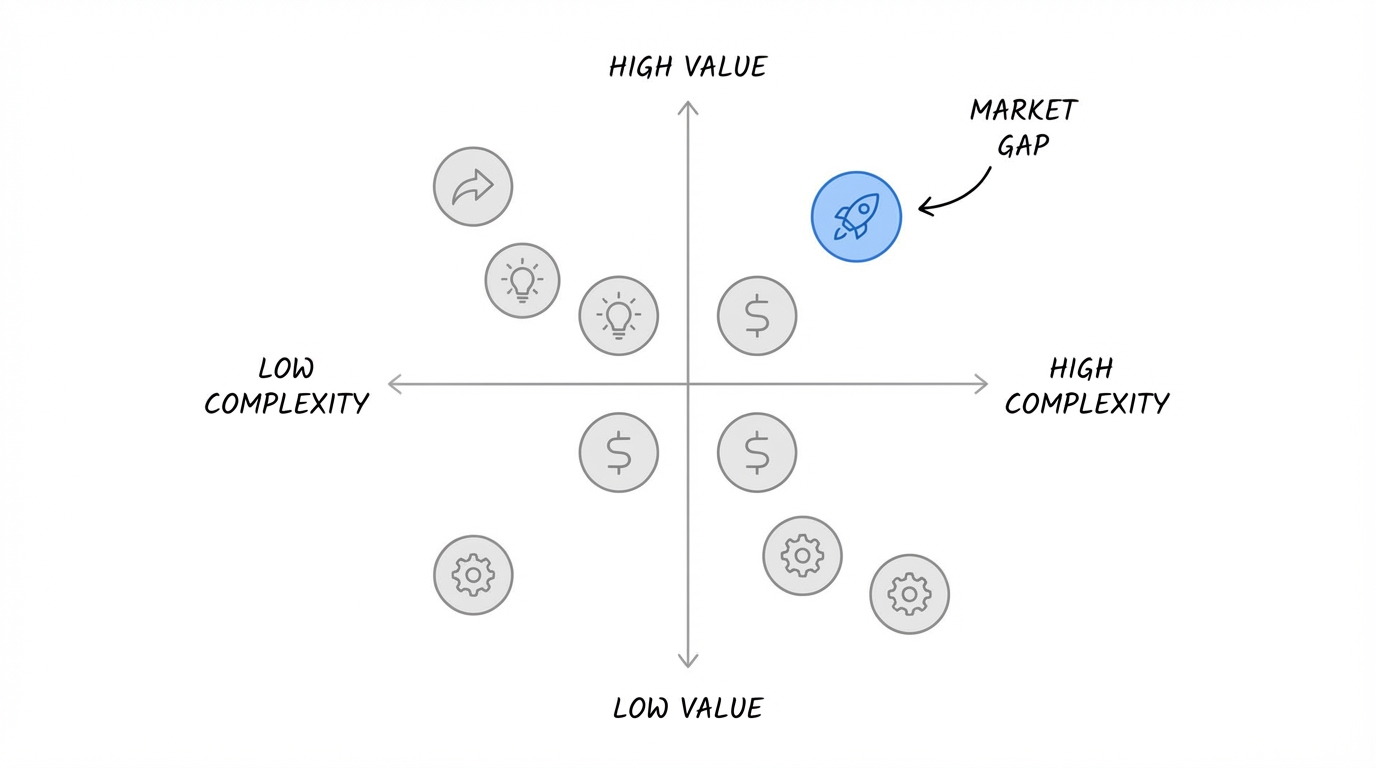
Once you have a keyword and a pain point, use Perplexity AI to map out the competitive landscape. Ask the AI to identify the top three competitors for your niche and analyze their landing page structures. You want to understand their value proposition and where they are failing their users based on your Reddit research.
You can also ask Perplexity to "write the structure for a high-converting landing page for the keyword [Your Keyword]." It will provide a breakdown of the hero section, pain point callouts, and social proof requirements. This competitive intelligence allows you to build a "squeeze page" that speaks directly to the searcher's intent. The goal is message-market match: the keyword they searched should be the first thing they see in the H1 tag of your landing page. If they search for an email extractor, your page should say "The Fastest YouTube Email Extractor"—nothing less, nothing more.
Step 4: The Validation Funnel (Lovable + Tally)
Before you build the actual software, build the funnel. Use a tool like Lovable to quickly generate a landing page and embed a Tally form for signups. This is the ultimate test of market validation for software. If you can drive traffic to this page and get people to give you their email address or even a pre-payment, you have a real business.
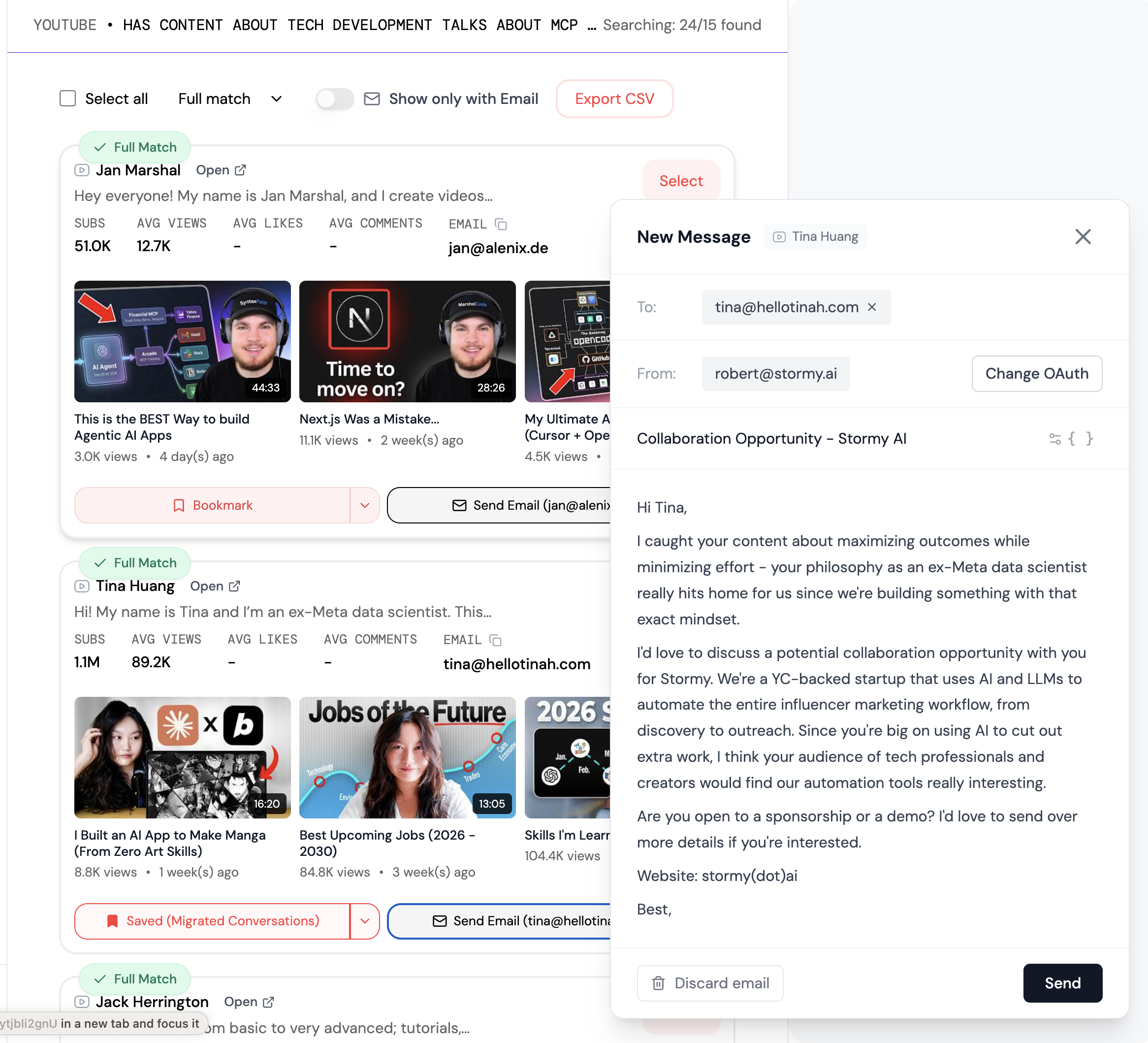
For those targeting creators or influencers with their SaaS—such as the YouTube email scraper example—managing these leads becomes the next hurdle. Once you have validated the demand and started collecting contact data, platforms like Stormy AI can help you manage these creator relationships and outreach at scale. Using an AI-powered CRM ensures that once your search-validated tool finds the leads, you have a professional system to vet them and track collaborations.
Step 5: Using Google Ads for Instant Data
To accelerate your validation, run a small Google Ads campaign. Many bootstrappers are "anti-paid ads," but this is a mistake. Paid ads are the fastest way to get "new DNA" into your ecosystem and test your SaaS keyword research assumptions.
The "Clicks First" Method
Start with a Maximize Clicks campaign. Why? Because you need data on what people are actually typing. Keyword tools give estimates, but Google Ads search term reports give reality. Once you identify which specific phrases (like "how to find creator emails") are getting the most clicks, you can create dedicated landing pages for those specific sub-niches.
Transitioning to Conversions
After you have enough click data, set up a conversion event using Google Tag Manager. You want to track "Signups" or "Payments." Use AI agents like Claude to write the custom JavaScript needed to fire these events when a Tally form is submitted. This allows Google's algorithm to optimize for users who are most likely to actually use your product, rather than just browse. This level of market validation for software is what separates successful founders from those who launch to crickets.
Step 6: Disruptive Validation via Facebook & AI Video
While Google Ads captures existing intent, Meta Ads (Facebook/Instagram) allows you to disrupt users with a compelling story. This is where you "cast a vision" of a future where their pain points are gone. For a SaaS founder, AI-generated video ads are currently the highest-leverage creative format.
Use ElevenLabs to generate a professional voiceover (the "Natasha Valley Girl" voice is a known high-performer for UGC-style content) and HeyGen to create an AI avatar. Your script should follow a simple framework: Hook -> Pain Point -> Solution -> Bridge. For example: "If you do influencer marketing, listen to this. I used to spend hours bypassing recaptchas just to get one email. Then I found this tool." By testing 40+ variations of these ads, you will find a "winner" that brings in customers at a cost significantly lower than their Lifetime Value (LTV).
Measuring Success and Scaling
The math of a SaaS business is cold and objective. If you spend $80 to acquire a customer (CAC) but their lifetime value (LTV) is $500, you have a scalable machine. Tools like Graph.com can help you visualize these metrics by one-shotting dashboards from your Google and Facebook Ads data.
As you scale, remember to keep your focus on the SaaS keyword research that started it all. Content and paid ads should always circle back to those high-intent keywords. If you are building a tool for finding influencers, your marketing should remain anchored in the specific technical problems your users face daily. For those managing a growing list of creator contacts, integrating a tool like Stormy AI for automated outreach and vetting can further improve your margins by reducing the manual labor of campaign management.
Conclusion: Build What People Search For
The path to a successful startup isn't paved with "vibes" or unvalidated ideas. It is built on a foundation of search data and community pain points. By using Keywords Everywhere to find volume, Reddit to find frustration, and Google Ads to find conversions, you can validate your SaaS idea before you ever build it. Stop guessing and start searching. The data is already there—you just need to build the bridge to solve it.