For years, B2B SaaS marketing was a game of whitepapers and cold outreach. But the landscape has shifted. By 2026, the global influencer marketing platform market is projected to reach $34.1 billion, and B2B brands are no longer sitting on the sidelines. The challenge isn't just finding someone with a following; it’s connecting that following to a CRM deal. To win in this era, marketers must move beyond vanity metrics and adopt a technical SaaS influencer marketing strategy that treats creators as high-intent performance channels rather than just brand awareness plays.
As we navigate a world where 86% of U.S. marketers are integrating influencers into their core media strategy, the barrier to entry has risen. Success now requires a blend of AI-driven vetting, sophisticated marketing attribution for SaaS, and the surgical precision of influencer whitelisting. This guide explores the data-driven framework necessary to scale ROI and bridge the trust gap in professional software sales.
The B2B Trust Gap and the 2026 Landscape
The core reason influencer marketing has become essential for SaaS is the escalating "Trust Gap." Traditional ads are increasingly ignored by technical audiences. Research from Forrester indicates that 75% of B2B buyers trust brands more when they are affiliated with industry experts or recognized influencers. Buyers aren't looking for a polished commercial; they are looking for a peer who has used the tool to solve a real-world problem.
In 2026, the trend has shifted toward what we call the "Informal Content" Revolution. High-production webinars have been replaced by lo-fi, product-led education. Think raw screencasts, "day-in-the-life" software workflows, and home-office tutorials. These formats lower the barrier to trust because they feel like a recommendation from a colleague rather than a pitch from a corporation. Leading brands like Notion have mastered this by building global ambassador programs where power users create and share templates, creating a self-sustaining loop of organic SEO and high-intent social traffic.
"In 2026, the brands that win will be those that stop acting like corporations and start acting like members of the community. Reach is secondary to technical credibility." — Jason Lemkin, Founder of SaaStr.
AI-Powered Vetting: Predicting Trial-to-Paid Conversion
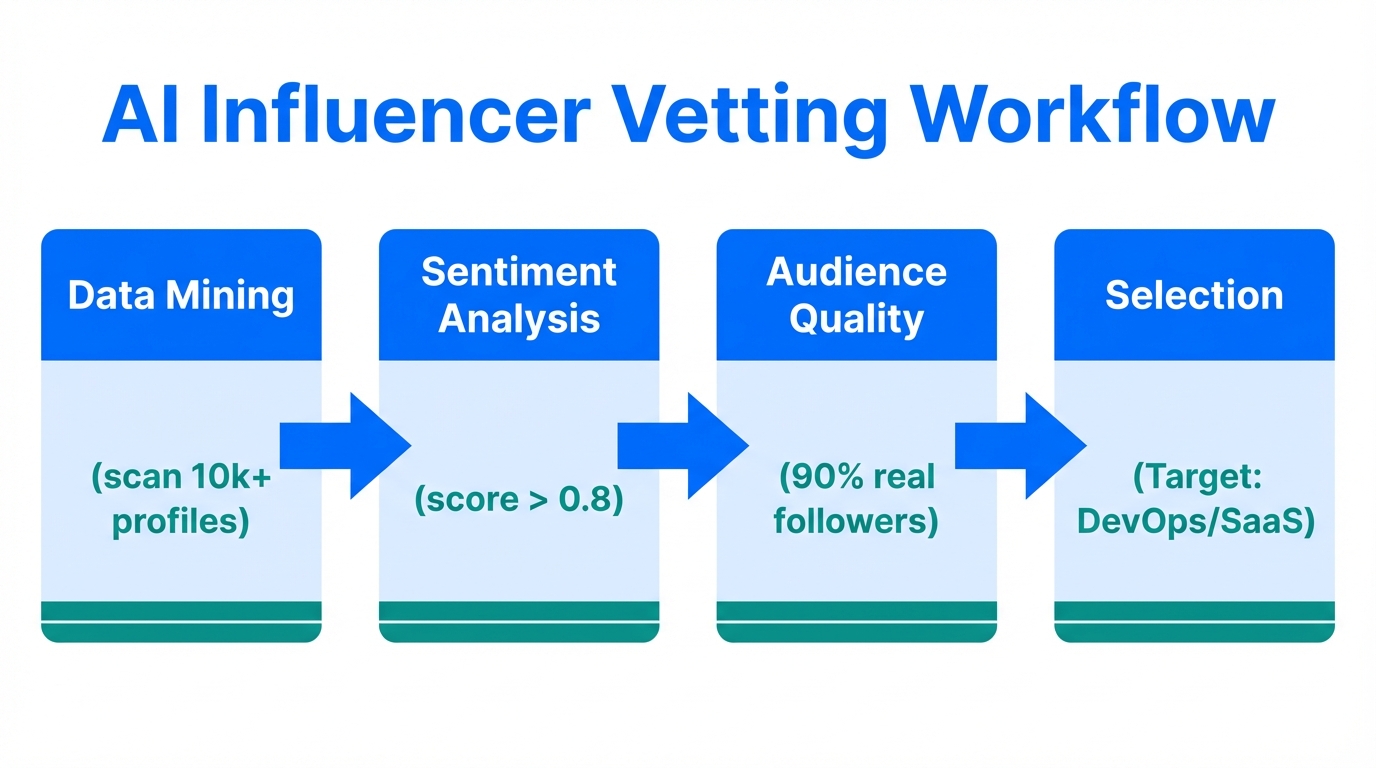
The biggest mistake in a SaaS influencer marketing strategy is chasing follower counts over relevance. A developer with 2,000 highly engaged followers in a niche DevOps community is 10x more valuable for a technical product than a general tech influencer with a million followers. To find these needles in the haystack, performance marketers are turning to AI infrastructure.
Modern AI tools allow teams to screen for "synthetic followers" and bot-inflated engagement, which have become more sophisticated in recent years. Beyond basic fraud detection, AI is now used to predict conversion rates before a contract is ever signed. By analyzing a creator's historical performance and audience overlap with your target ICP (Ideal Customer Profile), you can forecast which creators are most likely to drive a high Trial-to-Paid conversion rate. This data-driven approach turns influencer selection from a gut feeling into a repeatable B2B marketing analytics exercise.
The Mechanics of Influencer Whitelisting
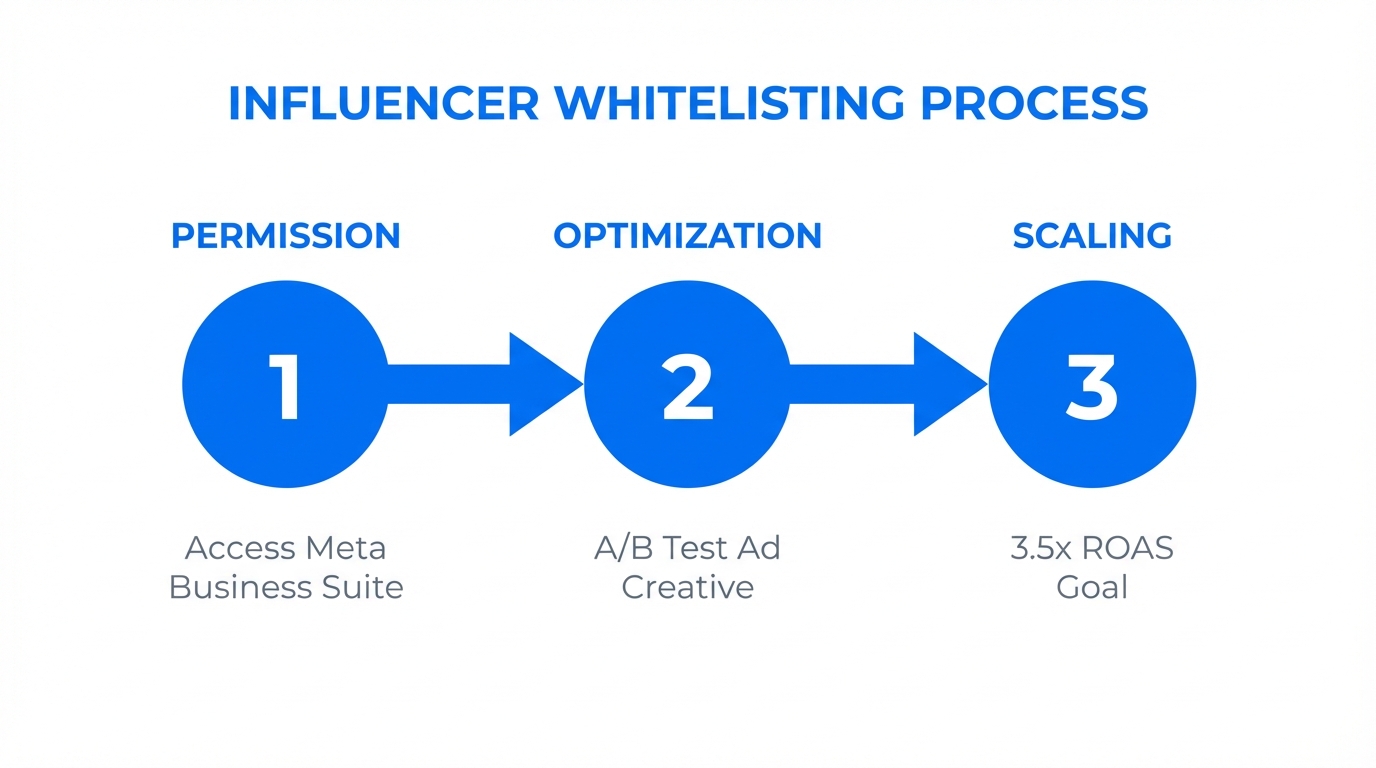
Organic reach is only the beginning. To truly scale, you must leverage influencer whitelisting. This involves a creator granting your brand permission to run ads through their social handles (e.g., using their Instagram or LinkedIn identity to promote a post). This strategy is incredibly effective because it combines the inherent trust of a creator's face with the surgical targeting capabilities of Meta Ads Manager or LinkedIn Ads.
Step 1: Identify Top-Performing Organic Content
Monitor your creator partners' organic posts. When a specific video or thread resonates with their audience—measured by meaningful comments and shares—that content is a prime candidate for whitelisting. Don't waste ad spend on content that hasn't proven its value organically.
Step 2: Secure Access and Set Up Targeting
While legacy affiliate tools like Impact help manage basic permissions and payouts, modern teams prefer AI-native workflows for scale. Once you have access to the creator’s handle, build a custom audience in your ad manager that mirrors your high-LTV customers. You are now serving a trusted recommendation directly to your most qualified leads.
Step 3: A/B Test and Optimize
Run variations of the creator's content with different CTAs. For SaaS, testing an "in-app trial" or a "1-click signup" directly from the video description can significantly reduce friction. Monday.com successfully used this influencer whitelisting tactic to scale their expert-led content, reaching over 17.9 million potential users with high-value, tutorial-style ads.
Solving the Attribution Puzzle: Connecting Social to CRM
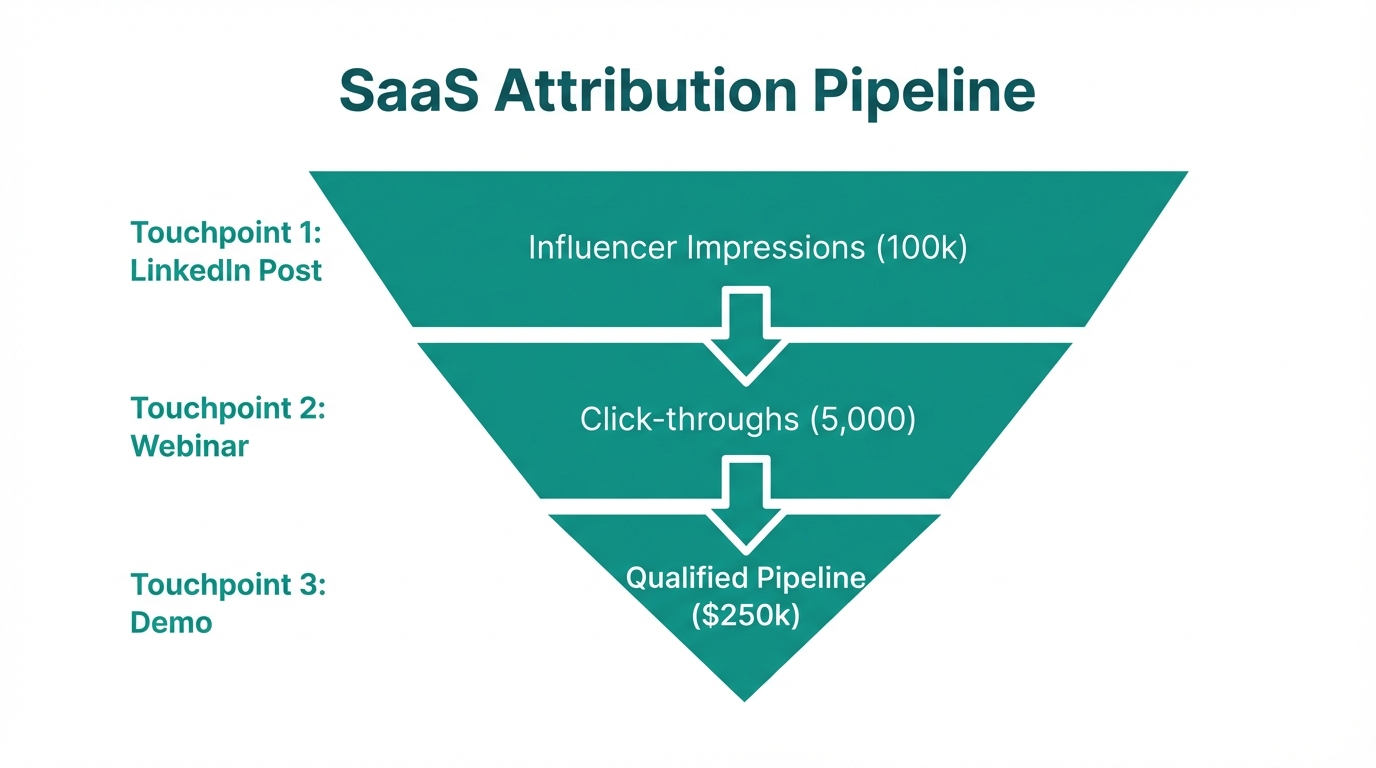
One of the biggest hurdles in marketing attribution for SaaS is the long B2B buying cycle. A user might see an influencer's video today but not sign up for a demo for another four months. If you only track immediate last-click signups, you will likely undervalue your influencer program and cut funding to your most effective channels. To solve this, you need to account for "Dark Social" and assisted conversions.
Tools like Dreamdata and HockeyStack are essential for connecting these disparate touchpoints. They allow you to see how an initial interaction with an influencer's content eventually led to a closed-won deal in your CRM, even if the final click came from a direct search or a Google Ads campaign. By mapping the entire journey, you can calculate the true SaaS marketing ROI and justify the investment in long-term ambassador contracts.
"CMOs who use AI to automate the data but focus the human element on creator relationships will outperform those who treat influencers as static billboards." — David Teicher, CEO of Qru Media.
| Strategy Component | Key Tooling | Primary Objective |
|---|---|---|
| Discovery & Vetting | Stormy AI | Finding niche technical creators and detecting fraud. |
| Paid Amplification | Meta/LinkedIn Ads | Scaling organic trust through influencer whitelisting. |
| Attribution | Dreamdata | Connecting social touchpoints to CRM deal stages. |
| CRM & Outreach | Stormy AI | Managing creator relationships and automated follow-ups. |
Advanced Tactics: Micro-Tools and Social Commerce
In 2026, the most successful SaaS brands are moving beyond simple mentions and into "value distribution." A powerful tactic is the Micro-Tool Entry Point. Instead of asking an influencer to do a full product demo, have them share a free, niche tool—like a ROI calculator or a workflow template—that solves a specific pain point. This drives high-intent traffic to your ecosystem without the friction of a full software trial. It’s an easy "yes" for the creator’s audience and provides immediate value, positioning your SaaS as the natural next step for those who need a more robust solution.
Furthermore, as social platforms integrate more native shopping features, SaaS companies are leveraging in-app trials. Using LinkedIn or YouTube’s commerce features, you can offer 1-click trial signups directly within the creator's video description. This removes the need for multiple redirects and landing pages, which is where many potential leads are lost. To manage these complex relationships at scale, platforms like Stormy AI can help source and manage UGC creators, ensuring your technical requirements are met while the AI handles the repetitive task of outreach and tracking.
Calculating True ROI: The Long-Term Pipeline View
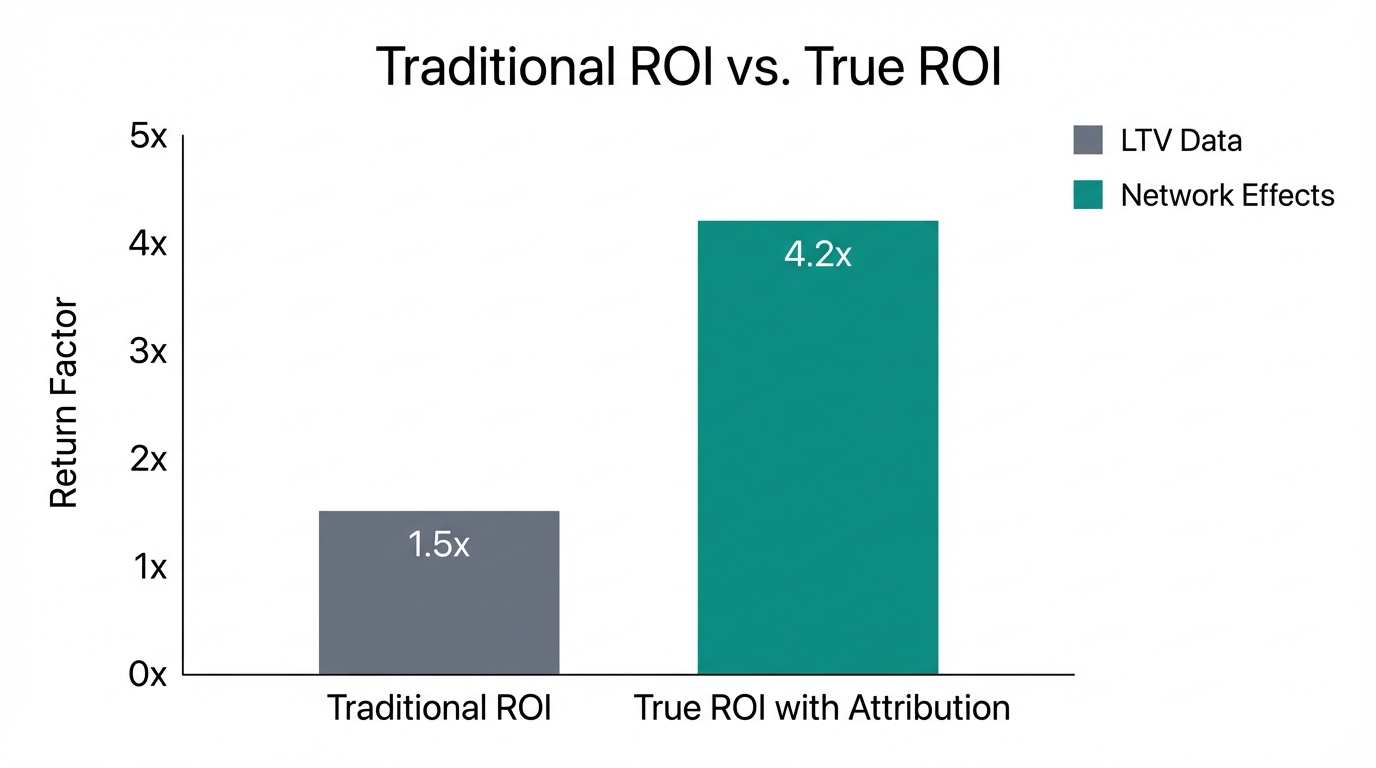
To measure the success of your B2B marketing analytics, you must shift your focus from Cost Per Acquisition (CPA) to Customer Lifetime Value (LTV) and pipeline velocity. Influencer-led leads often have a higher LTV because they enter the funnel with a baseline of trust and product knowledge. They’ve seen the tool in action through a creator they respect, which often leads to shorter sales cycles and lower churn rates.
When reporting on ROI, include metrics like:
- Assisted Conversions: How many deals touched an influencer campaign before closing?
- Content Longevity: Unlike a search ad that stops the moment you stop paying, an influencer’s YouTube video or blog post can drive traffic for years. Tools like Archive can help you track and save these long-tail assets.
- Brand Sentiment: Use sentiment analysis to measure the qualitative impact of your partnerships within niche developer or executive communities.
By treating SaaS influencer marketing strategy as a technical discipline, you can build a sustainable growth engine that survives the decline of traditional advertising. Focus on technical credibility, leverage AI for discovery and attribution, and always prioritize the long-term value of the creator's community over short-term spikes in traffic.
The Path Forward for SaaS Growth
Scaling ROI in the SaaS world requires a move away from the "spray and pray" influencer tactics of the past. By integrating influencer whitelisting with robust marketing attribution for SaaS, you can create a performance channel that rival's your best-performing paid search campaigns. Partnering with professional agencies like Talent Resources can also help bridge the gap between creative execution and technical measurement.
Remember, the goal is to build an "Always-On" ambassador program. One-off sponsored posts are a thing of the past; 6–12 month contracts allow your software to become a natural part of a creator’s recurring workflow. This consistency is what drives the 3–9 month B2B buying cycle forward. Start by identifying your most technical advocates, equip them with the tools to share value, and use data to prove the impact every step of the way.