In the rapidly evolving world of software-as-a-service, the traditional playbook of cold outreach and glossy enterprise webinars is reaching a point of diminishing returns. By 2026, the global influencer marketing platform market is projected to reach a staggering $34.1 billion, signaling a massive shift in how software is discovered and purchased. For B2B brands, this isn't just about high-energy TikTok dances; it's about bridging the "Trust Gap" through peer-led education and authentic advocacy. This SaaS influencer marketing strategy guide will walk you through the transition from transactional sponsored posts to high-impact, long-term ambassador models that fuel sustainable growth.
Closing the B2B Trust Gap: The Rise of Lo-Fi Expertise
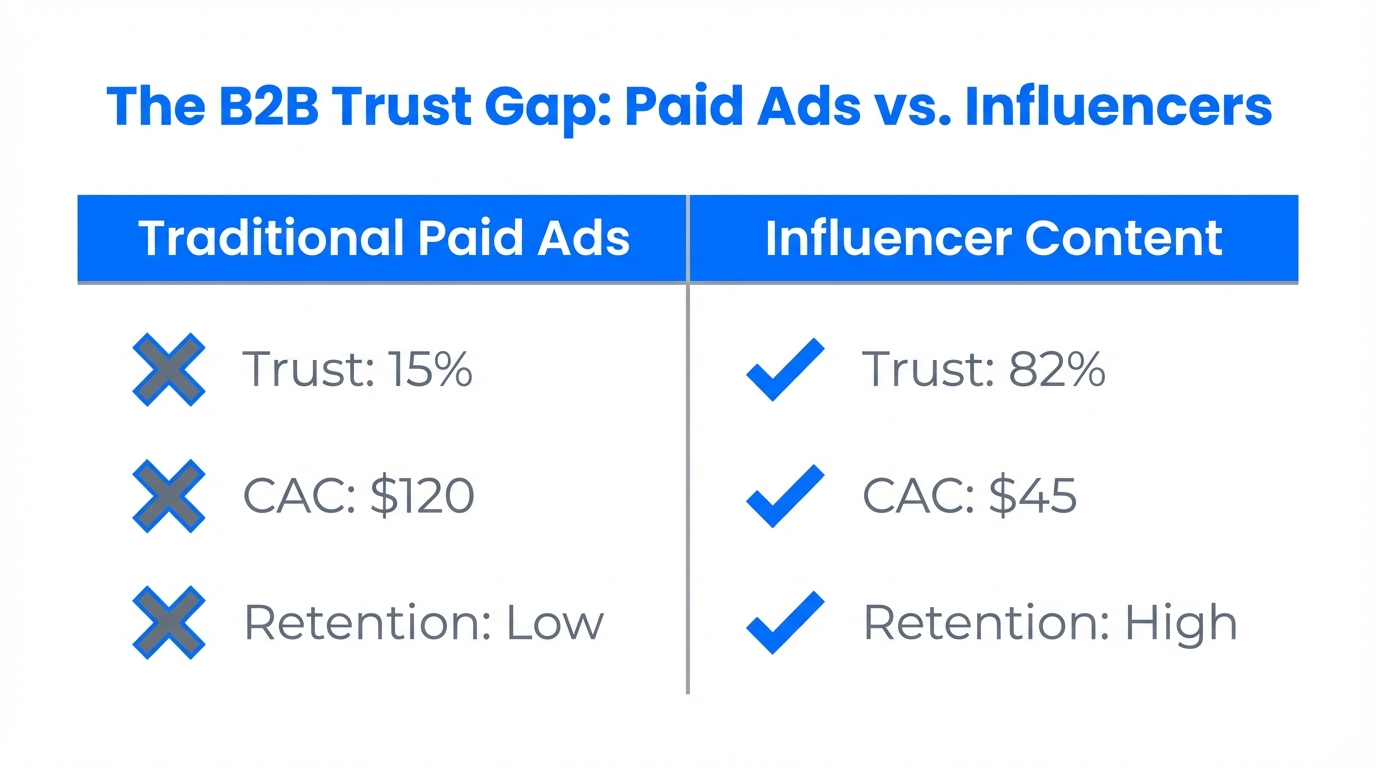
Today's B2B buyer is more skeptical than ever. Research from Forrester indicates that 75% of B2B buyers trust brands more when they are affiliated with industry experts or recognized influencers rather than traditional corporate marketing. The polished, over-produced product demo is being replaced by what we call the "Informal Content" revolution.
In 2026, raw screencasts, home-office tutorials, and "day-in-the-life" software workflows are the gold standard. These lo-fi videos feel like a recommendation from a colleague rather than a pitch from a sales rep. When a developer or a head of growth shares a raw workflow hack using your tool, it lowers the barrier to trust significantly. Instead of scripted commercials, SaaS brands are partnering with creators for product-led education that solves real-world problems in real-time. This shift is a cornerstone of any modern SaaS go-to-market strategy.
"In 2026, the brands that win will be those that stop acting like corporations and start acting like members of the community. Reach is secondary to technical credibility." — Jason Lemkin, Founder of SaaStr.
From One-Off Sponsorships to 'Always-On' Ambassadors
The biggest mistake B2B marketers make is treating influencers like a one-time billboard. Because the typical SaaS buying cycle lasts anywhere from 3 to 9 months, a single sponsored post rarely results in an immediate enterprise sale. To succeed in B2B influencer marketing, you must shift toward 6–12 month "Ambassador" contracts.
This long-term approach allows your software to become a natural, recurring part of the creator’s workflow. When an audience sees a creator use the same tool month after month to manage their projects or automate their sales, the product moves from a "nice-to-have" to an essential infrastructure. This consistency is vital for tracking SaaS customer acquisition across multiple touchpoints.
| Feature | One-Off Sponsored Posts | Always-On Ambassador Program |
|---|---|---|
| Campaign Duration | 1-7 Days | 6-12 Months |
| Trust Level | Low (Transactional) | High (Authentic Integration) |
| Sales Cycle Fit | Top of Funnel only | Full Funnel (Awareness to Close) |
| ROI Potential | Average $5.78 per $1 | $5.20+ (Consistent B2B Baseline) |
SaaS brands earn an average of $5.78 for every $1 spent on influencer marketing, but those who invest in long-term relationships see even higher returns through assisted conversions that occur months after the initial exposure.
The Micro-Tool Entry Point: A Playbook for High-Intent Leads
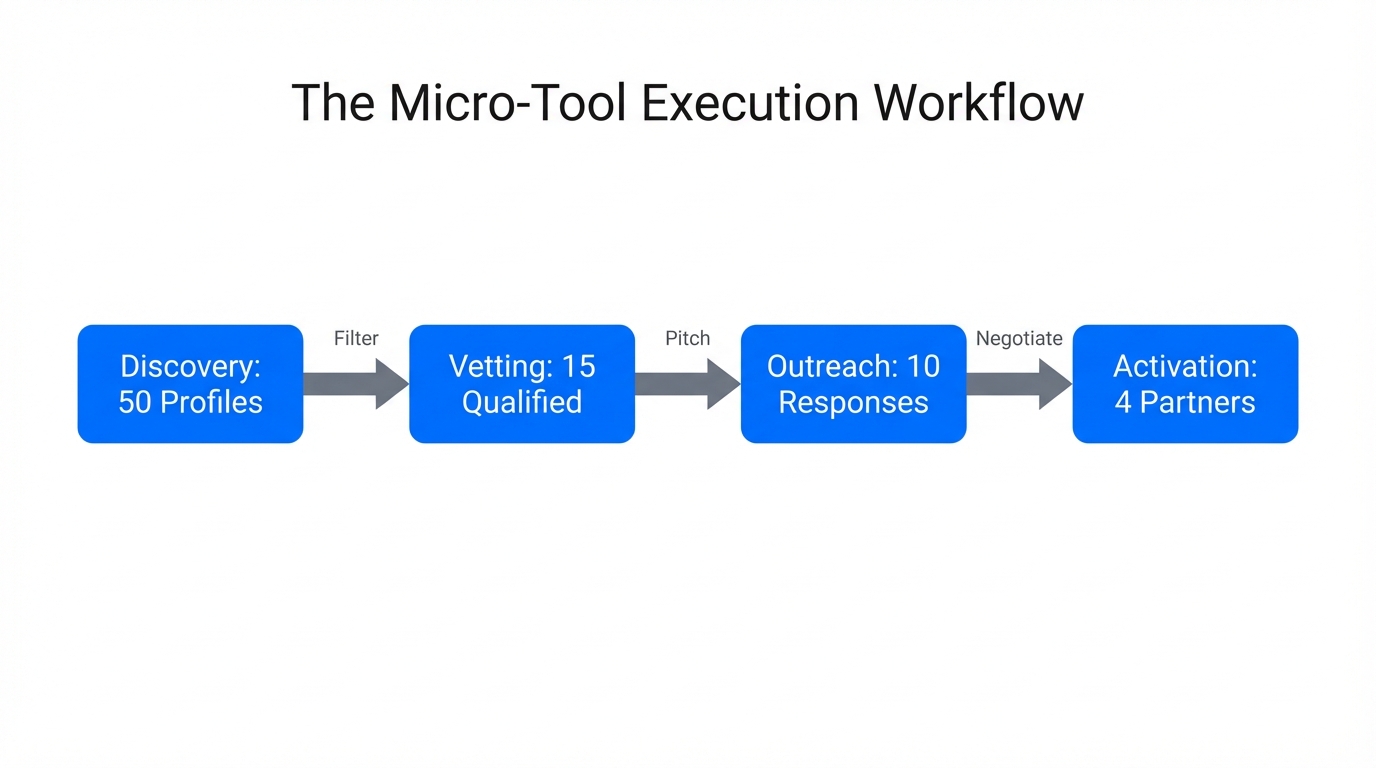
Influencers shouldn't just talk about your product; they should distribute value. One of the most effective tactics in the creator economy for B2B is the "Micro-Tool" entry point. This involves having an influencer share a free, high-value resource—like a calculator, template, or checklist—that solves a niche problem while introducing your core platform.
Step 1: Identify a Friction Point
Find a specific, recurring problem your target audience faces (e.g., "calculating churn rate" or "content calendar organization").Step 2: Build the Asset
Create a free micro-tool or template (like a Notion workspace or a Google Sheets calculator) that requires your SaaS for the "next step" or simply brands the experience.Step 3: Creator Distribution
Partner with niche experts to share the tool. Because it's a "free gift" rather than a pitch, engagement rates are typically 3x higher than standard ads.Step 4: Capture & Nurture
Use the micro-tool as a lead magnet. Once the user is in your ecosystem, use automated sequences through tools like Klaviyo or Instantly to move them toward a trial.
"CMOs who use AI to automate the data but focus the human element on creator relationships will outperform those who treat influencers as static billboards." — David Teicher, CEO of Qru Media.
Case Study: Replicating the Notion Organic Loop
Notion provides the ultimate blueprint for SaaS influencer marketing strategy. Instead of buying millions of impressions, they built a Global Ambassador Program. They identified power users—productivity YouTubers and tech influencers—and turned them into certified experts. These creators then produced thousands of tutorials and templates, creating a self-sustaining organic loop.
This strategy works because it leverages social commerce and community trust. By incentivizing creators to build and sell their own Notion templates, Notion essentially turned their user base into a decentralized sales force. This is a model that many mobile app developers are now adopting, utilizing UGC creators to demonstrate app functionality in a way that feels native to platforms like TikTok and YouTube.
To manage these complex relationships at scale, modern marketing teams are moving away from messy spreadsheets. Using an AI-powered creator CRM like Stormy AI allows brands to track every interaction, negotiation, and payment in one central location, ensuring that no ambassador relationship falls through the cracks.
Mapping the Long Funnel and Tracking ROI
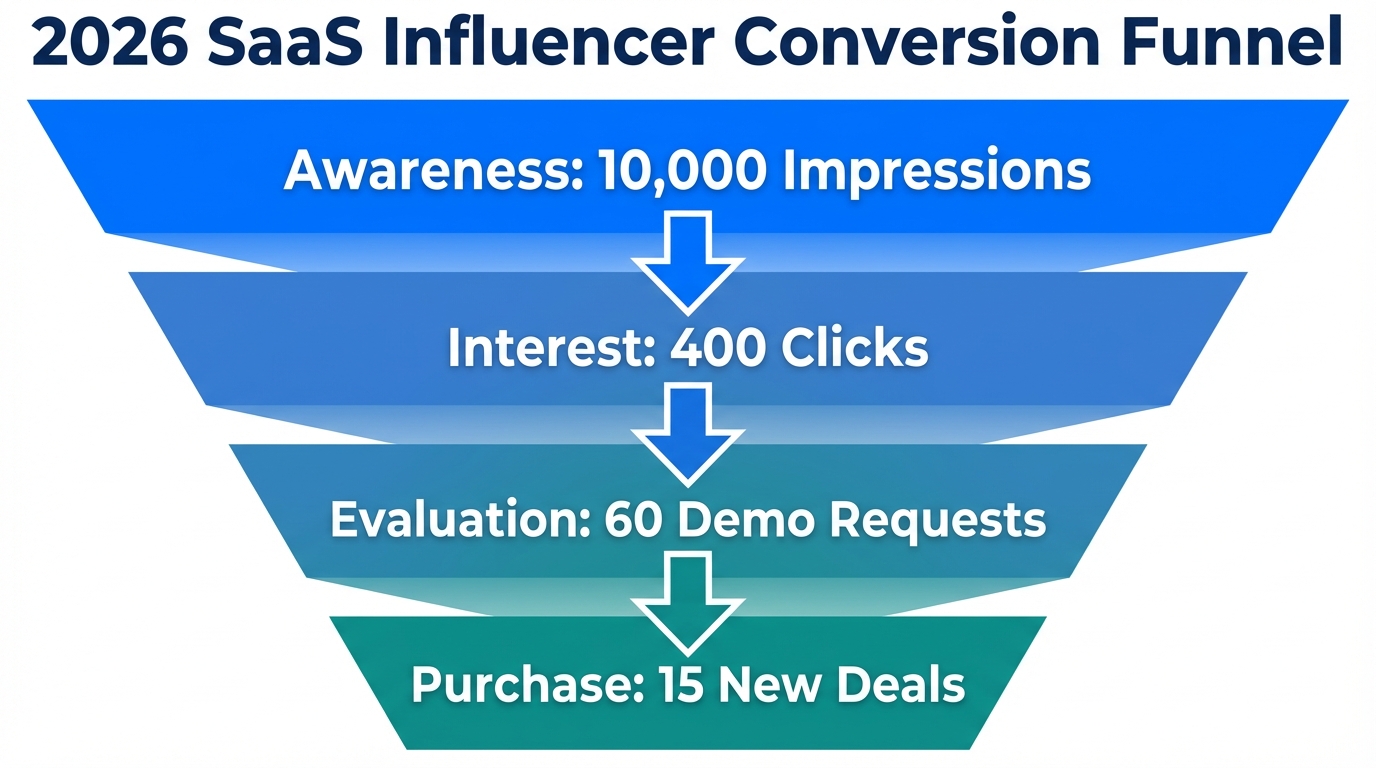
In B2B, the path from seeing a LinkedIn post to signing an enterprise contract is rarely linear. In 2026, you must track Assisted Conversions. This means looking at how an influencer's content influenced a deal that closed four months later. Tools like impact.com are essential for managing hybrid payment models—combining flat fees with performance-based commissions.
Furthermore, don't ignore "Dark Social." Many of the best SaaS referrals happen in private Slack groups or Discord communities. To capture this, provide your ambassadors with unique discount codes or personalized landing pages. This data, combined with AI-driven discovery platforms, helps you predict which creators will drive the highest trial-to-paid conversion rates before you even sign a contract.
When you're ready to scale, platforms like Stormy AI can help you discover and vet technical creators across TikTok, LinkedIn, and YouTube, ensuring they have genuine audience quality and no bot-inflated engagement.
Common Pitfalls to Avoid in 2026
As you build out your SaaS influencer marketing strategy, avoid these three critical mistakes that can sink your ROI:
- Chasing Follower Count: A niche developer with 2,000 highly engaged followers is 10x more valuable for a DevOps tool than a lifestyle influencer with a million followers. Focus on relevance over reach.
- Over-Scripting: Audiences in 2026 have sophisticated "BS detectors." Give your creators creative guardrails and technical goals, but let them speak in their own voice. If it feels like a script, users will scroll past.
- Failing to Map the Long Funnel: If you only track immediate last-click signups, you will undervalue your influencer program. Use attribution tools like Google Analytics to see the full journey from initial touch to final deal.
By treating influencers as strategic partners rather than temporary vendors, SaaS brands can build a powerful engine for SaaS customer acquisition that thrives on trust, education, and community advocacy. Whether you are scaling a mobile app via UGC strategies or launching an enterprise CRM, the human element is what will set you apart in an AI-driven world.