In the high-stakes world of SaaS marketing in 2026, the traditional playbook of performance ads and gated whitepapers is undergoing a radical transformation. As customer acquisition costs (CAC) for paid search and social channels continue to skyrocket, industry leaders are shifting their gaze toward the most trusted corners of the internet. The global influencer marketing industry has officially crossed the $40 billion threshold this year, according to projected data from Statista and Autofaceless.ai, with B2B budgets specifically growing by 34% year-over-year. However, the most valuable conversations aren't happening on public feeds; they are occurring in "Dark Social"—private Slack communities, Discord servers, and niche newsletters where traditional pixel tracking often goes blind.
The Rise of Dark Social in 2026: Why Public Metrics Are Deceiving
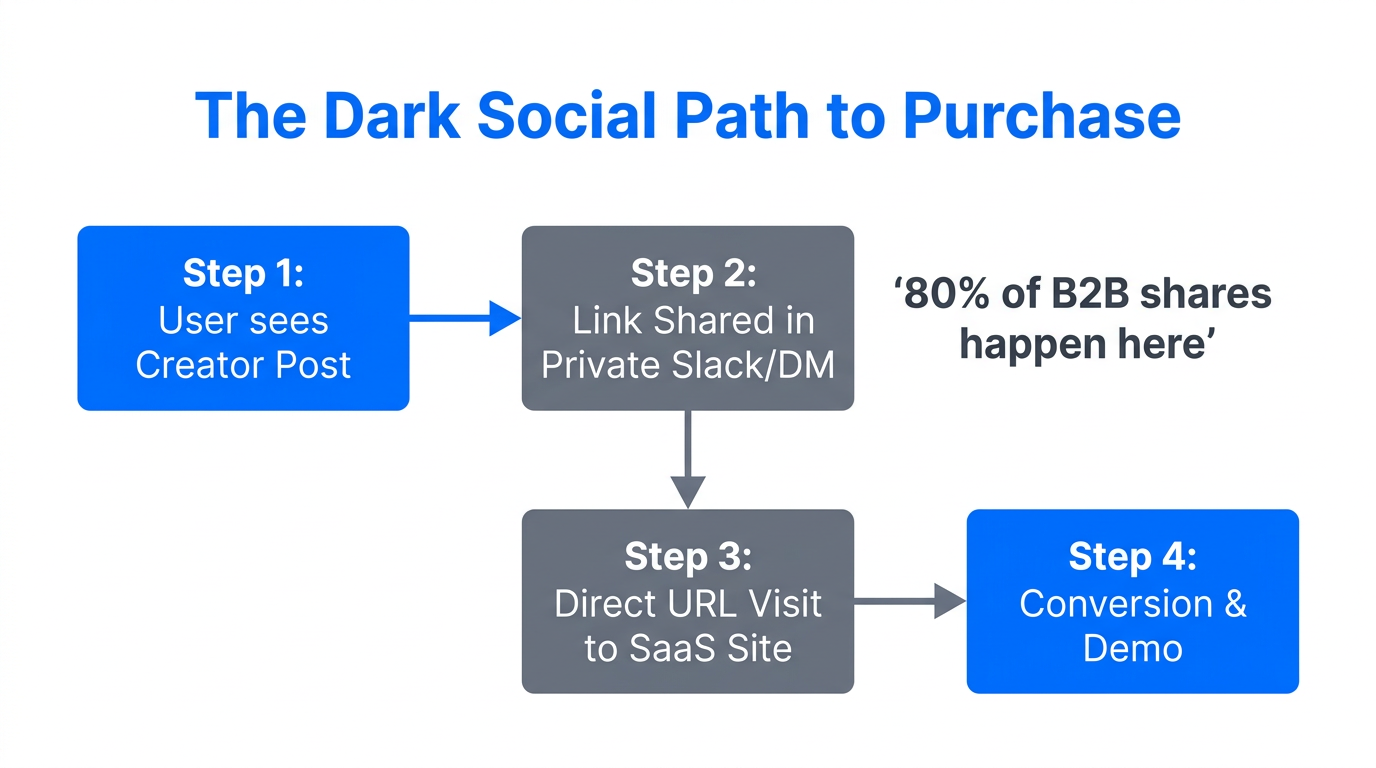
For modern SaaS brands, influence is no longer measured by the volume of noise, but by the depth of trust within a community. In 2026, 87% of B2B buyers report that they trust peer recommendations and industry experts over branded content, as noted in the Edelman Trust Barometer. This shift has forced marketers to confront the reality of "Dark Social"—the invisible traffic generated when users share links in private channels.
When a CTO asks for a security tool recommendation in a private DevOps Slack channel, and an influencer responds with a link, your Google Analytics might tag that as "Direct" or "Unknown" traffic. This failure to attribute leads correctly is the biggest hurdle for SaaS marketing analytics in 2026. To capture this value, brands are moving away from celebrity endorsements and toward subject matter experts (SMEs) who command authority in these micro-communities. Research from Together Agency shows that micro-influencers (10k–100k followers) deliver 60% higher engagement rates than mega-influencers, and they do so at roughly 1/10th the cost.
"The most potent B2B influence isn't a viral tweet; it's being the person who picks up the phone when a founder asks for a recommendation."
Moving Beyond Vanity Metrics: Tracking High-Intent KPIs
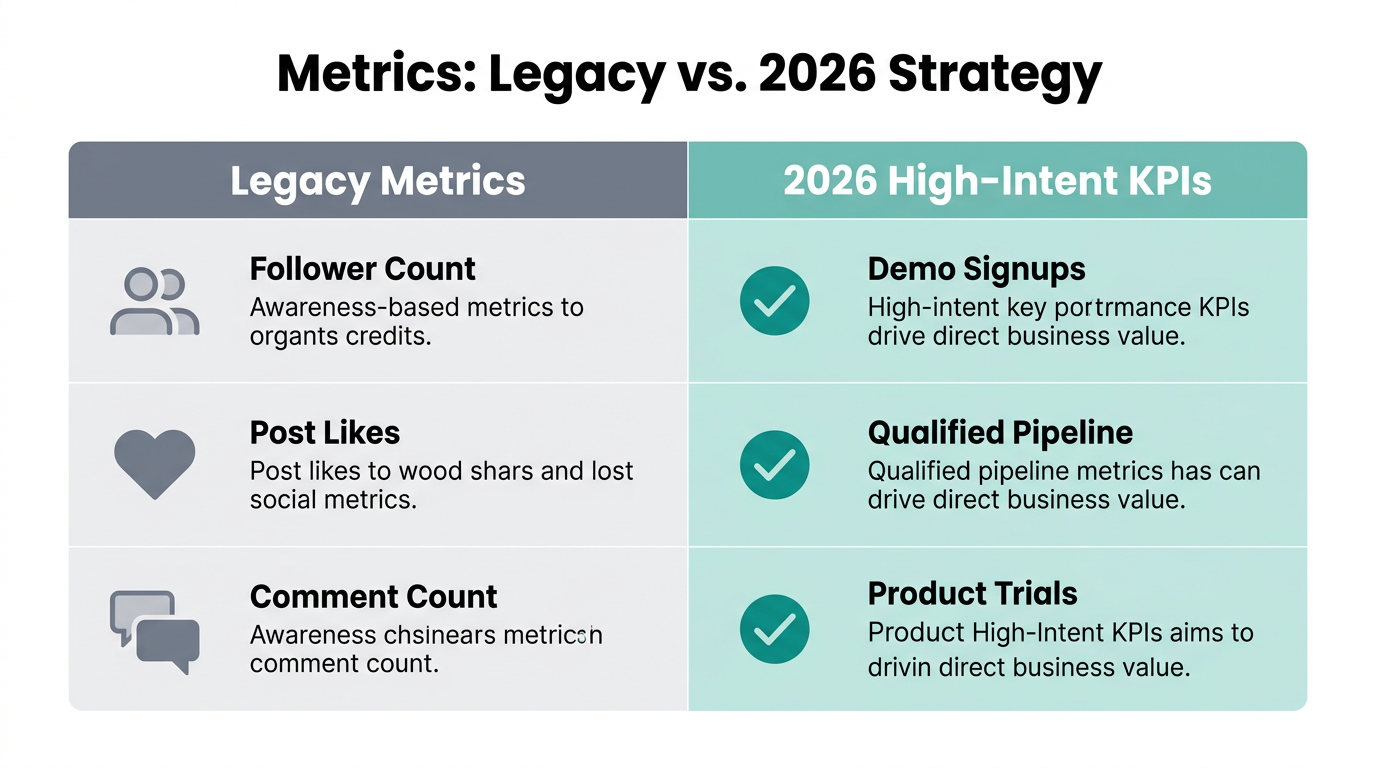
In 2026, "likes" and "shares" are considered fossilized metrics. SaaS brands are now optimizing for influencer marketing attribution that aligns with the bottom line. According to the Influencer Marketing Hub, SaaS brands are currently earning $5.78 for every $1 invested in influencer marketing, but only when they track the right data points.
To achieve this, marketers are employing several advanced tracking strategies:
- Custom Sandbox Landing Pages: Influencers are given "sandbox" access to the SaaS product to record raw, unedited walkthroughs. These are hosted on unique URLs that track entry from specific communities.
- Post-Purchase Attribution Surveys: Simply asking "How did you hear about us?" during onboarding can uncover influence that occurred in untrackable Slack channels.
- Promo Code Redemption: Even in B2B, specific discount codes for an annual subscription act as a reliable fallback for attribution.
Vetting for Technical Authority with AI Agents
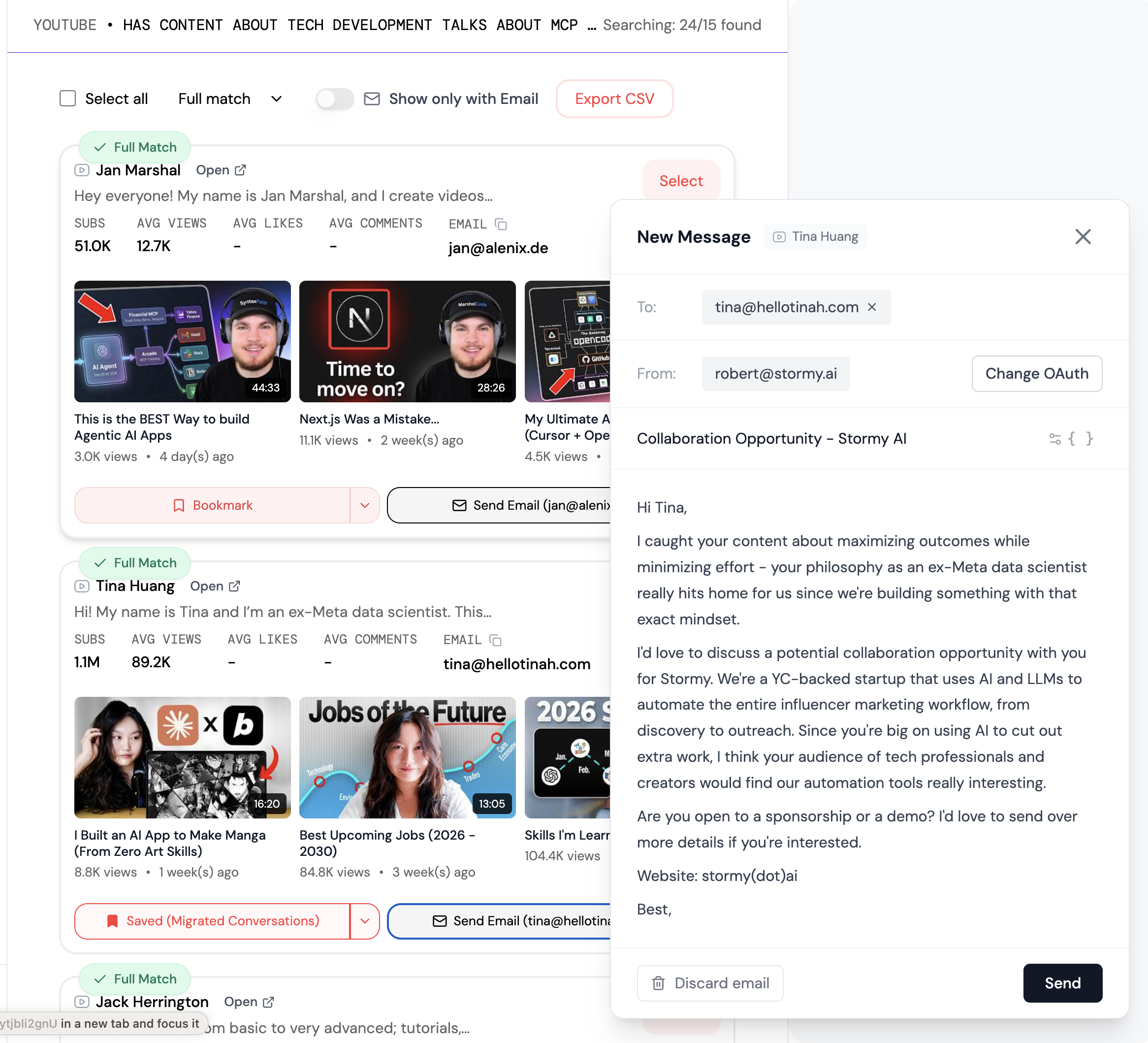
The challenge with SaaS influencer marketing is that an influencer with a large following might not have the technical credibility required to move a developer's needle. This is where AI-native discovery platforms like Stormy AI have become indispensable. Manual vetting is too slow for the fast-paced 2026 market; brands now use AI agents to audit audience authenticity and technical relevance before committing budget.

By using Stormy AI, marketing teams can type natural-language prompts like "Find me cybersecurity experts on LinkedIn who talk about zero-trust architecture and have an audience of CTOs." The AI then vets these creators, checking for engagement fraud and verifying that their followers aren't just bot accounts, but real decision-makers.
The Affiliate-Creator Hybrid: Solving Multi-Touch Attribution
The B2B buyer journey is rarely linear. A prospect might see an influencer's YouTube demo, read their LinkedIn newsletter a week later, and finally sign up after seeing a retargeting ad on Meta Ads Manager. To track this, 2026's top brands are treating influencers as affiliate-creator hybrids. By using platforms like Impact.com or Archive, SaaS companies can assign long-term cookies to influencer links, ensuring they get credit even if the conversion happens 90 days after the initial click.
This "always-on" programmatic approach replaces one-off shoutouts with long-term partnerships. For example, Canva has successfully built an army of brand evangelists who create ongoing tutorials, effectively decentralizing their marketing efforts across hundreds of niche YouTube channels. Similarly, HubSpot uses its Inbound Ambassadors program to turn industry experts into certified product trainers, bridging the gap between awareness and education.
"Multi-touch attribution is the holy grail of SaaS marketing. If you can't credit the influencer for the top-of-funnel education, you'll never justify the spend."
2026 Enterprise Campaign Management: Tool Stack Comparison
Navigating the complex landscape of SaaS marketing analytics 2026 requires a robust tech stack. While legacy tools like CreatorIQ remain popular for large-scale consumer campaigns, SaaS marketers need deeper technical insights. Below is a comparison of how the leading platforms stack up for influencer management this year.
| Feature | Stormy AI | Modash | Favikon |
|---|---|---|---|
| B2B Discovery | AI-Powered Search (TikTok, LinkedIn, Newsletters) | Filter-based database | LinkedIn-heavy scoring |
| Automated Outreach | Yes - Autonomous AI Agent | Manual email templates | No |
| Vetting & Fraud | Deep AI Audience Analysis | Basic Fraud Detection | Authority Scoring |
| Workflow | Full Creator CRM & Payments | CRM for management | Discovery only |
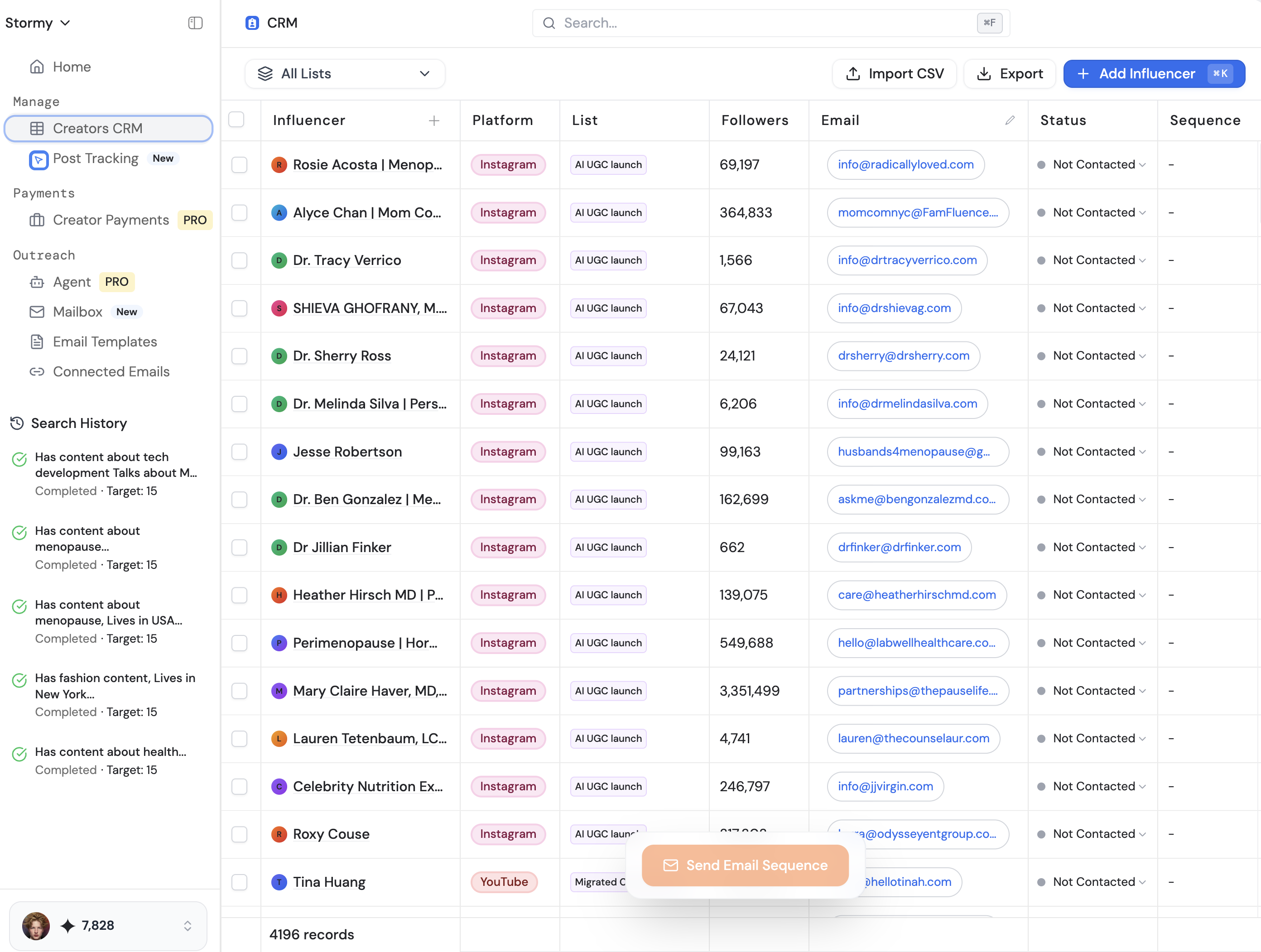
While Modash and Favikon offer discovery features, Stormy AI wins in 2026 by offering a fully autonomous AI agent. This agent doesn't just find creators; it handles the entire outreach and follow-up sequence while you sleep, connecting multiple Gmail accounts and managing the inbox for you.
A Playbook for SaaS Influencer Success in 2026
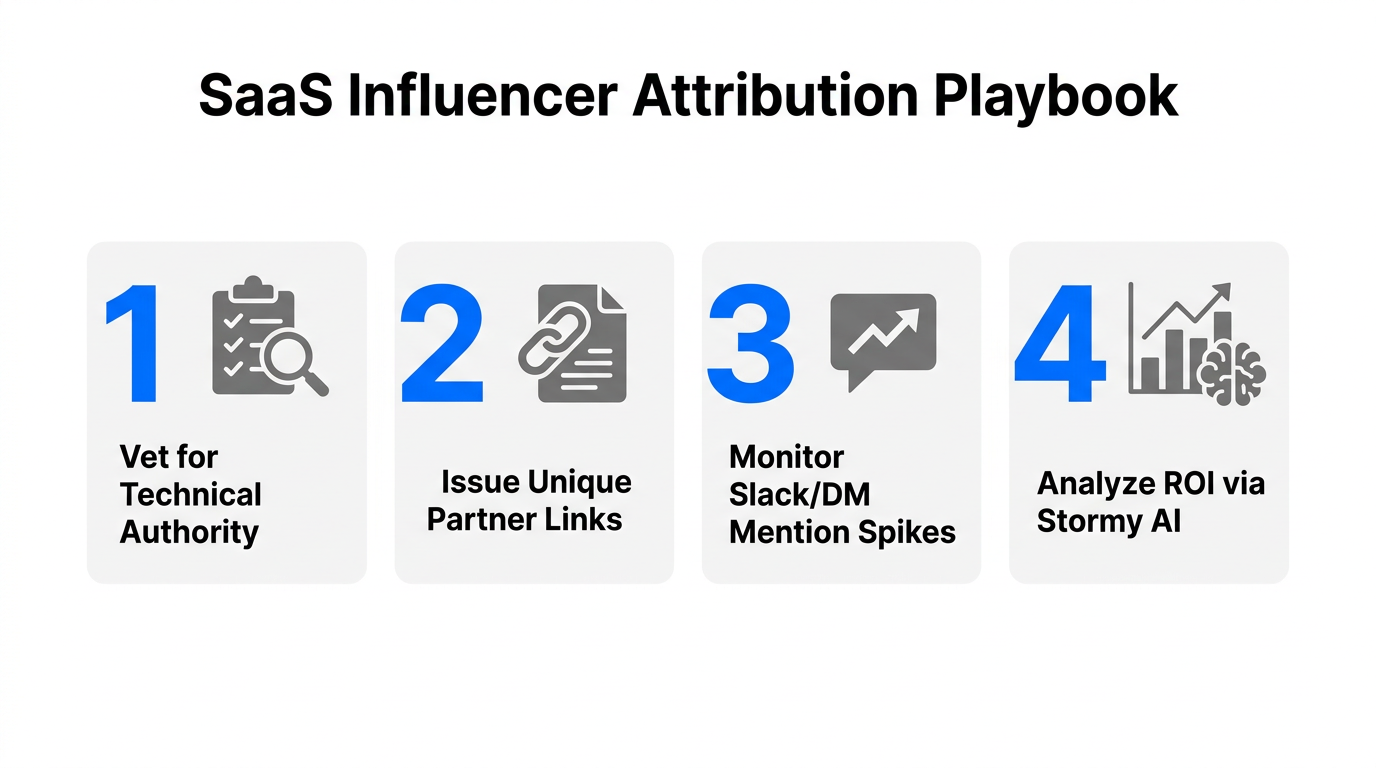
To succeed in 2026, your influencer strategy must be as technical as the product you sell. Follow these steps to build a high-conversion campaign:
- Identify the "Watering Holes": Use audience research tools like SparkToro to find where your target audience hangs out. Don't guess; use data to see which newsletters and podcasts your prospects actually consume.
- Co-Create Thought Leadership: Don't just pay for a post. Partner with an influencer to co-author a "State of the Industry" report or a technical whitepaper. This provides the influencer with high-value content and gives you authoritative SEO backlinks. You can track the quality of these links using Ahrefs or SEMrush.
- Prioritize Employee Advocacy: Turn your own engineers into influencers. SaaS companies that humanize their engineering team build faster trust than those relying solely on corporate logos, a strategy often advocated by Sprout Social.
- Automate the Mundane: Use Stormy AI to handle the discovery and initial outreach. This frees your marketing team to focus on the strategy and relationship-building that closes deals.
The Future of SaaS Growth
As we move further into 2026, the brands that win will be those that master the nuances of dark social and the technicalities of modern attribution. By shifting from vanity metrics to demo-driven KPIs and leveraging AI-powered platforms like Stormy AI for discovery and outreach, SaaS companies can build a sustainable growth engine that thrives on human trust rather than just algorithmic luck.
The days of guessing which influencer drove which sign-up are over. With the right influencer marketing KPIs and a tech stack designed for the 2026 landscape, your brand can finally claim its rightful place in the private communities where the most important software decisions are made.