For years, SaaS marketers treated influencer campaigns like a black box. You would pay a YouTuber or a LinkedIn thought leader to mention your product, watch a spike in traffic hit Google Analytics, and hope that some of those users eventually hit a 'Closed-Won' stage in your CRM. But in a landscape where the B2B buying cycle is growing increasingly complex, relying on last-click attribution is a recipe for under-investing in your most profitable channels.
Today, influencer marketing for Software-as-a-Service (SaaS) has matured into a core acquisition engine. It is no longer about impulse buys; it is built on education, long-term trust, and utility. According to recent industry research, the global influencer marketing industry is projected to reach $24 billion by 2025 and nearly $33 billion by 2026. For SaaS companies, the stakes are even higher because 87% of B2B buyers now give more credence to content featuring industry experts they trust. To capture this value, brands are moving away from vanity metrics and toward a sophisticated stack involving PartnerStack for partner management and HockeyStack for full-funnel attribution.
The Shift from Clicks to Recurring Revenue and Renewals
In the B2C world, an influencer's job is often done once a purchase is made. In SaaS, the purchase is just the beginning. The real value lies in Life-Time Value (LTV) and Net Revenue Retention (NRR). If an influencer drives 1,000 sign-ups but 900 of them churn after the first month, that campaign was a failure, regardless of the initial 'conversion rate.'
Modern SaaS influencer attribution requires tracking the customer journey far beyond the initial sign-up. You need to know if the leads generated by a specific LinkedIn teardown or a YouTube tutorial are renewing their subscriptions six months later. This is where high-performing teams separate themselves. By focusing on recurring revenue rather than one-time acquisitions, SaaS brands are seeing influencer marketing ROI reach impressive heights. For every $1 spent, brands earn an average of $5.78, with elite SaaS campaigns reporting returns as high as $18–$20 per dollar invested.
Benchmarks for SaaS ROI: Understanding the $5.78 to $20 Range
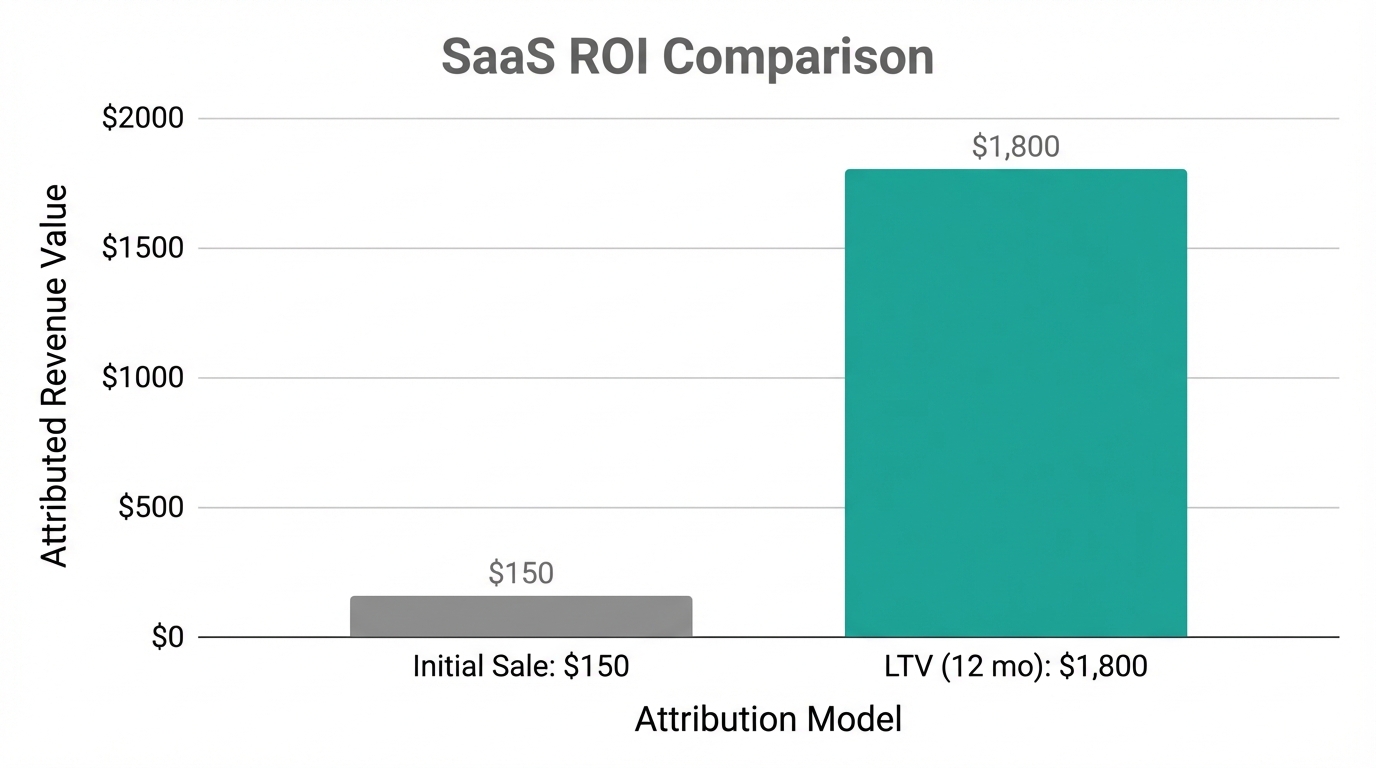
Why is there such a massive gap between the average return ($5.78) and the high-end performers ($20+)? The difference usually comes down to attribution accuracy and influencer selection. Brands that treat influencers as billboard ads often land on the lower end of the spectrum. Brands that treat influencers as extended sales teams and equip them with the right tracking infrastructure reach the top tier.
When we look at the data, 30% of younger B2B buyers involve 10 or more people outside their organization in purchase decisions. These people are often the influencers, consultants, and peer networks that your target audience follows. If your attribution model can only see the final click, you are missing the 9 other touchpoints that influenced the deal. By integrating tools like HockeyStack analytics, marketers can finally visualize the 'dark social' impact of these expert recommendations.
"The most successful SaaS companies don't just buy reach; they buy authority. A recommendation from a trusted industry expert is the ultimate shortcut in a 6-month sales cycle."Configuring PartnerStack for Affiliate-Hybrid Models
Managing a handful of influencers is easy. Managing fifty influencers who expect monthly commissions on recurring revenue is a logistical nightmare. PartnerStack influencer marketing workflows solve this by automating the 'Affiliate-Hybrid' model, which has become the gold standard for SaaS compensation.
In a hybrid model, the influencer receives a flat fee for content creation (ensuring they are paid for their labor) plus a performance bonus or recurring commission (aligning their interests with your long-term growth). Typical structures include a 20-30% recurring commission for as long as the user remains a customer. This incentivizes the influencer to not just drive sign-ups, but to produce content that helps users succeed with the tool, thereby reducing churn.
Key Benefits of Using PartnerStack for Influencers
- Automated Payouts: Handle complex recurring commission structures without manual spreadsheets.
- Custom Dashboards: Give influencers a clear view of their performance, including pending rewards and conversion data.
- Resource Hubs: Host brand guidelines, assets, and expert-approved discount codes in a single location for easy access.
Using HockeyStack to Map the Entire Customer Journey
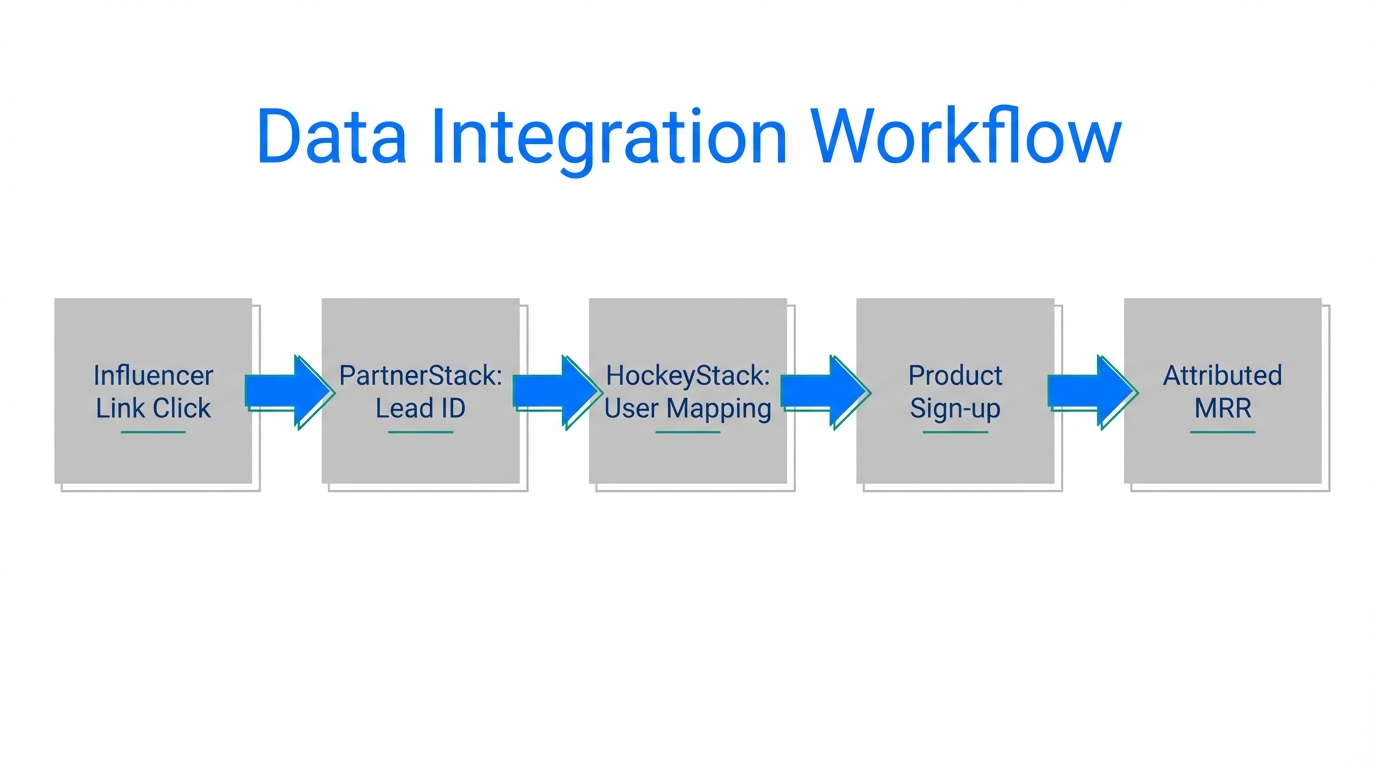
If PartnerStack is your payout engine, HockeyStack is your insight engine. One of the biggest challenges in B2B marketing attribution is the 'long tail' of the buyer journey. A prospect might see an influencer's LinkedIn post in January, listen to them on a podcast in March, and finally sign up for a trial in May after seeing a retargeting ad on Google Ads.
HockeyStack allows you to map every single one of these touchpoints back to a single Closed-Won deal. It uses AI-powered GTM intelligence to connect the dots between anonymous web visits and identified CRM leads. This level of granularity is essential for proving that an influencer was the 'first touch' or 'significant assist' in a high-contract-value deal.
| Metric Type | Traditional Tracking | Advanced SaaS Tracking (HockeyStack) |
|---|---|---|
| Focus | Clicks & Leads | Revenue & Retention |
| Attribution | Last-Click Only | Multi-Touch & Cross-Device |
| Transparency | Black Box | Full Journey Visualization |
| Influencer Pay | One-time Bounty | Recurring/Performance-Based |
By seeing exactly which influencers drive the highest Annual Contract Value (ACV), you can optimize your budget toward the creators who attract your 'whale' clients rather than those who just drive high volumes of low-value trials. Tools like Dreamdata also offer similar account-based insights, ensuring no influencer touchpoint goes unrecorded in the CRM.
Data-Driven Discovery: Using AI to Identify High-ROI Influencers
Identifying the right influencer is no longer a guessing game. 82% of top-performing teams now utilize 'always-on' programs, according to research from Archive.com. These programs rely on predictive analytics to find creators most likely to drive actual trial sign-ups. In the LinkedIn-dominated B2B world, platforms like Favikon provide specialized data to ensure you are reaching genuine industry thought leaders rather than 'engagement pod' participants.
For those looking to scale their outreach, Stormy AI provides an all-in-one platform where you can discover creators using natural-language prompts like 'productivity influencers for developers with high engagement' and immediately initiate AI-personalized outreach. This reduces the manual friction of sourcing, allowing growth teams to focus on strategy and relationship building.
"Predictive analytics can now tell us which influencers are likely to drive trials before we ever send the first outreach email. Data has replaced the 'gut feeling' in influencer marketing."The SaaS Influencer Attribution Playbook
To implement this advanced tracking and management system, follow these steps to ensure your data is clean and your influencers are motivated.
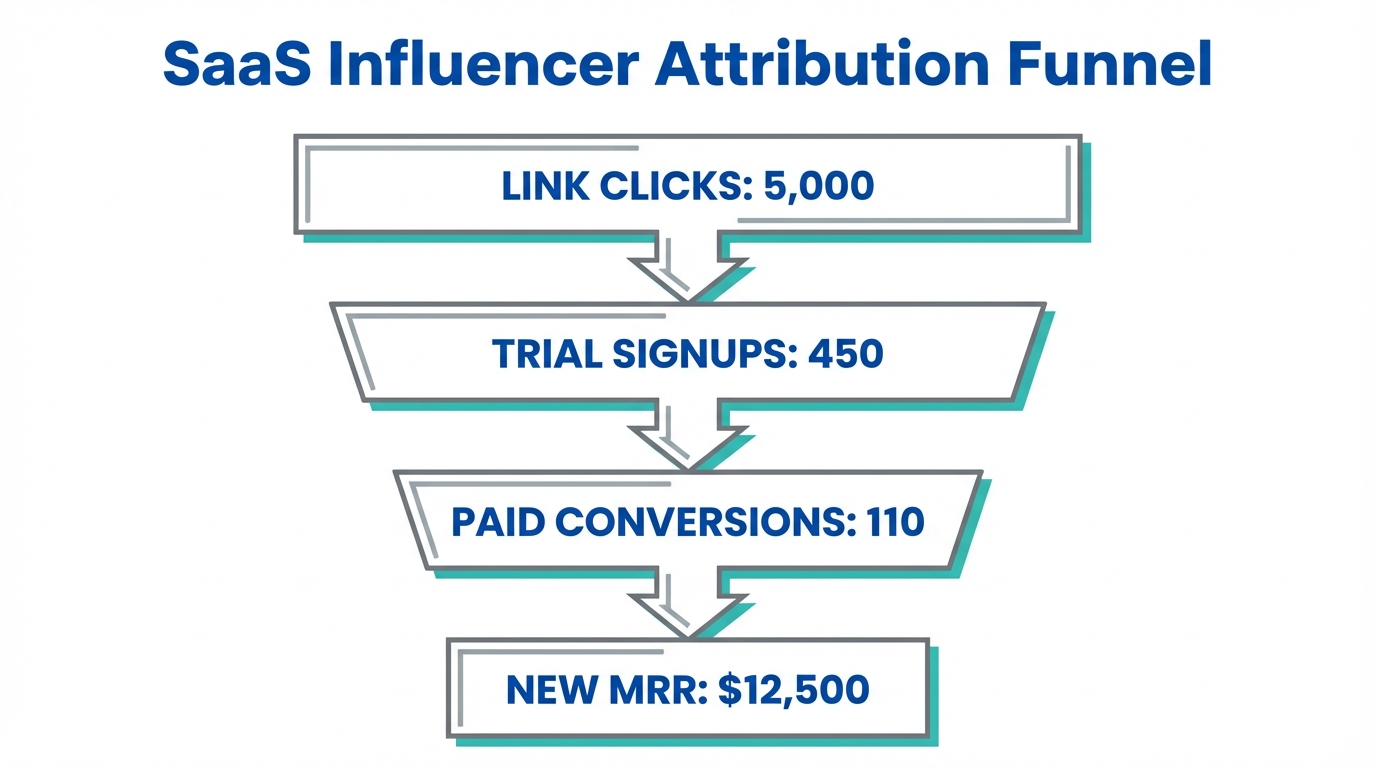
- Define Your North Star Metric: Move past impressions. Are you optimizing for MQLs, SQLs, or Paid Subscriptions? Most SaaS brands should optimize for Paid Conversions.
- Set Up PartnerStack: Create a partner group specifically for influencers. Configure a hybrid payment structure: a base fee for the content plus a 20% recurring commission on revenue tracked via their unique link or landing page.
- Integrate HockeyStack: Connect your website, CRM (like Salesforce), and ad platforms to HockeyStack. This will allow you to see when a prospect visits your site from an influencer's link but doesn't convert until weeks later via a different channel.
- Create Influencer-Specific Landing Pages: Do not send traffic to your homepage. Use tools like Framer or Webflow to build personalized pages that say 'Welcome [Influencer Name] Fans!' and offer a specific trial incentive.
- Monitor the 'Wall of Love': Track organic mentions and endorsements. Early-stage companies like Slack used this strategy to build product 'inevitability' by leveraging tech founder endorsements.
Compliance, Creative, and Common Pitfalls
Even the best attribution tech won't save a bad campaign. One of the most common mistakes is treating influencers as rigid advertising mouthpieces. Research shows that 65% of influencers prefer being involved in the creative process. If you force a script on an expert, their audience will smell the 'ad' from a mile away and tune out. Instead, lean into the 'informal content revolution'—lo-fi screencasts and home-office tutorials often outperform high-production commercials.
Furthermore, never neglect compliance. The 2025 FTC guidelines are stricter than ever, requiring both verbal and written disclosures in video content. Vague hashtags like #collab are no longer sufficient. You must ensure your partners are following best practices as detailed by experts at The Social Media Law Firm to avoid legal headaches that could damage your brand reputation.
Conclusion: The Future of B2B Marketing Attribution
The days of 'guessing' the value of an influencer mention are over. By integrating PartnerStack for automated recurring payouts and HockeyStack analytics for multi-touch journey mapping, SaaS brands can treat influencer marketing with the same mathematical rigour as Search Engine Marketing. This data-driven approach allows you to scale what works, kill what doesn't, and finally answer the question: How much revenue did this creator actually drive?
As you scale your program, remember that the best creators are those who genuinely solve problems for their audience using your software. For those ready to begin their discovery journey, modern platforms like Stormy AI can help source and manage these UGC creators at scale, ensuring your pipeline remains full of high-quality, expert-vetted leads. Stop tracking clicks and start tracking growth.