In the current technological landscape, the barrier to building software has effectively collapsed. As demonstrated by entrepreneurs like Polius, who built a $30,000 SaaS during his morning commute, the ability to prompt your way to a functional application is now a reality. However, the ease of creation has birthed a new challenge: building something that people actually want to buy. Statistics show that roughly 90% of startups ultimately fail, often due to a lack of market need. Without a rigorous approach to saas idea validation, most founders find themselves with a technically impressive product that serves a market of zero. The secret to success in 2025 isn't just about how fast you can code; it's about how accurately you can identify and fill the gaps within a high-growth sector like the influencer marketing niche, which is projected to reach over $24 billion in 2025.
The Shift from Coding to Market Research
For years, the advice for startup founders was to "learn to code." Today, the advice has shifted toward market research for startups. If AI tools like Cursor and Bolt can handle the heavy lifting of development, the founder's primary value lies in their ability to understand the customer's psyche. Polius's journey from a door-to-door salesman to a SaaS founder proves that domain knowledge and deep research are the ultimate unfair advantages. He didn't start with a complex technical architecture; he started by pursuing creator-led services and identifying a need for a database that he would use himself. This "scratch your own itch" methodology, combined with modern research tools, is the blueprint for profitable app ideas in 2025.
Step 1: Identifying Gaps with Topic Research
The most effective way to validate an idea before writing a single prompt is to see what the world is already searching for. Using a tool like the Semrush Topic Research tool allows you to enter a broad term—such as "TikTok influencers"—and immediately see a map of related sub-topics, headlines, and questions. This data represents the unmet needs of the market. When you see high search volume for terms like "TikTok influencer search platform" or "how to hire TikTok influencers" on resources like the TikTok Creative Center, you are looking at a validated demand for a solution.

While discovering these gaps is the first step, understanding the quality of the creators within those niches is where many founders stumble. This is where Stormy AI's influencer analysis and vetting becomes essential for those building in the space. Instead of relying on vanity metrics, modern platforms need to detect fake followers and engagement fraud automatically—a feature that legacy tools often bury behind expensive enterprise paywalls. By integrating deep analysis early in your research phase, you can ensure your SaaS idea addresses audience quality, not just quantity.
Step 2: Extracting 'Pain Point' Questions
Market research isn't just about keywords; it's about the questions users are asking Google and TikTok. When you analyze search intent, look for "how-to" queries and "best way to" phrases. These indicate a user is in a state of friction. For example, a search for "best way to manage creator relationships" suggests that existing spreadsheets or legacy CRM tools are failing. Users are actively looking for a more streamlined, AI-native way to handle collaborations.
By identifying these specific pain points, you can narrow your SaaS focus. Instead of building a generic "influencer tool," you might build a specialized AI-powered discovery engine. For instance, Stormy's AI search allows users to find creators using natural language prompts like "fitness creators in LA with high engagement" across TikTok, YouTube, Instagram, and LinkedIn. This solves the specific pain point of manual filtering and tedious discovery, which is a major bottleneck for brands today. When your product's core feature directly answers a high-volume search question, your marketing effectively does itself.
Step 3: Competitive Analysis and The 'Edge' Theory
To find how to find startup gaps, you must look at what the incumbents are missing. Many existing platforms in the influencer space were built in the pre-AI era. Legacy systems like Tagger or Captiv8 are often clunky, require manual data entry, and lack the automation that modern users expect. A competitive analysis should focus on friction points in the user journey of these older tools. Are they slow? Is the data outdated? Is the outreach process manual?
Your "edge" is the one thing you can do that no one else is doing—or that everyone else is doing poorly. In the influencer marketing niche, that edge is often automation. While older platforms require you to export lists and send emails manually, an AI-native approach like Stormy AI's automated email outreach handles the discovery, personalization, and follow-ups on a daily schedule while you sleep. Providing this level of autonomous operation is how a solo founder can outcompete a legacy company with hundreds of employees.
Step 4: The Hero Section Framework for Conversion
Once you have a validated idea and a clear edge, you need to present it. Polius suggests that 80% of your effort should go into the hero section—the area above the fold on your landing page. This section must communicate your full message in seconds. A winning hero section follows this framework:
- The Headline: A bold statement of the primary benefit (e.g., "Find and Hire 100 Influencers in 10 Minutes").
- The Subheading: A brief explanation of how you solve a painful problem using your unique edge.
- The Call to Action (CTA): A clear "buy" or "get started" button that removes friction.
Using a tool like Framer allows you to rapidly iterate on these designs using templates. The goal isn't to create a work of art; it's to create a conversion machine that reflects the search intent you discovered during your research. If your Semrush data showed people are worried about "influencer fraud," your hero section should explicitly mention AI-powered vetting and fraud detection.
Step 5: Rapid Prototyping with the AI Stack
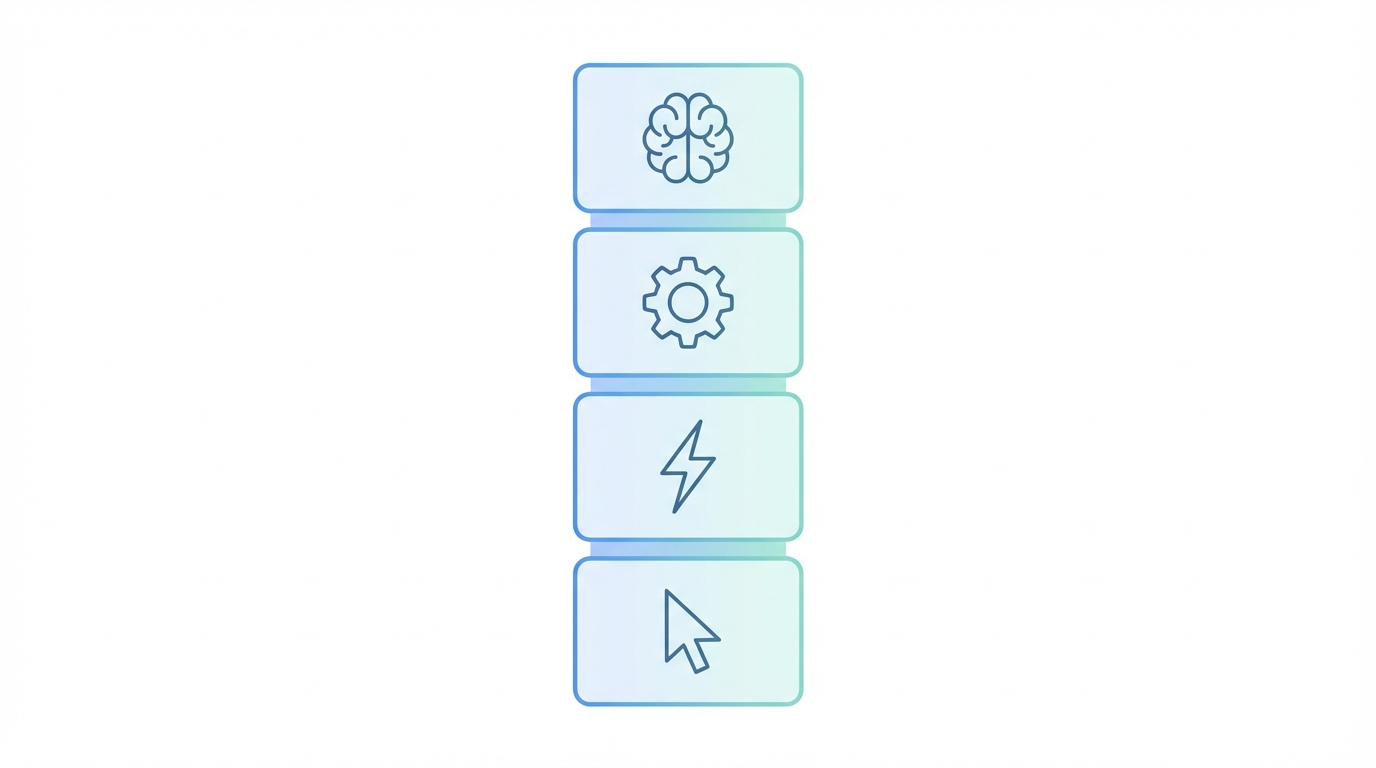
With a validated idea and a high-converting landing page design, it’s time to build the "scrappiest" version of your idea. The goal of an MVP is to test the "Buy" button, not to build a perfect product. The modern AI stack for rapid prototyping includes:
- Perplexity: Use this for deep research into documentation and to create a step-by-step technical game plan.
- Bolt: Generate a functional, visual MVP in minutes using natural language prompts.
- Cursor: Refine the code, connect your backend (using Supabase), and add authentication (using Clerk) to make it production-ready.
During this phase, don't get bogged down in custom UI. Use pre-built component libraries like shadcn to keep things clean and functional. If you need to manage the creators or data you are gathering, Stormy's creator CRM offers a perfect example of how to structure relationship management, deal stages, and payments without overcomplicating the interface. By deploying on Vercel, you can go from a blank page to a live, paying app in a single weekend.
Marketing Your Validation: The Build in Public Strategy
Validation doesn't end when the app is live; it continues through distribution. One of the most effective ways to gain traction in the influencer niche is to "build in public" on platforms like X (Twitter) or TikTok. The key is to join the bigger conversation rather than shouting into the void. If there is a debate about the effectiveness of AI in marketing, share a video of your AI tool performing a task that used to take hours.

Polius saw massive success by tapping into existing trends and using simple, raw human reactions in his demos. This scrappy marketing approach builds trust and allows you to gather real-time feedback. It also provides an opportunity to show how your tool handles the nitty-gritty of influencer marketing, such as post tracking and analytics. When you can show a dashboard like Stormy's AI-powered post tracking, which monitors views, likes, and engagement across all social platforms automatically, you provide visual proof that your SaaS solves a real business problem.
The Early Bird Advantage
The window of opportunity for AI-powered SaaS is wide open, but it won't stay that way forever. As more people realize they can build apps with AI, the market will become crowded with low-quality clones. The winners will be those who combine AI-native speed with old-school market research. By using tools like Semrush to find high-intent, low-difficulty keywords and then building a solution that addresses those specific pain points, you position yourself for long-term success.
If you are serious about shipping and want to join a community of builders who are turning ideas into revenue, resources like Starter Story Build provide the motivation and framework to get started. Don't wait for the perfect idea—find a gap, build a scrappy solution, and see if the market is willing to pay. In the world of SaaS idea validation, the only real failure is not starting at all.