Imagine working just 20 hours a week from anywhere in the world, managing a business that effectively prints money while you sleep. For Dimitri, the founder of YourMove AI, this wasn't a pipe dream—it was reality for five months of travel and exploration. However, that freedom wasn't an overnight success; it was the result of a brutal two-and-a-half-year grind conducted entirely while holding down a high-level data science management role in Big Tech. Transitioning from a stable salary to a full-time founder requires more than just a good idea; it requires a calculated SaaS exit strategy that balances financial benchmarks with psychological endurance.
The 'Infinite Runway' Strategy: Your Salary as Venture Capital

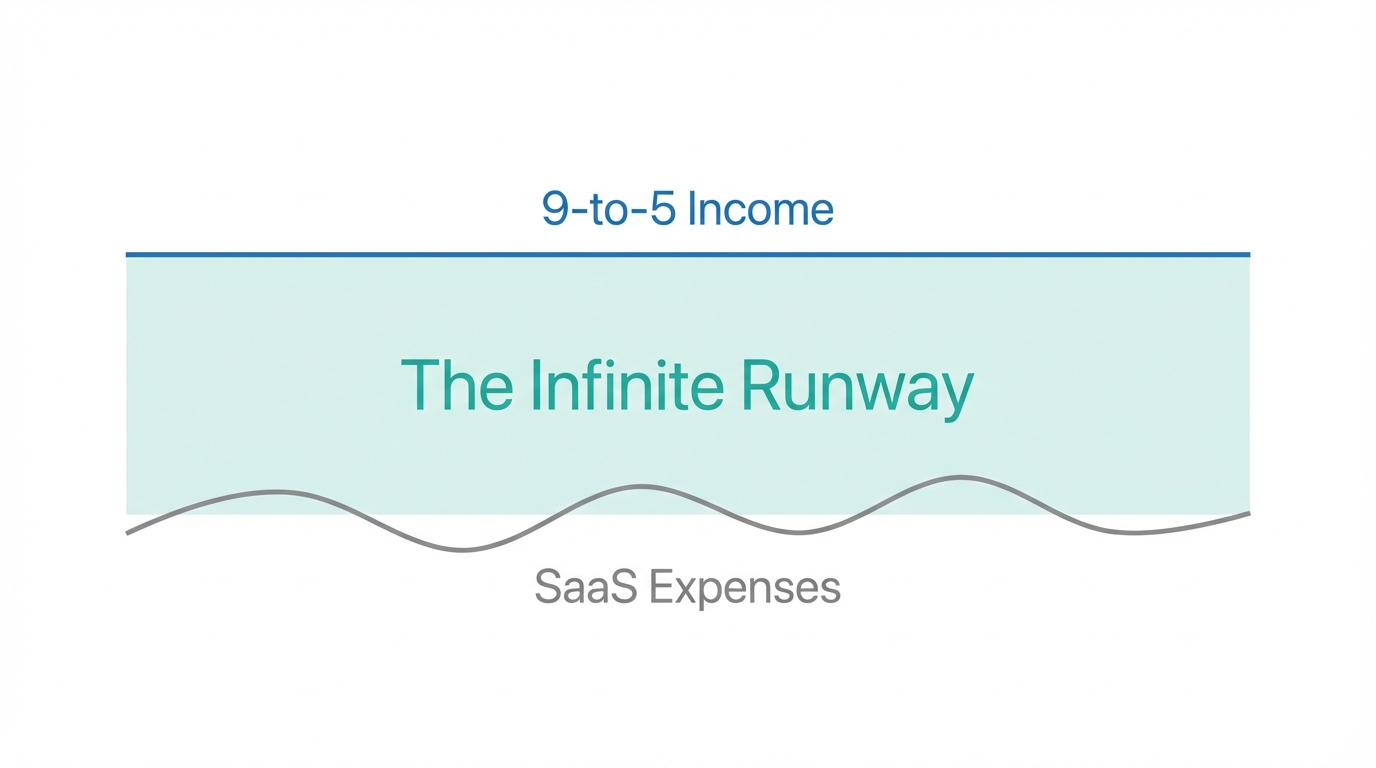
Most aspiring founders believe they need to quit their jobs to "focus" on their startup. In reality, for a first-time founder, quitting too early is the fastest way to fail. Dimitri’s success was built on what we call the 'Infinite Runway' strategy. Instead of giving himself a six-month window of desperation, he used his tech salary at companies like OpenDoor to fund his experimentation. When you have a high-earning W-2 job, you aren't just an employee; you are your own first venture capitalist.
During the early phases, your job provides the capital to test growth channels in the red. You can afford to be unprofitable for months because your cost of living is covered. This period is for discovery, not immediate ROI. Platforms like Stormy AI act as an AI search engine across TikTok, Instagram, and YouTube, helping founders instantly find the right creators to jumpstart this growth and build an audience before they ever need to pay themselves a dividend. By treating your paycheck as a reinvestable asset, you can hire specialists while you're still in meetings, effectively duplicating yourself. Dimitri at one point managed 10 to 12 different contractors on Upwork, most working just a few hours a week, all while he was still navigating his corporate responsibilities.
The Status Trap: Building a 'Low-Status' Side Hustle
One of the hardest parts of the side hustle to full time journey isn't the technical work—it's the psychological barrier. In Silicon Valley and Big Tech hubs, your job title is your identity. Leaving a "high-status" role at a place like Google or Meta to work on a "low-status" side hustle (like an AI dating assistant) can feel like a step backward. This is the high-status trap: the fear that if your startup fails, you’ve traded a prestigious career for a failed experiment.
Dimitri admitted that maintaining his high-status job made the transition easier because it provided legibility. However, to find true financial independence for founders, you must eventually embrace the "low-status" activities that drive revenue. Whether it’s answering customer support tickets or posting on Hacker News at 2 AM, the work that builds an asset is rarely glamorous. Reading foundational texts like The Millionaire Fastlane can help reframe this: high status is a cage; asset ownership is freedom.
The 20k/Month Rule: Determining Your 'Freedom Number'

When is it officially time to quit job for startup life? Many founders wait for a specific feeling, but the exit should be based on hard SaaS revenue milestones. For Dimitri, that number was $20,000 in monthly revenue. However, the nuance lies in the difference between revenue and profit.
- The Calculation: $20k in revenue at an 80% margin often results in roughly $10k-$15k in take-home profit after taxes and expenses.
- The Safety Net: In a high-cost city like New York, $10k/month in profit covers a comfortable lifestyle without burning through personal savings.
- The Momentum: By the time you hit this milestone, the business has proven its product-market fit and is no longer a "hobby."
You shouldn't aim for a 1:1 replacement of your tech salary. Instead, aim for reproducible profitability. If your app can consistently generate $20k a month while you are distracted by a 9-to-5, imagine what it can do when you give it 100% of your focus. Tools like Superwall and their paywall experiment generator are essential during this phase to squeeze every bit of LTV out of your existing users.
The Contractor Playbook: Scaling While Employed
You cannot build a $30k/month business alone while working 40 hours a week for someone else. You must master the art of delegation. The most successful founders break their app down into 3-5 distinct parts—onboarding, core functionality, paywall, and marketing—and hire specialized contractors for each.
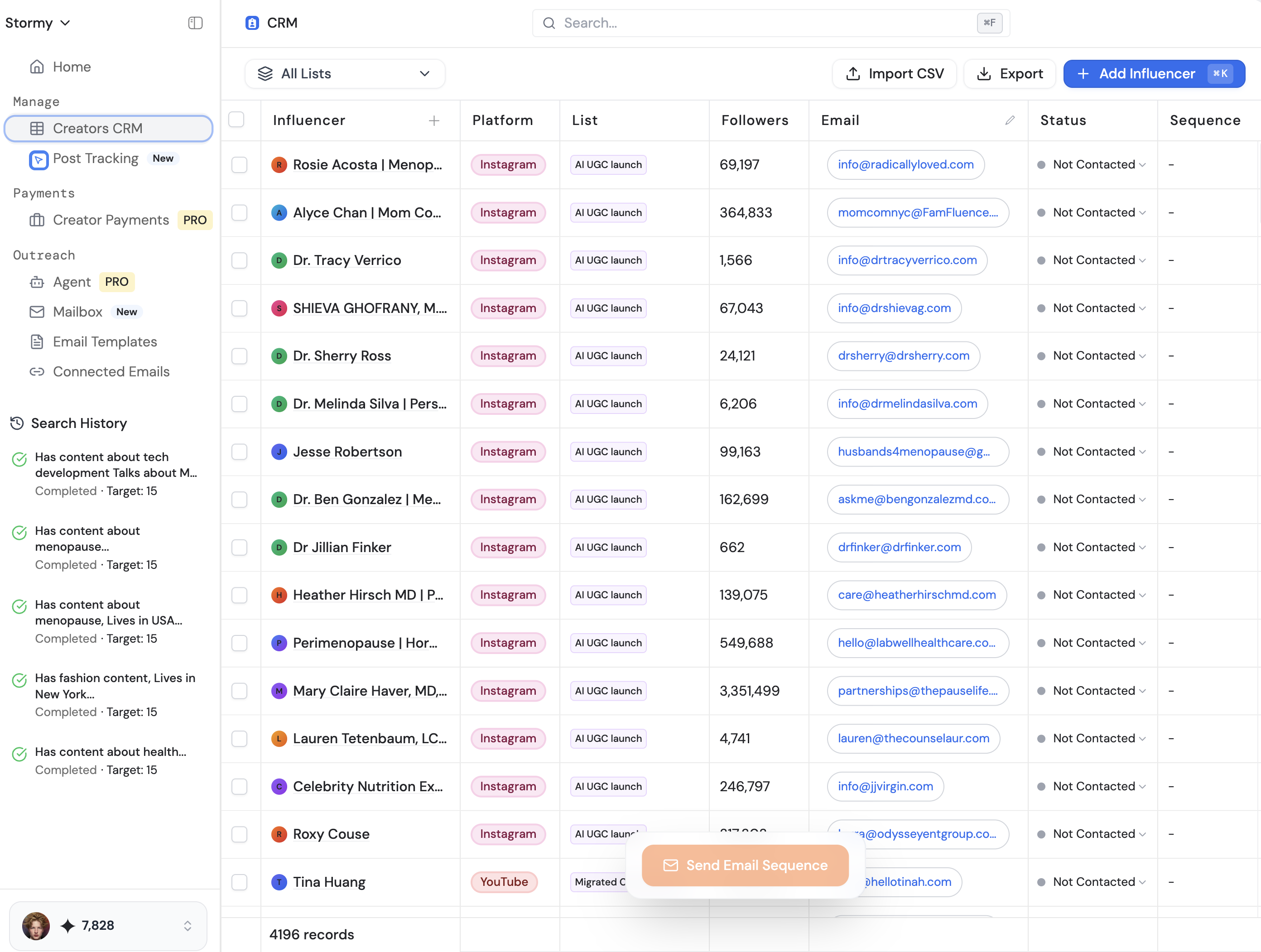
Dimitri’s method involved using Upwork not just for labor, but for education. He would hire experts to run Google Ads, then have them train him on the process. This allowed him to maintain a "sense of smell" for what good work looked like without having to do every task himself. For those in the mobile app space, using Stormy AI to find and manage creator relationships through a full CRM is a prime example of this: you outsource the content creation and outreach while maintaining full control over the strategy.
The SEO Moat: Turning PR into Defense
Dimitri found that while features in major outlets like the Wall Street Journal or Fox Business didn't drive massive direct sales, they provided insane domain authority. This is a critical lesson for any startup exit strategy: use novelty to get press, then use that press to win at SEO.
By securing backlinks from reputable news sites early on, YourMove AI built a defensible moat. When potential users searched for "pickup lines" or "how to text on Hinge," Dimitri’s blog posts appeared at the top of the results. This latent demand is much cheaper to capture than the induced demand of social media ads. While competitors were stuck in the "lottery system" of viral TikToks, Dimitri was building a machine that drove 50% of his traffic through organic search. To keep a pulse on what content works, founders can use Stormy AI to track individual videos and monitor engagement metrics across all major platforms. If you are struggling with content ideas, tools like SpyTok can also show you what is currently going viral, which you can then adapt into long-form SEO content.
Painkillers vs. Vitamins: Choosing the Right Problem
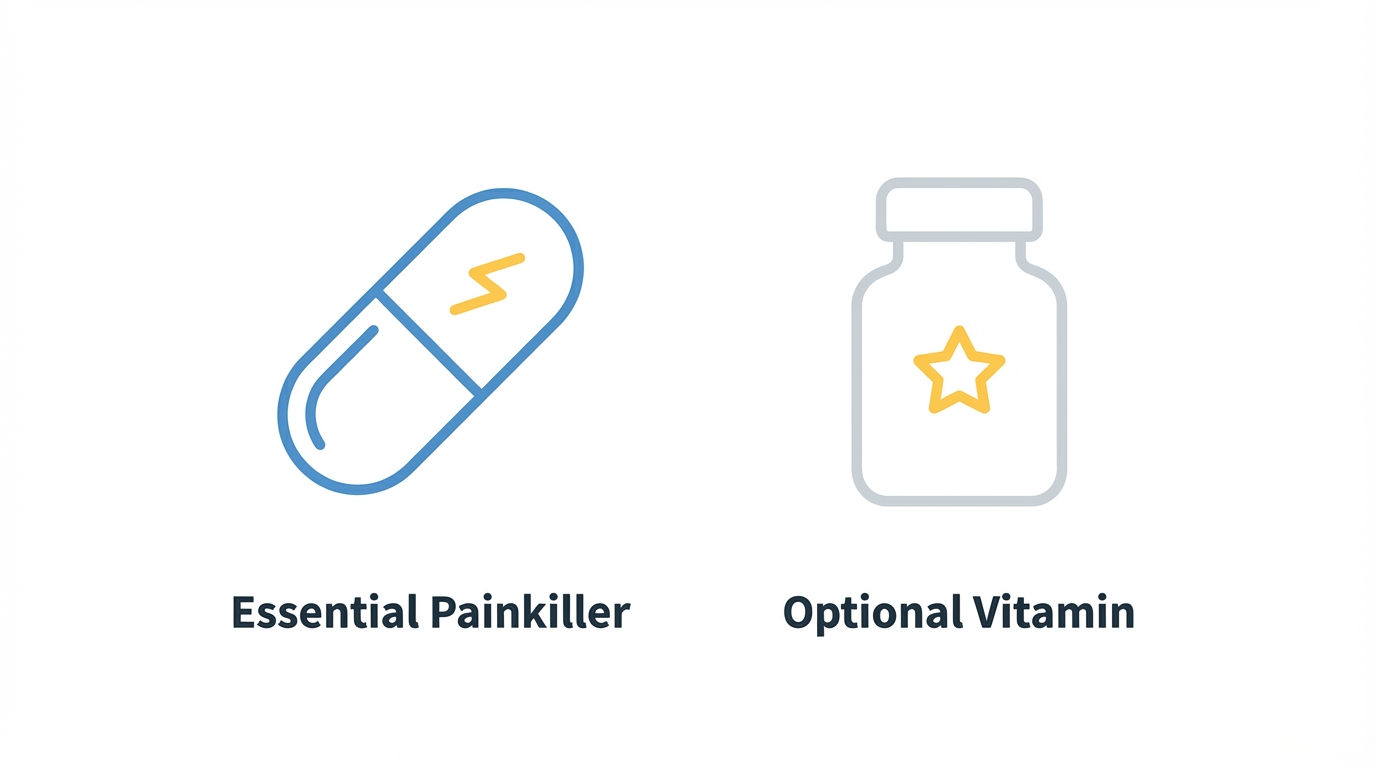
If you want to reach SaaS revenue milestones quickly, you cannot afford to build a "vitamin." A vitamin makes life 10% better (like a new to-do list app). A painkiller solves a problem that keeps people up at night. Dating, health, and wealth are the "big three" for a reason.
Dimitri’s product succeeded because dating apps are exhausting. People aren't just looking for a "cool tool"; they are looking for a solution to a core human need for connection. Painkillers have higher intent, which leads to higher conversion rates on platforms like Meta Ads Manager. When the problem is painful enough, users don't need a 20-minute onboarding sequence—they just need to know that you can fix their problem.
Negotiating the Exit: Layoffs and Severance
The final step in the SaaS exit roadmap is the departure itself. Interestingly, Dimitri’s exit was perfectly timed with a massive layoff at OpenDoor. While most people dread layoffs, for a founder with a profitable side hustle, a layoff is the ultimate gift.
Getting a severance package on top of a business making $28k a month is like receiving a series-A check with zero equity dilution. If you know your company is heading toward a reduction in force, volunteer for the package. Use that capital to hire your first full-time employee or to double your ad spend on Apple Search Ads. The goal is to exit with as much cash as possible to maximize your startup's initial launch capital.
Building Momentum with 'Ship It Sundays'
Maintaining a 9-to-5 while building a startup is a recipe for burnout. To survive the two-year grind, you need a community of builders. Dimitri participated in a group called "Ship It Sundays," where local founders would meet every week to work on their respective projects. This provided social accountability—if you didn't ship something, you had to answer to the group.
This community is also where you discover the "meta" of marketing. Since the best tactics for creator outreach or optimizing paywalls change every six months, you need to be in the room with people who are actively testing. Modern founders are now utilizing Stormy AI to deploy autonomous AI agents that discover and outreach to creators on a daily schedule while the founder is at their 9-to-5. Isolation is the enemy of the side-hustler.
Conclusion: Your Roadmap to Freedom
Transitioning from a side hustle to full time isn't about taking a blind leap of faith; it’s about de-risking the jump. By utilizing the 'Infinite Runway' of your current salary, hitting the $20k revenue milestone, and building a defensible SEO moat, you can exit the corporate world with total confidence.
Start today by identifying a painkiller problem, hiring your first contractor to handle the busy work, and setting your "freedom number." The road is long—often taking two years or more—but as Dimitri proved, the financial independence for founders waiting at the end is worth every lost Sunday. Keep building, keep shipping, and use tools like Stormy AI to turn your 9-to-5 into your biggest competitive advantage.