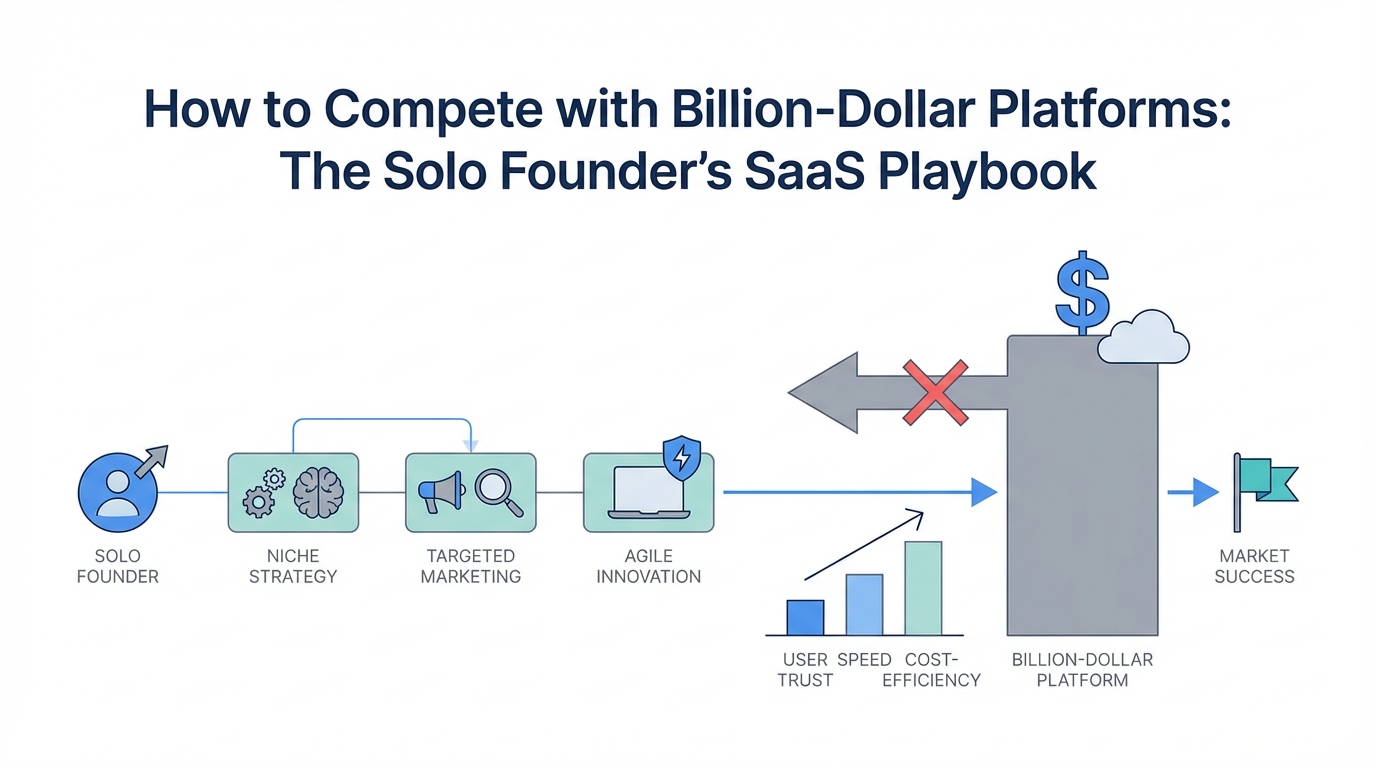
Entering a market dominated by billion-dollar incumbents can feel like a suicide mission. For a solo founder, the sheer scale of companies like OpenTable, Yelp, or HubSpot can be paralyzing. These giants have thousands of employees, massive marketing budgets, and decade-long head starts. However, as Joe, the founder of Waitly, recently shared in an interview with Starter Story, being small is not a disadvantage—it is a disruptive business strategy. Joe built a waitlist app that now generates over $40,000 in monthly recurring revenue (MRR) by focusing on the gaps these giants ignore. This article explores the solo founder’s SaaS playbook for outmaneuvering industry titans by prioritizing simplicity, transparent pricing, and human-centric service.
Analyzing the 'Giant’s Weakness': Identifying the Friction Gap

The first step in any SaaS competitive strategy is realizing that size often breeds complexity. When a platform becomes a multi-billion-dollar entity, it must serve many masters: shareholders, enterprise clients, and a broad, diverse user base. This inevitably leads to feature bloat and a degraded user experience. For Joe, the realization came during a simple brunch outing. He was forced to download a massive app and create an account just to see his place on a waitlist. This is the 'friction gap'—the space where a giant’s desire for data collection and ecosystem lock-in overrides the user’s need for a quick solution.
Big companies like Yelp and OpenTable often prioritize their own platforms over the end customer's convenience. They want users inside their walled gardens, which creates a significant opening for a solo founder business model that prioritizes the user's immediate needs. By identifying these points of friction, you can build a niche market business idea that solves a single problem perfectly rather than ten problems poorly. Successful disruption starts with finding the one thing the giant does that annoys their customers and doing the exact opposite.
The Flat-Fee Advantage: Transparent Pricing as a Weapon
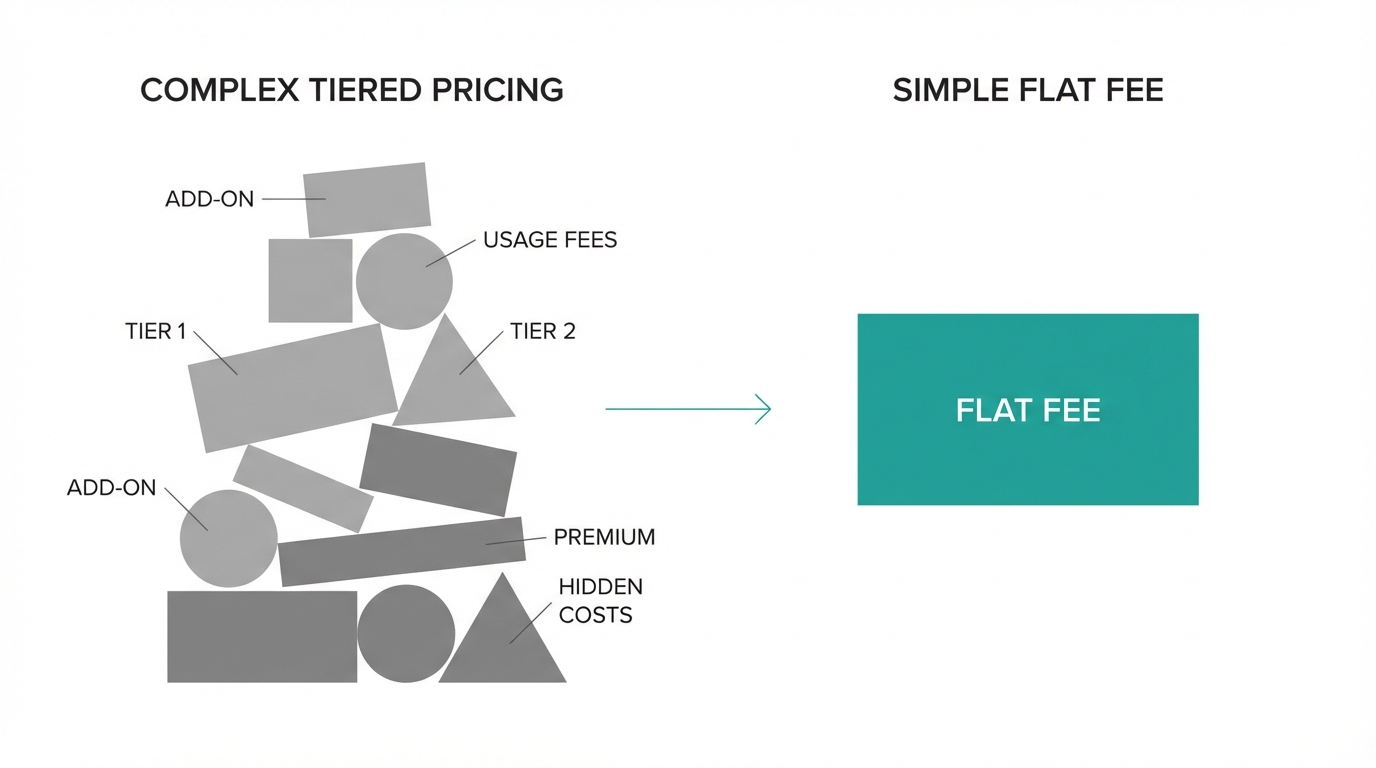
One of the most effective disruptive business strategies is to simplify the economic model. Giants often use complex 'per-use' or 'per-cover' pricing structures that make it difficult for small business owners to predict their monthly expenses. OpenTable, for instance, famously charges flat fees alongside additional costs for every reservation made through their platform. For a small restaurant, these costs can fluctuate wildly, eating into already thin margins.
Joe’s approach with Waitly was to offer a flat fee of $100 per month to unlock all features. This transparency is a massive competitive advantage. When a business owner knows exactly what they are paying, they feel in control. This model is easily managed through platforms like Stripe, which allows solo founders to handle global payments with minimal overhead. By removing 'hidden fees' and 'per-seat' pricing, you aren't just competing on price—you are competing on trust and predictability. In the world of SaaS, a simple, predictable bill is often more attractive than a complex, variable one, even if the total cost is similar.
Product Simplicity as a Feature: The 'No-App' Experience
In modern software development, we often think more features equal more value. However, in the context of how to compete with big companies, less is frequently more. Joe’s 'no-app-required' experience is a masterclass in reducing user friction. Instead of forcing a download, Waitly sends a text message with a link. The user taps the link and sees their wait time in a mobile browser. It’s fast, it’s intuitive, and it requires zero commitment from the end-user.
Building this kind of lightweight experience is easier than ever thanks to modern tech stacks. Joe built Waitly using Google Firebase for hosting and database management, with a back-end powered by Node.js. This allows a solo founder to scale to 59 million parties waitlisted without needing a massive DevOps team. When your product is simple to use, it is also simple to maintain. This lean approach allows you to iterate faster than a large corporation. While a billion-dollar company might spend six months in committee deciding on a button color, a solo founder can ship a new feature by the time the sun goes down.
The Customer Service Moat: Human-Led Support
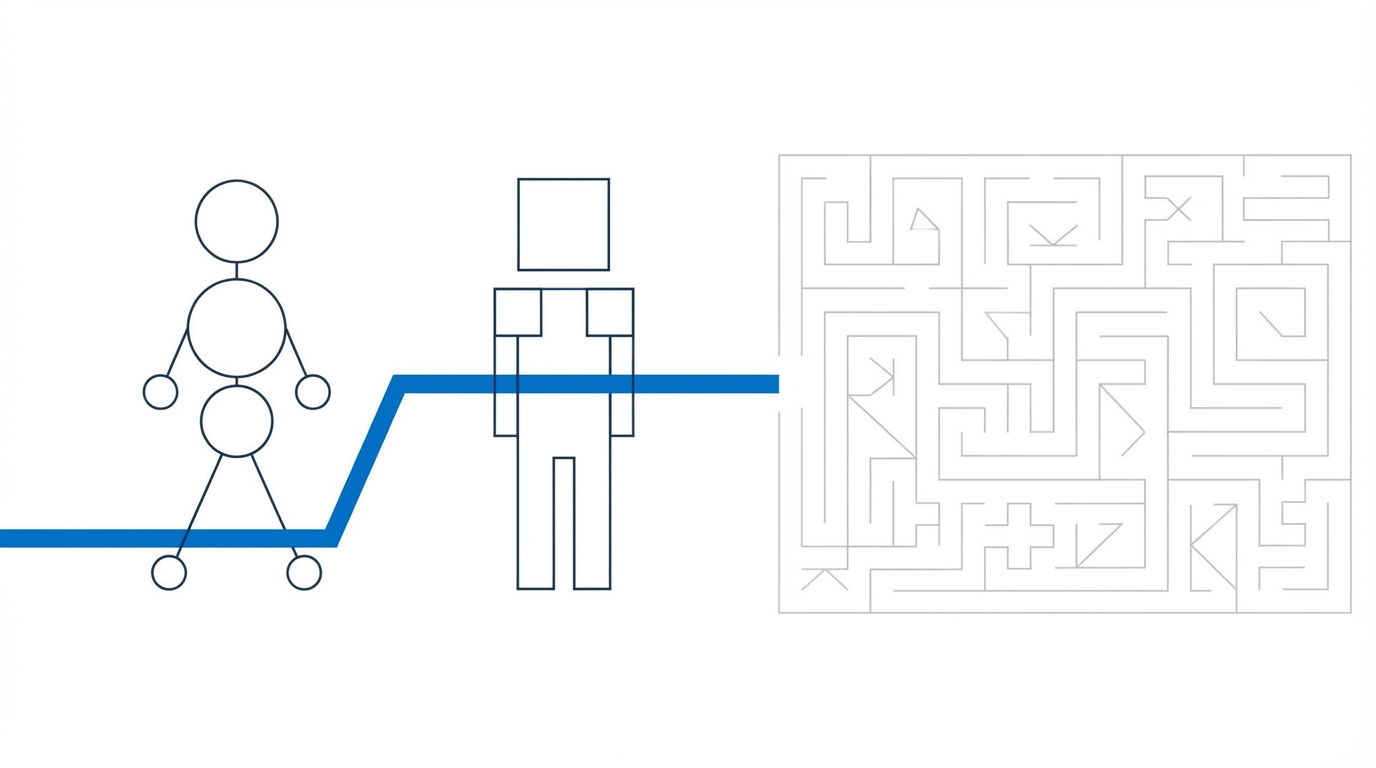
As companies grow, they tend to automate their customer service to save costs. We’ve all experienced the frustration of being trapped in a loop with an automated chatbot that can’t solve a specific problem. This is where a solo founder can build an unshakeable 'moat.' When a customer calls Waitly, Joe or a member of his small team answers. This immediate, human-led support is so rare in the SaaS world that it becomes a key selling point.
For founders looking to scale this without losing the personal touch, utilizing AI for the heavy lifting is a smart move. Joe uses ChatGPT and Claude to assist with coding and content generation, freeing up his time to handle high-touch customer interactions. Similarly, in the realm of marketing and outreach, platforms like Stormy AI streamline creator sourcing and outreach by helping founders find and manage UGC creators at scale. By using AI to handle the manual work of creator discovery and personalized outreach, a solo founder can maintain a high-quality, human-centric brand presence without a massive marketing department. This allows you to focus on building real relationships with your customers while the AI handles the logistics.
Strategic Niche Expansion: Flexibility as a Growth Lever
Waitly didn't stay confined to restaurants. Because the core problem—managing a queue—is universal, Joe was able to pivot when the market changed. During the COVID-19 pandemic, retail stores needed a way to manage outside lines. Because Waitly was built on a flexible solo founder business model, Joe could quickly adapt to serve retail chains. This flexibility led to the app being used in over 700 locations across the United States, effectively 10x-ing the business in a single year.
This is a vital lesson in SaaS competitive strategy: start in a niche, but build for flexibility. By not over-engineering the product for a specific industry's edge cases, you leave the door open for horizontal expansion. Whether you are running ads on Apple Search Ads or Google Ads, your ability to speak to different niches—from restaurants to pickleball leagues—is what drives long-term growth. Joe’s customer acquisition cost (CAC) of around $130, against a lifetime value (LTV) of up to $1,000, proves that a focused, flexible approach is highly profitable.
The Solo Founder’s Playbook for Disruption
- Identify the Friction: Look for billion-dollar platforms that are forcing users through unnecessary hoops (downloads, accounts, complex UIs).
- Simplify the Pricing: Adopt a flat-fee or transparent model. Use Stripe to automate the billing and keep it simple for the customer.
- Build an MVP with AI: Don't spend years coding. Use AI tools to build a functional prototype in weeks, not months.
- Pick a Niche, then Listen: Start with one industry (like restaurants) but be ready to adapt when a different industry (like retail) shows interest.
- Answer the Phone: Make human support your differentiator. Use Stormy AI to handle your creator outreach and marketing automation so you have more time for direct customer success.
Conclusion: The Power of 'Keep Going'
Competing with billion-dollar companies isn't about outspending them; it’s about out-thinking them. By focusing on product simplicity, transparent pricing, and exceptional customer service, solo founders can carve out highly profitable niches that the giants are too big to see. Joe’s journey from a side project to a $500,000 per year business is a testament to the power of persistence. As Joe advises, "Acknowledge that your doubts have no basis in reality because you cannot predict the future." The market is always big enough for a better, simpler solution. Start building, keep it lean, and don't be afraid to take on the giants.