
In the competitive landscape of mobile app distribution in 2026, the traditional path to exit—years of building, grinding for retention, and slow-burning organic growth—has been officially disrupted. Caleb Dean, a developer and growth strategist, recently flipped the script by selling his app, Runify, for a six-figure sum just 26 days after launch. This wasn't a fluke; it was a carefully engineered Instagram marketing strategy that leveraged extreme content frequency, automated video generation, and a psychological visual format that triggered competitive impulses in millions of viewers. By the time the acquisition DM hit his inbox, Runify had already generated over 5 million views and secured thousands of downloads through a strategic pre-order campaign.
The Death of Quality Over Quantity: Why 9 Reels a Day is the 2026 Standard
Why posting nine reels every single day is a winning strategy on Instagram.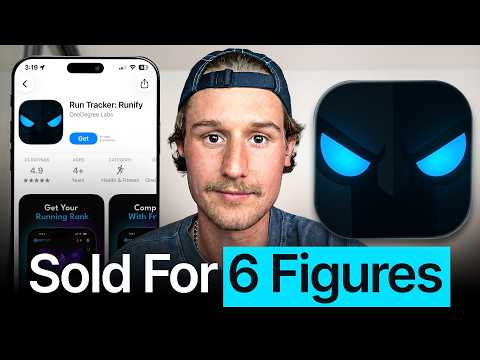

For years, the mantra in social media marketing was "quality over quantity." In 2026, that rule has been inverted for new app launches. Caleb Dean discovered that Instagram doesn't punish high-frequency posting; in fact, it rewards the cumulative data that multiple daily uploads provide to the algorithm. While platforms like TikTok often throttle reach if an account posts more than three times a day, Instagram Reels function like a high-volume lottery. If you post nine times a day, you aren't cannibalizing your views—you are giving the algorithm nine distinct opportunities to find a specific pocket of users.
During the peak validation phase of Runify, the team was posting nine Reels per day. The strategy was simple: flood the feed with variations of a proven format. This allowed them to reach millions of potential users in a matter of weeks, a feat that would have taken months or years using traditional ASO (App Store Optimization) techniques. For founders looking to scale quickly, modern tools can help identify which niches are currently underserved and which creators are successfully utilizing high-frequency strategies.
"Instagram really doesn't punish you for posting nine times a day. We posted 50 videos in a week and got millions of views because the algorithm just keeps finding new pockets of people."Decoding the Runify Video Format: Gamification and Psychology
The core of Runify's viral success was its specific video format. Rather than showing complex app features, the content focused on rank-based visuals. Borrowing a framework from successful fitness apps like Liftoff—which generates over $700,000 in monthly revenue according to Sensor Tower—Caleb created simple graphics that showed running times categorized into tiers like "Bronze," "Gold," and "Elite."
This format works because it taps into competitive psychological triggers. When a viewer sees a 5-minute kilometer categorized as "Bronze," they feel an immediate urge to comment, either to brag about their faster time or to complain that the ranking is too harsh. This engagement (comments and shares) signals to the Instagram algorithm that the content is "high-signal," pushing it to an even wider audience. The visuals themselves were generated using ChatGPT and basic design tools like Canva, proving that high production value is secondary to high psychological resonance.
The 'Internal Tool' Strategy: Generating 10,000 Variations in 60 Seconds
Using automated tools to identify outlier videos and trending content on TikTok.
Scale is the hardest part of high-frequency distribution. You cannot manually edit nine high-quality Reels every day without burning out a creative team. To solve this, Caleb’s CTO built an internal automation script. This tool allowed the team to generate 10,000 unique video variations in under a minute by programmatically swapping out text, background colors, and audio tracks using libraries like MoviePy.
This is the secret behind short form video automation in 2026. By treating content like software, the Runify team could test thousands of different hooks and "medals" (the rankings) to see which ones triggered the most engagement. They found that track and field distances (100m, 200m) were inherently more competitive and viral than long-distance marathon content. Without the ability to generate variations at scale, they never would have discovered this niche arbitrage opportunity.
| Platform | Frequency Tolerance | Algorithm Type | Best For |
|---|---|---|---|
| Instagram Reels | Very High (9+ per day) | Cumulative Reach | Viral Growth & Brand Exposure |
| TikTok | Moderate (2-3 per day) | Interest Graph / Lottery | Niche Community Building |
| YouTube Shorts | High (3-5 per day) | Search & Recommendation | Long-term Evergreen Views |
Platform Arbitrage: Why Instagram Wins for App Growth in 2026
While many marketers still prioritize TikTok for virality, Runify’s success highlights a critical platform arbitrage opportunity. TikTok’s algorithm has become increasingly sensitive to "spam-like" behavior. If you post too frequently on TikTok with similar content, your views will often drop to zero. Instagram, however, treats each Reel as a standalone entry into the discovery feed. This makes it the ideal platform for mobile app distribution when you have a proven content template that you want to scale horizontally.
Caleb noted that while one video on TikTok might get 700,000 views, the second post would often tank. On Instagram, the floor for views remained consistent, allowing them to stack views across dozens of posts. To manage this volume of content and maintain creator relationships, many agencies are now turning to Stormy AI, which automates the discovery and outreach process, allowing founders to focus on the technical "internal tools" that generate the media assets.
"TikTok punishes you for posting multiple times a day, but we doubled down on Instagram because it allowed us to stack millions of views without a penalty."The Pre-order Hack: Seeding the Leaderboard Before Day 1
How the pre-order strategy seeds your app with users before it even launches.One of the most overlooked viral app growth hacks mentioned in the Runify case study is the App Store pre-order strategy. Social apps face a "cold start" problem: nobody wants to be the first person on a leaderboard. Caleb solved this by putting Runify up for pre-order two weeks before the official launch. While he was flooding Instagram with content, he directed all traffic to a landing page built with Stripe and ChatGPT at Runify.xyz.
By launch day, he had 3,000 pre-orders. The second the app went live, it automatically downloaded to those 3,000 devices. This instantly filled the leaderboard, creating an "active" environment for any new users who joined later that day. This seeding of the social graph is the difference between an app that dies on arrival and one that scales to a six-figure exit in 26 days. If you're building a consumer app, you should also be running experiments on your conversion flow using tools like Paywall Experiments to ensure you're maximizing revenue from that initial surge of users.
Step-by-Step: Setting Up Your 30-Day Automated Content Calendar
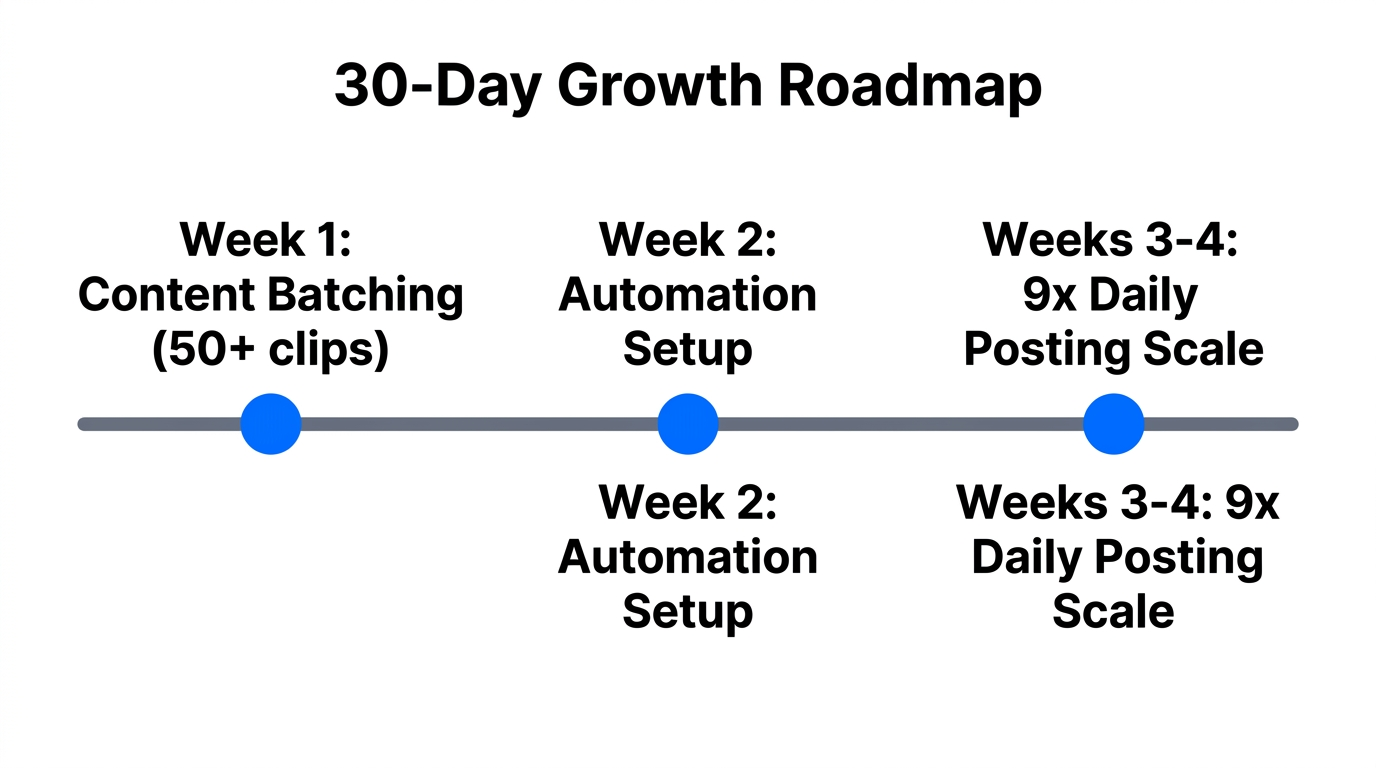
If you want to replicate the Runify playbook for your own mobile app, follow this structured process to validate and scale your distribution.
- Identify a High-Revenue Niche: Use Sensor Tower to find apps in your category making at least $100k/month. For Runify, the inspiration was Liftoff.
- Reverse-Engineer the Format: Identify the 2-3 content formats that drive their organic growth. Don't reinvent the wheel; remix the visual hooks.
- Build a Validation Landing Page: Use ChatGPT to create a simple HTML site and link it to a Stripe payment button. Offer an "Early Adopter" lifetime deal for $5.
- Set Up the 'Internal Tool': Create a script or use a no-code automation tool like Zapier to generate 100+ variations of your video format.
- Execute the 9-Post Daily Schedule: Upload 9 Reels per day to Instagram. Use a scheduling tool to maintain consistency.
- Enable App Store Pre-orders: Once you have signal (signups or payments), put the bare-bones V1 of your app on the App Store for pre-order.
- Launch and Iterate: Send a 50% discount code to your waitlist on launch day. Use the initial data to optimize your paywall via Superwall.
The Ideation Checklist: Finding a Niche Worth Your Time
Before committing to 14-hour days and high-frequency posting, you must ensure the market is worth entering. Caleb Dean uses a specific checklist to avoid "small TAM" (Total Addressable Market) traps like his first app, UriBrave, which helped people with shy bladder syndrome but had limited scaling potential.
- Revenue Signal: Are there 1-3 apps in the niche doing $100k+ per month?
- Organic Virality: Can the product be explained in a 7-second visual ranking or comparison?
- Competition Check: Avoid niches dominated by one VC-funded monopoly that spends millions on Google Ads. Look for fragmented markets with weak organic presence.
- Founder Connection: Do you have a personal link to the problem? Running was Caleb's hobby, which allowed him to write better captions and understand user pain points.
"I really wanted to validate what I’m going to work on before I commit too much time to it. If a niche doesn't have existing apps making $100k a month, it's not enough validation for me to build."Conclusion: Compressing the Timeline to Acquisition
The Runify case study proves that in 2026, the distance between "idea" and "exit" can be compressed into a single month. By focusing on short form video automation and high-frequency Instagram distribution, you can generate the necessary signal to attract buyers before you even have a full month of revenue data. Whether you are building in fitness, wellness, or productivity, the playbook remains the same: find a proven format, automate the variation, and flood the feed.
For founders and agencies looking to scale this process across multiple apps, Stormy AI offers the tools to discover trending creators and manage the outreach necessary to fuel these viral engines. Don't wait for the perfect product—start posting today and let the algorithm tell you if you have a winner.